Choose your language

Choose your language

The website has been translated to English with the help of Humans and AI

Dismiss

Four Predictions for Retail Media Networks in 2023

Four Predictions for Retail Media Networks in 2023

Commerce Commerce, Media, Retail media 4 min read
Profile picture for user johnl

Written by
John Ghiorso
SVP of Global eCommerce

A person's hands on a keyboard holding a credit card

As 2022 has come to a close, my team and I like to take some time to reflect on our learnings and what our focus will be in the new year. Over the past year, retail media networks (RMNs) have blown up and worked their way into the hearts of retailers, advertisers, and marketing services partners. Looking both back and ahead, I can say with absolute certainty that much of our efforts will be dedicated to helping our partners set up this technology.

In case you need a little refresher, retail media networks are advertising platforms established by retailers on their own digital platforms—it’s sort of like in-store advertising, but in digital format. This creates a new revenue stream for retailers, as RMNs enable them to monetize their first-party data through the launch of ad products. Essentially, it’s all about the data, as ad monetization with RMN allows retailers to gather new information on the behavior and interests of their customers, enhance their first-party data strategy, and engage with new audiences by meeting their specific needs. Ever since third-party cookies have started crumbling, RMNs have emerged as the sweet treat that both retailers and advertisers need—and the demand for this solution is rising at an incredibly fast pace. 

The tried and tested RMN trend will continue to accelerate in the new year. Here are four developments that retailers, advertisers and digital marketing services partners alike need to prepare for.

RMNs go global. In short, every retailer around the globe is going to have a retail media network, if they don’t already—it’s simply becoming pure table stakes. What started in North America, with Amazon leading the charge, has been rubbing off on businesses in every other part of the world. I can guarantee that only a year or two from now, even small-scale regional retailers will have an RMN, whether that’s in Italy, Thailand or Argentina. Why? Because once the flame of a business trend has been ignited and fueled by a new, but proven economic paradigm, the fire simply has to spread. That said, it is important to note that all of this may seem like a scenario with no downsides, but there is a potential one: if RMNs are not executed well, retailers and advertisers run the risk of diminished customer experience. For this reason, many brands choose to team up with a partner that’s specialized in this technology. 

Put creative differentiation at the core. Up until very recently, the game of retail media completely revolved around data and mathematics, with people and technology coming in to better execute what is essentially a quantitative effort. As such, RMNs allowed very little space for creativity. Now, however, we are seeing retailers such as Amazon move up the funnel and into the world where creativity truly matters: branding. When it comes to building brand awareness and bringing in new customers, data definitely counts—but it’s the creative that can make a real difference. So, while you still need the smartest people and the savviest technology to handle quantitative details, retail media is more and more a game of bringing in the right creative. Considering there’s so much more opportunity for creative differentiation, the brands that are best able to bridge data with creativity are the ones that will succeed. 

Tailor unified real-time strategies. So far, most brands (and even some of their partners) have been deploying retail media networks per channel, which means that an advertiser’s budget and approach for Amazon may differ from its budget and approach for Walmart. In other words, they have been working in silos and optimizing within the lengths of each different platform. However, this is all about to change. In the near future, I believe brands will view retail media networks as interconnected advertising channels instead of a handful of unrelated platforms. With that, it will become more and more feasible for brands to build a single retail media strategy, which allows them to be more flexible and seamlessly move between different channels. In the same vein, they will start to use unified real-time optimization tactics to capitalize on arbitrage opportunities between various retail media networks. This essentially means that brands will take more of an active daytrading type of approach. While some parts of this process can be automated, many others will still require manual efforts and human intervention in the form of more centralized retail media teams—both at the side of advertisers and their partners. 

Deliver dynamic in-real-life placements. As retail media networks—which are currently completely digital—expand, retailers will start to move ads from their online platforms to their offline spaces. For example, Amazon has announced that it will install more digital signage in its Whole Foods stores across the US and connect their DSP to their in-store screens. This will enable the retailer to use first-party data to dynamically serve ads in a previously analog framework and programmatically target consumers, thereby transforming the century-old concept of paid POS into an extension of digital advertising. 

In short, dynamic IRL placements can help retailers and advertisers enhance their targeting. However, one issue with this approach is that it’s still based on backward-looking data. Simply put, ad placements are currently based on average demographic numbers. This means that a retailer doesn’t actually know who is in its store in real time. However, with Amazon’s Just Walk Out technology, where cameras and sensors follow customers throughout their entire in-store journey, retailers and advertisers will be able to gather aggregated data of everyone who’s in a particular store in real time. This technology may already be in use in Amazon Go stores, but I believe it will take a few more years before it can scale, especially considering its significant privacy concerns—so I’ll save this prediction for another time.

Teamwork to make the RMN dream work. 

Over the last year, retail media networks have blown up and blown our minds. The impact of this technology is far-reaching and will only continue to expand in the coming years. Now, it’s up to retailers and advertisers to dive in and start monetizing their first-party data. As for my final piece of advice, make sure to team up with an experienced partner that can help you along the way—this will benefit every party involved. 

Curious to learn more about retail media networks? Get in touch with our team via sales-ecommerce@mediamonks.com.

Find out four developments that retailers, advertisers and digital marketing services partners alike need to prepare for. digital marketing digital retail media strategy amazon first-party data third-party cookies ecommerce Media Commerce Retail media

12 Advertising Capabilities Unveiled at Amazon unBoxed

12 Advertising Capabilities Unveiled at Amazon unBoxed

Industry events Industry events, New paths to growth, Technology Consulting, Technology Services 6 min read
Profile picture for user Performance.Monks

Written by
Performance.Monks

Media.Monks employees standing in front of an amazon ads exhibit

Advertising experts across the board gathered at unBoxed 2022, an Amazon Ads conference, to talk about innovation and strategy as the future of ecommerce and consumer behavior continues to evolve. Amazon unveiled new ad features and capabilities to make things easier for advertisers, and we pulled together 12 of the biggest updates for you here.

1. Amazon Live 

Recently announced, non-endemic clients can now use Amazon Live to launch new offerings and answer questions in real time. In 2023, the vertical view format in Amazon Live will become available for eligible advertisers. 

2. Sponsored Products: performance recommendations 

New performance recommendations, which are in-console, actionable best practices, were unveiled and are now available in ten countries. By troubleshooting in the background, advertisers can utilize these tailored recommendations to boost Sponsored Products ad campaign performance. 

3. Sponsored Products: campaign presets

Advertisers will now be able to create Sponsored Products campaigns with recently launched preset campaign settings, which include the following: 

  • Daily budget 
  • Bidding strategy
  • Targeting strategy
  • Associated bids 

These pre-populated campaign settings are based on historical performance and will be pulled to provide advertisers with estimated performance data, including impressions, clicks and conversions. According to Amazon, campaigns launched with presets observed positive results, including a 77% increase in clicks and a 29% increase in conversions.

Combined with expert knowledge, this feature can assist in selecting the right ASINs to run paid advertising. It's important to note that while advertising drives the most highly qualified traffic, your brand needs to be retail-ready to drive conversion and achieve the results you want. 

4. Sponsored Display: Twitch and non-endemic businesses

For non-endemic businesses in verticals not available on Amazon (e.g., restaurants and gyms), US advisers can run Sponsored Display ad campaigns to connect with audiences on Twitch. These campaigns are focused on driving outcomes and improving business performance on the Amazon platform, confirming Amazon's opportunities beyond its own ecosystem. SVP of Ecommerce John Ghiorso talks more about it here

While Sponsored Display ads already appear on the Twitch browse tab and directory page, they will now be integrated with Twitch live streams, which bring in 30 million daily visitors on average.

Monk Thoughts Amazon Ads has invested a tremendous amount into enhancing their products to make it easier for both endemic and non-endemic advertising experts to use. It’s not the same DSP from a few years ago and we look forward to more innovation to deliver on behalf of our clients.
Christina Bender headshot

5. Rewarded Sponsored Display 

To incentivize further shoppers, shopping/streaming credits can be added to Streaming TV, Display, and Video campaigns. Brands can add an Amazon credit directly to Sponsored Display creatives, which shoppers can redeem by clicking on the ad and purchasing the advertised product. This will come in closed beta for US advertisers soon. 

To demonstrate the value and utility of this type of experience, a 2021 Amazon Ads survey of US adult Amazon shoppers showed that 92% of respondents are more likely to take action if offered an Amazon shopping credit.

6. Sponsored Display: Brand Store traffic 

To drive traffic and brand growth on the Amazon platform, advertisers can now use their video ads to redirect shoppers to the Brand Stores with Sponsored Brands video creatives. This new feature introduces a broader product catalog and increases engagement with shoppers without distractions from competing offers. 

7. Sponsored Display: video creative enhancements 

New video capabilities to enhance Sponsored Display’s creative allows advertisers to showcase products and the brand through immersive storytelling such as tutorials, demos, unboxing and testimonials. This means advertisers using Sponsored Display audiences can build awareness on and off Amazon with 45-second videos and link shoppers directly to the product detail page for further purchase consideration. 

It was also recently announced that non-endemic advisers will soon be able to run Sponsored Display ad campaigns focused on driving outcomes and improving positioning on Amazon O&O. 

For smaller brands with limited creative capabilities, a new beta Video Builder tool provides customizable templates to create ad campaigns in under ten minutes. Video ads can appear above the SRP for Sponsored Brands and Sponsored Display campaigns. As advertisers, it's still vital to keep in mind the importance of organic placement and avoid being a pay-to-play brand on Amazon.  

According to third-party research from Wyzowl, 73% of consumers say they prefer video ads to learn about products and services, and 88% say video ads have convinced them to buy.

8. Amazon Demand-Side-Platform (DSP): performance enhancements 

Campaign improvements have been made to decrease setup time to 15 minutes, optimizing efficiency and productivity. A few notable changes include: 

  • Addition of a "Change History" feature to track campaign changes and impact on performance 
  • Updated algorithm to include "keep learning" and ingest more signals that result in better outcomes 
  • Amazon Ad Tag is moving from IMG to JS, which will enable 1 pixel for all events that are being tracked and drive richer insights with no requirements of third-party identifiers.
  • Amazon Audiences are automatically updated to improve signals beyond third-party identifiers
  • Contextual Targeting (beta) based on Amazon's retail taxonomy and in-the-moment content consumption with 40K categories available 
  • Amazon Brand Lift is now available for UK advertisers in Amazon DSP 

These changes show that Amazon DSP's extensive targeting capabilities will continue to evolve, allowing advertisers to dial in on what's working and what's not. 

9. Digital Signage Ads

Starting in November 2022, eligible advertisers can programmatically purchase ad space in Amazon Fresh stores by utilizing the new inventory opportunity within Amazon DSP. With these Digital Signage Ads programmatically placed in Amazon's stores, customers will see more relevant ads and have the opportunity to physically engage with brands. Brands and advertisers can customize ad placements, daypart and measure performance for meaningful results, which allows for efficient optimization and improved customer experience.

At unBoxed 2022, Amazon shared that Digital Signage Ads within Amazon Fresh stores resulted in a 40% sales lift for Kraft.

10. Streaming TV Ads

Along with Thursday Night Football, streaming TV ad placements during Premier League games are now available in the UK. Advertisers can also utilize incremental household reach, a post-campaign reporting solution, to measure incremental audience reached. By combining first-party and third-party signals, advertisers can ensure accurate, aggregated results augmented by machine learning-based projections.

Monk Thoughts Amazon’s continued investment into video and streaming TV ads is a real game changer for marketers. Amazon is in a unique position with their Prime Video partnerships rolling out features such as Virtual Product Placement. This may be an experiment for some advertisers but this move is representative of a lot of future innovation on the horizon.
John Ghiorso headshot

11. Amazon Marketing Stream

Amazon Marketing Stream launched globally in October 2022, with the exception of India. By expanding to all countries within the Amazon Ads API, this new service delivers hourly campaign metrics to advertisers’ AWS accounts via a push-based model. It provides details such as targeting expression performance by placement and budget consumption messages. 

Advertisers can expect additional hourly Sponsored Display data to come soon, which can be used for further campaign optimization. Amazon goes on to say that brands can benefit from Amazon Marketing Stream in the following ways: 

  • Optimize campaigns more effectively
  • Respond quickly to campaign changes
  • Improve operational efficiency 

12. Amazon Marketing Cloud 

Currently, Amazon advertisers can utilize ad signals of Sponsored Products and Amazon DSP media. With the recent addition of Sponsored Display signals in Amazon Marketing Cloud (AMC), advertisers can dive deeper into cross-media attribution and better understand the customer journey. Along with the additional signals, companion instructional queries (IQs) were launched to guide advertisers on cross-media attribution, the overlap into Amazon DSP, and other common Sponsored Display analytics. 

Based on customer feedback, Amazon Ads has focused on building AMC capabilities across four areas: 

1. Signal coverage. Advertisers can now build queries to analyze bidding efficacy, cross-publisher attribution, and total reach through integration with Sizmek Ad Suite. These Sponsored Brands signals will be added in early 2023. 

This integration is valuable as it allows advertisers to measure the impact of non-Amazon media on Amazon conversions and achieve more comprehensive cross-channel attribution, further fine-tuning the planning strategy across each phase of the marketing funnel. 

Christina Bender, Director of Amazon Partnerships, noted, “If you use Amazon Attribution to measure the effectiveness of your non-Amazon media driving Amazon.com metrics, testing out Sizmek would be a natural next step to see how that data can be queried within AMC.”

2. Ease of use. Within the past year, AMC's Instructional Query library increased from 10 to more than 50 pre-built queries serving as advertising playbooks on AMC.  

3. Actionable insights. Brands will soon be able to manage their Amazon DSP audiences within AMC, enabling audience creation via an SQL statement. 

4. Partner programs. Ask us about your Amazon services!

Monk Thoughts Insight-driven and privacy-safe solutions are crucial to our advertisers’ success. We’re excited about all the enhancements Amazon is making onto AMC as it allows us to better answer our clients’ critical business questions.
Christina Bender headshot

Final thoughts from Amazon unBoxed

With the recent updates, Amazon has laid a landscape that brands can utilize for incremental business growth. A revenue increase in Q3 turned things around for Amazon, who reported total sales of $127 billion (a 15% increase compared to last year), and a 13% jump in ecommerce sales YoY.

That growth brings opportunities for brands to end the year on a strong note. Not keeping up with Amazon’s innovations may lead to missed opportunities in revenue, especially as it remains the go-to marketplace in the US. Through the power of storytelling and advertising, advertisers can showcase their brand story and products without the distractions of competitors or offers, on and off Amazon. 

There is a lot to unpack here, but our team is eager to explore these new rollouts with you! Reach out to an Amazon Ads Specialist today to game plan a winning strategy on the Amazon platform.

Amazon unveiled new ad features and capabilities to make things easier for advertisers, and we pulled together 12 of the biggest updates for you here. amazon advertising amazon campaign performance performance marketing ecommerce ecommerce amazon ads Technology Services Technology Consulting Industry events New paths to growth

How Hatch Leveraged Data to Deliver Hyper-Effective and High-Performance Ads

How Hatch Leveraged Data to Deliver Hyper-Effective and High-Performance Ads

Data maturity Data maturity, Media, Media Analytics, Performance Media 3 min read
Profile picture for user Performance.Monks

Written by
Performance.Monks

Four portraits of men and women in squares, waterfalling down a purple background

As the ecommerce space continues to expand, it’s increasingly critical to meet your customers where they are. However, digital brands that depend on platforms like Facebook, YouTube and Amazon face a string of challenges, including rising acquisition costs; a limited ability to manage their performance, attribution and audience targeting; and the risk of losing brand authenticity. These issues are costing many companies a good night of sleep—but not Hatch. Having seen it all, the fast-growing health and wellness brand decided to focus on its ad experience in coping with these changes. They found that the secret to sweet dreams is striking the right balance between performance and brand creative, while always staying close to your authentic brand look and feel.

In the latest episode of In a Monk’s Opinion, our SVP, Global Performance and Enterprise eCommerce Kashif Zafar sits down with special guest Holly Elliot, VP Growth Marketing at Hatch, and fellow Monks Robbie Wiedie, VP Creative Services, and Jackie Andreetta, Associate Director of eCommerce, to discuss the smart-sleeping giant’s approach to marketing and advertising and their most recent strategic decisions. Furthermore, they talk about Hatch’s partnership with Media.Monks, the value of starting a creative mission with data, the importance of keeping track of trends and meeting customers where they are, and why advertisers shouldn’t miss out on Amazon. The golden thread? Whatever you do, always test and learn. 

In case you missed it—you can watch the full conversation below.

Hatch has had creative consistency and an unquestionable brand ethos since day one, which was instantly clear to Holly when she joined the team in 2021. As any growth marketer knows, starting a new role shortly before Q4 can be quite intense, but luckily she was given a warm and well-branded welcome. However, in preparing the marketing and advertising for the upcoming holiday season, Holly discovered two gaps: channels were optimized in silos and creative work was conducted based on campaigns rather than evergreen performance—in short, nothing that Media.Monks can’t solve.  

Acting as an extension of Hatch’s creative team, our main task was to make memorable content that could also perform, keeping in mind the company’s paid efforts. “We like to think of performance creative as fuel for the media engine,” says Robbie. The secret to success is starting with the data. So, our team first looked at the performance data on all the creative work to date, and then took existing assets, learned to speak the brand language, and created iterations of the top performers. Through a post-production-only methodology, our team repurposed existing creative assets into channel-specific iterations in a fast and efficient way—with the first social ads going live within a couple of weeks, before moving on to user-generated content and larger campaign stories. “We often say data is our creative director and this really holds true,” says Robbie, noting the role that insights can play in refining creative ideas.

While Hatch’s internal creative team primarily works on brand marketing, Media.Monks focuses on the performance part. “The speed at which we work with Media.Monks is so essential,” says Holly. “We’re able to test content on new platforms very quickly, which we couldn’t have done on our own.” On top of that, media learnings make the process seamless. This is crucial, as the health and wellness brand plans to focus on media diversification even more in the future. “It’s all about making sure you find new places to reach people,” says Holly, to which Robbie adds: “And that it’s based on the learnings, because you can’t argue with data.” Curious to hear what else the future of Hatch will hold, and how the brand readies itself for the upcoming holiday season? Take a look at the video above to find out more.

In this episode of IMO, we talk about smart-sleeping giant Hatch’s strategic direction, data as your creative director, meeting customers where they are, why advertisers shouldn’t miss out on Amazon, and much more. amazon customer data data-driven creativity amazon advertising content marketing strategy Media Media Analytics Performance Media Data maturity

5 Amazon Seller Tips for the Holidays

5 Amazon Seller Tips for the Holidays

Media Media, Media Strategy & Planning, New paths to growth, Seasonal marketing 6 min read
Profile picture for user Performance.Monks

Written by
Performance.Monks

Amazon boxes on a black table

The holidays are fast approaching, with deals already spiking as Amazon kicked off the season with the Prime Early Access Sale. Many experts anticipate that Q4 2022 will be the most lucrative yet, and it’s just getting started.

That said, economic uncertainty has prompted shoppers to search for the best deals and product value ahead of Black Friday, making the preparation window for sellers much shorter than in previous years. What’s more, Salesforce anticipates that 51% of consumers will purchase fewer holiday gifts this time around.

To help you reach consumers when they are ready to buy and make the most of this season, we built a list of tips that will get every aspect of your ecommerce business up to speed. With excess inventory, inflationary pressures and other unprecedented events, it’s vital to give your Amazon seller strategy the final tweaks it needs to positively impact your sales in Q4. Here’s what you need to know.

Consider these key seller dates.

According to Amazon, these are some of the main dates and events to prepare for. Be sure to mark your calendar so that you don’t miss any opportunities.

  • August 3rd - Holiday promotion submissions open in Vendor Central and Seller Central.
  • September 17th - Deadline to submit 7-day deals, Best Deals, and Lightning Deals.
  • October 21st to November 17th - Inbound shipping cutoff for vendors: Deal inventory must be in transit.
  • October 24th to November 17th - FBA inventory cut-off date for sellers: Shipments should arrive well before the key shopping dates for the holiday season. Inventory should arrive at fulfillment centers by this date.
A roadmap showing tips to the best advertising on amazon for the holidays

Set relevant goals.

Once you’ve marked the critical Amazon holiday deadlines on your calendar, start preparing the required elements and thinking about budget allocation across this prolonged season. Amazon advertising and promotion budgets should be specifically planned around these peak dates. 

As you start campaign planning, it’s important to set realistic expectations and key performance indicators that you can regularly keep track of on your data dashboard. If you’re uncertain what those should be, consider building out KPIs for each one of the steps outlined here, and keep in mind that your numbers may differ from other seasons. Audiences are often subject to change during the holidays, which is why our experts recommend determining your audience pre-holiday season to better plan your campaigns and initiatives.

A good step is to leverage past sales data (including Prime Day) to inform your strategy and goal-setting for this year. This will also help when it comes to inventory planning.


Become retail ready.

As we always say, advertising drives the most highly-qualified traffic, and retail readiness drives conversion. But what does it mean to be retail-ready? 

1. Inventory management

First, ensure you have an inventory plan in place. The sooner you can determine which products you plan on selling and guarantee you're not facing any inventory issues such as spoilage, deadstock, or low or high inventory levels, the sooner you can plan your other business elements. A fundamental part of managing inventory is reviewing your past sales to forecast this year's. Analyze your products' historical data, their performance during Prime Day, and which of your items (and your competitors’) could skyrocket during the holidays.

The next step is to ship your inventory to Amazon fulfillment centers before November 2 for Black Friday and December 1 for Christmas. With shipping and inventory in place, you can move on to advertising strategies, promotions, product detail pages and catalogs according to the products you have in stock.

2. Optimized content on Amazon

Product detail pages are vital for driving conversions and building trust with your customers, so spend time optimizing your pages' critical elements, then split-testing your work. We recommend starting with your product detail pages and A+ content. Ideally, this should begin as early as possible as A+ content takes the longest to build out. We encourage sellers to start preparing their creative in September.

If you’re not sure whether you need to update your A+ content, ask yourself: are we using comparison charts? Are we using all five modules? What about Brand Story? If the answer is no, it’s probably a good time to take another look at your content. What’s more, you can take the opportunity to refresh your current images and add holiday themes and festive overlays. Your images should sell the product on their own. Once creative is produced, add it to the platform to ensure Amazon approves it in advance.

Brand Stores should also be tailored for the holiday season. One strategy for your Brand Store is to create "store versions," where you can duplicate a page in your store, update the images, videos, or layout and schedule that version to run during a predesignated period. Store versions are helpful for quick updates that you wouldn't want to carry over into the new year or past a specific peak season. Another strategy is adding a Holiday Favorites page and running Sponsored Brand Ads. These should be done at least a month in advance. 

Our tip for optimizing copy is to review your top ASINs ahead of time to determine the top sellers and ensure they have robust titles, bullets, and descriptions. Be careful when adding keywords like "gift" or "present" in your listings during the holiday season, as it goes against Amazon policies. Instead, be strategic in how you are updating your listing copy and backend terms, determine what highly qualified keywords competitors are using and aim to be informative to your target customer.

3. Keyword Research

The months leading into Q4 and the holiday season are great times to conduct keyword research, update your current list and search for holiday-centric keywords to evaluate every opportunity.

Develop a competitive promotional strategy.

We can’t depend on consumers searching across e-retails, we need to stand out among the competition with an attractive promotional strategy. Some of the Amazon promotions that can come in handy during this long holiday season are:

1. Amazon Coupons (run time of up to 90 days)

Flexible and low-cost, these are great for driving velocity and increasing sales.

2. Best Deal/7-Day Deals (run time of up to two weeks for Vendors and one week for Sellers)

These are brand awareness tools that are better suited for well-established brands on the platform. The discount minimums are high, and merchandising fees are required.

3. Lightning Deals (run time of up to 12 hours)

Similar to above, these are high-cost brand awareness tools. They also have rigid approval policies and, even if approved, they are not guaranteed to run. Longer run times allow for more traffic to be driven to detail pages.

4. Promo Codes (run time of up to 120 days)

Great for brands with a strong social media presence or marketing campaigns. These can attract customers to buy on the channel and capture new purchases. Promo codes are the best option for specific targeting and having more control over the audience you reach.

It’s important to keep in mind that deals have a submission deadline. This year, it fell on September 17th for Black Friday and Cyber Monday. Also, review run times to better plan out your season’s promotional strategy.

Consider these Amazon Advertising best practices.

Once you have everything in place to be retail-ready, Amazon Advertising is necessary to unlock growth over the holiday season. It will not only help with competitive visibility; it can also improve organic rank and drive incremental sales when done correctly.

Considering the budgets you have determined in your goal-setting phase, you should start building your advertising campaigns based on your objectives. If you are a new seller with a new product, we recommend you begin your advertising efforts as soon as possible. Three months is the minimum to gather data and gain relevance within the algorithm. 

For sellers with existing products, give yourself at least a month in advance to begin new campaigns or refresh your current ones. Your products have triggered the flywheel or rank organically, so they will have an easier time staying relevant during the holiday season. Build awareness in advance through high-volume seasonal search terms—leading up to higher-converting campaigns to retarget and capture those early visitors when they are ready to buy.

Last but not least, examine your data and metrics regularly to ensure your holiday advertising strategy is as optimized as possible throughout the season. 

Recap the peak season.

The work you or your agency have to do on Amazon doesn’t end after the holidays. It’s fundamental to look back at your wins and losses over the last couple of months to guide your 2023 planning and continue to drive visibility on the platform.

Some ways to recap the season include:

  • Reviewing analytics to measure your successes (or failures) and your competitors’.
  • Paying attention to customer feedback through reviews, cancellations and returns.
  • Applying learnings to your New Year planning.
  • Refreshing your keyword lists, ads and content to remove seasonal copies and imagery.

All in all, it’s never too late to set your business up for success. While the task may seem daunting, spending your time and effort on a brief list of products that move the needle is what will pay off. Follow these steps, make relevant optimizations and results will follow.

Learn more information about our Amazon Services.

To help you reach consumers when they are ready to buy and make the most of this season, we built a list of tips that will get your ecommerce business up to speed. ecommerce amazon holiday marketing holiday campaigns amazon advertising ecommerce strategy Media Media Strategy & Planning Seasonal marketing New paths to growth

Enhancing the Customer Experience with an Amazon Brand Store

Enhancing the Customer Experience with an Amazon Brand Store

Brand Identity & Systems Brand Identity & Systems, Digital transformation, New paths to growth, Technology Consulting, Technology Services 3 min read
Profile picture for user Xuanmai Vo

Written by
Xuanmai Vo
Content Marketing Manager

To successfully grow a business, it’s important to understand the customer’s journey and overall experience. When it comes to Amazon, the best way to own the customer journey starts by building an Amazon Brand Store. Amazon Brand Stores are digital storefronts that help strengthen credibility and increase brand value. Customization is made easy through predesigned templates and drag-and-drop tiles to create pages that fit your brand. Sellers can also create their own branded URL, giving shoppers the access to explore a full range of products. In addition, the Amazon Brand Store helps sellers better understand their customers, providing key metrics such as page views, traffic sources, sales and more.

Amazon Brand Stores offer customization and control.

Amazon sellers can build a strong customer connection through the brand store by sharing their stories and educating shoppers on the brand’s mission, values, and much more. There is no other place on Amazon where the customer experience is controlled. Competitors’ ads are not visible on the Brand Store, which allows for a more customizable experience that focuses on just the brand’s products and offerings. With the spotlight being purely on the brand, this feature is crucial to leverage compelling brand storytelling.

Set your Brand Store up for success.

Once an Amazon seller completes the Amazon Brand Registry, they’ll be able to create an Amazon Brand Store. It’s important to note that the Brand Store template should reflect the brand’s image. Amazon frequently releases new ideas for sellers to boost their revenue and customers’ loyalty, such as brand videos to show products in motion, interactive posts, and product comparison tables. By adding these components, sellers can emphasize how their products can solve the shoppers’ problems with lifestyle images and a brief brand story. 

The Brand Store should include an “About Us” section or page, which speaks on the brand’s story and competitive advantages. This allows them to establish a rapport with their shoppers and provide a more personable experience. 

Since ecommerce shoppers rely heavily on visuals to make important purchase decisions, Brand Store imagery should be a top priority for sellers. Images and videos should follow specific size requirements to avoid any store errors. Other best practices for images include showing a variety of high quality images and ordering them in a way that prioritizes the images in a specific sequence.

Successful Brand Stores should also have a user-friendly navigation menu, categorized in a way that matches the brand’s target audience needs. Since the Brand Store acts as a hub for customer browsing, I recommend all products are available and accessible through the Brand Store. 

Analyze and optimize every step of the customer journey.

Amazon Brand Stores should always be monitored and optimized based on the data and engagement. This includes updating active promotions as well as featuring new product launches and seasonal products. If the seller fails to keep the Brand Store updated, they risk losing sales and revenue. According to Amazon, on average Brand Stores updated within a 90-day window have 21% more repeat visitors and 35% higher attributed sales per visitor. With the goal of increasing sales and customer loyalty, sellers should focus on optimizing the Brand Store content to be as informative and relevant as possible. 

Last but not least, sellers are able to track their Brand Store performance and shoppers’ engagement. These metrics include but are not limited to daily visitors, page views, estimated total sales, and so much more. Reviewing these metrics can be beneficial for a seller who wants to use their Brand Store in conjunction with their other marketing efforts.

When it comes to Amazon, the best way to own the customer journey and experience starts by building an Amazon Brand Store. amazon advertising services amazon amazon content optimization performance marketing Technology Services Technology Consulting Brand Identity & Systems New paths to growth Digital transformation
`

Amazon Content & SEO

Maximize Your Amazon Sales

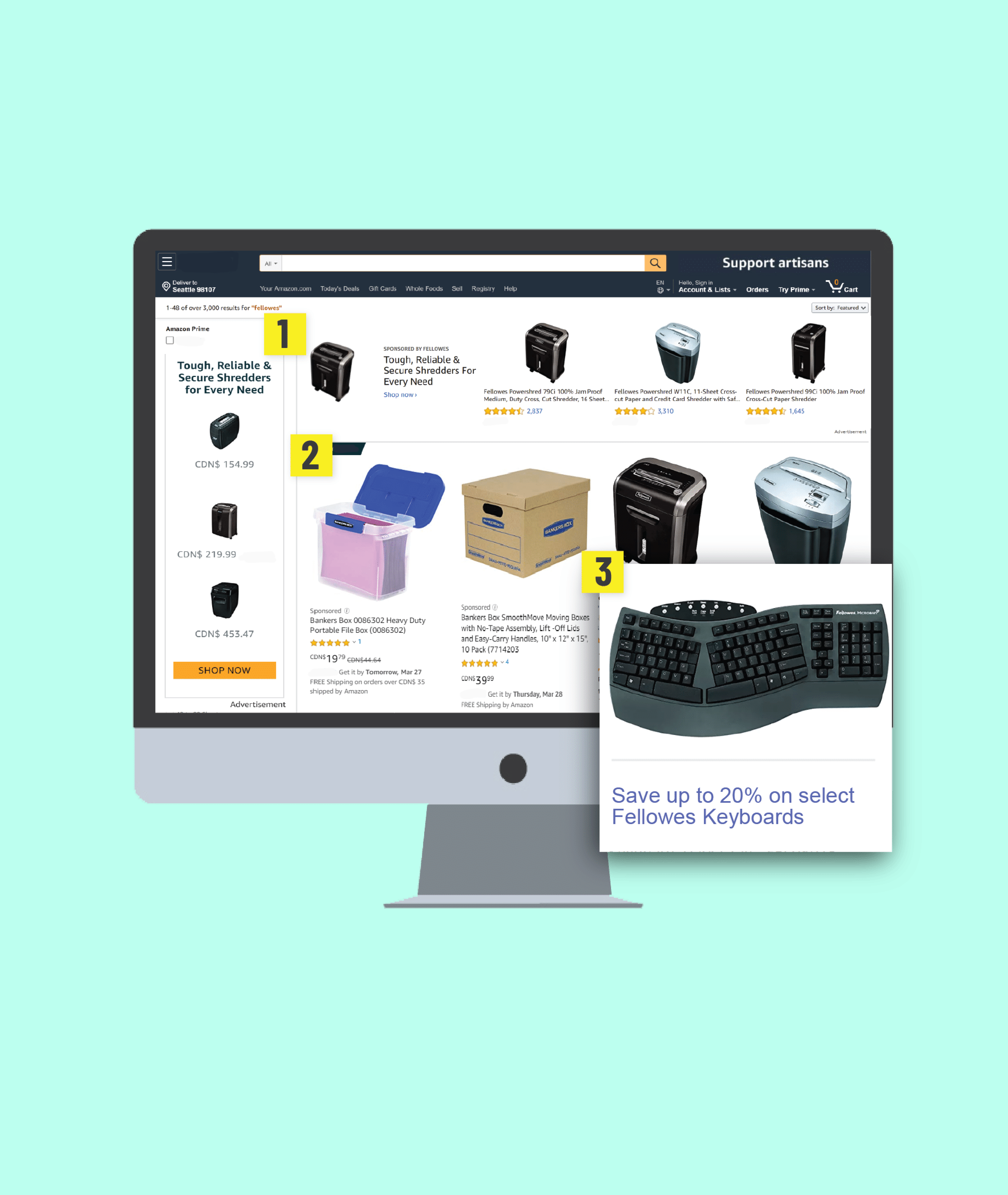
Amazon brand store image
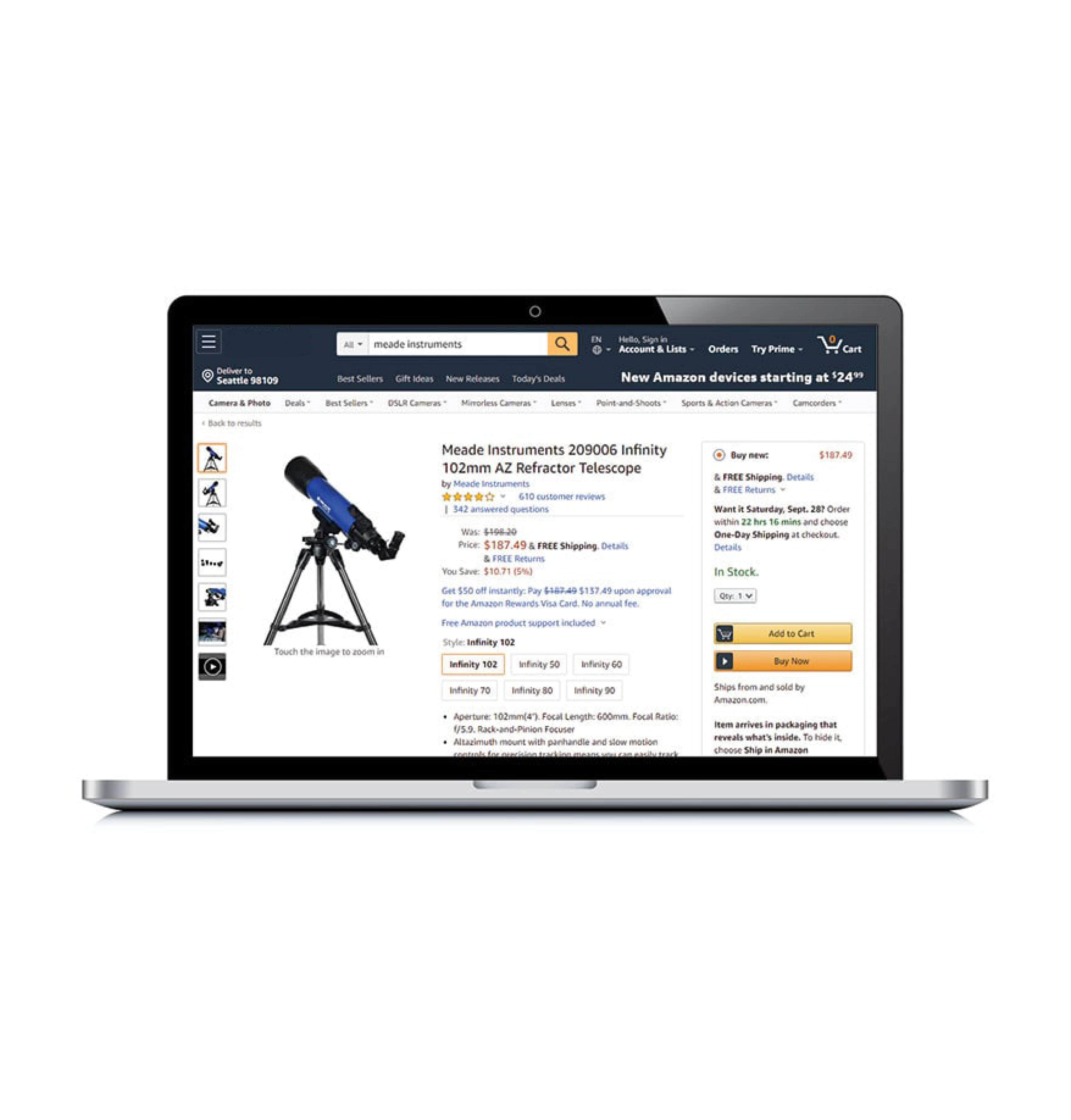
Amazon product detail page image

Close the sale with high-impact brand content on Amazon.

When it comes to making a purchasing decision, it’s critical that your customer has all product information at their fingertips. We optimize basic content and A+ content to keep customers on the page, answer their questions, and ultimately give them the confidence to click “add to cart."

Logos of notable brands that we have worked with

Start growing your Amazon business today with optimized content.

Hey 👋

Please answer some quick questions so we can learn more about your Amazon business.

  1. Amazon Content & SEO Services • We help brands get discovered and convert more customers on the world’s most competitive digital marketplace.

  2. SEO


    Amazon SEO puts your product in front of the right customers by improving your Amazon search ranking and optimizing your search keywords.

  3. Product Detail Page


    Every title, image, bullet point, and description needs to build confidence in the customer so they ultimately click "add to cart."

  4. A+ Content

    We design best-in-class A+ content that satisfies both form and function. With SEO keywords layered throughout the copy, your organic search ranking will rise.

  5. Brand Stores

    Set yourself apart with a custom Amazon storefront, then attract a crowd to it with managed advertising campaigns.

  6. Find out more about our Amazon content services.

Swipe
For More!

Drag
For More!

Get in touch with our commerce-focused team.

Hi 👋

Let us know how we can reach you to discuss growing your Amazon business.

Interested in more? Here's some related content for you.

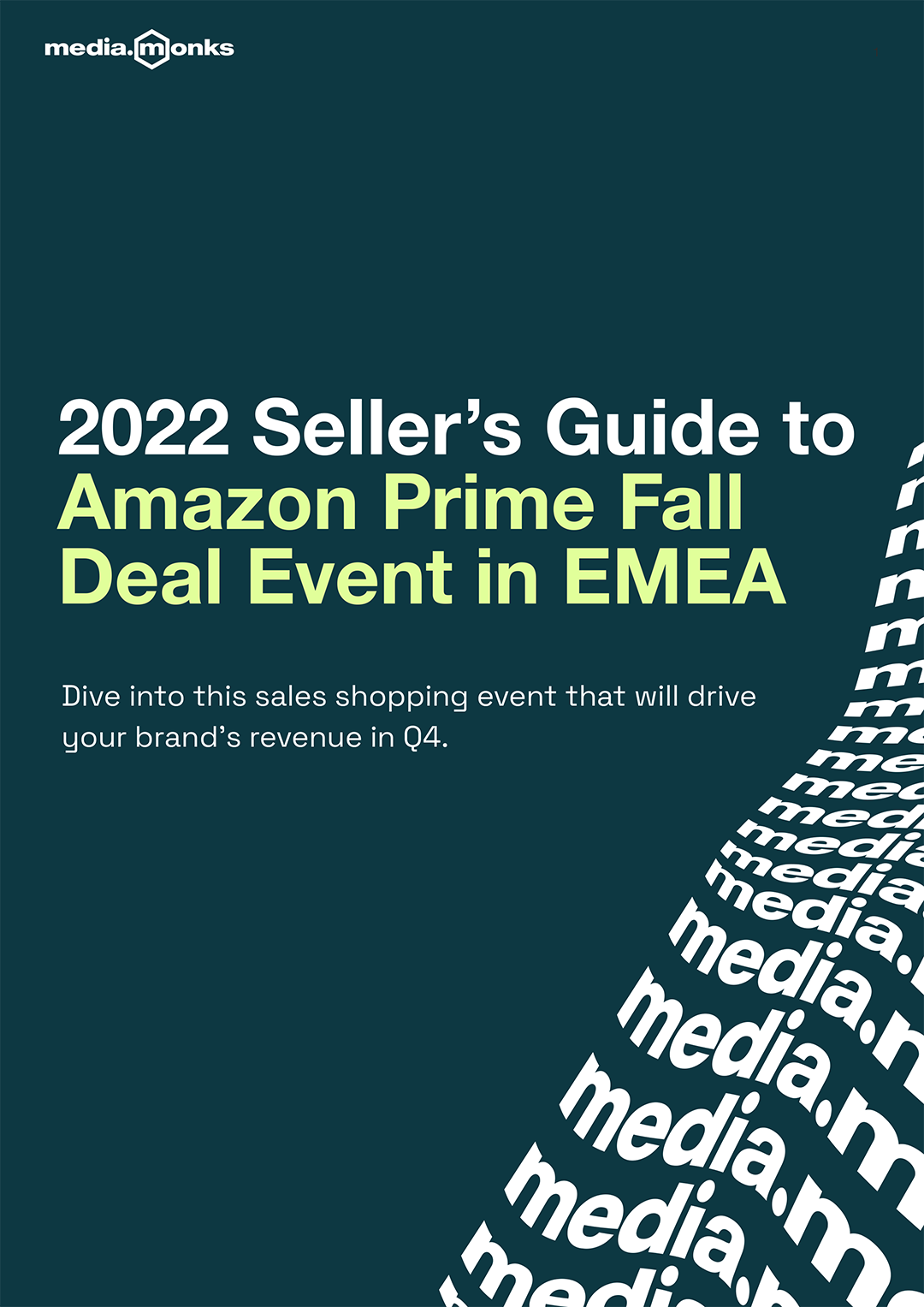
2022 Seller’s Guide to Amazon Prime Fall Deal Event in EMEA

2022 Seller’s Guide to Amazon Prime Fall Deal Event in EMEA

1 min read
Profile picture for user mediamonks

Written by
Monks

An illustrative team of workers moving boxes

Gear up for Prime Day events and maximize your earnings with our guide.

Amazon’s upcoming Prime Fall Deal Event is expected to go live in Q4 2022, meaning now is prime time for Amazon sellers to prepare. Because this will be the first event of its kind, we've put together a resource that unpacks Prime Day tactics and sets brands up for success on the platform.

With the Turkey 5 (a 5-day span between Thanksgiving and Cyber Monday) right around the corner, brands must align budgeting tactics, promotional campaigns, and inventory levels to ensure a profitable shopping event.

Amazon prime sellers day report cover

You're one download away from success on the Amazon platform with:

  • Forecasting inventory levels to prepare for Prime Day traffic.
  • Selecting the products to promote.
  • Learning marketing tactics and promotions to win Prime Day and beyond.
  • Keeping the momentum going post-Prime Day.

This experience is best viewed on Desktop

Download Now
Amazon’s upcoming Prime Fall Deal Event is right around the corner. We've put together a resource that unpacks Prime Day tactics and sets brands up for success on the platform. amazon amazon account management amazon listing optimization performance marketing brand strategy

Top 10 Highlights from Amazon Accelerate 2022

Top 10 Highlights from Amazon Accelerate 2022

Commerce Commerce, Industry events, Media, Performance Media 6 min read
Profile picture for user Performance.Monks

Written by
Performance.Monks

A bunch of screens showing speakers from amazon accelerate 2022

The Amazon Accelerate 2022 conference was filled with new announcements and provided opportunities for sellers and Amazonians to connect. Located right in Amazon’s backyard, the Media.Monks team attended the conference and came away with some key takeaways from the two-day event.

It’s no secret that Amazon continuously innovates to improve the shopping experience for sellers and shoppers alike. Still, the company recognized that merchants (otherwise known as sellers, brands, or retailers on the Amazon platform) are looking for ways to broaden their reach beyond the Amazon platform. Amazon has historically been reluctant to send shoppers anywhere besides its platform but has recognized the need for further growth and success. Read on to learn more about the new expansions announced at Amazon Accelerate 2022.

Monk Thoughts Amazon Accelerate highlighted some exciting new releases like Amazon Marketing Stream and Buy with Prime. The testimonies from the panelists of brands demonstrated how these tools solved some of their pain points and the results that were driven.
Jackie Andreetta headshot

1. Testing to Optimize

Manage Your Experiments allows sellers to run A/B Tests on individual product listing pages, comparing two versions of content against one another to identify the best performing version. Learn more about A/B Testing on Amazon here.


So what’s new? In October 2022, sellers will be able to utilize new capabilities for A/B testing to optimize product listings, including the ability to test bullet points and descriptions, which was not an option before. 


Another addition to testing capabilities is the “experiment to significance” option, which allows Amazon to determine when the campaign ends (after accumulating statistically significant data). Rather than analyzing results from a specific timeframe, the “experiment to significance” option focuses on consumer interaction.  

2. Tailored Audiences

A new capability within the Manage Your Customer Engagement tool was added to allow Amazon sellers to increase their email marketing reach and build stronger relationships with shoppers. Using the new “Tailored Audiences” tool, which is currently in beta but will be available to eligible sellers come 2023, sellers can proactively send email marketing campaigns to shoppers to increase brand awareness, customer loyalty and overall engagement.

Previously, shoppers had to follow the Brand Store to receive email campaigns from the brand. With the new additions, brands can now target three different audience types: repeat customers, recent customers and high-speed customers.

Put simply, when a shopper purchases on Amazon, they are automatically added to the seller’s email list and categorized appropriately. This update will help sellers build deeper relationships with repeat shoppers earlier, maintain current relationships and potentially increase overall sales. You can learn more about tailored audiences on Amazon’s blog.

But that’s not all that’s new to the Manage Your Customer Engagement tool. Since sellers on Amazon have expressed difficulty interpreting experiment results, Amazon rolled out a new feature that sends notifications during the MYE process if the new content versions do not lead to meaningful results. Also, sellers can authorize Seller Central to auto publish winning content to product detail pages if it is at least 66% better in November 2022.

Monk Thoughts Tailored Audiences is a super exciting new release that will offer clients the ability to tap into customer review insights and connect with customer “audience” segments. This tool will harness powerful insights for both content and PDP integrity as well as product development.
Heather Geurkink headshot

3. Buy with Prime – Marketing Expansion

In April 2022, Amazon announced a new way for brands to grow their DTC store through its Buy with Prime (BwP) program. This invite-only program is a way for brands to connect with their off-Amazon audiences and provide them with Prime benefits. 

Here’s what’s new: Amazon amplified this program by adding a new Buy with Prime page within the Brand Store, to which sellers can drive shoppers through Sponsored Brand ads. With the ability to customize the page, shoppers can preview products and complete their purchases on the brand’s DTC store.

Additionally, Amazon has offered to invest in co-branded BwP Facebook and Instagram ads with approved sellers. Though this is an invitation-only beta opportunity, Amazon’s decision to fund and manage these ads shows the value and impact they believe BwP can have for sellers.

Sellers can utilize a new BwP badge in product listings to show they offer Prime benefits on their DTC store, further enticing shoppers to purchase from the independently run DTC site. You can dive into the new Buy with Prime additions here.

4. Premium A+ Content 

A new upgrade to the standard content management system (CMS), available to all brands worldwide, now supports larger modules on product pages. Modules include video, interactive features, image carousels and Q&A. 

5. Amazon Marketing Stream

While Amazon Marketing Stream was introduced as a beta program a few months ago, it wasn’t until now that this push-based marketing and metrics system can share data visualizations to improve a brand’s overall business performance. The provided heatmaps, callouts stack ranking, and more can be utilized to further optimize advertising copy, leading to sustainable growth on the Amazon platform.

6. Improved Seller Experience

Amazon Accelerate offered a few notable updates that improve the experience for Amazon sellers.

  • A newly consolidated FBA dashboard: With a list of actions to grow sellers’ businesses, the new dashboard summarizes shipments and defects, identifies SKUs that need replenishment, and highlights any excess inventory/shipping needs.
  • Account Health Assurance Program: This program prevents account deactivation with good ratings as long as sellers work with Amazon. To be eligible for this program, sellers must maintain high account health and have a valid emergency number on file.
  • Call Me Now Button: This button is available on the account dashboard for compliance-related issues handled by another Amazon team.
  • Customer Ask Alexa: This self-service tool lives on product pages to answer customer FAQs, though is only available to select groups in October 20222 as an invite-only program before expanding to all eligible sellers in 2023. Learn more about Alexa’s capabilities here.
  • Pricing Health tool: With the pricing health tool, sellers can now view competitive pricing and see if any offers are at risk of being delisted due to non-competitive pricing. In addition, updates to this tool now allow sellers to bulk update pricing.

7. Amazon Global Logistics (STAR)

It’s no surprise that Amazon strives to provide opportunities for sellers to grow their business, which is why they launched the Marketplace Product Guidance for selling internationally. Recently enhanced to provide selection recommendations by identifying high-demand products, Marketplace Product Guidance can increase the likelihood of success globally, with automated pricing across all Amazon stores. 

The “List Once, Sell Globally” feature allows sellers to bulk upload products for global selling. Here’s how it works: 

  1. Choose a template 
  2. Select a product 
  3. Select the marketplaces 
  4. Generate template
  5. Fill in template 
  6. Voila! 

Behind the scenes, Amazon will purchase your inventory and ship the products to the appropriate fulfillment centers. On the shopper’s end, products will still be listed as “shipped from and sold by Amazon.” With this, sellers can leverage local fees rather than the cross-border remote fees. We can expect new listing language choices and additional global management tools to apply fixes across all marketplaces. 

8. Amazon Local Selling

Two new updates in the local selling category are BOPIS and Amazon Today. Buy Online Pick Up In-Store (BOPIS) is now available for sellers to utilize brick-and-mortar stores for local pickup, further connecting local sellers to shoppers. Amazon Today is geo-targeted to list your in-store inventory on Amazon and provides same-day delivery for shoppers.

9. Veeqo US Launch

Amazon announced the US launch of Veeqo, an inventory/shipping tool available to sellers at no cost. This multi-channel shipping software was built to help cut shipping costs while increasing the speed of fulfilling customer orders. Sellers can connect their sales channels (i.e., Amazon, eBay, Etsy, and Shopify) and access discounted shipping rates on UPS, USPS, DHL and FedEx. You can read the official release here.

10. Seller Payment Services

Amazon introduced two new updates to improve the steps that sellers must take to transfer their funds from Amazon into the sellers’ bank account. 

  • Amazon Seller Wallet: This digital wallet makes it easier for global sellers to hold, view, convert and transfer store proceeds from their US store directly into their bank accounts, all within Seller Central. Dive into how Amazon made it easier for sellers to manage their funds. 
  • Express Payout: Provides sellers with the convenience of moving and receiving funds within 24 hours instead of the usual 3-5 business days. Learn more here.

Wrapping things up

The ecommerce space has been rapidly growing, and Amazon continues to lead the way with its commitment to improving both the seller and buyer’s shopping experience. In fact, Amazon went beyond providing better experiences for sellers as the new tools can help to increase customer lifetime value.

Want to see more from Amazon Accelerate? Don’t worry if you missed out; you can watch Day 1 highlights here and Day 2 highlights here. There was a lot to unpack at Amazon Accelerate 2022, but our team is eager to explore these new rollouts with you!

The Amazon Accelerate was filled with announcements and provided opportunities for sellers and Amazonians to connect. Learn some key takeaways from the event. amazon amazon account management amazon advertising Media Performance Media Commerce Industry events

IBC Show 2022 Captures Broadcasting for a New Era

IBC Show 2022 Captures Broadcasting for a New Era

Experience Experience, Industry events, Metaverse, VR & Live Video Production 7 min read
Profile picture for user mediamonks

Written by
Monks

Media.Monks employees on stage at IBC

September saw the launch of IBC 2022 in Amsterdam, one of the most influential conferences of the broadcasting industry, which made its triumphant return to face-to-face engagement. Naturally, we couldn’t pass up on the opportunity to show up in person.

Many might think that broadcasting is very traditional, loosening its grip on the cultural current as people turn more and more toward immersive, interactive experiences like gaming and the metaverse. But the IBC Show is anything but traditional, and this year our Monks on the ground (and on the stage) explored the broadcasting’s transformation in the virtualized era, from capturing new kinds of content to showing off workstreams that unlock incredible, new storytelling opportunities.

Monk Thoughts Innovation is at the forefront of the conference. We’re leaning into the future, and IBC is an optimistic part of that future.
Headshot of Lewis Smithingham

If it’s not interactive, it’s broken.

Video killed the radio star—and with the rise of the metaverse and an increasingly digital culture, is TV next on the chopping block? Smithingham opened the second day of the event with a keynote talk, “Step Into the Metaverse,” in which he set the stage for a new era of multi-dimensional, interactive media. The central thesis: traditional, flat media is less relevant today’s Gen Z and Gen Alpha audiences. “A core undercurrent across all of this is if something is not interactive to younger generations, it feels broken and disconnected,” says Smithingham, showing how live sports viewership is down and that most of the discussion surrounding the Super Bowl is about the halftime show instead of the game.

Still, Smithingham doesn’t want to discourage the industry; rather, now is the time for broadcasting players to take an active part in driving culture forward. “Broadcasting is culture. It’s the vehicle by which culture spreads,” he says, making the case by illustrating how text messaging volume directly correlated with American Idol viewership throughout the aughts. Likewise, broadcasting can embrace emerging technologies and behaviors—like livestream commerce—to connect more closely with today’s audiences and tap into new storytelling possibilities. For example, we partnered with Logitech to break out of the exclusive, VIP-focused awards show format with the Song Breaker Awards, making it more accessible and interactive for audiences in the metaverse. 

To Rob McNeil, VP of Live at Media.Monks, these immersive experiences will become complimentary to more traditional broadcast experiences. “It will coexist. Certain people will gravitate toward certain kinds of content,” he says, noting how he personally would rather watch sports in VR rather than on a TV. While he sees a future in 180- or 360-degree movies and TV shows, music performances and sports seem to be the use cases that make the most sense right now. “These are natural areas for immersive experiences,” he says, noting how music in particular takes advantage of spatial audio in the Meta Quest 2.

The lesson for brands and broadcasters? Break out of the traditionally one-way conversation of broadcasting and instead create a multidirectional ecosystem: a halo of virtual worlds, social content, streaming content, creator channels, podcasts, audience interaction and more. “It’s about feeding an audience that’s always on,” says Smithingham. “We have to evolve how we tell our stories.” You can learn more insights from Smithingham in the IBC interview below.

Esports points a way forward.

Marketers and broadcasters looking for examples of multidirectional ecosystems can turn to the esports space, which is taking some learnings from traditional sports while also establishing best practices of its own. Esports are a fast-growing industry, with 29.6 million monthly esports viewers this year—an 11.5% increase over 2021, according to Insider Intelligence. Funs Jacobs, our Gaming Category Lead, shared the stage with Nicolas Bourdon, CMO at EVS, and George Pratchett, Production Manager at Promod Esports, to discuss the new frontier of esports as they become increasingly mainstream.

Jacobs notes that most of the revenue earned in esports comes from sponsorships—but the number of esports games per year pale in comparison to, say, your average FIFA league, which amounts to less opportunities for sponsorship overall. That’s why in addition to hosting more games and tournaments, Jacobs encourages competitive gaming developers, leagues and teams to explore fan engagement on new social platforms. In addition, there is a new opportunity to strengthen their communities with blockchain-enabled technologies like NFTs, as brands can now cultivate a sense of ownership with their fans.

Monk Thoughts Give brands more opportunities to get involved. The viewer numbers are there, and the overall number of people who play video games is 3 billion worldwide.
Funs Jacobs headshot

Teams like FaZe Clan and 100 Thieves have done well to expand beyond tournaments into video content—FaZe Clan has four YouTube channels and 8.66 million subscribers to its main one—apparel, NFT drops, podcasts and dozens of channels run by individual content creators and pro players that have signed onto teams. 100 Thieves is even in the early stages of developing a game of its own. 

The variety of digital content offers not only new opportunities for sponsorship and revenue, but also different options for fans and viewers to engage as they see fit. “One thing we can learn from streamers is the level of accessibility,” says Jacobs. “These creators are so accessible despite being so far away in terms of lifestyle and skill level.”

Cloud-based workflows unlock new storytelling opportunities.

Broadcasting of the future requires new ways of working, and Smithingham joined Samira Bakhtiar, Director of Sales, Media & Entertainment at Amazon Web Services (AWS) to give conference attendees an inside look at our global, AWS-based virtual production team. While broadcasts are typically produced by an on-the-ground team tangled in wires and packed in a truck, our cloud-based setup unites personnel who are working across several different locations. 

Here's what it looks like. We put together a rack of gear, coders, monitors and uninterruptible power supplies. We then send two or three people to a location who take the rack, power it up and plug it directly into AWS via a network connection. “This is a direct connection outside of the internet, so we’re not susceptible to interferences, says Patrick Jones, Senior Director of Engineering, Live/Broadcast and Creative Solutions at Media.Monks. “We don’t have issues like outages from local ISPs.” 

Anywhere from 36 to 40 virtual machines are connected in the cloud, ranging from graphics servers, audio servers, playback servers that enable instant replays, and more. The cloud also connects dozens of people throughout a distributed team. “A director in Florida can collaborate with a tech director in England and audio people in New York,” says Jones. And despite the distance across teams, latency is negligible and just a matter of milliseconds.

Monk Thoughts There are people all over the place, and that’s the beauty of having a decentralized workflow. Our communications system lets us talk as if we’re right next to each other, which makes things so much simpler.
Patrick Jones headshot

Still, any live broadcast comes with a series of factors that may present the need for redundancies, whether that be extra equipment or multiple recording backups. “We’re the department of redundancy. It’s what we do: continue to make sure we have multiple systems in place to protect us,” says Jones. He notes that while traditional broadcasting trucks also have redundancies built in, things break, and having two of every piece of equipment isn’t practical. “If you’re in a truck, you may not have the ability to get another computer in. But in the cloud, we can quickly pivot to spin up another system or backup.”

Beyond the added efficiencies in stability and collaboration, one benefit of the AWS-powered workstream shouldn’t go unnoticed: it greatly reduces the carbon footprint of a broadcast, which would traditionally involve flying out an entire fleet of professionals. “We just have three people flying in for a typical production, and everyone else is in the cloud,” says Smithingham.

Broadcasting continues to evolve and innovate.

“Two years ago, we didn’t have some of the tools in the cloud that we have now,” says Jones. After exploring the showroom floor, he applauds the level of innovation at IBC. “Seeing all the people that are innovating, we advanced by maybe three years in six months. The pandemic forced a lot of companies to up their game, and we’re all reaping the benefits of that.”

We showed off our own innovation at the booth for RED Digital Cinema, who is disrupting the film production scene with camera equipment that is more affordably priced than more traditional names. At the booth, we shared a behind-the-scenes look at the making of Post Malone’s Twelve Carat Toothache VR performance, viewable on Meta Quest devices captured on RED’s cameras. Our team built a way to live-stitch the footage to accommodate VR viewing in a 4K resolution, streamed directly to Quest headsets as the footage is captured.

The shooting-to-viewing pipeline is important because advanced imaging isn’t just a learning curve for production crews; it forces performers to engage with the camera in new ways, too. “The camera’s movement is often limited, due to naturally occuring motion sickness,” says McNeil. “For artists, that’s challenging because they have to come toward the camera, rather than have the camera come to them.” Throughout the Twelve Carat Toothache shoot, the crew could let Post Malone inhabit the viewer’s perspective in between performances, influencing his stage presence.

To bring the same experience to the demo booth, we had headsets on hand capturing live footage of the conference floor. “As people create content with technology like this, we become desensitized to it, but people experiencing it for the first time were like, ‘This is simply stunning—absolutely amazing,’” says Jones.

The demo between team Media.Monks and team RED demonstrated more than just the potential of new technology. It also showed a spirit of partnership that permeated much of IBC this year. “You saw a lot of people going from booth to booth—not like an upstart going to the industry giants to get their foot in the door, but rather a lot of established names wanting to work together,” says McNeil.

Monk Thoughts It used to be separate workflows across the board. Now everyone has their own nuance or expertise and are working together to see what they can do together.
Rob McNeil headshot

To say that the world has changed since IBC’s last in-person conference in 2019 would be an understatement. But this year’s edition showed how the broadcast itself is in a state of evolution—one that will show no signs of slowing down soon. “We need to virtualize everything from our culture to how we do our work,” says Smithingham. From expanding content across different formats, to learning from emerging industries like esports, to exploring entirely new workflows, IBC 2022 offered several looks into the future of broadcasting—and it’s looking bright.

This year’s IBC Show offers a look into how the desire for interactive experiences and the metaverse are transforming the broadcast industry for the better. metaverse interactive content digital experiences amazon gaming Experience VR & Live Video Production Industry events Metaverse
`

Amazon Advertising Services

Grow Your Brand withAmazon Advertising

Amazon brand store image
Amazon product detail page image

Accelerate your growth with Amazon PPC and DSP management.

amazon ads partner badge


No matter who your customers are, one thing is clear: they’re already buying, browsing, and researching on Amazon. Customers on Amazon are ready to buy, and your marketing strategies need to target them at the right place and time.

Logos of notable brands that we have worked with

In partnership with

  • Reebok
Client Words We selected Monks from a group of their peers and couldn't be happier with the choice. Their command of the Amazon platform is second to none.
reebok logo

AJ Purpura

Senior Key Accounts Manager

Start growing your ecommerce business with Amazon advertising.

Hey 👋

Please fill out the following quick questions so you can learn more about your amazon business.

  1. Advertising on Amazon • Retail readiness is critical to building long-term, sustainable growth on the platform. Strategic Amazon advertising drives the most qualified traffic and unlocks holistic brand growth.

  2. Amazon Sponsored Advertising (PPC)


    We take an organic-first approach to Amazon Sponsored Advertising and work with you to develop product level keyword strategies to grow topline sales and create long-term momentum.

  3. Amazon Display Advertising (DSP)


    We craft custom media plans focused on leveraging DSP's rich audience, inventory and ad type capabilities while ensuring cohesion with Sponsored Ads.

  4. Reporting & Dashboards

    Our easy-to-access dashboards measure paid media's impact on organic search results, as well as the overall business, to better understand the true value of your investment.

  5. Amazon Ad Budgeting & Forecasting

    Whether planning media investments at a brand, product or keyword level, we have you covered. We take a holistic approach to budget forecasting, ensuring both paid and organic impacts are considered.

  6. Find out more about our Amazon advertising services.

Swipe
For More!

Drag
For More!

This is how we helped Reebok launch on Amazon

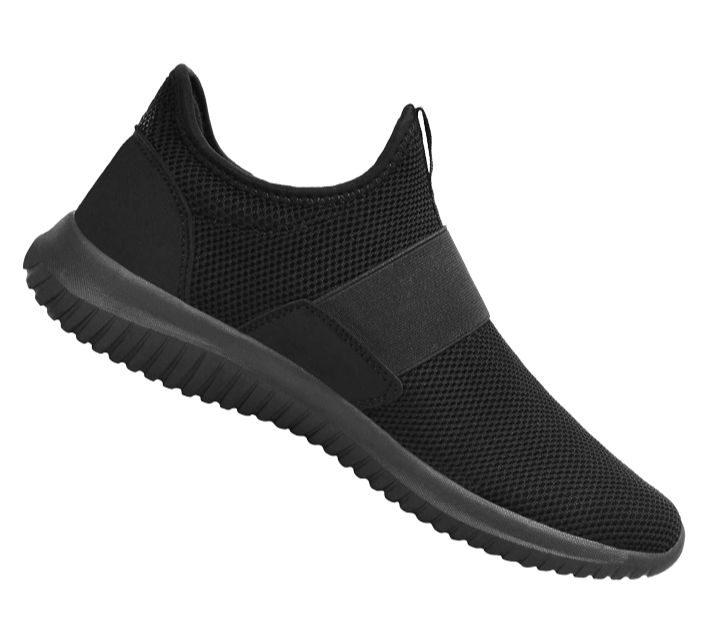
A black reebok shoe
Reebok logo
A person doing crossfit climbing a rope

Case Study

Amazon Sponsored AdvertisingFacing relentless competition on Amazon, we helped Reebok turn the tide with a restructured PPC strategy that resulted in a 106% increase in month-one sales.

See Full Case Study

Get in touch with our Amazon-focused team.

Hi 👋

Let us know how we can reach you and discuss how to grow your Amazon business.

Interested in more? Here's some related content for you.

Choose your language

Choose your language

The website has been translated to English with the help of Humans and AI

Dismiss