Choose your language

Choose your language

The website has been translated to English with the help of Humans and AI

Dismiss

Prime Day Strategy: 7 Common Mistakes and How to Avoid Them

Prime Day Strategy: 7 Common Mistakes and How to Avoid Them

Commerce Commerce, Retail media, Seasonal marketing, eCommerce Platforms 4 min read
Profile picture for user Amberleigh Benner

Written by
Amberleigh Benner
Director of Account Management

Common mistakes and pitfalls for Prime Day.

Prime Day offers incredible opportunities but can also be chaotic, leading to potential mistakes. To maximize your success, avoid common pitfalls and implement strategies that protect your brand. Steering clear of these blunders can save you time, money and effort, ensuring a smoother and more successful Prime Day experience. Here’s how. 

First, brands must understand consumer behavior, price sensitivity and brand loyalty on Amazon. Amazon shoppers are very price-conscious and will often hunt for the best deals, unless they are specifically loyal to a brand. Shoppers looking for generic items, like paper towels, will likely choose the option that offers the most value for their money, making it essential to consider your pricing strategy compared to other paid results. Even if competitors don’t have the exact same product, shoppers often think in terms of value and quantity. Additionally, some brands overlook the fact that increased traffic during Prime Day comes from deal-seeking shoppers. They’re not visiting the site for full-priced products, so offering compelling deals is necessary to capitalize on the increased traffic. 

Avoid these mistakes for Prime Day success. 

Mistakes are inevitable when crafting a strategy, and there’s no perfect formula since you can’t predict what other brands will do. Here are some frequent mistakes and how to avoid them: 

Mistake #1: Starting aggressive bidding and budget increases at the last minute. Many brands ramp up their bids and budgets either the day of the event or just a few days before, which puts them behind.

Don’t wait until the last minute to ramp up. Discuss and decide on your Prime Day products, promotions, budgets and inventory months before Prime Day. Strategically plan your promotions, inventory and advertising efforts well in advance to build momentum and maximize visibility.

Mistake #2: Pushing new or less relevant products that don’t have a proven sales history. Amazon's algorithm-driven platform can make launching new products on Prime Day challenging.

Push proven products, not newbies. Focus on products with a strong sales history, good category rankings and sales velocity. Launch new products ahead of Prime Day to build momentum, gain reviews and start the flywheel effect. Use Prime Day as a catalyst to boost visibility and sales for these products. This helps you capitalize on the increased traffic while ensuring your products have the necessary reviews and traction.

Mistake #3: Indiscriminately throwing discounts at everything. Your promotions need to be compelling and competitively priced. If your discount is 10% off but your main competitor offers 30% off, you'll be at a disadvantage.

Make your discounts count. Focus on a select assortment of products and leverage seasonal trends. Promote summer-appropriate items (e.g., outdoor gear, camping equipment, kayaks) and back-to-school necessities (e.g., school supplies, college essentials, cold medicine).

Mistake #4: Setting budgets that are too conservative. Those willing to spend more often see the most substantial growth. While cost-per-clicks may increase, so do conversion rates. 

Don’t be afraid to invest heavily. The returns can justify the expenditure. Monitor performance throughout the day and be ready to reallocate budgets to top-performing ads. Start ramping up your bids and budgets three to four weeks before the event to build momentum and better position your products.

Mistake #5: Underutilizing Sponsored Brand Ads. Typically, brands spend around 20% of their budget on these ads throughout the year, but this ad type performs exceptionally well during Prime Day.

Leverage the power of Amazon’s sponsored campaigns. Allocate a substantial portion of your budget to Sponsored Brand Ads for increased visibility. Use Sponsored Display Ads to retarget potential shoppers who have shown interest in your products, while using video ads to capture attention and boost brand recall. 

Mistake #6: Raising bids and budgets too early. This can lead to exhausted budgets by early evening. Brands often decide on a fixed number of advertised ASINs and split their budget evenly among them. 

Be flexible enough to reallocate your budget accordingly. Many consumers shop and convert later in the evening, so ensure your ads show at peak times like 7, 8, or 9 PM. Monitor performance throughout the day, double down on top performers and adjust budgets dynamically. Know when to turn off your deals, and revert settings by late evening on the second day to avoid overspending.

Mistake #7: Forgetting about the Halo Effect after Prime Day. Two critical strategies are often overlooked: retargeting and cross-selling.

Don’t ignore post-Prime Day opportunities. Implement lead-out strategies like retargeting and cross-selling to maintain momentum. Set benchmarks before Prime Day and be ready to revert to your pre-Prime Day bids and budgets immediately after the event. Failing to do so can lead to wasted money, lower conversion rates, and decreased efficiency, negatively impacting your SERP relevancy and organic ranking. Have a bulk sheet prepared detailing your historical spending and bids that drove growth. 

For additional preparation tips and insights, check out our Prime Day guide and checklist.

Monk Thoughts The Amazon shopper is very price conscious. They're looking for the best deal unless they’re brand loyal and looking for a specific product. To stand out, ensure your product appears in top search results, is competitively priced, and features high-quality images and compelling infographics.
Headshot; Amberleigh Benner, Director of Account Management

Playing the long game for incremental growth on Amazon.

Prime Day should not be viewed in isolation. It’s an opportunity to highlight your brand, gain new-to-brand shoppers and liquidate older inventory. More importantly, it’s a chance to capture consumers who may not have planned to buy immediately but are enticed by the discounts. This can lead to continued engagement and sales weeks or even months down the line. Think of Prime Day as a way to set the stage for future interactions with your brand. 

By optimizing your product listings and advertising strategies, you can make the most of Prime Day and drive substantial sales. At the same time, avoiding common mistakes and starting your preparations early can lead you to success. Focus on strategic planning, monitor your campaigns closely, and be ready to adapt to changing conditions. With these strategies in place, you’re well-equipped to achieve your Prime Day goals.

Ready to craft a winning Prime Day strategy? 

Our expertise lies in creating tailored strategies for incremental growth on Amazon. Contact us for expert advice and detailed plans to amplify your Prime Day results. 

Maximize your Prime Day success by avoiding common pitfalls, planning strategically, and implementing effective lead-in and lead-out strategies. Prime Day Strategy: 7 Common Mistakes and How to Avoid Them Maximize your Prime Day success by avoiding common pitfalls, planning strategically, and implementing effective lead-in and lead-out strategies. amazon prime prime day amazon seller central vendor central online shopping ecommerce amazon ads amazon advertising eCommerce Platforms Commerce Seasonal marketing Retail media

Prime Day Success: Custom Strategies and Advertising Tactics for Amazon Sellers

Prime Day Success: Custom Strategies and Advertising Tactics for Amazon Sellers

Commerce Commerce, Retail media, Seasonal marketing, eCommerce Platforms 5 min read
Profile picture for user Johnathon Braga

Written by
Johnathon Braga
Senior Advertising Manager

Person looking at their phone at a button saying, "buy now."

Prime Day offers Amazon sellers a unique opportunity to boost visibility, clear inventory, attract new-to-brand shoppers and leave a lasting impression on shoppers. However, success hinges on having a robust and well-thought-out Prime Day strategy. Drawing from years of experience working with various brands, I’ve found that focusing on the right promotional tactics and advertising approaches can enhance visibility and drive substantial sales. By leveraging consumer psychology, strategic planning and category-specific insights, you can capture the attention of potential shoppers and make the most of this high-traffic event. For additional preparation tips and insights, check out our Prime Day guide and checklist.

Plan your Prime Day deals to attract early shoppers and maintain momentum. 

Lead-in and lead-out strategies are essential for Prime Day success. Start your deals in the weeks leading up to Prime Day to attract early shoppers and extend promotions in the days following to catch those who missed the event. Offering slightly lower discounts during these periods can maintain momentum and boost overall sales, engaging window shoppers and latecomers. 

Understanding consumer psychology is key. Put yourself in the shopper’s shoes: a 20% off limited-time deal with a big red badge on the search results page is more impactful than a simple 10% or 20% off coupon. Shoppers are drawn to the thrill of limited-time and Lightning Deals. 

Implement these tactics to maximize Prime Day sales if you missed the deadline for Lightning Deals. 

When Lightning Deals are no longer an option, don’t panic; there are other ways to attract early shoppers, maintain momentum and drive conversions. For example:

  • Run traditional promotions. To attract attention, use Best Deals or coupons with significant discounts. Best Deals provide red badging and placement on Amazon’s Deals page.

  • Offer Subscribe & Save coupons. Convert one-time shoppers into repeat customers with a 15% discount on the first subscription, particularly effective for frequently purchased items.

  • Bundle products for added value. Create product bundles to increase the average order value and provide better deals to shoppers.

  • Invest in sponsored campaigns. Boost your Sponsored Product Ads, Sponsored Brand Ads and Sponsored Brand Video Ads. These ads appear at the top of search results, featuring multiple products and directing shoppers to a specific deals page within your Brand Store. Video ads are a cost-effective way to increase brand recall and engagement. 

  • Retarget with Amazon’s Demand-Side Platform (DSP). Use DSP to retarget shoppers who have interacted with your brand to boost loyalty and drive repeat purchases. Sponsored Display Retargeting is a viable alternative for smaller brands without a DSP budget.

  • Leverage Amazon Marketing Cloud (AMC). Use AMC to target shoppers who added products to their cart but didn’t complete the purchase. This is effective in the lead-out phase to convert undecided shoppers. This capability is not available in the DSP portal and requires an advertising partner with AMC access. 

  • Keep the momentum going after Prime Day. Continue retargeting and cross-selling for about six weeks after Prime Day. Adjust your bids to match post-event conversion rates, but maintain your budget to stay visible. Use DSP to retarget non-converters and cross-sell to those who purchased during Prime Day. 

Learn how to optimize ad placements and bids for increased Prime Day sales. 

Another important factor that will determine your success on Prime Day is visibility. There are certain strategies brands can use to maximize impact:

  • Increase top-of-search visibility. Consider strategies to ensure your ads appear at the top of search results, where shoppers are more likely to notice them. This can significantly impact your ad’s visibility and click-through rate. 

  • Plan your budget strategically. Break it down daily for the weeks leading up to, during, and after Prime Day. Focus on upper-funnel activities like DSP and audience targeting to build brand awareness. During Prime Day, shift to mid and lower-funnel tactics to capture the increased demand. After Prime Day, revert to normal bids and budgets to avoid off-peak overspending.

  • Utilize data from past events. Analyze historical data to understand which products and ad types performed best. This will help you focus your efforts on the most effective strategies and ensure you’re investing in the areas that will yield the highest returns. 

  • Ensure 24/7 ad activity. Prime Day traffic and conversions happen around the clock, so make sure your campaigns are active and visible for the entire 48-hour event to avoid missing out on potential sales during off-peak hours.

  • Make real-time adjustments. Keep a close eye on your campaigns and be prepared to make real-time adjustments. Adjust allocations to maintain visibility if you notice campaigns running out of budget. Remember, the 14-day attribution window can improve ROAS by 10-20%.

Evaluate your Prime Day success with these key performance indicators. 

Understanding your Prime Day performance is essential to gauge the impact of your promotional efforts and investments. By carefully considering the following metrics, you can evaluate the effectiveness of your strategies and make informed decisions to maximize future performance:

  • Top-Line Sales: Review your overall sales growth year over year to gauge the success of your Prime Day efforts. Once Vendor Central metrics are available, this should be your first metric to check. 

  • Total Advertising Cost of Sale (TACoS): TACoS offers a holistic view of your advertising efficiency by measuring total ad spend relative to overall sales. It helps you understand the impact of your ad investments. 

  • Conversion Rate: Compare your Prime Day conversion rate to the rolling four-week period leading up to the event. This will help you evaluate the effectiveness of your sales and promotional strategies. 

  • New-to-Brand Percentage: Track the percentage of new shoppers acquired during Prime Day. A high number of new customers can indicate future growth potential and brand expansion. 

  • Share of Voice (SOV): Measure your brand’s visibility compared to competitors. A higher SOV suggests greater brand awareness and market presence during Prime Day. 

  • Return on Advertising Spend (ROAS) and Advertising Cost of Sales (ACoS): Analyze ROAS to see the revenue generated per dollar spent on advertising and ACoS to understand the percentage of sales spent on advertising. Comparing these metrics year over year helps assess ad spend efficiency. 

Monk Thoughts Video ads are a powerful tool for Prime Day, capturing attention and boosting brand recall. They take up the most real estate of all ad types on Amazon, and even if shoppers don’t click, they still watch 30 seconds of your brand for free.
Headshot; Johnathon Braga, Senior Advertising Manager

Wrapping up your Prime Day strategy for maximum impact.

To make the most of Prime Day, understand consumer psychology, plan strategically, and tailor your approach based on your brand’s category. Success involves a mix of stacked promotions, mid-funnel advertising, strategic budget pacing, and dynamic adjustments based on real-time performance. Start your preparations now, as CPCs are expected to rise by 50% on Prime Day. Mid-event adjustments will be more expensive and challenging, especially for non-branded keywords. A well-crafted strategy will help you capture shopper attention and maximize returns. 

In a nutshell, Prime Day shoppers are hunting for the best deals. Decide your strategy ahead of time: if profitability is your goal, be more controlled with your deals; if growth is your goal, be more aggressive with promotions. 

Finally, remember that a solid Prime Day strategy is only as good as the results it delivers. Analyze your outcomes to refine your approach for future events. 

Ready to optimize your Prime Day strategy? 

We specialize in enhancing Amazon product listings and understanding shopper behavior to ensure your brand stands out and achieves maximum returns. Contact us for more strategic insights and techniques to maximize Prime Day results. 

Increase Prime Day sales with tailored strategies, ad optimization and category-specific tips for Amazon brands. Prime Day Success: Custom Strategies and Advertising Tactics for Amazon Sellers Increase Prime Day sales with tailored strategies, ad optimization and category-specific tips for Amazon brands. amazon prime prime day amazon seller central vendor central online shopping ecommerce amazon ads amazon advertising eCommerce Platforms Commerce Seasonal marketing Retail media

Prepare for Prime Day Success with Optimized Product Listings and Basket Building Tactics

Prepare for Prime Day Success with Optimized Product Listings and Basket Building Tactics

Commerce Commerce, Retail media, Seasonal marketing, eCommerce Platforms 4 min read
Profile picture for user Mckay Elliott

Written by
Mckay Elliott
Advertising Manager

blog-cover-boxes-prime-day-prep

My team and I have worked with many Amazon sellers to help them succeed on Prime Day, and we know that success goes beyond just offering discounts. Part of a winning strategy requires optimizing your product listings and understanding the basket-building behavior of shoppers eagerly awaiting Prime Day deals. By meticulously fine-tuning your product details and strategically planning for shopper behavior in the weeks leading up to Prime Day, you can set the stage for a highly successful event. Whether your goal is to boost profitability or drive growth, these insights will help you tailor your approach for maximum impact. 

For even more preparation tips, be sure to check out our comprehensive Prime Day guide and checklist.

Get ready for Prime Day by upgrading your Amazon Brand Store and listings.

Optimize every detail for Prime Day. Even if you think your listings are already optimized, take a moment to ensure every detail is dialed in. Check that all of your content is up-to-date, especially if you've made recent product changes. Beyond individual listings, ensure your entire brand presence on Amazon is polished and consistent across your Brand Store, posts, and logos.

Boost your organic visibility on Amazon. Evaluate your organic performance in Amazon search results. Fine-tune your titles, bullet points, product descriptions, and backend keywords to boost your organic rankings. Organic sales are generally more profitable than advertising sales, so tracking and improving your organic performance should be a priority. Make incremental adjustments to potentially move from a lower search result slot to a higher one, enhancing visibility during Prime Day.

Give your Amazon Brand Store a Prime makeover. Your Brand Store plays a significant role in your overall strategy. Ensure it offers a seamless user experience, especially on high-traffic days like Prime Day. Focus on metrics like consumer interaction, add-to-cart rates, and click-through percentages. These insights will help you understand how shoppers engage with your store and identify which products drive the most interaction. 

To keep the shopping experience engaging, consider refreshing your Brand Store’s visuals, such as updating the header or images. While you can't make exaggerated claims like "50% off all products" due to Amazon's policies, you can still create a visually appealing and timely presentation. Some brands even update their Brand Store headers for specific holidays or internal promotions to maintain a fresh look.

Prime your listings for shopper confidence. In addition to the basics, consider these advanced tips to enhance your listings further and drive better performance on Prime Day: 

  • Leverage A+ Content and Enhanced Brand Content features to provide detailed, visually rich information about your products. This can improve conversion rates and help your listings stand out.
  • Incorporate high-quality product videos that demonstrate your product’s features and benefits. Videos can increase engagement and give potential shoppers a better understanding of your product. 
  • Actively manage your customer reviews and Q&A sections. Address negative reviews promptly and provide thorough answers to customer questions. Positive reviews and active engagement can significantly impact purchase decisions.

Prepare for Prime Day basket building by anticipating shopper behavior and adjusting ad budgets. 

In the two weeks leading up to Prime Day, shoppers tend to build their baskets in anticipation of deals. This behavior can result in lower conversion rates and reduced advertising ROI. To effectively navigate this period, follow these steps: 

Anticipate delayed purchases. Shoppers often add products to their cart but wait to purchase until Prime Day. Recognizing this pattern helps you better interpret performance metrics during this period. 

Set the right expectations for Prime Day. A temporary dip now means a big sales payoff later. Brands participating in Prime Day should start by pacing their budget day-by-day for the weeks leading up to, during, and after Prime Day. A detailed budget plan avoids overspending early and ensures there are enough resources to maintain visibility throughout the event.

Adjust Prime Day ad budgets. Consider reducing your ad budgets to avoid overspending. However, rather than drastically changing the advertising budget, just dial it back a bit. Stay visible and keep engaging with potential shoppers so you’ll be ready to retarget those who interacted with your ads when Prime Day hits. For instance, focusing on mid-funnel ads such as Sponsored Brand ads and Sponsored Brand Video ads can help maintain visibility and engagement during this period.

Maximize visibility during Prime Day. Standing out during this high-traffic event requires a strategic approach to ensure your product remains top-of-mind for shoppers. Here are some effective strategies to boost your presence and drive sales:

  • Increase your budget for Sponsored Product ads to maintain a strong presence throughout Prime Day. These ads help drive traffic directly to your product listings and keep your brand visible amid the competition.
  • Participate in Lightning Deals and offer enticing coupons to attract bargain hunters. These limited-time offers can significantly increase your product’s visibility and drive higher sales volumes by creating a sense of urgency and value. 
  • Leverage social media and influencer partnerships to create buzz around your Prime Day deals. Influencers can help expand your reach and build anticipation, making your products more appealing to a broader audience.
Monk Thoughts Avoid drastically changing your advertising strategy because you can retarget people on Prime Day who engaged with your ads in the lead-up period. When deals go live, they often return to purchase items from their baskets or explore your brand further.
mckay-elliot-headshot

Ensure Prime Day success with enhanced listings and strategies.

Optimizing your listings and preparing for basket building are crucial steps for Prime Day success. By polishing your listings, boosting organic visibility, and enhancing your Brand Store, you create a seamless and engaging shopping experience. Anticipating shopper behavior, setting realistic expectations, and adjusting your ad budgets strategically will help you navigate the high-traffic period effectively. Finally, leveraging advanced advertising tactics and engaging with influencers can amplify your reach and drive higher sales. With these strategies in place, you'll be well-prepared to capture the increased traffic and capitalize on Prime Day's opportunities.

Ready to optimize your Prime Day strategy? 

We excel in optimizing Amazon product listings and analyzing shopper behavior to help your brand achieve exceptional results. Our strategic insights and proven techniques can set you up for Prime Day success. For expert guidance and support, connect with us here. 

Optimize your Amazon product listings and prepare for basket-building to boost Prime Day sales and visibility. Prepare for Prime Day Success with Optimized Product Listings and Basket Building Tactics Optimize your Amazon product listings and prepare for basket-building to boost Prime Day sales and visibility. amazon prime prime day amazon seller central vendor central online shopping ecommerce amazon advertising eCommerce Platforms Commerce Seasonal marketing Retail media

Profit or Growth? Crafting a Winning Prime Day Strategy

Profit or Growth? Crafting a Winning Prime Day Strategy

Commerce Commerce, Retail media, Seasonal marketing, eCommerce Platforms 4 min read
Profile picture for user Wyatt Burley

Written by
Wyatt Burley
Senior Advertising Manager

blog-cover-light-bulb-prime-day-prep

At Media.Monks, we see Prime Day as a substantial opportunity for brands to boost sales and enhance visibility on Amazon. However, to make the most of this event, I recommend that brands decide whether to focus on profitability or growth, as these goals require different strategies and approaches. From strategic spending and category analysis to leveraging lead-in and lead-out strategies, our experts have come together to help you develop a plan that maximizes your success. For additional preparation tips and insights, don’t forget to check out our Prime Day guide and checklist.

Here’s how to tailor your Prime Day strategy to meet your objectives.

If your Prime Day goal is profitability, the key is to be strategic with your spending and focus on products with healthy margins. Here are some steps to consider:

  • Allocate your budget to a few key ASINs to minimize wasted spend and maximize ad efficiency. This focused approach helps you manage your resources effectively.
  • Use historical data and competitive analysis to understand the market landscape. Look at what your competitors are doing. How much are they spending? Are they running limited-time Lightning Deals or Prime-exclusive discounts? This information helps you decide where to allocate your budget effectively without overspending on inflated CPCs, which can rise by 30-40% during Prime Day.
  • Understand that consumer buying behavior has shifted to shoppers spending less on ecommerce. This makes it even more important to be even more strategic. If you can't compete with the big spenders, lowering your bids and maintaining efficiency might be smarter rather than chasing inflated cost-per-clicks.

If your Prime Day goal is growth, you might need to be more aggressive with your advertising and promotions. Here's how to approach it:

  • Increase your ad spend and run more extensive deals to capture a larger market share. To ensure your efforts are effective, you need a thorough understanding of your competitors’ actions and current consumer trends.
  • Understand that consumers want deals with big red badges, not regular-priced items. Think like a shopper: If your item is priced the same as it was yesterday, they'll likely wait or go elsewhere.
  • Use all available data to make informed decisions. Failing to do so will make your efforts more expensive and less effective. In some cases, if you can't afford to run deals or compete with high ad spending, saving your budget for after Prime Day when competition normalizes might be wiser.

Learn the importance of lead-in and lead-out strategies for Prime Day.

Whether your goal is profitability or growth, a comprehensive lead-in and lead-out strategy is what will drive and maximize your Prime Day success. The lead-in phase is about building awareness and interest and familiarizing Amazon shoppers with your brand, while the lead-out phase is about capturing residual demand and maintaining momentum to drive additional sales even after Prime Day ends. Here’s how to build awareness before the event and maintain momentum afterward. 

Lead-In Strategy: Starting Strong. The lead-in phase is about building awareness and familiarizing shoppers with your brand. This is not the time to focus on high ROAS; instead, run video placements, streaming TV ads, and Sponsored Brand Ads to move consumers down the funnel. 

Budget Pacing: Timing Your Treasure. When preparing for Prime Day, aligning on which products to push is important. These discussions should start early, ideally in February or March, to determine which products will be promoted and how the budget will be allocated. Planning your budget structure—whether to pull spending from August into July or otherwise—is key. Strategically plan your budget down to the day, considering how much to spend in the weeks leading up to Prime Day. This early alignment ensures that you are well-prepared and not scrambling at the last minute. During Prime Day, shift to lower-funnel tactics to capture demand, using Sponsored Product Ads and Sponsored Display retargeting to drive high returns.

Lead-Out Strategy: Finishing with Flair. Don’t let your efforts end when Prime Day ends. Many shoppers continue to shop in the days following the event. Extend your deals slightly and continue advertising to capture these late buyers. This approach can help you maintain momentum and capture additional sales. Focus on bottom-funnel ads like Sponsored Product Ads and Sponsored Display Retargeting to capture residual demand. This can help you ride the wave off of your competitors coming out of Prime Day.

Monk Thoughts If launching your biggest deal, build awareness with streaming TV and Prime Video ads. If budget is tight, focus on gaining relevance through proven strategies like launching a Sponsored Brand video a month before.
wyatt-burley-headshot

Pave the way to Prime Day success.

Identifying your goals for Prime Day will set you on the path to incremental success on Amazon. By focusing on strategic spending, analyzing historical data, and understanding consumer behavior, you can develop a tailored approach that aligns with your specific objectives. Whether your aim is profitability or growth, early alignment on product promotion, a well-planned advertising strategy, and a comprehensive lead-in and lead-out approach are key to success. Additionally, creativity in ad placements and leveraging advanced targeting options like Sponsored Display Retargeting can further enhance your campaign's effectiveness.

By starting preparations early and thinking strategically, you can maximize your returns on Prime Day.

Looking to make the most out of Prime Day? 

Media.Monks specializes in crafting tailored strategies that help brands achieve their goals, whether profitability or growth. Let us guide you through the process with expert insights and proven techniques. Reach out to us here. 

Maximize Prime Day success by choosing the right strategy: profitability or growth. Tailor your approach for Amazon’s biggest event. Profit or Growth? Crafting a Winning Prime Day Strategy Maximize Prime Day success by choosing the right strategy: profitability or growth. Tailor your approach for Amazon’s biggest event. amazon prime prime day amazon seller central vendor central online shopping ecommerce eCommerce Platforms Commerce Seasonal marketing Retail media
`

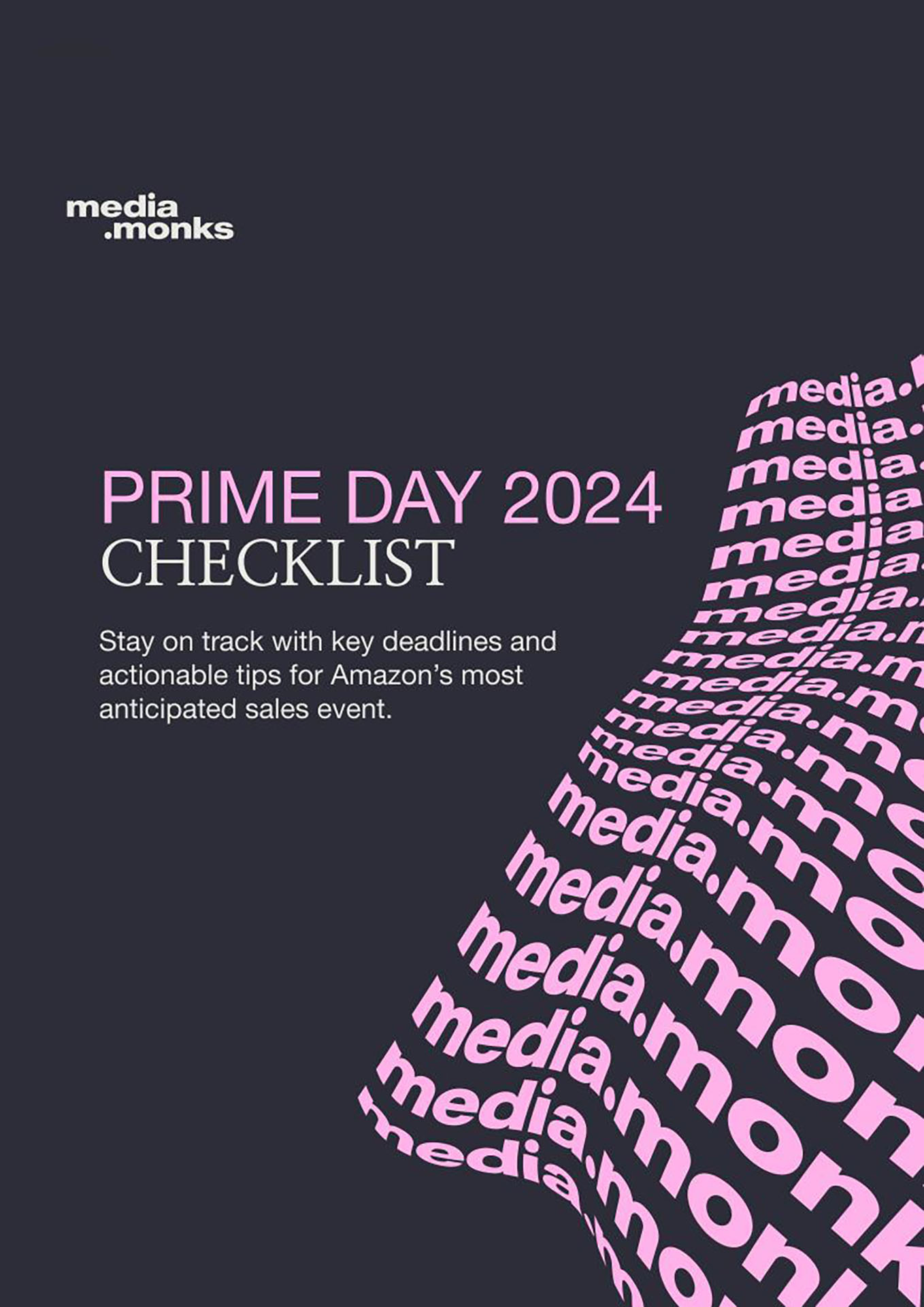
Prime Day 2024 Checklist

Ready, Set, Prime: Check Off Your Path to Amazon Success

Prime day checklist report cover

Download now to start marking your milestones toward Prime Day success.

Alongside our guide, we’re offering a separate checklist as a resource for brands to prepare for Prime Day.

This resource ensures that every critical strategy and touchpoint is carefully created, implemented, and reviewed.


Key Takeaways:

  • Thorough Preparation: Ensure retail readiness by systematically addressing each critical aspect of your Prime Day strategy.
  • Seamless Execution: Use the checklist to execute strategies flawlessly, minimizing errors and maximizing efficiency.
  • Continuous Improvement: Review and refine your approach regularly based on detailed assessments, driving ongoing enhancements and better results.

This experience is best viewed on Desktop

Download Now

Drop us a line.

Hey?

Please fill out the following quick questions so our team can get in touch with you.

How Our Innovation Sprints with AWS and Google Push Our Talent and Tech Partners Forward

How Our Innovation Sprints with AWS and Google Push Our Talent and Tech Partners Forward

AI AI, Experience 5 min read
Profile picture for user Iran Reyes

Written by
Iran Reyes
VP, Global Head of Engineering, Experience

Innovation sprints

“Given that AI technology is evolving rapidly, it’s extremely valuable to have a safe space to experiment with these technologies at an early stage,” our Executive Technical Director Andy McDonald tells me. So, we’ve created this safe space: innovation sprints are all about learning by doing and giving our talent the opportunity to get hands-on experience with building brand-new tools and technologies—and not just for our own gain, but to help push innovation forward at the world’s most impactful tech companies.

And opportunities there are. In the last few months alone, we’ve completed three innovation sprints in collaboration with some of our key cloud partners. First, we joined forces with Amazon Web Services (AWS) to host a challenge across time zones to create internal AI tools using Amazon SageMaker. A few weeks later, Google gave us, in our capacity as a large Workspace customer, the chance to play with Vertex AI and push the technology to its limits in two multi-day events focused on experimentation.

From the outset, the purpose of these sprints is to benefit our cloud partners next to our own business, as we collaborate on solving key industry challenges, developing use cases that drive brand results, and strengthening our partnerships.

Seizing every opportunity to tweak our expertise. 

The setup of innovation sprints is as follows: together with our partners—AWS and Google in this case—we come up with a challenge. Hereafter, our talent dedicates their time and creative chops to come up with ideas and execute on them by using the partner’s AI technologies. 

The needs of brands are at the heart of every sprint. Privacy, for one, is always a bright golden thread, as most brands are highly concerned with making sure everything is safe and sound. Collaborating with AWS and Google to develop AI tools guaranteed we were operating in a privacy-safe environment within their cloud computing platforms. For instance, when you’re deploying a project to Vertex AI, it’s going to be sort of sandboxed within your own hosting environment, which means it’s only pulling data from a knowledge base that you control. As for Amazon SageMaker, this service is GDPR-compliant. 

When it comes to AI-driven projects fully hosted by our partners, our Technical Architect and one of our AWS Certified Solution Architects Ben Moody says, “We used to tackle AI projects with high-level tools like Amazon Rekognition and Transcribe, among others. With Amazon SageMaker, we can be entirely flexible, covering any custom AI solution, high AI data privacy needs, and low latency requirements.” 

In developing AI-driven solutions for brands, it’s critical to know all the capabilities as well as limitations of the tools you’re working with. As our Senior Creative Technologist Angelica Ortiz highlights, “We use a lot of the latest tools from our cloud partners, and these innovation sprints are a great opportunity to formally dedicate the time towards testing their capabilities.” Such early-stage testing enables us to truly understand the limits of what we are pushing certain tools to do—and as a result, McDonald says, “New ideas get spun around all the different ways we could use a technology, which is 100% going to show up in our client work.” 

Accelerating experimentation to drive results for brands.  

As anyone who works in the field of technology knows, experimentation has a ripple effect. Whether you run into a roadblock or discover a new possibility, you’re always expanding your knowledge and skills. But these ripples have a much further reach than just the individual creative, designer or developer. By experimenting with building our own AI tools in partnership with leading technology brands, we’re able to create truly crafted, custom-made solutions for our clients. Let’s be honest, massive AI tools can’t really do that (yet).

“With tools like SageMaker and Vertex AI being made available to us, we’re really able to supercharge our experimentation processes,” says McDonald. “And then, we can feed these generative AI learnings back into our existing projects and new pitches for AWS and Google as our clients.” As it turns out, most of the solutions our Monks come up with during these innovation sprints are transferable and can be wrapped up and applied to various other scenarios. 

Feedback is a very powerful ripple. Once a sprint comes to a halt, we always share our learnings with the aim to help our cloud partners improve their tooling. For example, Moody says, “During the AI challenge with AWS, we had ten teams with members across different time zones, and so we quickly noticed that it was not easy to set up a seamless MLOps and Monitoring strategy. Since our team was lucky to have direct contact with AWS, they supported us right away and provided learning resources for future production iterations.” 

Similarly, innovation sprints allow us to offer our cloud partners an exciting new take on their technologies. “They’ve been working on their products for years and years, so we can provide fresh perspectives—and sometimes even discover bugs in the system—by applying what we know using their tech. While they help us learn more about these technologies, we give them valuable feedback on how they can improve their products and services, so it’s really a win-win situation,” Ortiz says. And as a fun bonus, it often makes our partners excited to explore uncharted territory together.

Nurturing partner relationships is an ongoing process.  

This feeling of excitement to keep experimenting has been echoed by every participant and organizer of our recent innovation sprints, including myself. Now, all there’s left for us to do is to keep carving out the time, so that we can continually develop our creative ideas inspired by the technologies that our cloud partners kindly make available to us. Our Technical Solutions Engineer Sarah Sheppard highlighted that it’s great to “finally get the time to build some momentum on something. We have so many day-to-day things that can slow us down, so to actually set aside time and create space so we can keep our ideas moving forward—I think that's the best thing these sprints do for us.” Her team, for example, had several weeks to flesh out ideas, while getting trained on the AI tools. “This made the whole experience feel like a sprint, as we tried to do as much as we could in the allocated time,” adds Sheppard. 

Ultimately, this time spent on experimenting with existing technologies and creating new applications allows us to not only drive technical solutions for our cloud partners (and ourselves), but also push our partnerships forward. As Sheppard tells me, “One of the best parts of these sprints has been working with our partners and seeing where their heads are at in a totally different context. Instead of reaching out about a fire that needs putting out, I was now messaging them to say I had some cool ideas and if we could work on it together.” In the end, when it comes to team play, you always want to make sure that you add some fun to the game.  

Our innovation sprints with AWS and Google enable our talent to build new AI tools and push innovation at our cloud partners forward. AI Google amazon Innovation Experience AI

How Live Remote Production Keeps Sustainability Goals Grounded

How Live Remote Production Keeps Sustainability Goals Grounded

Emerging media Emerging media, Experience, Sustainability, VR & Live Video Production 4 min read
Profile picture for user mediamonks

Written by
Monks

A person on a laptop

As the effects of the climate crisis become more apparent and time is running out to act, sustainability has become a key focus for brands and consumers alike. Brands are setting up ambitious targets to turn the tide—and we’re no different, holding ourselves to UN Sustainable Development Goals and formalizing our commitment to become net-zero by signing the Climate Pledge in 2021.

Among our foundational environmental, social and governance goals, we aim to become a climate-neutral, environmentally conscious business—and a catalyst for change in our industry, leading by example and helping brands become more sustainable themselves. So while programs like carbon offsets are steps in the right direction, the key to meeting sustainable goals is to design operations that limit carbon emissions to begin with, and our live remote production workstream fits the bill.

Sustainable workstreams shouldn’t be a tradeoff.

Sometimes the road to being green can feel like making a series of concessions, but working sustainably often means working smarter. When reliance on digital grew throughout the Covid-19 pandemic, we adapted by designing a remote broadcasting workflow that limited the number of people needed on location. This production pipeline, with Amazon Web Services (AWS) as its backbone, did more than help us deliver incredible, live digital experiences to people everywhere—like immersing audiences in a VR Post Malone performance that transforms the experience of listening to an album. It also significantly reduced our carbon footprint.

Our live remote production connects teams to broadcasting software, eliminating the need for gas-guzzling broadcasting trucks on location. It also cuts out the need for specialized talent to travel to shoot an event: we’ve reduced our number of on-site broadcast talent by 83%. Adding to those benefits, our primary workload is based out of the AWS Northern Virginia region, which was powered by over 95% renewable in 2021.

Who wouldn’t want to trade lugging around energy-intensive equipment prone to breaking down—be careful not to trip on a wire and shut down the whole show!—for the cloud? This pipeline recently earned us the coveted Sustainability in Leadership award at NAB Show, the leading conference dedicated to the evolution of broadcast.

NAB awards ceremony with people on stage

Lewis Smithingham, far right, accepts the Sustainability in Leadership award at NAB Show.

Monk Thoughts We're incredibly honored and excited for this award because we believe sustainability can and should drive innovation and creativity throughout the production process.
Headshot of Lewis Smithingham

The benefits extend to talent as well. Gone are the long, grueling hours spent on set. The ability to collaborate remotely broadens our talent pool, ensuring the best person is cast for each job, even if they’re working across the country—or in a different one. Our experiential team has also developed a suite of tools like LiveXP that furthers the connection between audiences and the action beyond the screen.

One key benefit of live remote production is risk mitigation. First, the greatly diminished environmental impact reduces the social risk of a brand missing their pledged environmental, social and governance (ESG) commitments. Second, cloud-based tools are also more reliable. Traditional broadcast production teams have only a finite set of equipment that may break down. In the cloud, we can plan for redundancies and quickly spin up a new virtual machine should something happen to an existing one. You can learn more about what live remote production looks like on Amazon’s blog

Let sustainability be the byproduct of innovation.

Sustainability and innovation go hand in hand, and our low carbon, live remote production uniquely enables compelling virtual and hybrid experiences—filling a crucial whitespace in broadcasting as the culture shifts to more immersive and creator-led channels.

“Broadcasting is culture. It’s the vehicle by which culture spreads,” says Smithingham. Increasingly, culture is happening within immersive, interactive spaces like gaming, social feeds and metaverse worlds—behaviors that are challenging broadcasting to adapt. “A core undercurrent across all of this is if something is not interactive to younger generations, it feels broken and it feels disconnected.”

Look at award shows for example. Exclusive and invite-only, viewers must watch the fun from a mediated distance, chattering in backchannels like social media. We flipped the script by partnering with Logitech For Creators to host the first music award show in the metaverse—The Song Breaker Awards—which invited everyone to not only attend but actually become part of the show in Roblox.

What about hybrid experiences? When it comes to sharing an esports experience with audiences around the world, you’d be forgiven for using traditional sports broadcast as a blueprint. But with sports facing a decline in young viewership, it’s clear the formula is worth shaking up. In celebration of Valorant’s first anniversary, we translated the game’s rich lore into a recognizable IRL environment, then pit attendees against livestream viewers in a challenging bout. Viewers could frustrate on-site players by sharing hashtags in the chat that triggered traps—setting a new precedent for gamified broadcast experiences.

Both experiences were designed to connect with consumers in ways that weren’t possible before. If an experience calls for disruptive ways of working, why not use that as a forcing function to move a part of the operations to a low-carbon approach?

Live remote production balances efficiency and sustainability.

By leveraging live remote production, our experiential team can deliver interactive experiences that drive culture and ROI with incredible efficiency, reducing greenhouse gas emissions in the process. The best part? Those benefits contribute directly to brands’ ESG goals and industry mandates. This is a win-win as we connect with consumers in innovative ways, contribute to carbon reduction goals, and reduce risk along the way.

As consumers increasingly demand sustainability from the brands they engage with, offering environmentally friendly solutions becomes an urgent need. And because sustainability challenges us to accomplish our goals in new or different ways, it can unlock innovative ways of reaching audiences. So, whether it’s a matter of saving the planet or simply saving consumers from boredom in fresh ways, we’re down for the challenge.

Our live, remote production worksteam limits carbon emissions in a practical way—achieving sustainable goals and delighting audiences in the process. sustainability amazon livestream film production digital production virtual experiences hybrid events Experience VR & Live Video Production Emerging media Sustainability

Tips to Get Primed for Prime Day 2023

Tips to Get Primed for Prime Day 2023

Commerce Commerce, Media, Seasonal marketing 3 min read
Profile picture for user Xuanmai Vo

Written by
Xuanmai Vo
Content Marketing Manager

A person on their laptop ordering something holding a credit card

It’s prime time for Amazon sellers to begin planning for Amazon Prime Day 2023. Are you ready? With discounted prices, exclusive deals and the convenience that customers expect from Amazon, Prime Day is a key driver of sales on the platform, with the potential to continue paying dividends beyond the dates of the event via incremental sales. This year, the shopping event is likely to take on greater significance for inflation-weary consumers and brands. But don't take deal-conscious consumers for granted; to gain from the shopping holiday, sellers will need to be prepared.

Originally launched in July 2015 to celebrate Prime members on Amazon’s 20th birthday, Prime Day has historically influenced sellers’ success in launching new products, refreshing inventory, and capturing increased traffic to boost sales. As brands aim to maximize sales and reach budget-conscious consumers on the world’s most competitive marketplace, now is the time to prepare your Prime Day 2023 strategy and build toward rocketship growth on the Amazon platform.

What makes Prime Day 2023 unique from previous years?

Prime Day offers numerous opportunities for brands each year, from reviving sales or moving inventory. These advantages are especially salient in a dreary economic outlook. In fact, data from Prime Day 2022 proved that frugal consumers will spend if the price is right. Despite a historically high inflation rate, shoppers brought in an estimated $11.9 billion in sales and saved over $1.7 billion on more than 300 million items last year.

What makes Prime Day even more important this year is that Amazon sellers can use the event to build sales momentum in the weeks that follow by taking advantage of Prime Day’s halo effect. When optimized product listings drive more sales during the event, Amazon’s algorithm will support that growth with an organic lift in product rankings.

Monk Thoughts The customer in 2023 is going to be penny-wise and will most probably know ‘what they want to buy.
Pushan Banerjee headshot

Banerjee offers a series of strategies to deliver on those needs. “To create that want, we recommend you use unboxing videos, sleek product videos and interactive premium A+ coupled with a brand store that can differentiate you in the customer’s mind.” Basically, offering a good product and customer experience during Prime Day will continue to drive traffic and incremental sales. But optimization is key to reaping these rewards, because other top-performing sellers can achieve these gains, too.

Begin preparations for Prime Day now.

Prime Day is more than just the advertised sales event. There is a considerable halo trailing the event, especially for brands who strategized on price and had loaded discounts and deals at the ready for the post-Prime Day period. In short: Prime Day is an opportunity to supercharge long-term sales and growth on Amazon marketplace

Again, preparation is key. To help sellers get ready for Prime Day in advance, we’ve put together a guide to Prime Day detailing how sellers can maximize their earnings through tactics that set brands up for success on Amazon. Want a preview? Check out eight steps to Prime Day success below:

  1. Analyze past events’ performance and trends to determine driving forces for engagement and conversion rates.
  2. Identify seasonal trends and what shoppers are interested in at that particular point in time. Note: Offer different product types to provide shoppers with a broader selection and them away from your competitors.
  3. Provide a discount on your related products to incentivize shoppers to purchase your products over your competitors.
  4. Launch targeted ad campaigns to stand out from the competitors. Note: Specific Prime Day campaigns should be launched a month prior to Prime Day.
  5. Dial in on the top-performing products and increase the daily ad budget to avoid running out of funds first thing in the morning when active hours could be later in the morning.
  6. Optimize ad campaigns by running A/B Test Experiments to identify the best performing version of the product listing.
  7. Track campaign performance frequently and strategize for future events. Be sure to note inventory levels to avoid running out of stock or have dropship transmitted as a backup.
  8. Extend your efforts two weeks after Prime Day to maintain the relevancy, momentum, and growth built leading up to the event. Note: traffic will still be higher than average as shoppers continue searching for trickling discounts.

There’s even more to uncover in the full guide, where you’ll learn how to determine if Prime Day is suitable for your brand, the best advertising practices, and the right strategy for a successful shopping sales event. 

Don’t wait to get your Prime Day preparations in order—grab your copy now.

As brands aim to maximize sales and reach budget-conscious consumers on Amazon, now is the time to prepare your Prime Day 2023 strategy. amazon amazon advertising amazon content optimization Media Commerce Seasonal marketing

4 Ways to Elevate Your Business with Buy with Prime

4 Ways to Elevate Your Business with Buy with Prime

Commerce Commerce, Media, Platform, Retail media, eCommerce Platforms 4 min read
Profile picture for user Performance.Monks

Written by
Performance.Monks

Three graphics, one being a computer, and the other two being shopping bags

If you are a retail brand looking to boost your online sales, then you probably have heard about Amazon’s strategic new program, Buy with Prime. At this point, you may be wondering what Buy with Prime is all about and if the program is right for your brand. Look no further, because we will explore below how brands can maximize the benefits that Buy with Prime offers to DTC ecommerce platforms.

Everything to know about Buy with Prime.

Buy with Prime is Amazon’s latest strategic program launched in April 2022, allowing Prime members to utilize their Prime benefits on eligible purchases on a brand's direct-to-consumer (DTC) site with fast, free shipping and a checkout experience millions of shoppers trust. Since then, Buy with Prime has been expanded to all US-based merchants. A notable detail is that you do not need to be an Amazon Seller to participate in this program, meaning you can offer Buy with Prime on your ecommerce site without showing up on Amazon.com.

“Buy with Prime is a brilliant move by Amazon to move upstream of DTC and offer the biggest benefit of a Prime membership—free two-day shipping—without having to go to Amazon's website,” says John Ghiorso, SVP of Global Ecommerce at Media.Monks. “This is a strategic move by Amazon to address one of its biggest threats: customers bypassing Amazon altogether in their ecommerce journey.”

By clicking the Buy with Prime button, shoppers can check out by signing into their Amazon account. The payment method and shipping details are pre-populated, which allows a seamless experience for shoppers to conveniently make a purchase. 

Buy with Prime lets brands build strong customer relationships and brand loyalty while offering conversion-driving benefits. Amazon Prime members see the Prime logo and delivery promise on eligible products, which signals that the item is available for free delivery and easy returns—a win-win for both consumers and brands. Check out even more benefits below.

Increase conversion rates. 

The most apparent benefit of Buy with Prime is the potential increase in conversion rates. According to Amazon, the program has been shown to increase shopper conversion by 25% on average. This means shoppers are more likely to place an order when Buy with Prime is available. 

“I’m most excited about the increases in conversion rates (on average 25%) early merchants have seen since implementing Buy with Prime on their websites,” says Christina Bender, Director of Amazon Partnerships at Media.Monks. “Buy with Prime reduces the friction for the end customer. Additionally, the Buy with Prime team constantly updates their product, listening to customer and partner feedback.”

Offload the logistical stress from online purchases. 

As brands expand their online presence and ecommerce grows in popularity, they will need to strategize the most taxing part of selling online: handling shipping and returns. Amazon Prime has changed consumer behavior tremendously, so much so that shoppers now expect deliveries in two days. Retailers who don’t offering similar timelines often get overlooked as a result.

“The biggest benefit to Buy with Prime for Amazon partners is the time they will get back,” says Scott Miller, Director of Business Management at Media.Monks. “By outsourcing the payment and delivery process to Amazon, brands will free up their employee’s bandwidth to focus on what matters most: customer acquisition, satisfaction, and retention.”

With Buy with Prime, brands can take advantage of Amazon's vast logistics network and offer the same reliable shipping and easy returns that Amazon Prime members expect from the online retailer. This can save brands significant time, resources, and money on logistics and customer service, allowing them to focus on what they do best: creating and selling great products.

Access to a loyal customer base. 

Brands can tap into the millions of U.S.-based Prime members who trust and prefer the Amazon.com experience, allowing brands to build strong customer relationships and brand loyalty. When a brand joins the Buy with Prime program, their products become visible to millions of Prime members on Amazon.com and across Amazon's mobile apps, which can significantly increase brand visibility and drive more sales. Another example of integration between the Amazon platform and a brand’s own are customer reviews, which further build trust.

“The recent announcement of having the option to display customer reviews from Amazon.com within their ecommerce store helps brands showcase the positive customer feedback they have already received about their products,” says Jordan Kushan, Senior Account Manager at Media.Monks. “Customers get the benefit of seeing what is popular from a trusted source. It is a clear win-win."

Optimize your Amazon strategy with Buy with Prime analytics. 

Finally, the Buy with Prime program also provides brands with valuable data and insights that can be used to optimize their sales strategy. This data can include customer behavior, purchase history, and demographics, which can be used to create targeted marketing campaigns and improve the customer experience.

Get started with Buy with Prime now.

If you’re interested in adding Buy with Prime to your website, confirm your eligibility here. After setting up Buy with Prime, you can identify which products that will offer the Buy with Prime button. Then, simply add the Buy with Prime button code to your existing website and you’re good to go.

In today's fast-paced and highly competitive ecommerce landscape, the Buy with Prime program presents an enormous opportunity for brands to grow their DTC stores and take advantage of the Amazon platform—all while increasing conversions and fostering customer relationships. By joining the program, brands can leverage Amazon’s extensive distribution infrastructure and take advantage of the wealth of data and insights that Amazon offers. 

Media.Monks is an Amazon Ads Advanced Partner, and our dedicated team of experts specialize in growing brands' businesses on the Amazon platform. We can help you make the most of the Buy with Prime program and drive more sales and revenue for your brand. 

Want to strategize a winning game plan for your brand to grow sales and relationships in 2023?

Learn how to maximize online sales for your retail brand with Amazon's Buy with Prime program. amazon amazon content optimization online retail Platform eCommerce Platforms Media Commerce Retail media

Choose your language

Choose your language

The website has been translated to English with the help of Humans and AI

Dismiss