



Case Study
Media
Performance-Driven Creative Production
Blend data-driven creative and performance media strategies to drive conversion.
Fuel for the media engine.
As black-box algorithmic campaigns take over digital platforms, creative is the most critical lever to fuel new performance gains. The modern digital landscape requires all ad creative to be quantifiable, tested at scale, audience-specific and channel-native. To deliver on this, our performance creative experts work hand-in-hand with media strategists and AI technology to rapidly produce and optimize new assets according to your business goals. Our solutions combine agile development, iterative testing, generative AI, and human ingenuity to deliver the most effective and relevant message to your target audience and unlock efficient growth for your brand.
What We Do
-
Our Services • We quickly concept and develop direct response creative, often from existing partner assets, to test against specific audiences and relevant funnel placements, fueling ROI from paid media efforts.
-
![Creative services GIF for just fab]()
Asset Optimization
Unlock limitless test variations from your existing image and video assets with fresh copy, overlays, resizes and movement.
-
![Lifestyle UGC video for a coffee maker]()
User-Generated Content
Build authentic customer relationships using high-quality UGC, with rapid time-to-market and pre-planned test iterations.
-
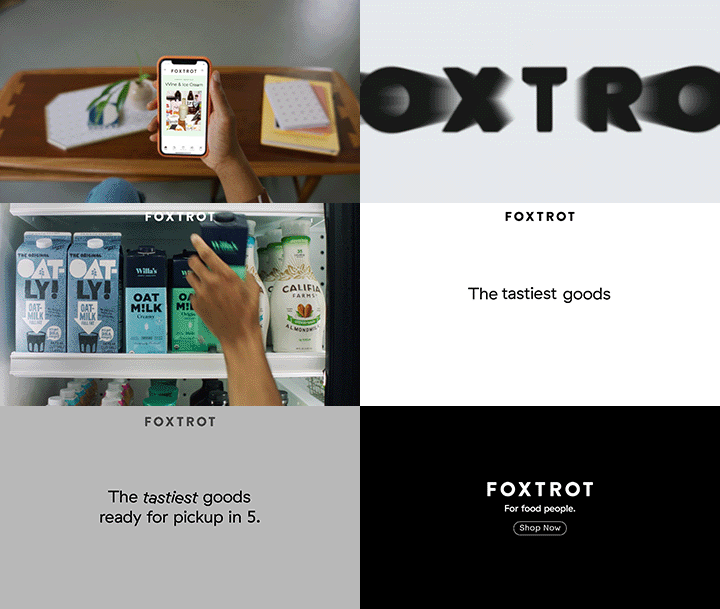
![performance creative foxtrot brand example gif]()
Movement & Video
Stand out in your audience’s feeds with movement-first design, including video, GIFs, animation and more.
-
![Top 5 Best Amazon Storefront Examples]()
Ecommerce Content
Optimize and elevate your PDPs and brand store, from Amazon to TikTok Shop and other marketplaces.
-
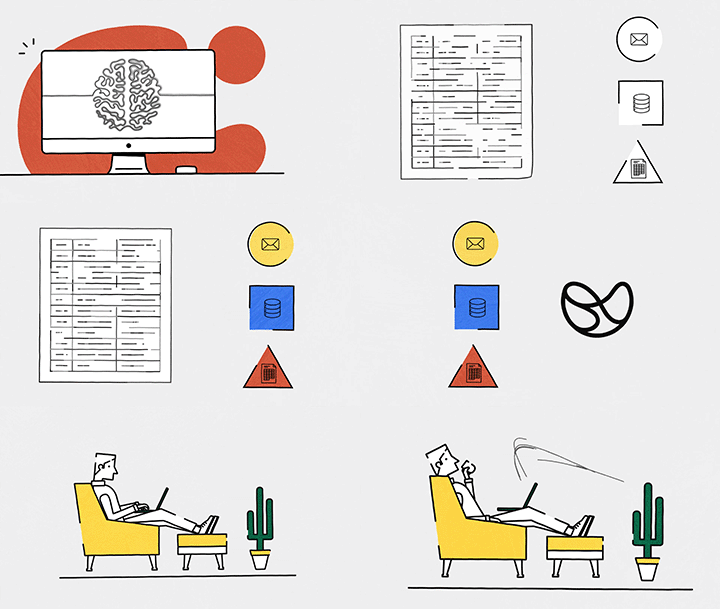
![performance creative work example gif format]()
Illustration & Animation
Educate your target audience with explainers and attention-grabbing graphics, no photography needed.
-
![A studio with film equipment shooting a suv commercial]()
Modular Production Shoots
Build a custom, modular content library to unlock thousands of performance tests with original photo and video assets.
-
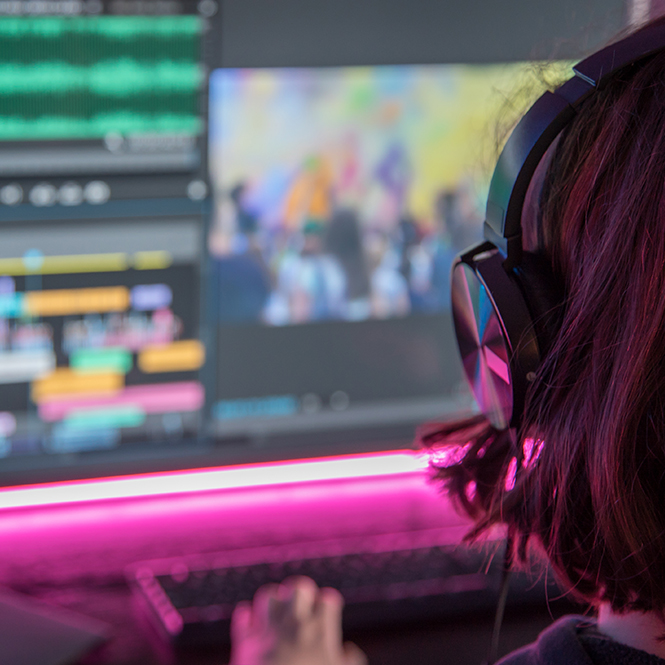
![An employee editing a video on a desktop]()
Channel Customization
Native design and fit-for-format testing helps your assets fit in on CTV, TikTok, YouTube, LinkedIn, Pinterest and more.
-
Want to learn more?
Swipe
For More!
Drag
For More!
00:00
00:00
00:00
Case Study
0:00
Powering 44% more sales for Hatch.


AI in Creative
Text-to-image technology gets our creative in market faster, unlocking multiple benefits in the creative process. In addition to cutting down time spent on concepting and approvals with AI-generated mockups, the technology also speeds up QA with automated content checks based on your brand guidelines, testing taxonomy, and ad platform requirements.
Even the biggest brands have challenges maintaining fresh asset libraries, with long timelines and high cost to shoot new content. Generative AI allows us to get scrappy with existing content and create modularity. From new backgrounds to alternating models, localization to platform-native aspect ratios, the opportunities are endless.
Want to rev up your creative performance? Let's connect.
Integrating test plans with design.
Our performance creative experts are embedded with our media strategists to put data-driven testing at the beginning of the development process, rather than retrofitting tests onto existing brand work. We start with custom learning agendas based on historical performance and your business goals, then bake in our testing dimensions to the creative concepts themselves, from visuals to value props to tone and more. We generate a tailored ad taxonomy to analyze results in aggregate, then fuel iteration quickly. Every decision is data-driven, while keeping your brand’s voice center stage.

Extension of your creative team, partner to your media buyers.
Our creative strategists form an agile bridge between your brand designers and your advertising experts, whether in-house or outsourced. Your creative team benefits from extended capacity, combined with deep knowledge of performance media best practices, while your media marketers can ramp up their testing velocity without sacrificing quality or learnings. ROI is our north star as we adapt your brand concepts and traditional media assets into bespoke digital iterations for each stage of the funnel and each ad placement. We are equally fluent in “art director,” “media buyer,” and “data analyst”—our cross-functional expertise seamlessly integrates us into your team to benefit your bottom line.
-
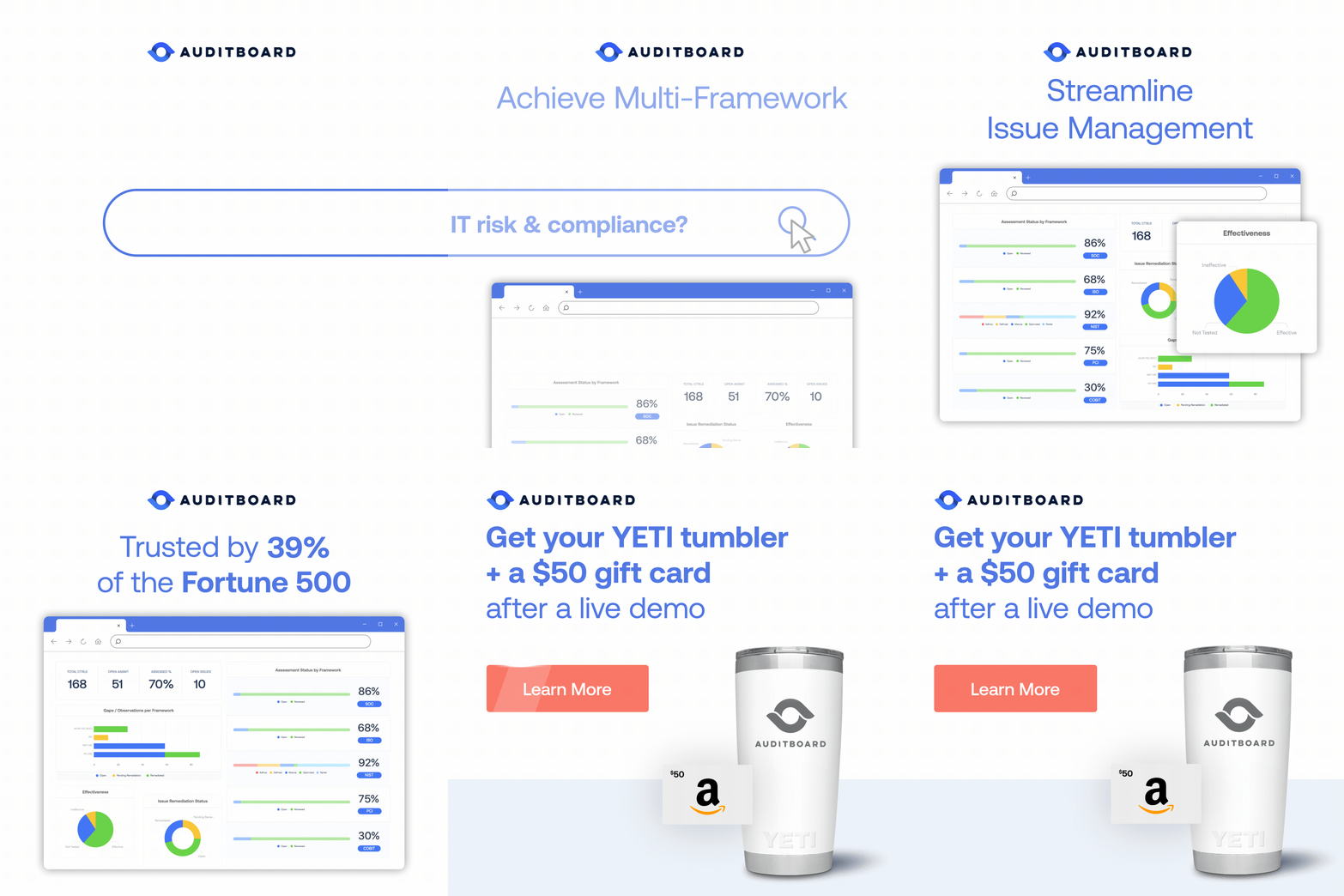
Designing for performance benefits every vertical. • Motion-first testing can help B2B, SaaS, and digital platforms stand out from the pack.
-
-
![Animated B2B SaaS ad]()
-
![Animated ad showing a search query]()
-
![Animated ad showing design software in use]()
-
Breathe life into your SaaS ads today.

Swipe
For More!
Drag
For More!


Let's talk about your ad creative.
Thanks! We'll get in touch shortly.
Before you look around more, we would love to know how you found out about us.
Can’t get enough? Here is some related content for you!
-
![An illustrated rocketship shoots off into space]()
Blog Post
Transform Your Marketing Performance Through Your Creative Planning Process By Robbie Wiedie 4 min read -
![A landscape animated mountainside with mist and fog]()
Blog Post
A Frame-by-Frame Look at How Generative AI Supercharges Creativity By Labs.Monks 6 min read -
![person photographing someone trying clothes on at a store]()
Blog Post
Uniting Brand and Performance in Marketing Strategies By Julia Pacheco 4 min read



Explore more of our Media solutions
A Vision Ten Years in the Making by Media.Monks Milan
A Vision Ten Years in the Making by Media.Monks Milan

Arrivare prima degli altri, comprendere prima che accada, prevedere la next best thing, saper evolvere e cambiare, puntare in alto. Questa potrebbe essere la sintesi di una storia iniziata poco più di 10 anni fa a Milano, tra un gruppo di amici - diventati poi soci - professionisti del settore e appassionati di cinema, pubblicità, comunicazione. Tutto è cominciato da un’intuizione: le agenzie di comunicazione si affidavano sempre a case di produzione esterne per realizzare i loro contenuti, cercando altrove editor, producer, motion designer. In Miyagi, invece, abbiamo da subito proposto un approccio “all inclusive”, dove per inclusività si intendeva anche l’idea di fondere la creatività con la capacità produttiva, realizzando in house quello che gli altri cercavano fuori. In questo modo abbiamo integrato strategia, creatività e produzione sia come nostra forma mentis che come nostro modus operandi, sapendo risolvere problemi subito e prima degli altri, come novelli Mr Wolf della comunicazione. Snelli, veloci, smart. Senza dimenticarci quella coolness che tanto piace a Milano, ma in fondo a chi non piace?
Content first, because content is our king.
Siamo sempre stati una realtà orientata al contenuto. Ma come si arriva prima? Come si anticipa un trend? Seguendo l’evoluzione tanto social, quanto sociale. È arrivato prima TikTok o i suoi contenuti? Perché certi temi diventano dei trend e altri no? Cosa “funziona”? Dobbiamo tenere ben presente che società e social si contaminano a vicenda, sempre. Uno sguardo attento e attivo, partecipe e non solo da spettatori, ci ha guidato nelle nostre scelte e intuizioni. Ma non basta essere creativi. Bisogna avere una struttura in grado di plasmarsi continuamente, mossa dalla voglia di novità e in costante mutamento, capaci così di adattarci allo Zeitgeist del momento, arrivando preparati ai cambiamenti e non facendoci travolgere una volta diventati sistemici. Eccoci lì, con la nostra bandierina piantata sulla Luna prima che diventasse (pure quella) mainstream.
Anticipare i trend significa saperli cogliere ma anche accogliere, senza pregiudizi, con curiosità e interesse.
Quando, ad esempio, per Ray-Ban ci chiesero di trovare un’attivazione social, soprattutto per TikTok - un canale dove il brand non era ancora percepito - che coinvolgesse gli utenti e li portasse a realizzare contenuti user generated, ci ispirammo a quello che a tutti gli effetti sembrava un trend in arrivo, ma ancora inespresso. Ci domandammo: che fanno questi in ascensore? Perché si mettono a fare video in cui ballano tra le porte che si aprono e si chiudono verso il prossimo piano? E se ci mettessimo degli occhiali da sole?
Così, in un pomeriggio su un divano a scrollare TikTok, è nata una campagna esplosiva, di grande successo. C’era tutto, il brand, l’effetto wow, la dinamica di gioco e il perfetto posizionamento del brand all’interno di un contesto come quello di TikTok. Ray-Ban stava parlando la lingua giusta, e si stava pure divertendo.
17.2 Billion Views
3.2m+ new videos created
Engagement rate of 14
Monk Thoughts
Quando la comunicazione di un brand riesce a coinvolgere spontaneamente il target significa che è stato fatto un ottimo lavoro

Pensiero creativo con approccio produttivo.
Back in the days le agenzie offrivano ai clienti contenuti social principalmente statici. Belli, originali, ingaggianti. Ma statici. E i video erano un altro campionato, spesso nemmeno erano richiesti, perché percepiti come troppo complessi sia da realizzare che a livello di sostenibilità economica. La cosiddetta “macchina produttiva” che andava attivata era impegnativa, richiedeva un effort che era visto come lungo nei tempi e dispendioso negli investimenti.
La nostra proposta è sempre stata, invece, quella di un gruppo variegato, un assetto produttivo con la creatività orizzontalmente condivisa tra le diverse professionalità. La fantasia, insomma, era nel team, che vedeva figure strategiche come videomaker, editor, graphic designer, ecc, collaborare insieme.
Così a un cliente potevamo proporre idee laterali, disruptive, cool e ben più dinamiche di contenuti statici. Ma tutto questo era assolutamente affordable. Non era magia, era il nostro valore aggiunto: creatività con assetto produttivo. Qualcosa di diverso da un’agenzia, qualcosa di più di un’agenzia.
Ai tempi quindi il nostro cliente diretto b2b si ritrovava con contenuti video anziché statici, ma a prezzi che difficilmente si potevano trovare in giro, e, allo stesso tempo, i clienti finali e i consumer potevano giovare di contenuti fighi che si distinguevano dagli altri.
D’altronde, oggi come allora, quando affrontiamo un brief non ci lanciamo subito sull’execution di una buona idea, ma facciamo un passo indietro e analizziamo il brand approfonditamente. Questo ci permette di individuare, non solo i problemi di business, ma tutti gli aspetti che hanno portato a quel problema, per poter dare una soluzione creativa che non sia soltanto bella ma anche efficace. E coerente.
Monk Thoughts
Smart production non è solo un claim. È una regola d'oro che ogni agenzia creativa deve seguire se vuole essere rilevante nel mercato contemporaneo.

Smart fa rima con flessibilità.
Oggi sempre di più abbiamo a che fare con un mondo liquido, dove i progetti si fondono con i canali, i brand con i contenuti, e le dinamiche sono ancora più veloci e in continua evoluzione. Non è più tempo per ragionare in una sola direzione, ma bisogna avere uno sguardo ampio, per sapersi declinare in tanti aspetti diversi.
Il nostro essere “smart” è soprattutto una flessibilità produttiva, che si adatta in continuazione a qualsiasi esigenza. Ci sono progetti che iniziano in un modo e poi evolvono in nuove forme e possibilità, come riuscire a non andare in tilt?
Progettando sin dal principio sapendo anticipare problematiche e necessità. Non si può essere rigidi, pena trovarsi bloccati ad ogni step imprevisto. Ed ecco che allora il nostro portarci avanti, vedere lungo, saperci adattare diventa un metodo e una mentalità che riguarda tutti i reparti, dalla creatività alla produzione.
Alzi la mano chi ama gli imprevisti, ma se diventano uno stimolo, allora siamo pronti a metterci in gioco.
In questo modo smontare e rimontare un piano produttivo diventa parte del percorso, un lavoro di team che si adatta alle esigenze e che si pone come obiettivo sempre la qualità e l’efficacia del risultato.
Monk Thoughts
L’approccio produttivo modulare e flessibile da sempre definisce il nostro modo di pianificare e affrontare progetti diversi, nei quali le competenze si fondono e si contaminano. È un valore, un mindset, un posizionamento di mercato.

La tecnologia come super potere.
L’intelligenza artificiale è il grande tema di questi giorni. Il mondo si divide tra chi la vede come la fine dell’umanità e chi come la via verso un futuro migliore.
Per noi l’AI deve essere un alleato, uno strumento al nostro servizio.
Se quando abbiamo iniziato la nostra avventura, oltre 10 anni fa, ci siamo saputi inserire nel mercato come un’agenzia diversa dalle altre, proprio perché il nostro metodo e il nostro “know how” sapeva essere un valore aggiunto, oggi vogliamo essere i primi a saper interpretare le nuove tecnologie, integrandole nel modo in cui lavoriamo.
Invece di averne paura, dobbiamo conoscerla, capirla, studiarla. E farla diventare parte del nostro team.
Ci piace pensare l’AI come un super potere nelle nostre mani, e - proprio perché di potere si tratta - citando Spiderman “da grandi poteri derivano grandi responsabilità”. Tradotto in ambito Monks, l’AI è un’enorme occasione per migliorare la qualità del lavoro. Sta a noi decidere come.
In primis integrandola nella nostra routine lavorativa, come supporto utile e non come scorciatoia. Per un copy è un alleato nel realizzare tante variazioni sul tema, testare idee e contenuti, giocare a generare testi che possano dare nuove ispirazioni. Per un art è un modo per poter viaggiare con la fantasia, spingere l’acceleratore su idee complesse e audaci, potendosi permettere di sfruttare al massimo il tempo. La velocità che ci offre l’AI non è tanto nel fare in meno tempo quello che prima richiedeva ore, quanto invece poter fare di più, potersi dedicare più approfonditamente alle vere priorità, e non bloccare processi creativi per compilare dei documenti.
L’AI si inserisce nel nostro percorso smart e flessibile, perché, oggi come ieri, siamo capaci di essere sempre competitivi e veloci, abbattendo i costi, ma fornendo qualità e originalità. Ecco perché vogliamo essere pronti da subito, prima degli altri, imparando a governarla, gestirla e prevedendone utilizzi e nuovi scenari. In linea con la nostra storia, ci piace farci trovare pronti e sempre preparati.
Monk Thoughts
Giocare d'anticipo, anticipare i trend, per acquisire un vantaggio competitivo. Questa è la vision, lo spirito imprenditoriale con cui abbiamo sempre approcciato alla nostra industry e al nostro business. Con questa prontezza proponiamo ai nostri clienti azioni evolutive piuttosto che soluzioni ai problemi.

We’ll be there for you.
E adesso? Continueremo ad esserci prima degli altri, affamati di curiosità e carichi di entusiasmo. Milano ci ha insegnato a essere sempre aperti al futuro e in ascolto rispetto a quello che accade intorno a noi. Ci è sempre piaciuto arrivare dritti all’obiettivo con idee concrete, coerenti e realizzabili, ma quando ci vuole anche stupire con effetti speciali. Crediamo nel valore del team inteso davvero come gruppo di persone che collabora per condividere insieme una passione comune. È emozionante e una bella soddisfazione allargare oggi sempre di più il nostro gruppo, aprendoci a nuovi mondi e ad un contesto internazionale. Sentirci, dopo averla sempre cercata, un po’ anche noi quella “next best thing”.
A Vision Ten Years in the Making
A Vision Ten Years in the Making
Enjoy this article in Italian as well.
Getting there before others, understanding before it happens, predicting the next best thing, knowing how to evolve and change, aiming high. This could be the summary of a story that began just over ten years ago in Milan, between a group of friends who later became partners: professionals and enthusiasts of cinema, advertising and communication.
It all started with a hunch: communication agencies always relied on external production houses to create their content, looking elsewhere for editors, producers and motion designers. At Miyagi—now Media.Monks Milan—we immediately proposed an "all inclusive" approach, where inclusiveness also meant the idea of merging creativity with production capacity, creating in house what others were looking for outside. In this way we have integrated strategy, creativity and production both as our mindset and as our modus operandi, knowing how to solve problems immediately and before others, like the new Mr. Wolf of communication. Lean, fast, smart, without forgetting that coolness that is so popular in Milan.
Content first, because content is our king.
We have always been a content-oriented company. But how do you get there first? How do you anticipate a trend? You do it by following the evolution of both culture and social media. Which came first, TikTok or its content? Why do certain themes become trends and others don’t? What “works?” We must keep in mind that society and social media always influence each other.
It’s not enough to be creative. We need to have a structure capable of continuously shaping itself, driven by the desire for novelty and constant change, and thus become capable of adapting to the zeitgeist of the moment. There we were, with our flag planted on the moon before it became mainstream.
Anticipating trends means knowing how to grasp them but also welcoming them, without prejudice, with curiosity and interest.
When, for example, for Ray-Ban they asked us to launch a social activation on TikTok—a channel where the brand was not yet established—with the goal of eliciting user generated content, we sought to understand the inkling of what would become common tropes: what are these people doing in the elevator? Why do they start making videos of themselves dancing between doors that open and close on the next floor? What if they put on sunglasses?
Thus, in one afternoon on a sofa scrolling TikTok, an explosive, highly successful campaign was born. It was all there: the brand, the wow effect, the gameplay mechanics and the perfect positioning of the brand within a context like that of TikTok. Ray-Ban was speaking the right language, and it was having fun too. The campaign earned 17.2 billion views, 3.2+ million new videos and an engagement rate of 14%.
Monk Thoughts
When a brand's communication manages to spontaneously involve the target, an excellent job has been done.
Creative thinking with a productive approach.
Back in the day, agencies offered clients mostly static social content. Beautiful, original, engaging—but static. And videos were another category, often not even requested, because they were perceived as too complex both to create and in terms of economic sustainability. The so-called "production machine" was demanding, requiring an effort that was seen as time-consuming and expensive in investment.
Our mindset, however, has always been that of a varied group, a production structure with creativity shared horizontally between each profession. In short, the team saw the power of strategic figures such as videomakers, editors, graphic designers, etc., collaborating together. Thus we could propose lateral, disruptive, cool and much more dynamic ideas to a client than static content. And all this was absolutely affordable. It wasn't magic, it was our added value: creativity with a production structure. Something different from an agency, something more than an agency.
At the time, therefore, our direct B2B customer found himself with video content instead of static, but at prices that were difficult to find elsewhere. And at the same time, end customers and consumers could benefit from cool content that stood out from the others.
On the other hand, when we face a brief we don't immediately launch into the execution of a good idea. We take a step back and analyze the brand in depth. This allows us to identify not only the business problems, but all the aspects that led to that problem, in order to be able to provide a creative solution that is not only beautiful but also effective. And consistent.
Monk Thoughts
Smart production is not simply a claim. It is a golden rule each creative agency needs to follow if it wants to be relevant in the contemporary market.
Smart flexibility.
Today we are increasingly dealing with a dynamic world, where projects merge with channels, brands with content, and the dynamics are even faster and constantly evolving. There is no longer time to think in just one direction; but we need to have a broad outlook, to be able to interpret ourselves in many different aspects.
Our being "smart" is above all a productive flexibility, which continuously adapts to any need. There are projects that start one way and then evolve into new forms and possibilities, how do you manage not to go haywire? By planning from the beginning and knowing how to anticipate problems and needs. You cannot be rigid, otherwise you will find yourself blocked at every unexpected step. And so moving forward, taking a long view and knowing how to adapt becomes a method and a mentality that concerns all departments, from creativity to production.
In this way, dismantling and reassembling a production plan becomes part of the journey, a team effort that adapts to needs and which always focuses on the quality and effectiveness of the result.
Monk Thoughts
The modular and flexible production approach has always defined our way of planning and tackling different projects, in which skills merge and influence each other. It is a value, a mindset, a market positioning.
Technology as a superpower.
Artificial intelligence is the big theme these days. The world is divided between those who see it as the end of humanity and those who see it as the path to a better future. For us, AI must be an ally, a tool at our service.
If when we started our adventure, over ten years ago, we were able to enter the market as an agency different from the others, precisely because our method and our "know-how" could be an added value, today we want to be the first to know how to interpret new technologies and integrate them into the way we work. Instead of being afraid of it, we must know it, understand it, and study it. And make her become part of our team.
We like to think of AI as a super power in our hands, and—to quote Spiderman—"with great power comes great responsibility." Translated into the Monks context, AI is a huge opportunity to improve the quality of work. It's up to us to decide how.
One way is by integrating it into our work routine, as a useful support and not as a shortcut. For copy, it is an ally in creating many variations on the theme, testing ideas and content, and generating text that can provide new inspiration. For an artist it is a way of being able to travel with the imagination, accelerating the creation of complex and daring ideas, allowing oneself to make the most of time. The speed that AI offers us is not so much in doing in less time what previously took hours, but rather being able to do more, being able to dedicate ourselves more deeply to real priorities and not blocking creative processes.
AI is part of our smart and flexible path, because, just like in our early days, we are capable of remaining competitive, fast and cost-efficient without sacrificing quality and originality. This is why we want to be ready immediately, before others, learning to govern it, manage it and foresee its uses and new scenarios. In line with our history, we like to be ready and always prepared.
Monk Thoughts
Playing in advance, anticipating trends, to gain a competitive advantage. This is the vision, the entrepreneurial spirit with which we have always approached our industry and our business. With this readiness, we propose transformative actions to our customers rather than solutions to problems.
We’ll be there for you.
And now? We will continue to be there before others, hungry for curiosity and full of enthusiasm. Milan has taught us to always be open to the future and listen to what is happening around us. We have always liked getting straight to the goal with concrete, coherent and achievable ideas, but we also want to amaze. We believe in the value of the team as a group of people who collaborate to share a common passion together. It is exciting and a great satisfaction to expand our group more and more today, opening ourselves up to new worlds and an international context. After always looking for it, we too feel a bit like that "next best thing."
How to Build a Creative System to Sustain Innovation
How to Build a Creative System to Sustain Innovation


Every organization wants to grow, and the most sure-fire way to do so is through innovation. In the beginning stages of growth, it is easier to be nimble and disruptive but as companies scale, they need to sustain current revenue streams while planning for new ones, all while keeping a keen ear to the ground on what consumers need.
Enterprise companies are seeking management practices focused on strategies, systems and culture that foster creativity. On our first installment of “Talking Creativity” webinars, we touched on the topic of always-on creativity: how leading brands are maintaining high standards of creativity and the ways that creatives, who form the engine for sparking innovations, are building the systems for scale. Below are a handful of takeaways from the session.
Everyone is creative, but some exercise it better than others.
From finance to data, legal to sales, or even science to football, every job function has individuals who are inherently creative. Being creative is never an end, but rather a means to finding solutions. One must continuously hone their skills in creativity. Haniah Omar, Associate Creative Director for Media.Monks Singapore, put it this way: “Remember pretending to be a plane when you were a kid? Bring that amusement back and channel it to solve real-world problems.”
The new-age creatives need to be like Swiss army knives.
Creatives need to dream big but dream quickly. They need to imbibe an iterative approach to creativity by thinking, doing, testing and repeating. Most creatives today need to be “T-shaped people”: experts in one or two fields who also have skills in other ones, and who are able to connect those competencies. For example, if you have pitched your creative idea, you have been a salesman. It’s donning multiple hats but knowing the one that fits rather comfortably.
Organizations must be willing to invest in creativity and innovation.
Global Marketing Director for Paypal Shane Capron shares that his mantra is to innovate or die. He quoted a study he’d read about how 77% of brands could disappear and people wouldn’t even care. The only way of survival is to invest in creativity, knowing that it might not yield results immediately but can help future-proof your business. It’s important to avoid having myopic view. Think of both the immediate and long-lasting effects of creativity and innovation on the brand.
Agility can be a bit of a dangerous word.
Despite needing to be agile in today’s volatile world, Capron warns brands not to get on a race to the finish line, absorbing as much data as possible and applying them into campaigns. That’s when brands turn to a cookie-cutter approach to creativity, making their marketing ineffective and their people burnt out. Creativity comes from unlocking beautiful insights that enable brands to make a significant impact on its consumers now and into the future. Agencies who help brands do that build brand continue to build value amidst disruption.
Simplify the brief.
Capron shares how briefs can be a whiteboard for demonstrating marketer knowledge and includes all the bells and whistles. This is when creativity can be in the ether but not touch real ground. It’s important to really dig into what problem statement the brand is dealing with and what are the mediums they could explore within a time frame. Instead of the nice-to-haves, focus on the north star and try to understand what’s not on the brief. Those cues are important to brand learning.
Monk Thoughts
The hardest briefs are the ones with no guardrails.

Make space for collective creativity.
We pride ourselves for offering brands seamless access to a diverse range of global talent, agnostic of where your business is. This comes from the understanding that collective creativity is truly a superpower and that sharing insights is key. Organizations must create a system for creativity and innovation by combining people and teams with three individual factors: plasticity (drive to explore), divergence (high-degree of non-conformity and impulsivity) and convergence (ability to be precise, conscientious and persistent by seeing interdependencies). Omar believes putting your soul out there as a creative is scary but teamwork makes it lesser so.
"A great innovative idea can come from anywhere." Shane Capron, Global Marketing Director, PayPal
Seize the areas ripe for creativity.
With digitalization and now virtualization, creativity will play a key role in riding the future. Capron warns brands to not just fit into mediums for the sake of it. Instead, they should define their purpose and then choose the medium that best supports it. Creativity is finding the right role brands can play to add value to the customer. We’ve mapped out different virtual realms to help brands discover ways they can authentically present themselves in our Map of The Metaverse worlds.
Finally, the panelists shared that the ultimate role of creativity is about being meaningful and influencing change—be it in changed behavior, identity, experience and/or growth. Awesome work ultimately creates memory recall and has a lasting impact on the minds of consumers. Thus, exercising creativity is knowing the role you play in shaping the future.
Get Creative and Get Out of Your CX Rut
Get Creative and Get Out of Your CX Rut
A new Forrester report by Jay Pattisall, unveiled at the start of Cannes Lions, highlights how the pursuit of customer experience (CX) as a go-to strategy has in fact inhibited growth for many brands. Instead, brands must invest in creativity (and identify the right partners to help them do so) to achieve higher returns. It’s welcome news at Cannes, which celebrates creative excellence and serves as a benchmark for best-in-class communications—and MediaMonks is proud to have been interviewed alongside other agencies for the report.
Pattisall relates CMOs’ focus on CX to a diminishing prioritization of creativity; one finding in his Forrester report is that “Every brand offers the same digital experience because they all address the same customer needs, use the same technology platforms, and design for the same mobile use case.” Brands shouldn’t put all their eggs in one basket by focusing purely on function, but place greater attention on offering creative experiences.
A recent article published by Marketing Week agrees that brand creativity is on an overall decline, yet is a key indicator of success: 67% of companies with top ratings on McKinsey’s Award Creativity Score—measuring quantity, variety and consistency of Cannes Lions awards won—have above-average growth, according to the article.
Monk Thoughts
Every brand offers the same digital experience because they all address the same customer needs.
What does this mean? Creativity might not be immediately quantifiable, but it can go a long way in increasing enterprise value. MediaMonks Global Executive Creative Director Jouke Vuurmans has long spoken out against brands failing to take advantage of the creative opportunities available to them. He has noticed a “suburbanization” of design where bold brand identity has taken a back stage to sanitized interfaces that tick off the same boxes. Because digital interfaces are often the most common—or even first—settings in which users will engage with a brand, this results in a lot of wasted potential for brands to differentiate themselves and deliver on the brand promise.
Building content and experiences requires input from many people across the organization, each perhaps pursuing their own goals—but they must collaborate to ensure their efforts are on the same page. “Just because so much focus is on digital doesn’t mean we should ignore brand within this relentless creation and distribution of content,” says ter Haar as quoted in the Forrester report, “The Cost of Losing Creativity,” highlighting the importance in remembering that even the most solutions-oriented approach shouldn’t dismiss the brand-building opportunities of creativity.
The Interface is the Brand
At MediaMonks, we believe every engagement that users have with a brand is an opportunity to represent its core products and services. Most apps that exist to fulfill a specific function essentially look and feel identical, lost in a sea of sameness where differentiating factors are slight, if they exist at all. This is especially true in travel brands, for example: any airline app will let you book a flight or check in with a digital boarding pass. But brands can stand out by fusing creativity and technology to fulfill a wider purpose. The Aeroméxico app is a great example of this by offering smart content based on users’ itineraries, helping them easily find offers most relevant to their trips.
Monk Thoughts
People underestimate the creative value of always-on communication.

The use of highly relevant and targeted personalized content shows how even the smallest interactions can make a big impact on the user experience—and those interactions directly translate into brand loyalty. “Creative experiences that embed the brand’s purpose and values within a tech-fueled solution connect the uniqueness of the brand, the emotional needs of its customers, and the convenience of technology,” writes Pattisall in the Forrester report.
We agree. While brands have come under great pressure to engage their consumers through always-on content, it’s become easy to view small pieces of content as disposable or having limited impact on the overall consumer experience. “People underestimate the creative value of always-on communication,” cautions ter Haar. “Just because it’s 6 seconds on Facebook doesn’t mean you can’t think about distinction.”
Drive Purpose Across the Ecosystem
A remedy for unlocking the creative potential in any touchpoint or piece of content is to begin thinking in terms of ecosystems. The user journey extends beyond individual channels and platforms. Likewise, brands should take a more holistic approach at the creative experiences they provide. “We spend a lot of time thinking about creativity as a broader term—something as part of UX, digital design, flow—across anything that’s building people into an ecosystem,” says ter Haar. “How does the work we do for brands lock people into an ecosystem?”

Forrester's report on the importance of creative experience released at the Cannes International Festival of Creativity, shown above.
Take grilling brand Weber, who also realized audiences were beginning to care less about objects—like grills—and gravitate more towards experience. This shift in consumer focus provided Weber with an untapped opportunity: how could they use creativity through content and experience to position grilling (and by extension, their brand) at the center of social experiences that consumers crave?
The result is an all-encompassing digital ecosystem that serves not only as a place to learn about grilling products, but to seek out and discover inspiration about grilling as a lifestyle. By infusing this promise across an ecosystem that encompasses personalized web content, connected apps, interactive demos, in-person experiences and more, Weber has achieved a compelling digital ecosystem that accounts for a griller’s every need, infusing emotion and aspiration into every step of the experience.
Monk Thoughts
We spend a lot of time thinking about creativity as a broader term, across anything that’s building people into an ecosystem.
In his Forrester report, Pattisall highlights the importance of infusing creative problem solving at the beginning of every creative process: “Rather than bolting creative on at the end of the process as an established look or defined list of deliverables, initiate the project with creative problem solving to help define the problem and craft a solution at the start,” he writes.
It all boils down to instilling your work with a sense of purpose. When working with clients to narrow their efforts and align those goals with moving the business forward, we enjoy quoting the NASA janitor who proudly told President Kennedy that he was helping to put a man on the moon. A similar sense of purpose should manifest from every step of the creative process, at every level of an organization and at every touchpoint at which users engage. Such an approach ensures customer experiences differentiate a brand and uniquely affect consumers to strike a stronger, longer-lasting connection.
creativity brand creative branding brand strategy creative content digital sameness digital ecosystem creative design