Choose your language

Choose your language

The website has been translated to English with the help of Humans and AI

Dismiss

Build Your Data Game Plan with Insights from Superweek

Build Your Data Game Plan with Insights from Superweek

Data Data, Data Privacy & Governance, Data Strategy & Advisory, Death of the cookie, Industry events 1 min read
Profile picture for user mediamonks

Written by
Monks

Headshots of Doug Hall and Julien Conquet

The data landscape is no stranger to tectonic shifts that curtail brands' control. From Google's announcement to push back cookie deprecation once more, to Apple's app tracking transparency, to differences in data regulation around the globe, emerging bumps in the road continue to challenge plans to provide personalized user experiences. These issues—and more—were discussed at the 2022 Superweek Analytics Summit, a global community of digital marketing professionals, analysts and thought leaders of the measurement industry.

Now, marketers can relive the excitement and ideas of the conference (or encounter them for the first time) in a new documentary. THE GAME features insights from speakers—including Vice President of Data Services and Technology (EMEA) Doug Hall and Senior Director of Analytics, EMEA Julien Coquet—to discuss how recent developments in data collection, activation and regulation are reshaping the strategies of brands and their partners.

For a clear understanding of where the industry is headed, find the documentary in full below. Look forward to more Superweek next year, running from January 30 to February 3 in Egerszalok, Hungary!

Monk Thoughts It's like the classic physics three-body problem, where we have tech, regulation and public opinion are the three bodies. The physics problem states that their orbits are so complex in the system that you cannot predict where these entities are going to go.
Doug Hall headshot
Get insights from this year’s Superweek Analytics Summit, a global community of digital marketers, analysts and thought leaders of the measurement industry. data analytics google Google Analytics data privacy third-party cookies first-party data Data Data Privacy & Governance Data Strategy & Advisory Industry events Death of the cookie

There’s More Time Before the Cookie Crumbles – But Don’t Rest Yet

There’s More Time Before the Cookie Crumbles – But Don’t Rest Yet

Data Data, Data Privacy & Governance, Death of the cookie 2 min read
Profile picture for user doug_hall

Written by
Doug Hall
VP of Data Services and Technology

An illustrated laptop with a cookie on it

Call it déjà vu: Google Chrome has delayed third-party cookie deprecation to 2024. According to Google, there is a “need for more time to evaluate and test the new Privacy Sandbox technologies before deprecating third-party cookies in Chrome.”

We might speculate as to other reasons why the deadline has changed, but we can be confident that—whether from a privacy or commercial perspective—the proposed solutions haven’t met expectations. This is actually encouraging because we should expect a 2024 solution that doesn’t compromise on privacy or commercial performance.

But what does this mean for digital marketing? What changes? How do we position ourselves with this delay? There are things we know and things we don’t, but we can prepare for both. And one thing is for certain, the worst possible tactic is doing nothing. 

Here’s what we do know:

  • Marketing on Google owned and operated properties (Search, YouTube and Maps) remains unchanged given its use of first party, rather than third party cookies.
  • Audience (re)targeting, measurement and attribution will change, but we don’t know when or how.
  • Life goes on within walled gardens, but with an increased focus on the value of first-party data across industry leaders like Google, Meta, Amazon, LinkedIn and TikTok.
  • Elsewhere in the industry, there’s an expectation that the adoption of so-called “solutions”—clean rooms, ID resolution, SaaS marketing clouds, contextual—will slow down.

We agree that increased first-party data focus is the best move for marketers and agencies. This is a gift that cements the foundation of fully consented first-party data as part of the overall data strategy. 

The postponement is not an excuse to just keep doing digital marketing as we’ve always done it.  That’s a “fat and happy” symptom and a one-way ticket to extinction. Indeed, any lost opportunity to explore and learn new avenues is a waste.  That’s not to say we need to spend this extra time trying to maintain the status quo. Embracing regulatory and tech change as a driver rather than a business impediment is a competitive advantage.  

Here’s a recap of the Death of the 3P cookie timeline:

  • 2018: DoubleClick ID files redacted
  • 2019: Privacy Sandbox is announced
  • 2020: Third-party cookie deprecation announced (targeting 2022) 
  • January 2021: Google commits to Privacy Sandbox and Federated Learning of Cohorts (FLoC)
  • March 2021: Google announces that it will not allow “alternate identifiers”
  • June 2021: Google announces Chrome will stop supporting 3P cookies by end of 2023
  • July 2022: Google Chrome has delayed 3P Cookie deprecation to 2024

How many more delays do we face? It doesn’t matter.  We’re already in a precarious situation that common sense says we don’t leave untouched.

One of the most recognizable personalities in the digital analytics industry, Avinash Kaushik, said, “Most browsers have allowed you to block third-party cookies since the dawn of the internet. A cluster of people (like me) have taken advantage of that option.” (Chrome is the last of the most popular browsers to have no restrictions on third-party data storage like cookies). “So your current third-party cookie tracking based audience and measurement at the minimum already has a signal quality degradation built in,” Kaushik goes on to say.

These are the unignorable signals of change. More than ever, be prepared.

Google Chrome has delayed third-party cookie deprecation to 2024. Find out what this means for digital marketing. Google third-party cookies first-party data data privacy privacy Data Data Privacy & Governance Death of the cookie

Can Topics Enable Personalization at Scale?

Can Topics Enable Personalization at Scale?

4 min read
Profile picture for user Benjamin Combe

Written by
Benjamin Combe
Senior Manager, Analytics and Optimization

two images of people: on the left, a woman looking at her phone. On the right, the same woman smelling perfume at a store

Google have recently announced their newest proposed mechanism for enabling interest-based advertising following the phasing out of third-party cookies, called Topics. Topics replaces Google’s previous proposal, Federated Learning of Cohorts (FLoC), and aims to improve on that proposed solution based on stakeholder feedback.

With Topics, Chrome determines several thematic interests, like “Fitness” or “Travel,” based on a user’s recent browsing history. Topics are calculated and stored entirely on a user’s device without communicating with Google’s servers. They are designed to be transparent and viewable by the user, as well as easily interpreted by potential advertisers via a JavaScript API. This makes Topics a future-proofed solution for simply and clearly providing user’s browsing interests for site owners and advertisers, without exposing detailed browsing history or cookie-based identifiers.

While Topics are aimed primarily at enabling advertisers, it could help with better onsite actions using tools like Google Optimize, Adobe Target, Optimizely, or other onsite testing and personalization platforms.

Brands Need to Look Beyond the Third-Party Cookie

Currently, most optimization or personalization tools cannot be used directly to customize onsite content based on interests. If they can, they are reliant on data management platforms (DMPs) and other brittle solutions that continue to require soon-to-be-deprecated third-party cookies. 

For example, Google Optimize cannot be used directly based on interest or affinity information inferred from third-party cookies. Instead, interest data provided by users who consented to third-party cookie tracking is currently available in Google Analytics for reporting and analysis purposes. 

Since this data is not available for use in audiences shared with Google Optimize, one is unable to target or personalize onsite experiences based on it. Alternatively, while Adobe Target may be able to access this data through API integrations with DMPs, it is also dependent on soon-to-be deprecated third-party cookies, making the data integration moot.

Chrome’s implementation of the Topics API meanwhile presents a ripe opportunity for personalization tools to leverage user interests, agnostic of the third-party ecosystem. In particular, a user’s interest topics will be stored entirely on the browser and accessible via API, meaning that they can be surfaced to a website or other API caller without reference to an opaque third-party cookie. 

This change enables accessibility of users’ Topics directly within the browser, rather than having to be processed on Google’s servers—meaning that a tool like Google Optimize will be able to query and read a user’s Topics in real time when they land on a website, leading to better onsite personalization in a first party context on the browser.

How Topics Can Enable Post-Cookie Targeting

Imagine a user visits our site www.ecommerce.com. As they land on the site, a query to the Topics API returns a relevant interest for that user is “Fitness.” We can surface that topic to an optimization/personalization platform (e.g. Optimize or Target) for targeting, resulting in the optimization platform changing the homepage banner to direct that user to our Fitness product category. 

In this way, Topics and a personalization engine could be used to:

  • Update landing page copy and imagery to be more relevant
  • Personalize a homepage banner to hero relevant product categories
  • Feature content or articles more relevant to a user’s interests 
  • Feed personalized recommendations to users

Pending the exact specifications of how Topics are eventually rolled out, even more advanced use cases may be made possible via storing and linking a user’s topics with a first-party identifier. A first party identifier could be cookie based for anonymous users (e.g. a cookie ID like Google’s client ID), or an identifier linked to a known/authenticated user (e.g. a customer ID, a hashed email address etc). In the above example, it may be possible for the user’s “Fitness” topic to be tracked against their first party identifier in an Analytics tool (e.g. stored alongside a customer ID in Google Analytics). 

Once associated with a user’s first-party Universally Unique ID (UUID), this topic could then be integrated with CRM data and used to power relevant marketing automation emails. The topic could also be used to generate more relevant retargeting audiences (e.g. via customer match) or be used to power dynamic creative. Personalization to that level now seems like a hygiene factor with a recent McKinsey report sharing how 71% of customers  expect at least a basic level of personalization. However, a fine line needs to be maintained in how data informs the creative process rather than dominates it. 

Prepare for Cookie Deprecation Now

Topics are still a very new proposal from Google that has been released in order to prompt discussion and feedback, meaning that the actual Topics API has not been thoroughly tested by partners and stakeholders yet. While we can speculate on use cases and possible applications to personalization, all of the above will have to be tested thoroughly as the Topics API is rolled out by Google. 

While we await more detail and further evolution of the Topics API proposal, businesses can partially execute on these use cases by deploying a platform to test and personalize on their website, as well as targeting affinity/interest audiences either via media targeting or profiles available via data management platforms. This would mean a proactive approach to adapt to the eventual deprecation of third-party cookies. Topics may represent a way forward for providing more relevant customer experiences (both onsite and advertising) in a more robust, privacy-centric way.

While Google’s Topics are aimed primarily at enabling advertisers, it could help with better onsite actions using tools or testing and personalization platforms. While Google’s Topics are aimed primarily at enabling advertisers, it could help with better onsite actions using tools or testing and personalization platforms. personalization digital platforms Google third-party cookies

Welcome 4 Mile, Building Custom Data Experiences That Meet Business Objectives

Welcome 4 Mile, Building Custom Data Experiences That Meet Business Objectives

3 min read
Profile picture for user mediamonks

Written by
Monks

Media.Monks and 4 Mile Analytics logos in white on a black background

The year may have just begun, but we already have exciting news to share. Today, we’re welcoming a new addition to the company: 4 Mile Analytics. 4 Mile is a full-service data consultancy that specializes in custom data experiences. Their expertise lies in helping brands drive better decision-making through best-in-class data analytics, engineering, UX design and product management—and more colloquially, the team is regarded as the go-to partner for Looker, a favored enterprise platform for business intelligence.

00:00

00:00

00:00

The team is led by Nick Fogler, Founder and CEO; and Sam Baron, COO. Founded in 2017, 4 Mile’s relationship with Looker runs deep: Fogler previously led Looker’s engineering team and supported the company’s transition into a larger-scale enterprise before founding his own. Since then, 4 Mile has supported some of the biggest brands to accelerate their strategic initiatives.

The Rising Need to Translate Analytics into Action

As brands transition away from third-party data to first, much has been said about effective data collection—but that’s only half the battle. Many brands are already sitting on mountains of data that isn’t actionable, and the value of that siloed or hard-to-access data pales in comparison to its frictionless counterparts. Throw in the fact that data platforms and dashboards are often overly technical and opaque, and it becomes clear that focusing merely on data collection—not its usability—simply isn’t enough.

Realizing this need, Looker has long been a favorite solution by our data and digital media practice. Others agree; Looker is now regarded as a core part of the Google Cloud Platform (GCP). What makes it special is that teams using the platform can easily integrate data from various sources into intuitive data experiences that are custom-built to their specific requirements. This functionality solves the crucial need of pulling together insights that are accessible and actionable not only to teams in marketing, but also those across the organization.

A Reputation for Excellence 

4 Mile’s significant history and relationship equity with Looker builds upon our own expertise with the platform. Before they worked directly with clients, 4 Mile was hired by Looker as an extension of its product development team. Through this partnership, they developed custom visualizations and third-party integrations in the Looker product code base, deepening their already intimate understanding of the platform. And while 4 Mile’s direct-client relationships continue to grow, solid collaboration with Looker Data Services remains a cornerstone of the business. 

Still, 4 Mile’s proficiency isn’t limited to Looker. By leveraging strong relationships with leading technology platforms like Fivetrain, DBT, Snowflake, Exasol and Keboola, the team has developed a wide breadth of solutions for the modern data stack:

  • Designing and building custom data experiences that blend analytical and operational capabilities.
  • Transforming raw data into business-ready data that allows end-users to explore, curate and take action on data insights.
  • Designing and employing modern data warehouse solutions to support business intelligence.
  • Orchestrating movement of high-volume batch and real-time data across the enterprise.

A Shared Human-Centric Approach

Both Media.Monks and 4 Mile believe that a human-centric approach to technology opens the path to better customer experiences. At the same time, successful data-driven strategies must begin with a strong foundation to build deeper, more meaningful connections with audiences. For 4 Mile, this principle has inspired a people-first mentality—valuing diversity, empathy and respect—that informs the team’s approach to partnership. This includes providing training and documentation to enable internal teams to execute new data solutions, as well as building products that realize specific use cases.

With 4 Mile now a part of our team, their existing clients will gain access to a global community of talent that excels not only in data and digital media, but also content creation and tech services. Meanwhile, Media.Monks clients gain even greater access to a powerful bench of analytics and machine learning experts, providing greater scale, deeper data analysis and more data-driven decision-making. This allows for an even more seamless activation of first-party data, unlocking highly effective and engaging experiences across the customer journey.

Challenges from all ends—government regulation, tech platforms and public sentiment alike—suggest 2022 will be the year in which modern brands must adapt their data strategies once and for all. Together with 4 Mile’s exceptional Looker and GCP expertise, we’re excited to empower brands on their journey to achieve top-line business goals at an even greater velocity.

We’re welcoming a new addition to Media.Monks: 4 Mile Analytics, a full-service data consultancy that specializes in custom data experiences. We’re welcoming a new addition to Media.Monks: 4 Mile Analytics, a full-service data consultancy that specializes in custom data experiences. data data analytics third-party cookies data driven technology
`

Data Privacy

How to Get Ahead of Privacy Risks Now, An Ad Age Sponsored Online Event.

headshots of webinar speakers for mediamonks webinar on privacy regulations

00:00

00:00

00:00

What You'll Learn

How to stay ahead.

With movement in regulation, legal challenges to major tech companies, and monthly changes from platform players, many questions have arisen from marketers about what the implications are for their strategic decisions. Our guests Chris Martin, Co-Founder of Media.Monks and Zach Edwards, digital privacy expert and founder of boutique analytics consultancy Victory Medium join host Anna-Belle Buyse, Enterprise Consultant Manager at Media.Monks for a discussion on the important upcoming milestones that will alter your marketing.

Walk away knowing:

  • What we know about regulation now and where it’s headed
  • Where government and platform policy will clash with widely used ad technology in the near future
  • Ways to evaluate risk in your marketing strategy
  • What forward-thinking brands have done to get ahead of the curve
Monk Thoughts Data is not the new oil. Consumer data–at scale–is actually the new nuclear.
Portrait of Chris Martin

Want to talk data? 
Get in touch.

Hey?

Please fill out the following quick questions so our team can get in touch with you.

Can’t get enough? Here is some related work for you!

Key Takeaways for Brands from the Adobe Summit 2020

Key Takeaways for Brands from the Adobe Summit 2020

5 min read
Profile picture for user mediamonks

Written by
Monks

Key Takeaways for Brands from the Adobe Summit 2020

It’s fitting that the premier digital experience conference went all-digital this year, as just one of many tech conferences that have rapidly adapted their strategies in light of the COVID-19 pandemic—building the on-demand streaming alternative in just a month. Pictured above, you’ll see MediaMonks Founder Wesley ter Haar speaking at Adobe’s last tentpole event, Adobe MAX.

This urgency for stronger digital experiences served as a key theme for the conference. “We are clearly living in unprecedented times,” said Adobe Chairman, President and CEO Shantanu Narayen. “COVID-19 is changing everything about life and work as we know it. Now more than ever, we must come together as a community to share best practices to digitally engage with customers.”

During the keynote address, Adobe unveiled new tools and updated features that can help brands provide a better customer experience and reach their business goals: most notable is the Digital Economy Index, a tool that analyzes more than a trillion online transactions across 100 million product sales to help brands understand, act on and anticipate digital commerce trends. In addition to that and new updates to Adobe Experience Cloud Manager, Narayen called for a stronger relationship between CMOs and CIOs as brands spend 2020 refocusing their digital strategies and seek new ways to connect all known user data across the customer journey.

Digital is Table Stakes, and Brands Need to Adapt

 “Whether you’re replacing an in-person conference with a digital event, or working to engage with your customers virtually, the theme is the same: digital is revolutionizing how we interact with each other,” said Narayen. This sentiment has become all the more obvious in the past month, in which social distancing policies have shed a spotlight on the gaps that brands must fill in their digital transformation efforts and the need for emotionally resonant creative digital experiences.

Monk Thoughts Digital is revolutionizing how we interact with each other.

Today, customer experiences are much more than just delivering delightful and relevant experiences in real time, it is supporting the users’ needs in an almost completely digital world. From e-commerce services bringing products to our door, to paperless contracts and virtual offices, or digital tools enabling students to continue with their education, “digital isn’t only changing and reshaping our daily lives, it’s driving the economy,” says Narayen.

This change isn’t exactly new, but has become a moment of reckoning for brands. “Everything has been moving remote and online in one way, shape or form over the years,” says Henry Cowling, Managing Director at MediaMonks San Francisco, in our most recent report on reactivating customer obsession. “This is the chance for brands to really look at that, and reinvent how the digital experience looks and feels, because they’ll need to do it eventually.” 

The Moment for Real-Time CX is Here

Prioritizing customer experience management has become fundamental in a world dominated by digital interactions. Users expect more and demand more from brands, and they do not have the patience to wait for it, they want it all right now. Brands need to understand and use their data to craft a personalized and relevant experience that their users will enjoy in real time.

Monk Thoughts If you think you’re behind your competition, chances are you’re probably not.

In one breakout session, Adobe Principal Product Manager Trevor Paulson reassured audiences, “Almost everyone is trying to better understand the entire customer journey across all their channels … So, if you think you’re behind your competition, chances are you’re probably not.” Among the top challenges in customer journey analytics he identified are disconnected data, not enough data expertise and inability to action insights—each of which inhibit a brand’s ability to meet its audience’s needs throughout the full, end-to-end brand experience.

Cross-functional collaboration helps brands gather together diverse knowledge and expertise to bridge these gaps. Successfully achieving data-driven creative workstreams is key to building the creatively differentiated experiences that build brand love, assisting consumers wherever and whenever it’s most needed along the CDJ.

Get Ready for a Cookie-less Future

Third-party cookies have been a key part of digital experiences for a long time, but that is coming to an end. With browsers having banned them gradually over the last years, Google announced a few months ago that it will eliminate all third-party cookies in 24 months. We are entering a new era of cross-domain personalization enabled only for known users.

“Cookies aren’t that good for marketing, they overstate how many people brands are actually reaching, they lead to wrong demographic targeting, they miss conversions that are happening, and they overrepresent the individual you are trying to target,” said Justin Merickel, VP of Adobe Advertising Cloud. “They haven’t been great at providing the value that they were set out to do.”

“Delivering personalized experiences at scale requires rethinking the approach to data,” says Pari Sawant, Director of Product Management at Adobe. First, they must remember that personalization should aim to truly help consumers; and to execute on that need, they must realize the power of context over relentless retargeting.

Monk Thoughts Delivering personalized experiences at scale requires rethinking the approach to data.

Knowing that brands will soon not be able to use third-party data, which today may make up a good portion of all their data points, they need to rethink how they use it to build truly valuable experiences by owning, operating and maximizing first-party data. Data clean rooms offer one interesting solution; as brands aim to reinvent their CX strategies or digitally transform in a fast-changing digital landscape, brands can lean on their creative partners to highlight new technologies as they emerge and determine which make the best fit.

Customers Expect Control All Across their Journey

For decades consumers were forced to stay static and receive an experience where they had no input whatsoever, but with the emergence of digital and mobile environments, they have become empowered, and they know it. Consumers expect to have a say on everything, from the decisions they make, to the content they consume, at every single touch point. 

For decades, consumers have had little control over how their data was used by brands. But with brands focused on a need for building first-party relationships a cookie-less world, an opportunity emerges for them to empower customers. to become active participants in the creative experiences they consume. There needs to be a clear value exchange for users to part with their data, further driving home the need for content to be assistive. This approach requires brands to take ownership of the customer relationship.

The bar has been raised for consumers and brands alike, particularly when it comes to digital native newcomers who have forged deep relationships with consumers by aligning purpose with data-driven creativity. “The experiences they receive in the applications and services they use online every day have led them to demand the same from every brand they deal with,” said Nick McLachlan, Product Marketing lead for Advertising Cloud in APAC at Adobe. Between 65% and 70% of consumers expect highly contextual, personalized experiences in real time.

Brands face a unique challenge in order to fulfill the customers’ expectations; they need to create strategies that cater to those needs across every channel, taking a user-centered approach to how they do business. These challenges have come to a head in a year where fractures in brands’ existing digital strategies are apparent. Thankfully, the Adobe Summit streaming platform goes live at the perfect time for brands to begin refocusing their strategies for the rest of the year and beyond.

How can brands adapt their digital customer experience strategies during the COVID-19 pandemic and for the long term? We share these key takeaways from the Adobe Summit 2020. Key Takeaways for Brands from the Adobe Summit 2020 Digital customer experience is here to stay. Brands need to adapt quickly.
brands customer experience digital digital experience consumers cookies third-party cookies Adobe Adobe Summit Adobe Summit 2020 covid-19 coronavirus pandemic

The Sun is Setting on Third-Party Cookies and It’s Time to Move with the Market, Not Against It

The Sun is Setting on Third-Party Cookies and It’s Time to Move with the Market, Not Against It

4 min read
Profile picture for user simon_harris

Written by
Simon Harris

The Sun is Setting on Third-Party Cookies and It’s Time to Move with the Market, Not Against It

Google Chrome to Drop Third-Party Cookies

On January 15th, Google announced that third-party cookies would be blocked in Chrome by 2022. Over the past 24 months, increasingly aggressive iterations of Intelligent Tracking Prevention (ITP) in Apple products have challenged the third-party cookies used for measurement and targeting. However, Chrome currently commands a majority of desktop browser share globally, which makes Google's announcement significant for the industry. In the next 24 months, third-party cookies will become effectively unusable for advertising measurement.


browser-market-share-dec-2019.png


Based on current usage, by 2022 the market will be dominated by browsers that block some or all third-party cookies by default.


The Next Two Years

With this announcement and self-imposed deadline, Google will have to work out how their own ad platforms will interface with third parties, such as ad exchanges. The programmatic advertising ecosystem of which Google is a significant part of is based on third-party cookies. As things stand, Data Management Platforms (DMPs) will be significantly challenged. Likewise, view-based and today's multi-touch attribution (MTA) solutions are effectively moot. Many forms of third-party data, already challenged by government regulations like GDPR enforced in May 2018, will cease to exist.

Google has proposed a mechanism to allow for anonymized and aggregated measurement called the Chrome Privacy Sandbox which was announced in August 2019.


Sand What?

In August 2019, Google announced an initiative aimed at evolving the web with architecture that advances privacy, while continuing to support a free and open ecosystem. They call it a "Privacy Sandbox." Right now, these constitute a set of proposals for browser APIs that will eventually serve as privacy-preserving technical alternatives to third-party cookies.

There aren’t any tangible tools inside the Privacy Sandbox—at least not yet. Google said in their blog post that it aims to "eventually" build these tools with the industry over the next two years to ensure interoperability in the programmatic and ad tech ecosystem.


How Will We Target Audiences Without Cookies?

Third-party cookies have been used for everything from frequency management to behavioral targeting. How might marketers continue to employ these tactics moving forward?

Audience-based and user-level targeting have been the cornerstone of programmatic buying over the past decade. Indeed, the very concerns around ad targeting and user privacy contributed to Google's announcement.

There is every reason to believe that targeting will still be possible, as will attribution, but the mechanisms will need to radically change. The scale and scope of addressable audience targeting will decrease and advertisers may turn to federated learning, contextual targeting, and other techniques to drive business performance through programmatic platforms. Another suggested approach would be for the browser itself to segment audiences based on their browsing behavior, and once there are a sufficient number of other browsers in this interest group an advertiser could target them.

What about frequency management? In October 2019 Google introduced frequency management across bid requests without a third-party cookie associated with them. Instead, Google employs machine learning to analyze behavior from across their ad inventory and provide an estimate with a high degree of confidence the number of impressions an individual had been exposed to.

Lastly, publishers with first-party audience relationships are poised to fill in audience targeting gaps left by the removal of third-party data cookies. For example, this would include a publisher with a paywall that requires a user to login to read content. Publications are likely to sell more curated inventory packages (here's an example from Meredith), much of which will be available programmatically via private marketplaces (PMPs) and programmatic direct/guaranteed deals.
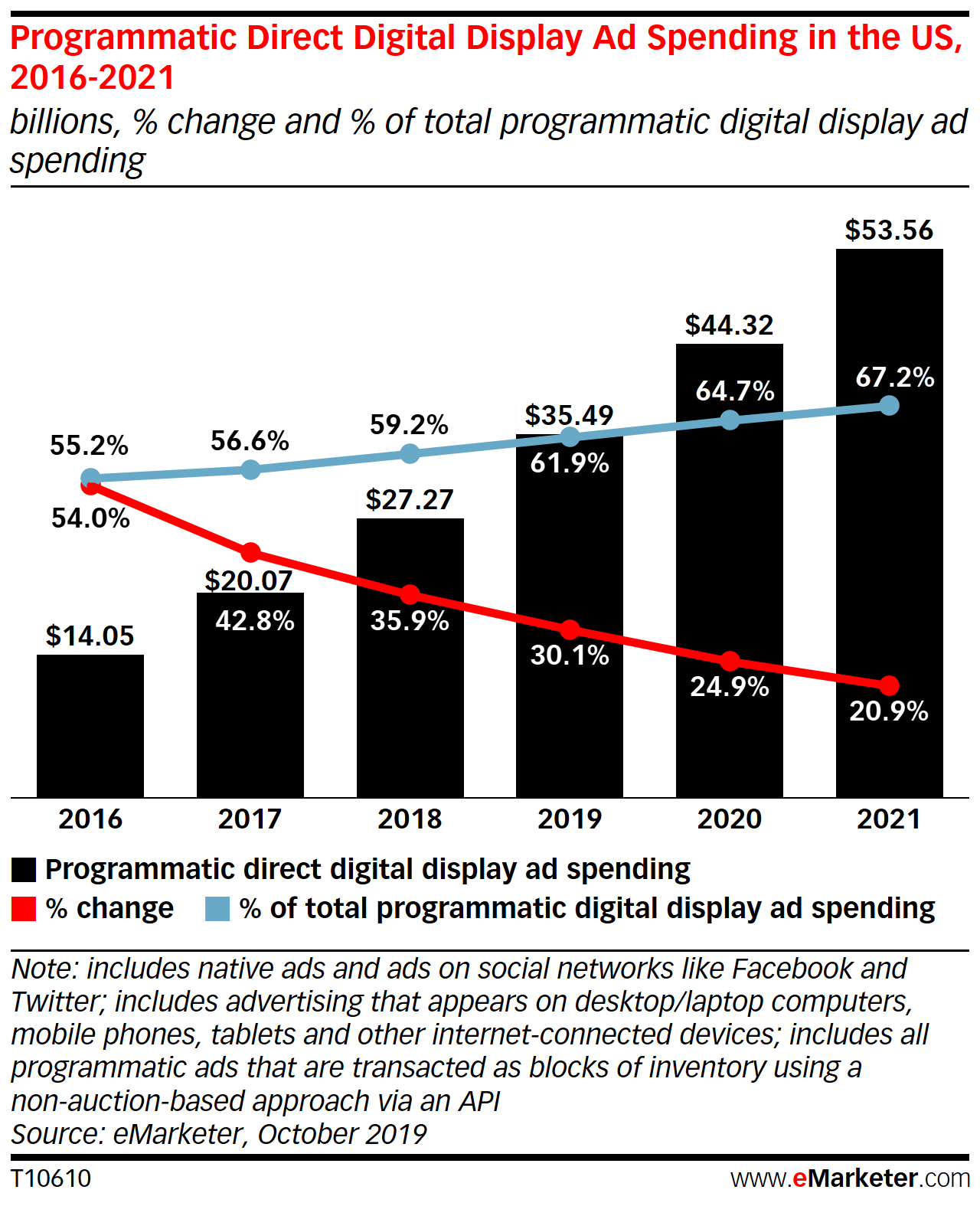
 

programmatic-direct-digital-display-ad-spending-us-2016-2021-emarketer.png


Spending on programmatic direct channels has grown significantly in recent years and is expected to continue climbing.


How Will We Measure?

Conversion tracking will become increasingly difficult to measure using current approaches, but there are several solutions available now and on the horizon. For example, as Campaign Manager log-level data loses fidelity, solutions like Google Ads Data Hub stand to open up new possibilities with more durable data and more privacy-safe methodologies. Likewise, platforms like Amazon and Facebook are working on similar solutions.
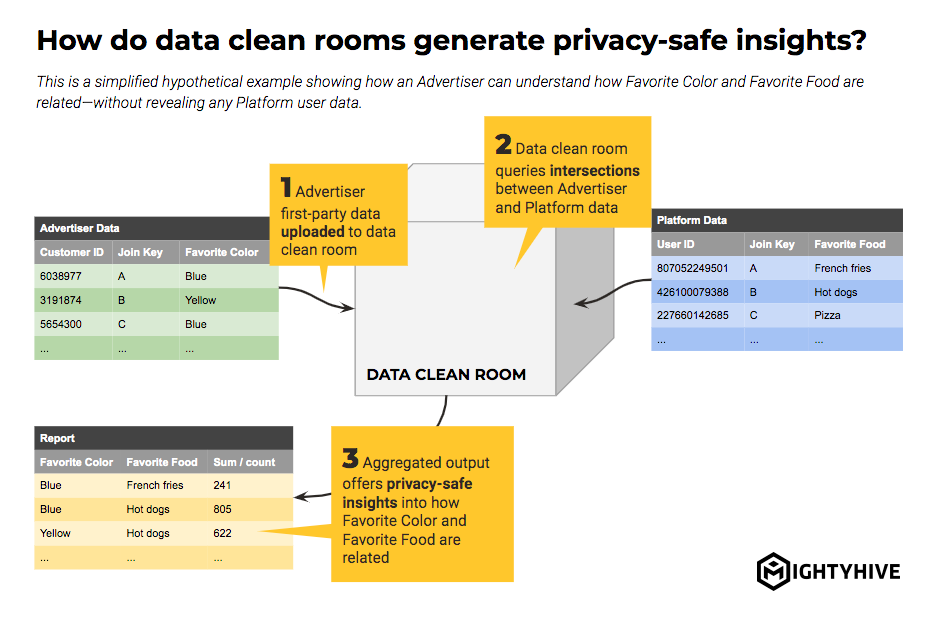
 

data-clean-room-example.png


Source: "The New Possibilities of an ID-Redacted World"

Google's proposal for a conversion measurement API would allow for click-based attribution without using cross-site trackers. Trials for click-based conversion measurement sans third-party cookies will start by the end of 2020. Read more on the Chromium Blog and in AdExchanger.

What about view-based conversion tracking? Most current approaches will cease to work in any major browser once Chrome deprecates third-party cookies, but Google has indicated that the future of measurement may be more probabilistic or panel-based. Whether this will allow for view-through conversion tracking remains to be seen.


How MightyHive Will Adapt

As with many businesses in the programmatic space, a number of MightyHive services are built to some extent on top of the third-party cookie, such as programmatic audience activation, dynamic creative, and advanced attribution.

In their current state, these technologies will not work in two years’ time. However, there is every reason to believe that ad tech will continue to innovate and adapt with these changes opening up new opportunities for more advanced and smarter marketers in a new cookie-less era.

  • We have already started developing targeting and measurement approaches independent of cookie-based approaches for use on multiple bidding and measurement platforms. Further, as a leading Google partner, will be collaborating closely with Google on the Privacy Sandbox protocols and work hard to bring these solutions to our clients.
  • MightyHive has deep, holistic consultative expertise to bear on these challenges. For example, we have invested heavily into data science, API and Cloud-driven solutions to help marketers gradually increase the utility of their first-party data while simultaneously reducing reliance on third-party cookie pools.
  • As part of S4Capital, with our sister company MediaMonks, our clients are exploring end-to-end digital strategies that leverage first-party data to drive content and programmatic media.

We argue consumers should always be the first constituent in considering the digital advertising experiences online and adapting to this shift requires marketers to place more attention on the value exchange traded for a consumer's attention. The key will be to move with the market, as opposed to push against it and seek short-term fixes.

As always, MightyHive is your partner and your advocate.

Very soon third-party cookies will become effectively unusable for advertising measurement, and it's time to move with the market. data privacy data analytics third-party cookies first-party data

Choose your language

Choose your language

The website has been translated to English with the help of Humans and AI

Dismiss