Choose your language

Choose your language

The website has been translated to English with the help of Humans and AI

Dismiss

Create Opportunities in a Privacy-Focused Future

Create Opportunities in a Privacy-Focused Future

Data Data, Data Privacy & Governance, Data Strategy & Advisory, Data privacy, Death of the cookie 1 min read
Profile picture for user mediamonks

Written by
Monks

breaking down the privacy era in dark and yellow fonts

Learn how to overcome privacy obstacles with ease.

The privacy movement is here and it affects us all. No one—marketers, holding companies, content owners and ad tech systems—will remain untouched by changes on the horizon. With no simple fixes or a return to prior ways of working, smart marketers know there’s little time to waste when it comes to rethinking data collection and management moving forward. This report provides you with everything you need to know to navigate imminent privacy changes: where to start, which elements to address today and how to create opportunities for the future.

Breaking down the privacy era

You’re one download away from learning…

  • Privacy-first expectations in the future
  • Walled garden and open web opportunities
  • Marketing tactics not reliant on third-party cookies

This experience is best viewed on Desktop

Download Now
Monk Thoughts Data is not the new oil. Consumer data–at scale–is actually the new nuclear.
Portrait of Chris Martin
The privacy movement is here and it affects all of us. Our report shares what you need to know to navigate imminent privacy changes. data privacy privacy data analytics third-party cookies first-party data Data Data Privacy & Governance Data Strategy & Advisory Death of the cookie Data privacy

Build Your Data Game Plan with Insights from Superweek

Build Your Data Game Plan with Insights from Superweek

Data Data, Data Privacy & Governance, Data Strategy & Advisory, Death of the cookie, Industry events 1 min read
Profile picture for user mediamonks

Written by
Monks

Headshots of Doug Hall and Julien Conquet

The data landscape is no stranger to tectonic shifts that curtail brands' control. From Google's announcement to push back cookie deprecation once more, to Apple's app tracking transparency, to differences in data regulation around the globe, emerging bumps in the road continue to challenge plans to provide personalized user experiences. These issues—and more—were discussed at the 2022 Superweek Analytics Summit, a global community of digital marketing professionals, analysts and thought leaders of the measurement industry.

Now, marketers can relive the excitement and ideas of the conference (or encounter them for the first time) in a new documentary. THE GAME features insights from speakers—including Vice President of Data Services and Technology (EMEA) Doug Hall and Senior Director of Analytics, EMEA Julien Coquet—to discuss how recent developments in data collection, activation and regulation are reshaping the strategies of brands and their partners.

For a clear understanding of where the industry is headed, find the documentary in full below. Look forward to more Superweek next year, running from January 30 to February 3 in Egerszalok, Hungary!

Monk Thoughts It's like the classic physics three-body problem, where we have tech, regulation and public opinion are the three bodies. The physics problem states that their orbits are so complex in the system that you cannot predict where these entities are going to go.
Doug Hall headshot
Get insights from this year’s Superweek Analytics Summit, a global community of digital marketers, analysts and thought leaders of the measurement industry. data analytics google Google Analytics data privacy third-party cookies first-party data Data Data Privacy & Governance Data Strategy & Advisory Industry events Death of the cookie

Solidify Your Data Strategy with The Unlocking Personalization at Scale On-Demand Video

Solidify Your Data Strategy with The Unlocking Personalization at Scale On-Demand Video

CRM CRM, Consumer Insights & Activation, Data, Data maturity, Death of the cookie 1 min read
Profile picture for user Ashley Musumeci

Written by
Ashley Musumeci
Global VP of Lifecycle Marketing & CRM

A yellow data block in the shape of a pyramid

Maybe it has been awhile since you thought about your data. Over the decades, digital marketers stacked one tech solution on top of another to add functionality, but after more than 20 years the data is unregulated and sprawled throughout the organization. It’s all there somewhere, but data sets can’t connect, insights can’t be shared across departments and much of the data is no longer actionable.

Earlier this year, Ashley Musumeci, Director Go-to-Market, CRM at Media.Monks, spoke to a packed house at Salesforce Connections. This exclusive 15-minute video captures her presentation in which she outlines how brand marketers are using Salesforce to deliver a personalized customer experience at scale when a clear data strategy is in place.

Ashley headshot on a title card

Build a strong data foundation by:

  • Establishing naming conventions
  • Standardizing data collection
  • Learning how to unify the data
  • Creating a single source of truth

This experience is best viewed on Desktop

Download Now
Ashley Musumeci, Director Go-to-Market, CRM explains how brands can deliver personalized customer experiences at scale when a clear data strategy is in place. CRM strategy personalization personalized marketing personalized content data analytics Data CRM Consumer Insights & Activation Data maturity Death of the cookie

Desarrollando una estrategia de medición integrada con Falabella

Desarrollando una estrategia de medición integrada con Falabella

5 min read
Profile picture for user mediamonks

Written by
Monks

An illustrated person holding a phone

Es la era de la first-party data. Más específicamente, de recuperar el control sobre nuestra data para construir recorridos digitales mejorados. A esta altura, la muerte inminente de las cookies de terceros no es novedad, y tampoco lo es la necesidad de adaptarse y evolucionar a la velocidad de las nuevas tendencias digitales. Pero si bien los últimos años han consolidado esta noción para todo tipo de empresas, muchas estarían de acuerdo en que, en la práctica, desarrollar un modelo moderno y funcional de first-party data no es tan sencillo.

Pensemos, por ejemplo, en un holding multinacional con unas seis marcas filiales, presente en siete países con tiendas físicas y plataformas web y app. No todas las filiales operan en los mismos lugares, y no todas las plataformas utilizan el mismo idioma. Ahora imaginemos querer unificar todo eso en un sistema escalable que proporcione información actualizada y precisa de sus consumidores, procesada a través de métricas confiables que le permitan comprender mejor sus necesidades e intereses. No es tan fácil, ¿cierto?

Falabella.com, una de las empresas de retail más grandes de Latinoamérica, se enfrentaba a ese mismo desafío en la búsqueda de mejorar sus capacidades tecnológicas y fortalecer su logística para respaldar el rápido crecimiento de sus ventas online. Su objetivo final era simple: proporcionar un mejor servicio a través de soluciones personalizadas y aumentar la eficiencia general de la empresa. Sin embargo, llegar allí requería un nivel de experiencia considerable en el uso y la implementación de sistemas de datos. 

Falabella retail store

Desarrollando sus músculos tecnológicos

Las tiendas insignia de Falabella, así como sus centros comerciales y supermercados, la han coronado como la empresa de retail más grande de Chile y una de las más importantes de América Latina. Pero si bien esta marca histórica ha sido construida sobre los valores de una tienda física tradicional, la importancia de contar con una fuerte presencia online jamás se les ha escapado. 

Hoy, Falabella.com busca convertirse en uno de los protagonistas del ecommerce en la región. En otras palabras, tomar la relevancia que ha sembrado en el mundo físico y trasplantarla al mundo virtual. Pero para convertirse en la plataforma de ecommerce por excelencia para una amplia variedad de necesidades, precisaba integrar al menos cuatro plataformas preexistentes y sus datos en un solo marketplace y un único sistema de medición. 

Nuestro Head of Data Growth, South Cone, Walter Rebollo, estuvo allí para apoyarlos en ese recorrido. “Formamos un equipo dedicado que trabajó codo a codo con el de Falabella, actuando como un músculo tecnológico”, explica.

Monk Thoughts El objetivo principal era mejorar la calidad de los datos con los que trabajaba la marca, unificando todas sus propiedades digitales en un solo sistema de medición.
Walter Rebollo headshot

Para una empresa de tal magnitud, cualquier falta de comunicación tecnológica entre las propiedades podría afectar la precisión de su análisis de datos, lo que justifica la necesidad de una transformación absoluta. “Nuestro equipo de expertos y expertas en analytics, consultoría e ingeniería ayudaron a la marca a diseñar planes de medición que estuvieran alineados a lo largo de toda la organización. Desarrollaron dashboards, manuales, y brindaron soporte técnico para sus implementaciones”, agrega Rebollo. 

Más que solo estadísticas

Además de actuar como un músculo tecnológico, el equipo empapó a la marca de una mentalidad más analítica y data-driven. Después de todo, ser consciente del potencial de la first-party data es el primer paso para construir una experiencia del cliente más afinada. Y no se trata de jugar con las estadísticas a ver que pega. Debemos pensar en la first-party data como una fuente de información verídica que ilustra las personalidades y los comportamientos de nuestros clientes. Una especie de hoja de ruta para apoyar a la audiencia a lo largo de todo el recorrido. 

Javier Fernández Morales, Head Regional de Performance & Growth en Falabella.com, lo explica claramente: “Como uno de los sitios y app con mayor tráfico en la región, la utilización de nuestra first party data es un activo clave para brindar una mejor experiencia de compra y navegación.

Monk Thoughts Nos permite construir una relación más cercana con nuestros usuarios, basada en la confianza mutua, con servicios personalizados y una distribución de producto más inteligente.
Javier Fernandez headshot

En el comercio minorista, los consumidores esperan encontrarse con una experiencia omnicanal que se adapte a ellos. Buscan pasar de app a web y cambiar de dispositivo tantas veces como sea necesario a lo largo del proceso de compra. Es por eso que diseñamos el marco de análisis para capturar esa información, creando un setup que facilitó la comprensión de cómo se comportan las audiencias y qué les interesa.

“La transformación digital de Falabella abarcó una serie de pasos que nos llevaron al objetivo final”, explica Gastón Fossati, nuestro VP de Data Growth SPLA. “Por ejemplo, la implementación del funnel de web ecommerce para todo los países, evaluaciones para definir el modelo de atribución a utilizar, el agregado de machine learning, la implementación de Enhanced Conversions en Google Analytics y acompañamiento de consultoría mensual para trabajar en el proyecto de Firebase para la app, entre otros”.

Un equipo empoderado conduce a una rápida toma de decisiones

Más allá de brindar una experiencia fluida al cliente, contar con un único sistema de medición alineado a lo largo y ancho de la organización puede ser tan útil internamente como lo es de cara al cliente. La medición refinada conduce a modelos automatizados efectivos, que pueden ahorrarle tiempo y energía al equipo. 

“Desde el punto de vista de backend, contar con un mejor sistema de gestión de datos nos ha permitido desarrollar un modelo de escalabilidad de producto bien ejecutado”, explica Fernández Morales. Al permitir que las herramientas de tecnología sean ejecutadas con mayor agilidad, empoderamos a los especialistas a que tomen mejores decisiones, y más rápido. 

Dicho esto, el desarrollo de un sistema de medición integrado no es algo que suceda de la noche a la mañana. En este proyecto de años de duración, que surge de una asociación que lleva por lo menos tres años, ambos equipos trabajaron en conjunto para crear una estrategia de medición que se acoplara a los objetivos de cada unidad, integrar Google Analytics y capacitar al equipo de la marca para actuar sobre esa información. “Nuestro enfoque siempre es de democratizar el conocimiento, por lo que nos aseguramos de enseñar a nuestros socios cómo y por qué hacemos lo que hacemos”, dice Rebollo.

A lo largo de ese proceso, ambos equipos se unieron hasta convertirse en uno. “Me parece realmente destacable cómo hemos creado un único equipo que si bien cuenta con miembros de ambos lados, todos comparten un mismo espíritu”, dice Lorena Alva Salazar, Head of Growth & Martech en Falabella.

Monk Thoughts Queríamos un partner que nos empujara, que hiciera las preguntas difíciles y nos ayudara a perseguir la visión correcta, no solo entregar lo que pedimos. Me alegra saber que contamos con eso.
Javier Fernandez headshot

Hoy, Falabella.com no solo goza de un equipo sólido y unificado, sino también con métricas confiables que están disponibles de inmediato para una rápida toma de decisiones. La eliminación gradual de las cookies de terceros no supone una amenaza. De hecho, nunca han estado mejor preparados para forjar una relación más estrecha con los consumidores. Primero, porque un marco integrado y múltiples puntos de recopilación de datos brindan información invaluable sobre ellos. Y segundo, porque la marca ahora puede empoderar a los usuarios para que elijan cuánta información desean compartir, cuidando así su privacidad.

Cómo nuestro equipo de data ayudó a Falabella a desarrollar un servicio unificado y personalizado para sus clientes. content personalization personalized marketing first-party data data analytics Retail data privacy

Building an Integrated Measurement Strategy With Falabella

Building an Integrated Measurement Strategy With Falabella

Data Data, Data Strategy & Advisory, Data maturity, Measurement 4 min read
Profile picture for user mediamonks

Written by
Monks

An illustrated person holding a phone

It’s the era of first-party data. More specifically, of reclaiming control over one’s data to build improved digital journeys. By now, the imminent death of the cookie is old news, and so is the need to adapt and evolve at the speed of the new digital trends. But while the last few years have cemented this notion for all kinds of businesses, many would agree that the journey to developing a modern, functional first-party data model has proven to be a bit bumpier than expected.

Think of, let’s say, a multinational holding company with about six subsidiaries in retail and banking, operating in seven countries with physical stores and both website and app platforms. Not all subsidiaries are present everywhere, and not all platforms use the same language. Now imagine wanting to unify all of that into a scalable system that provides updated, accurate information about your consumers—processed through reliable metrics that allow you to get a better grasp of their needs and interests. Not exactly child’s play, is it?

Our partners at Falabella, one of the largest retail companies in Latin America, were faced with that exact challenge in their ambition to develop their technological capabilities and strengthen their logistics to support the rapid growth of their online sales. The ultimate goal was simple: to better serve customers through personalized solutions and increase the company’s overall efficiency. The path to get there, though, required considerable expertise in the use and implementation of data. 

Falabella retail store

Growing Its Technological Muscles

Falabella’s flagship department stores, as well as its shopping centers and supermarkets, have crowned it the largest retail company in Chile, and one of the most important ones in Latin America. But while this long-standing brand was built on the foundations of a traditional physical store, the importance of having a strong online presence has never eluded them. 

Today, Falabella is in pursuit of becoming one of the region’s top ecommerce players. In other words, to take the relevance it’s built in the physical world and replicate it in the digital space. But to become the go-to ecommerce platform for a variety of needs, it had to integrate its four pre-existing platforms and their data into a single marketplace and a measuring system.

Our Head of Data Growth, South Cone, Walter Rebollo, was there to support them on that journey. “We put together a dedicated team that worked side by side with the brand’s, serving as a technological muscle,“ he says.

Monk Thoughts The main objective was to improve the quality of the data that Falabella was working with, unifying all its digital properties into a single measurement system.
Walter Rebollo headshot

For a company of this magnitude, any technological miscommunication between properties could hinder the accuracy of their data analysis, which explains the need for a foundational transformation. “Our team of analytics experts, consultants and engineers helped the brand design measurement plans that were aligned throughout the organization. They developed dashboards, documentation, manuals and provided technical support for their implementations,” adds Rebollo.  

It’s More Than Just Statistics

In addition to serving as the technological muscle, the team introduced the brand to a more analytical and data-driven mindset. After all, being cognizant of the potential that lies in one’s first-party data is the first step towards building a sharpened customer experience. And it’s not about playing with statistics to see what sticks. Think of first-party data as a source of truth that illustrates our customers’ personalities and behaviors; a roadmap of sorts to support your audience across the entire customer journey.

Javier Fernández Morales, Falabella’s Regional Head of Performance & Growth, puts it plainly, “As one of the sites with the highest traffic in the region, our first-party data is a key asset in order to provide a better shopping and browsing experience.

Monk Thoughts It allows us to build a closer relationship with our clients built on mutual trust, with personalized services and smarter product allocation.
Javier Fernandez headshot

In retail, consumers expect an omnichannel experience that’s tailored to them. They want to be able to switch between app, web and devices across the purchase journey from start to finish. We designed the analytics framework to capture that information, creating a setup that eased the understanding of how audiences behave and what they are interested in. 

“The digital transformation of Falabella encompassed a bunch of steps that led to the final goal,” explains Gastón Fossati, our VP of Data Growth SPLA. “For example, the implementation of the web ecommerce funnel for all countries, assessments to define the attribution model to be used, baking in machine learning for audience prediction, the implementation of enhanced conversions in Google Analytics and a monthly consulting service to work on the Firebase project for the app, among other things.” 

An Empowered Team Leads to Fast Decision-Making

Beyond providing a seamless customer experience, having a single measurement system aligned throughout the organization can be as helpful internally as it is for customer-facing interactions. Think about it: refined measurement leads to effective automated models, which can then save the team time and energy. “From a backend standpoint, having a better data management system has made it possible for us to develop a well-executed product scalability model,” says Fernández Morales. By allowing marketing technology tools to be executed with greater agility, we empower specialists to make better decisions, faster.

That said, the development of an integrated measurement system from the ground up is not something that happens overnight. In this year-long project—which stemmed from a three-year partnership—both teams worked in lockstep to create a measurement strategy according to each unit’s goals, integrate Google Analytics and train the brand’s team to act upon the information. “Our approach is one of democratizing knowledge, so we always make sure we’re not just delivering but also teaching our partners how and why we do what we do,” says Rebollo. 

Throughout that process, both teams blended with one another to the point where there was almost no distinction between each. “I find it truly remarkable that we’ve created a single team with not only a common goal but also a shared spirit,” says Lorena Alva Salazar, Head of Growth & Martech at Falabella.

Monk Thoughts We wanted partners who could push us, ask the hard questions and help us build the right vision—not just deliver what we ask for. I’m glad to know we have that now.
Javier Fernandez headshot

Today, they can bank not only on a solid, unified team, but also on reliable metrics that are immediately available for quick decision-making. The phase-out of third-party cookies poses no threat, and they are in fact better prepared to forge a closer relationship with consumers. First, an integrated framework and multiple data collection points provide invaluable information on their consumers. And second, the brand can now empower users to choose how much information they want to share, thus safeguarding their privacy.

Learn how our data experts helped Falabella develop a unified, personalized service for clients. content personalization personalized marketing first-party data data analytics Retail data privacy Data Data Strategy & Advisory Measurement Data maturity

Manage Permissions in Data Studio Like a Pro

Manage Permissions in Data Studio Like a Pro

5 min read
Profile picture for user mia.stanway

Written by
Mia Stanway
Data Associate & Fresh.Monks Consulting Graduate

Laptop with black data points surrounding it

When you think of data, you get a mental picture of scientists and buttoned-up tech professionals poring over figures and numbers. But that picture is quickly morphing to encompass every decision maker across an organization, increasing data’s value for wider use. At the same time, data volume is rapidly increasing, calling for a need to make it more accessible and easier to understand for everyone whose workflow it touches.

In our work, we’ve found that Google Data Studio does an excellent job with both. A free, online tool that transforms public and private data into interactive knowledge, the platform powerfully visualizes data at teams’ fingertips, without betraying security.

Augmenting Data Visualization with Google Data Studio

Google Data Studio helps people comprehend and manage data. Using the platform, you can:

  • Identify business trends: Interact with the data in the form of charts, maps, graphs and tables, using popular features like filters and segments.
  • Turn budget data into customized reports: A fully functional Business Intelligence (BI) platform with customizable interactive dashboards and reports.
  • Assess the performance of your websites and/or business: By connecting website analytics with business data, you can find outliers in performance. 
  • Analyze customized data and find useful data points for varied success criteria: Users may manipulate the data to suit their needs, having varying levels of user access.

Furthermore, access permissions can be managed across the whole organization with help from Google Workspace. Dashboard owners can also prevent other users from further sharing a dashboard and limit their options when it comes to downloads or exports to mitigate the risk of unauthorized data sharing. 

However, even though the different access levels and sharing controls are intended to prohibit the wrong people accessing sensitive/personal data, the process of sharing a dashboard or restricting access to one can be difficult to manage at scale. Google’s documented solution to personalize data results proposes using more data sources and using the blending functionality to create many-to-many filters. There are scenarios where this can be feasible (especially when BigQuery is not involved), but it could involve making changes to the data source that would then need updating if permissions changed. 

Managing Complex and Interconnected Data Streams

It’s easy for data to become overwhelming, and when a dashboard is connected to a data source used by multiple people, the dashboard owner wants to ensure that each user only sees the data that is relevant to them. This becomes an especially important requirement if the data in question is considered sensitive. So, how does one factor in this kind of a requirement in a dashboard using pre-existing Data Studio capabilities?

Using an email filter is one way to restrict access to irrelevant or sensitive data. When this feature is in use, Data Studio searches for the user's email address in the column that carries all user email addresses in the data source, and if located, Data Studio will filter and present only the relevant part of the data for that user. This is designed to provide a higher level of restriction around data that directly relates to an individual, known as “row-level data security.” The feature is available for any data source. If the data is in BigQuery, you can filter by the user's email address using the email parameter in a custom query. 

This feature isn’t without caveats, though. By default, the row-level data security function falls short in scenarios when more than one person has access to the same row of data. For example, if we are looking at internal business metrics about an employee in relation to a multilevel organizational structure, there might be an ongoing need for a manager to be able to have access to the data of the employees they manage.

Streamlining Internal Data Sharing

Rather than creating a dashboard using a personalized data source for each employee, then sharing access to this dashboard with others one-by-one, Media.Monks set out to create one dashboard with a data source that contains all required data and shares it in a way that gives access to a group of specified people. The proposed solution is based on BigQuery’s capability to use nested fields, enhanced further by using Google Sheets for simplified access management.

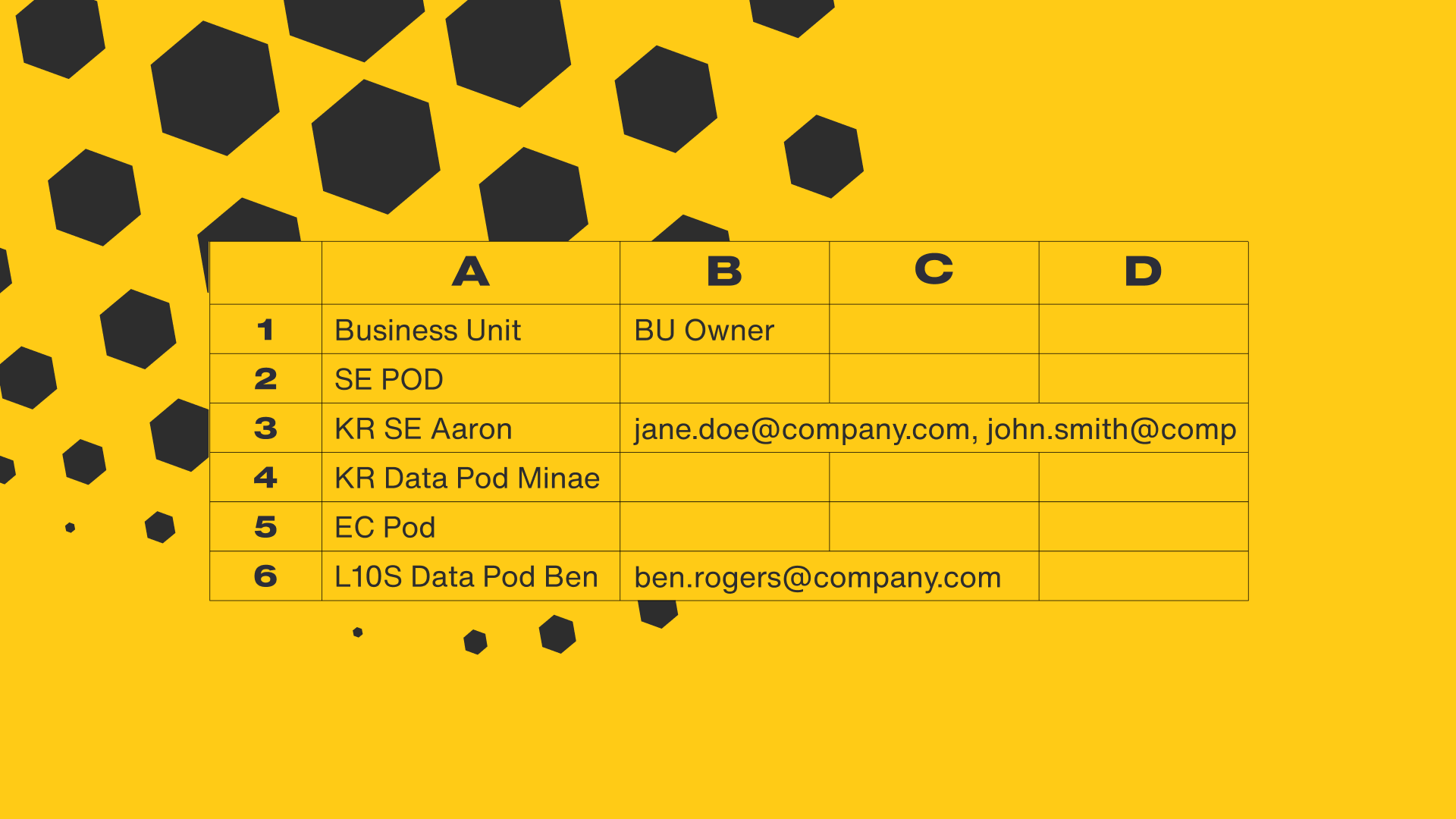
The example below provides maps between owners of business units and managers of varying levels. Thanks to this mapping, a direct manager can access the data of any employees sitting beneath them in the report, as well as a person who sits two layers up in the organizational structure. 

First, it is important to correctly map out who should have access to which part of the data set using a Google Sheet. This might vary depending on the data in question, and should be carefully considered before sharing the final dashboard.

Google data studio sheet with data point

Example mapping between business units and people who may have access to the data.

Looking back at the example, ‘Business Unit Name’ was identified as a mapping field between the data source being used and the access management sheet. The ‘BU Owner’ field is used to list all email addresses of people who shall have access to the data. ‘BU Owner’ will become the email field when setting up an email filter. What is particularly interesting about this solution is that any updates to permissions made via the access management sheet will work in real time. 

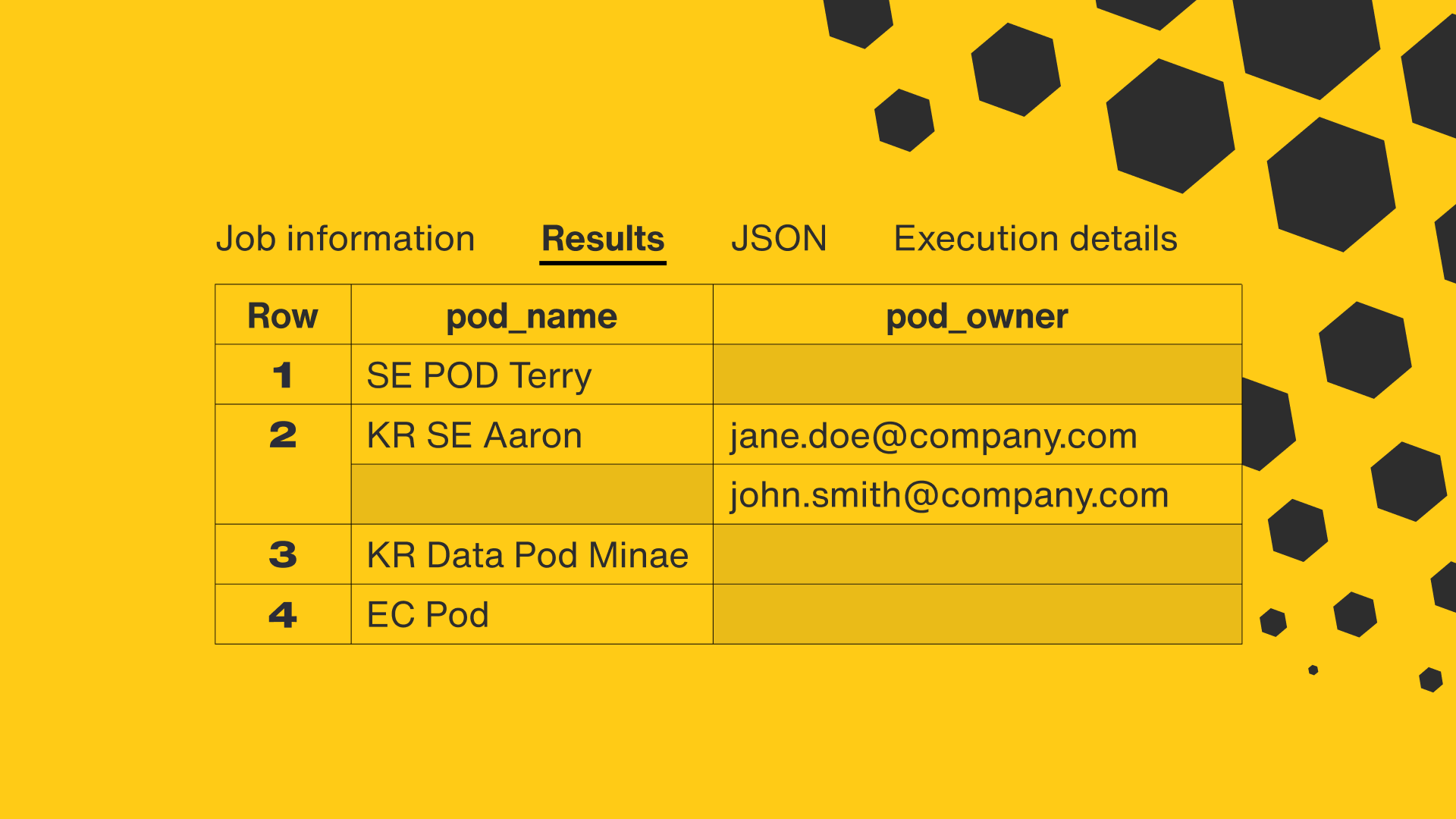
A few technical steps remain to put the solution together. The access management/permission sheet needs to be linked to BigQuery. Data transformation is also required in order to create a nested field (array) out of the provided email addresses, which is achieved with an SQL function “split”: SELECT bu_name, split(trim(bu_owner), “ , “ ) bu_owner FROM *Insert Data Source*

The result shows each team/Business Unit name, along with the corresponding emails of the users that have access to that team’s data, like this:

Google data studio sheet with data points

Query results based on data from Google Sheets.

The last step here is to join the original data source with the table representing the Google Sheet, then save it either as a view or a table. For more complex queries and situations it is advised to save the results as a table, which improves performance. Some further tweaks may be required to increase performance and leverage BigQuery’s BI engine. 

The logical principle here is that only a single user may access the dashboard at any point in time. The advantage, however, is that when the Business Unit Owner field gets ignored, the data maintains its consistency, as there are no row multiplications. 

The dashboard is then connected to BigQuery’s destination entity. In the Data Studio UI, the owner of the data source must enable the email address filter feature and appoint ‘BU Owner’ as the filtering field. If you need to make changes to who can have access to another person's data, you only need to do so in the access management sheet, as they will be reflected in the connected data source instantly. 

Toward Efficient Practices for Handling Data Internally

Sharing sensitive data with the right people, particularly in a multi-level organization, is a process that should be undertaken with utmost precaution. How people at different levels apply data to the business depends on their attitude to data—ranging from a core driver of the business to a point of annoyance and confusion—underscoring the importance of making data accessible and comprehensible to all who use it. By augmenting data visualization and securely sharing the most relevant data to members of the team, it’s only a matter of time when data becomes the priority. I eagerly wait for that day.

Data volume is rapidly increasing, making a need for it to be accessible and easier to understand. Learn how Google Data Studio does an excellent job with both. Google Data Studio Google Analytics data-driven marketing data analytics
McDonald's logo
A download now button in red with a cloud on it
A group of people enjoying hamburgers

Migration to Google Analytics 4 • Leveraging Predictive Audiences To Anticipate Outcome

  • Client

    McDonald’s Hong Kong

  • Solutions

    DataMeasurementConsumer Insights & ActivationTransformation & In-Housing

Results

  • 550% increase in In-App orders
  • 63% decrease in CPA
  • 230% stronger ROI
A young man on his phone sitting no the couch

Upsizing potential customer pools.

With the Covid-19 pandemic affecting foot traffic to quick service restaurants, McDonald’s Hong Kong sought to redesign its customer journey for the new normal. The brand identified new opportunities in mobile order in-store pick up, particularly through its McDonald’s app, and was eager to embrace the potential of its first-party data to grow app engagement and optimize the path to conversion. The brand partnered with Monks, who recommended turnkey machine learning solutions with GA4 to quickly gather customer insights, use them in predictive audience analytics, and target the audience segment with the highest impact.

A black line graph on a yellow background

In partnership with

  • McDonald’s Hong Kong
Client Words Google Analytics 4’s machine learning capabilities allow us to transform our digital advertising strategy efficiently and effectively by leveraging its out-of-the-box solution.
Kai Tsang headshot

Kai Tsang

Sr. Director Digital Customer Experience, McDonald’s Hong Kong

Satiating the appetite for accurate audience insights.

Using GA4’s machine learning capabilities, we analyzed a variety of behavioral insights: product impressions and clicks, cart activities and detailed views of engagement. With this data in hand, we created predictive audience segments and were even able to predict revenue from them. Linking the data to Google Ads allowed for deeper integration into the customer journey and enabled audience segments to further power app and web campaigns, helping the brand reach customers more effectively and drive in-app orders.

A hand holding a phone using the McDonald's app

Chart-topping results.

Through our guidance in implementing machine learning into the mix, not only did we help the client shorten months of data analysis work into a couple of weeks; the campaign also garnered very nice results in just two months. McDonald’s Hong Kong increased conversions by 550% and increased revenue by 560% for likely 7-day purchasers, as well as 230% stronger ROI overall. Using predictive segments, the learning phase of app campaigns became shorter, which helped reduce cost-per-acquisition by 63%. Finally, our team wrapped up the project with a workshop to enable the brand team to continue driving business results with GA4 capabilities.

Want to talk data? Get in touch.

Hey 👋

Please fill out the following quick questions so our team can get in touch with you.

Can’t get enough? Here is some related work for you!

Digital Transformation, Not Manifesto, but Marketers’ Today (KR)

Digital Transformation, Not Manifesto, but Marketers’ Today (KR)

1 min read
Profile picture for user Minae Park

Written by
Minae Park
Lead of Data Engagement Management

A bunch of black hexagons lead into a laptop

“내부 시스템을 탄탄하게 쌓아 수집된 데이터는 많은데, 마케터들이 활용을 너무 어려워 합니다.”

“고객의 이름, 주소, 전화번호, 성별, 구매횟수등의 데이터를 지난 십수년간 수집해왔습니다. 저희 회사 자산이죠.”

“쿠키의 종말? 걱정이 안되는건 아니지만, 퍼스트 파티 데이터 중심의 데이터 드리븐 마케팅 준비해야죠.”

마케팅을 바라보는 기업의 시각과 기대가 달라지고 있다. 이제는 ‘데이터'라는 단어없이 마케팅을 언급하지 않는다. 마케팅을 감각의 영역으로 생각하던 사람들 마저, 데이터를 기반으로 하는 실험과 실행의 영역으로 마케팅을 생각하고 있다.

불과 몇년전만 해도 마케터에게 데이터는 ‘결과'이자  ‘증거'였다. 미러룸에 가둬놓은 가망 소비자들의 상품 평가를 숫자로 환산하여 제품의 매력도를 숫자로 제공했고, 수많은 광고 회사, 리서치 회사들이 제공하는 업계 동향 및 트렌드를 참고하여 중장기 전략을 수립하기도 했다. 신뢰성의 문제는 항상 존재했으나, 그럴수록 마케터의 경험과 개인기가 빛을 발할 수 있었다.

“저는 마케터입니다"

시장과 소비자에 대한 집요한 관심, 소비자의 깊은 욕망(wants)과 니즈(needs)에 대한 탐구 , 급변하는 미디어 환경을 통해 내 서비스와 상품을 가장 매력적으로 어필하는 일을 하는 마케터, 누구보다 인사이트가 중요한 사람들로, 수많은 정보를 온 몸으로 받아들이고 끊임없이 처리해서 전략과 실행을 해나가는 사람들이다.

최근 몇년 사정은 완전히 달라졌다. 특히 플랫폼 회사를 중심으로, 브랜드 마케터, 퍼포먼스 마케터, 콘텐츠 마케터, CRM 마케터, 인플루언서 마케터 등, 마케터라는 직무가 매우 세분화되어 각자의 분야에서 효율을 찾는 구조로 변화하고 있다. 효과보다 효율을 찾는 구조에서 마케팅 세부 조직간의 소통의 문제가 대두되고, 이를 아우르는 ‘그로스 마케터'의 몸값이 올라가고 있다.

“그로스 마케터의 시대?"

그로스 마케터는 전통적인 개념의 마케터와 무엇이 다른가. 비즈니스에 적극적으로 개입하고, 통합적 KPI로 결과를 측정하며, ‘고객유치와 retention’을 위해 벽없이 일하는 사람. 전통적 마케터의 역할과 동일하다. 단 한가지 다른 점은, 더이상 ‘결과'이자 ‘증거'로서의 데이터를 활용하지 않는다.

현대의 마케터는 살아움직이는 고객과 동행하며, 남겨진 흔적들을 이해하며, 결과보다는 원인에, 증거보다는 의도를 읽는다. 더이상 수동적으로 취득된 정보에 의존하지 않고, 마케터의 전략에 따라 다양한 데이터가 양산되고 해석되며, 그 데이터를 재사용하여 마케팅을 실행하는 단계에 들어선 것이다. 예전의 조사회사 자리를 다양한 마케팅 솔루션들이 자리잡았고, 수많은 미디어 에이전시들이 집행하던 마케터의 전략은 상당부분 직접 실행하게 되었다.

“내가 있는 이 조직은 변하기 어려워. 나도 그냥 전통적인 마케터로 남아있을 수 밖에 없는 걸까”

“우리 조직은 이렇게 변화를 향해 몸부림 치고 있는데, 왜 마케터들은 그대로 남으려 하지?”

마케터들의 변화가 요구되는 지금이다. 가장 선두에서 이 변화를 만들어 왔던 마케터들이지만, 그 변화의 급박함과 다양함이 오히려 더 많은 변화를 요구받고 있다. 그리고 그것을 바로 우리는 ‘디지털 트랜스포메이션'이라고 부르고 있다.

디지털 트랜스포메이션은 한 사람, 한 부서가 출발점이 될 수 있지만, 결국은 한 조직, 한 브랜드가 모든 면에서 함께 움직여야 가능하다. 그리고 그 변화의 중심은 사람, 프로세스, 그리고 플랫폼에 있다.

“마케터의 변화”

“마케팅의 변화"

“마케팅 실행과 플랫폼의 변화"

이 모든 변화는 실제 마케터의 생각과 손에 달려있다. 쏟아져 나오는 수많은 마테크와 솔루션들에 흔들리지 않고, 내 브랜드와 내 소비자를 먼저 생각하자. 내 브랜드와 내 소비자가 만나는 접점들, 그 안에서 벌어지는 다양한 일을 이해하고 노이즈를 제거하고 다음 한걸음을 준비하자. 이 모든 것의 기반을 마케터의 경험에 더해 고객이 남겨놓은 모든 데이터를 활용하자. 흩어져서 의미가 없어진 데이터들을 꿰메고, 의미없이 모여진 데이터에 의미를 더하자. 그리고 그 모든 의미있는 활동들이 끊겨지지 않게 마케팅의 과정을, 비즈니스의 프로세스를 그에 맞게 변화시키자. 그 과정 중에 발생하는 문제와 비효율은, 데이터를 가장 잘 축적하고 이해하고 활용할 수 있게 도와주는 플랫폼들을 활용해서 풀어보자.

마케터의 디지털 트랜스포메이션의 모든 조직의 디지털 트랜스포메이션의 핵심이 되고 있다. 소비자와 함께 숨쉬고 살아가는 마케터의 변화가 조직의 근원적인 변화의 씨앗이 되고, 단순한 마케팅의 변화가 아닌, 일하는 방식과 목표의 변화, 나아가 일하는 이유에 대한 변화까지도 끌어낼 수 있을 것이다.

Media.Monks의 데이터팀은 이러한 고민을 가진 모든 마케터와 비즈니스 리더들에게 변화의 동반자로 함께 하고자 한다. 모든 마케터에게 진심어린 응원을 보낸다.

 

“Media.Monks의 데이터 전문 집단, data.monks가 오늘날 마케터들에 필요한 디지털 혁신과 그 의미에 대해 이야기합니다” Digital transformation data-driven marketing data analytics

Goodbye GA360, What We Should Know to Welcome GA4 (KR)

Goodbye GA360, What We Should Know to Welcome GA4 (KR)

1 min read
Profile picture for user Isabel Han

Written by
Isabel Han
Director of Analytics, Seoul

GA4 in big black block letter on a yellow background

전세계의 웹분석가들에게 사랑을 받았던 Google Analytics, 정확히 말하면 Universal Analytics 가 곧 그 시대를 마무리하고 새로운 세대의 Google Analytics, GA4라 불리는 새로운 분석 도구가 분석가들과 기업을 만날 준비를 하고 있다는 이야기를 들려드리고자 합니다.
GA360 Sunset 이란 무슨 의미인가

2년여 전, Google은 Universal Analytics(UA)를 대신하는 새로운 버전의 분석 도구를 시장에 내 놓을 것 이라는 로드맵을 발표했던 것이 엊그제 같은데, 드디어 한국시간으로 지난 3월 17일 새벽, 구글의 공식 블로그를 통해  2023년 7월 1일 부터는 공식적으로 무료 버전 UA의 Property에 새로운 데이터를 처리하지 않는다고 발표를 했습니다.  유료버전의 GA(GA360) 고객의 경우는 3개월이 연장된 10월1일 이후엔 이제 새로운 데이터를 수집할 수가 없게 됩니다. 
이 의미는 현재 GA를 사용하는 모든 기업과 개인은 2023년 7월 혹은 2023년 10월 이후를 준비해야하고, 경우에  따라서 어떤 기업 고객은 그 시간이 채 1년도 안남은 시간 동안 다음 세대의 GA 로 전환하는 준비를 해야한다는 의미입니다.  2022년 10월1일 부터 시작하는 라이선스까지는  GA360을 1년 더 사용하는 것이 가능하나,  당장 올해 11월부터 GA 라이선스를 Renew 하려고 계획하고 있는 고객부터는, GA360 대신 GA4 라이선스로 변경된 계약을 진행해야하는 상황이 되었습니다.  간단하게, 언제까지 GA360 을 사용할 수 있나 물으신다면, 현재 라이선스를 먼저 확인하고 Media.Monks의 담당자들에게 질의하시면 가장 빠른 답을 얻을 수 있습니다. 

GA4는 뭐가 다를까

많은 분들이 궁금해 합니다. GA4 는 그냥 버전 업그레이드 정도 아닌가? 뭐가 달라질까?

간단하게 웹분석의 기준으로 데이터를 보셨던 분석가들은 이제, 그 기준을 모바일 분석의 기준으로 데이터를 보아야 합니다. 즉, 데이터를 이해하는 패러다임이 달라집니다.   

Session이 아닌 Event - UA는 10여년 전 웹사이트에서 사용자의 행동을 추적하던 기술, Session 을 기반으로 추적을 했다면  GA4는 현대의 웹과 모바일을 저장소에 저장하고 추적할 수 있도록 event 를 기반으로 구조화 되어 있는 도구입니다.  이 의미는 하나의 데이터 저장소 안에  Web, iOS app, Android app의 데이터 스트림을 모두 담을 수 있게 되었으니 한 방문자가 여러 채널을 교차 방문하는 경우 그 분석이 가능해졌다는 큰 장점이 생겼습니다. 

유연한 리포팅  -  기존의 UA에는 이미 만들어진 여러 리포트가 있어서, 여러 방법으로 customize해서 사용을 했던 반면,  GA4는 사용자가 직접 Drag &Drop으로 리포트를 만들어서 활용할 수 있습니다. 그 대신 분석의 기준과 데이터의 기준에 대한 이해가 없는 사용자들은 어렵다고 느낄 수도 있게 됩니다. 따라서,  조직에서 데이터의 기준을 만들고, 데이터를 읽고 이해하는 방법을 소통하는 것이 더 많이 중요해십니다. 

Data-driven Attribution - Data-driven attribution은  각 전환 이벤트에 대한 데이터를 기반으로 전환에 대한 크레딧을 분배하는 기능으로, 고객 여정의 어느 클릭이 실제로 ROI에 기여했는지 분석하는 것이 가능해 집니다. 전환의 경로와 비전환 경로를 모두 평가하여 머신러닝에 기반한  배분 모델을 구현할 수 있게 되어, 과거 Last touch(마지막에 클릭을 했던 접점)가 모든 크레딧을 가져가도록 디자인 되었던 분배 방식으로 전환에 영향에 준 요인들을 대략 예상해 볼 수 밖에 없었던 마케터들은 이제, 데이터 기반 모델을 통해서  다양한 접점이 전환 결과에 어떻게 영향을 미치는지 이해할 수 있게 됩니다. 

그럼 UA Property에 있는 기존 데이터는 어떻게 되나? 

2024년부터는 Access 가 불가능해지므로, 늦어도 2023년 안에는 기존 데이터를 여러 방법으로 저장하는 현실적인 노력이 필요합니다. 예를 들면, 

  • 각 리포트를 여러 Format으로 export 하거나 (Manual) 
  • Google Reporting API로 export 하거나
  • 360 고객의 경우는 BigQuery로 export 하는 방법

그런데 GA360 고객의 경우 BigQuery로  exeport 한 경우라도, 그 데이터를 쉽게 비즈니스 사용자가 꺼내보기는 다소 어려울 수도 있으므로, 다양한 방법으로 Dashboard 등과 연결하여 GA4 만 사용하게 되는 순간이 와도, 과거의 데이터를 쉽게 access 하고 비즈니스의 연속성을 잃지 않도록 지금 부터 차근차근 준비하시길권유 드립니다.

준비되셨나요?

Media.Monks에서는 GA4 Adoption 프로그램이라는 이름으로, GA4 로 전환이라는 변화에 Soft landing 할 수 있는 많은 방안을 가지고, 서비스 및 컨설팅을 제공하고 있습니다. 더 상세한 정보 및 도움이 필요하시면 가까운 Seoul.Monks 들에게 연락주시기 바랍니다.

전세계의 웹분석가들에게 사랑을 받았던 Google Analytics, 정확히 말하면 Universal Analytics 가 곧 그 시대를 마무리하고 새로운 세대의 Google Analytics, GA4라 불리는 새로운 분석 도구가 분석가들과 기업을 만날 준비를 하고 있다는 이야기를 들려드리고자 합니다. Google data analytics

CJ Olive Young - Google Analytics 360 Implementation and Analysis (KR)

CJ Olive Young - Google Analytics 360 Implementation and Analysis (KR)

1 min read
Profile picture for user Dong-oh Kang

Written by
Dong-oh Kang
Senior Data Engagement Manager, Seoul

Black hexagons connecting from a thin white line

Team Members

Dong-oh Kang, Rebekah Kim, Sunyoung Kim, Jiyun Lee

Project Summary

CJ올리브영과 Media.Monks는 2021년 1월 시작해 약 5개월 간 데이터 수집 설계 및 구현 프로젝트를 진행하였습니다. 프로젝트를 완료한 시점부터 3개월 여 간 대시보드 구현 및 구매 단계 이탈요인(Fall-out), 온오프라인 고객 통합 데이터 행동 분석 프로젝트를 진행했습니다. 고객사 목소리에 따르면, 올리브영 내부에는 양사간의 협업 덕분에 데이터를 기반으로 한 의사결정 문화가 자리 잡았다는 평가를 받고있습니다. 또한 Media.Monks와 GA360 파트너십을 계속 유지하면서 앞으로도 양사 간의 시너지가 더욱 커질 것으로 기대되고 있습니다.

Project Object

올리브영은 국내 최대 규모의 커머스 플랫폼인 만큼 다양한 부서들이 협업하고 있습니다. 이에 따라 각 유관부서에서 필요한 데이터가 쌓일수 있도록 거버넌스 및 수집설계부터 필요한 상황이었고, 모든 구성원이 편리하게 데이터를 확인하기 위한 대시보드 제작도 필요했습니다. 또한 모든 유관부서 담당자들이 GA360을 제대로 쓸 수 있도록 이론 및 실습교육을 기획하고 실행하는 것도 하나의 목표였습니다.

데이터 수집 프로젝트가 완료된 뒤에는 수집 된 데이터를 바탕으로 사이트 유입 사용자의 이탈요인 분석(Fall-out Analysis)과 전국의 1,200개가 넘는 오프라인 매장을 보유한 고객사의 특성에 맞게 On-Offline 데이터를 통합한 고객의 구매행동 특성을 분석하는 프로젝트를 함께 진행했습니다.

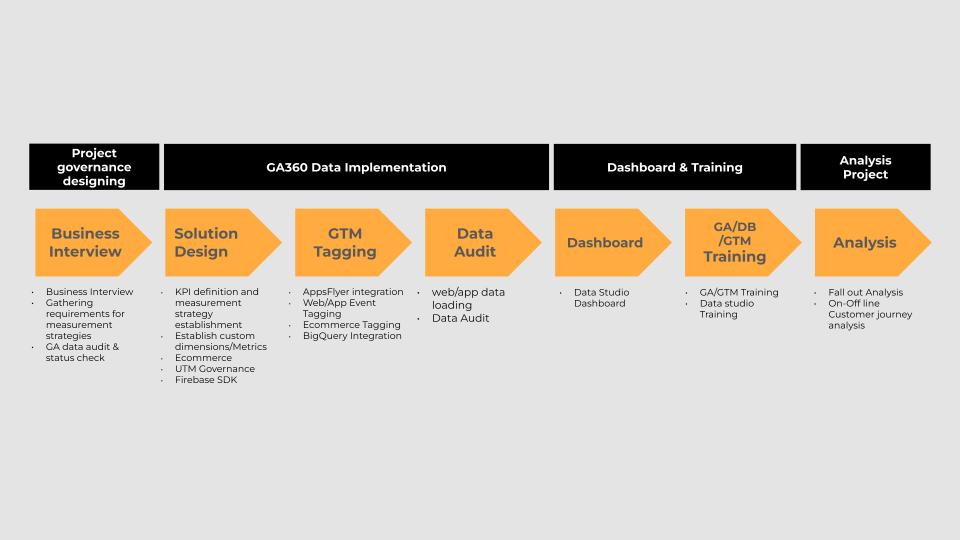
Project process from CJ Olive Young work

<올리브영 프로젝트 개요>

Project Detail

Data governance & Measurement design, GA 360 Data Implementation 

“GA360이라는 새로운 솔루션을 도입하고 내부 구성원들이 활용할 수 있도록 정착시키는 것이 쉽지않은 과정이었으나, Media.Monks와 함께였기에 성공적으로 완수할 수 있었습니다. 유관부서와의 인터뷰를 통해 보고싶은 데이터를 정의하는 단계에서부터 데이터 수집 방식 정의, 개발진행, 정합성검증, 분석과제 진행 단계까지 Media.Monks는 데이터 전문가로서 꼼꼼하게 계획을 수립하고 이행하며 과정 중 필요한 조언과 피드백을 아끼지 않았습니다.”

(허주연 대리, 플랫폼기획팀)

Media.Monks에서는 사전 설문 → 전 유관부서 비지니스 인터뷰 → 비지니스 요건의 구체화 및 측정 전략수립의 과정을 통해 올리브영 고객사에 가장 적합한 데이터 거버넌스와 측정전략을 수립하였고, GA360의 장점중 하나인 최대 200개까지 설정가능 한 맞춤측정기준과 항목을 최대한으로 활용해 첫 구매여부, 관심 매장 등 올리브영의 이커머스 플랫폼 환경을 모두 반영한 데이터가 수집될 수 있도록 설계할 수 있었습니다.

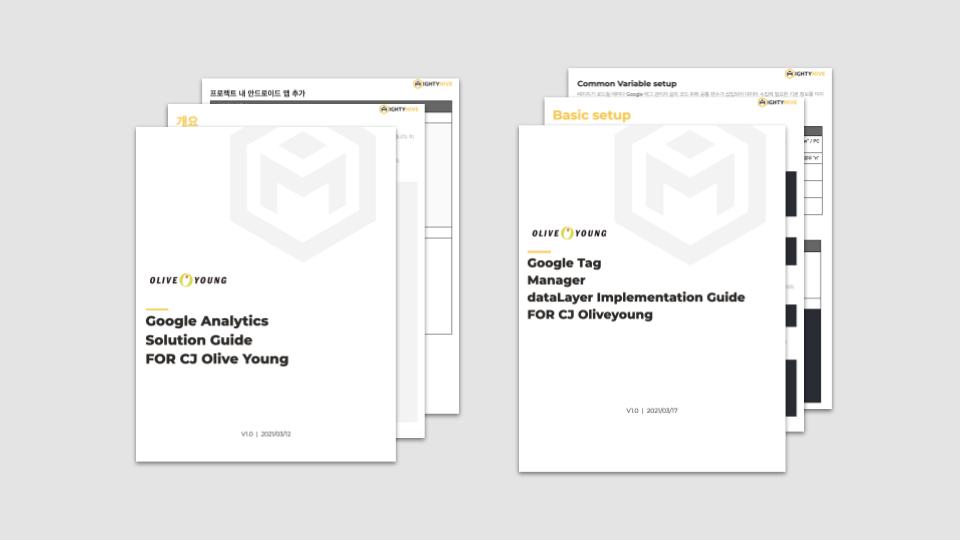
설계 이후 전 유관부서 들과 함께 설계한 내용을 공유하는 자리를 만들어 누락된 데이터가 없도록 최종적으로 설계를 마쳤고, 내부의 개발자들이 설계한 요건을 반영하여 개발에 적용할 수 있도록 Media.Monks의 솔루션 엔지니어가 개발 적용 전 과정에서 솔루션 디자인 문서 작성 및 적용 안내, 태깅, 확인 과정을 통해 데이터 수집 누락없이 프로젝트가 성공적으로 완료될 수 있었습니다.

Google analytics solution guide book from Media.Monks

<올리브영 솔루션 디자인>

Dashboard Design

“GA360 Implementation 프로젝트를 수행하면서, 대시보드를 통해 손쉽게 데이터에 접근하고, 자주 보는 데이터를 직관적으로 보여줄 수 있었습니다. 이에 따라 주로 데이터를 분석하는 팀이 아니더라도 전사에서 보다 쉽게 데이터를 매일 확인하고, 데이터 기반으로 업무하는 환경을 만들 수 있었습니다. Media.Monks와 구축한 GA360과 대시보드 사용을 시작으로 회사의 업무하는 방식에 대한 변화 이루어질 수 있었습니다.”

(홍민애 과장, 플랫폼기획팀)

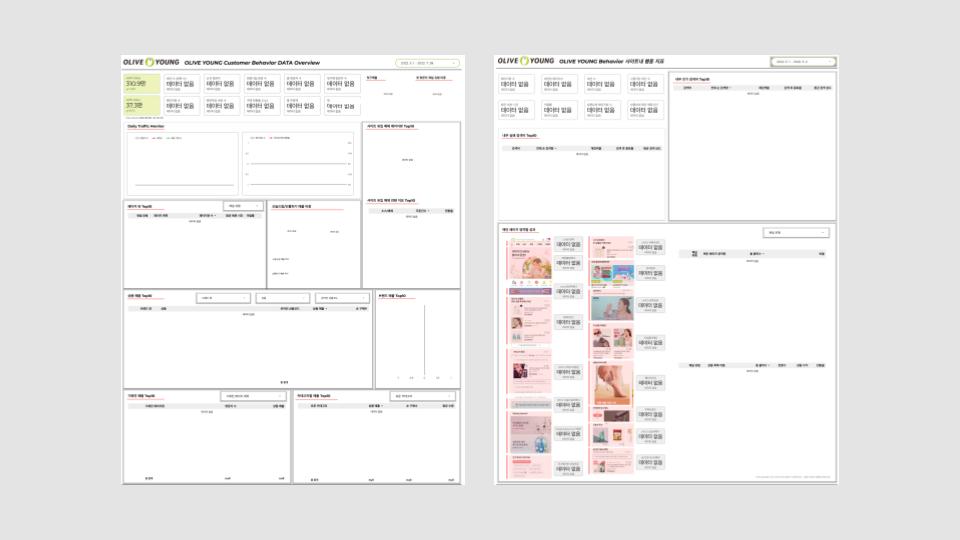
올리브영이 GA360 도입을 통해 이루고자 했던 목표는 데이터 기반의 업무 수행 문화가 회사 내 정착되는 것입니다. 이를 위해서는 누구나 고객행동 데이터에 손쉽게 접근하고 활용할 수 있는 환경이 조성되는 것이 필요합니다. Media.Monks는 항시 모니터링하는 사이트 유입 및 중요 행동지표들의 데이터 시각화 구현을 위해 테이블 필터 및 데이터 블랜딩 설계 등이 포함된 데이터 스튜디오 디자인을 수행했습니다. 이를 통해 구글 애널리틱스로 수집되는 데이터를 고객사 내부의 누구나 손쉽게 확인하고 공유될 수 있도록 했습니다.

Dashboard design

<올리브영 대시보드 디자인>

Analysis Project

“Fall-Out 분석을 통해 우리 고객의 실제 이동경로를 볼 수 있어서 좋았습니다. 이를 통해 고객에게 의미있는 서비스 페이지를 발견할 수 있었고, 이 페이지를 바탕으로 고객들의 구매전환에 더 도움이 될 기능들을 기획하게 되었습니다. 또한, 고객의 이탈요인이 명확하게 보임으로서, 간단한 UX 수정으로 고객의 구매전환을 상승시킬 수 있어 즉각적인 효과를 볼 수 있었습니다.” 

(임수진 사업부장, 디지털프로덕트사업부)

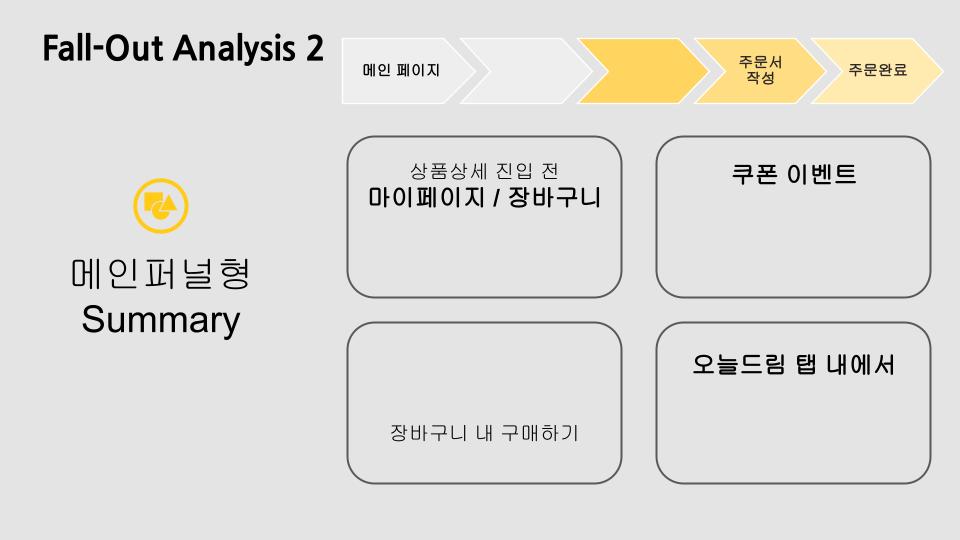
GA360에서 원하는 요건의 데이터가 수집되면서, 올리브영에서는 가설 수립 위주로 기획해 오던 온라인몰에서의 고객 구매여정을 데이터로 확인하고 구매 전 단계에서의 이탈요인을 분석 및 UX 개선 필요사항들을 도출하고자 했습니다. 이에 따라 Media.Monks에서는 Fall-Out 분석을 제안하였고, 분석 설계와 데이터 추출 및 보고서 작성 업무를 성공적으로 수행했습니다. 이를 통해 구매자의 주요 행동 특징을 파악할 수 있었고 퍼널 유형별 이탈 요인 및 개선 포인트를 도출 할 수 있었습니다.

Executive summary from project
Fall-out analysis from the project

<올리브영 Fall-Out 분석>

“올리브영과 같이 오프라인과 온라인 채널을 모두 보유한 회사의 경우, 지금까지는 온라인과 더불어 오프라인 고객들의 행동분석에 대한 갈증을 해소하기는 어려웠습니다. Media.Monks에서는 쉽지 않았음에도 새로운 분석방향을 제시해주시면서 올리브영이 원하는 온라인과 오프라인 고객 데이터가 연결된 옴니채널 고객 행동을 분석할 수 있도록 많은 도움을 주셨고, 함께 고객데이터를 분석하면서 의미있고 실행가능한 인사이트를 도출해주셨습니다.”

(강승범 팀장, 유저그로스팀)

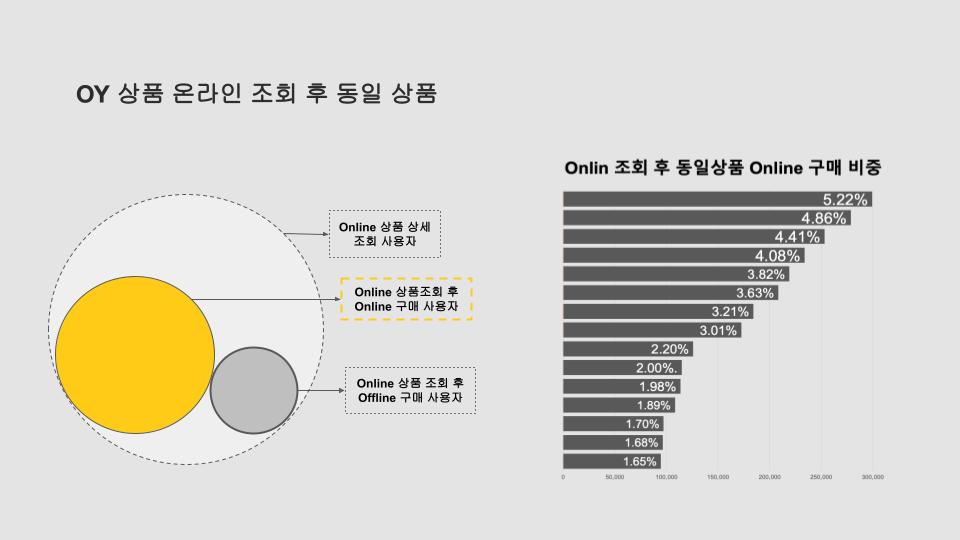
올리브영과 다른 온라인 플랫폼들간의 가장 큰 차이는 전국에 오프라인 매장을 보유하고 있다는 것입니다. Media.Monks와 올리브영은 매장내 고객들의 암호화된 데이터를 구글 클라우드 서비스를 통해 Bigquery에서 온라인 고객 정보와 매칭하여 고객의 On-Offline 통합 행동분석을 진행했습니다. 이를 통해 온-오프라인 플랫폼에서 동시 구매하는 고객과 일반 구매자와의 행동 특성의 차이점과 온라인 구매와 오프라인 구매 행동의 차이등을 분석하여 통합적인 마케팅을 전개할 수 있는 기초 자료를 보유할 수 있게 됐습니다.

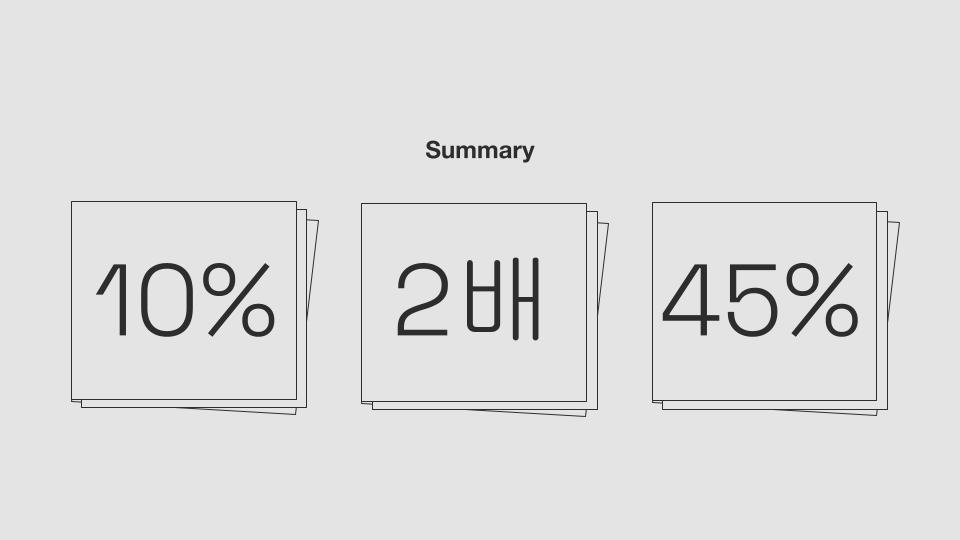
Summary outcomes from the projects

<올리브영 옴니채널 고객 행동 분석>

CJ올리브영 프로젝트는 2021년 1월 시작해 약 5개월 간 데이터 수집을 위한 거버넌스을 수립하는 구현프로젝트를 진행하였습니다. 설계 및 수집 프로젝트가 완료한 시점부터 3개월 여 간 대시보드 구현 및 구매 단계 이탈요인(Fall-out), 온오프라인 고객 통합 데이터 행동 분석 프로젝트를 진행했습니다. Google data analytics

Choose your language

Choose your language

The website has been translated to English with the help of Humans and AI

Dismiss