Choose your language

Choose your language

The website has been translated to English with the help of Humans and AI

Dismiss

Your Audience Is No Longer Just Gamers, Because We Are All Gamers

Your Audience Is No Longer Just Gamers, Because We Are All Gamers

Brand Brand, Go-To-Market Strategy, New paths to growth 4 min read
Profile picture for user Pablo Castillo

Written by
Pablo Castillo

gamer opinion piece

Art by Daniela Banda


“We need to target gamers!” 

“We need a gaming idea.” 

“We need to define the habits of the gaming niche.”

What do these requests have in common? Easy: they stem from a misconception that gamers are a niche market, rather than a wide-ranging audience with an ever-growing array of habits, preferences and lifestyles. Now, don’t misunderstand me; I have nothing against gamers (quite the opposite!). However, as time goes on, I’m becoming increasingly convinced that this notion of a “specific audience” doesn’t truly exist, or at least, it is as ambiguous as saying “people who enjoy music” or “people who like chocolate.”

Gaming is experiencing exponential growth and shaking the foundations of pop culture.

Let’s start with the facts. In recent years, the gaming industry has seen remarkable expansion. Today, gaming surpasses the combined value of the film and music industries, making up 42.1% of entertainment industry earnings and generating an astonishing $182.9 billion in profits. This trend has prompted numerous brands worldwide to seize the opportunity and develop strategies to engage with this audience, even including it as a secondary audience in their marketing briefs.

On top of that, the world of video games is a vibrant cultural sphere that has expanded far beyond gamers’ consoles and computers. Nowadays, we can see the impact of the gaming world permeating related industries like Hollywood, as they increasingly adapt video game concepts into movies and series. A prime example is the recent success of the Mario Bros film, which became the second highest-grossing movie globally in 2023. Similarly, we have The Witcher, the Netflix series based on the video game adaptation of a book saga. This influence also extends to the music industry, with worldwide tours featuring symphony orchestras performing iconic video game soundtracks to the delight of massive crowds.

The problem arises when we consider the sheer size of this universe. As of 2022, there were approximately 3.2 billion gamers worldwide, which amounts to nearly half of the global population. Yet, we still tend to think of it as a niche segment. I believe the real challenge lies in using overly broad terms when referring to this category. The term "gamer" encompasses a diverse range of individuals, from a young adult enjoying some Call of Duty during her downtime after college, to an eight-year-old playing Roblox before bedtime, and even a 65-year-old lady passing the time with Candy Crush in the waiting room. 

All of these people are games in their own way. So, if “gamers” can’t be a target audience, then what are they? They're part of a thriving and diverse community with immense potential, waiting to be explored if we go beyond generic discussions and approach them just like any other entertainment subcategory.

Monk Thoughts Just like saying ‘people who watch movies’ is not the same as saying ‘people who love blockbusters, romcoms, slashers, art-house coming-of-age films, or action movies,’ in the realm of video games, referring to someone as a ‘gamer’ is not equivalent to describing a player who has a passion for RPGs or sports games.
Pablo headshot

How to win in gaming: there’s no “one size fits all.”

By understanding the gaming community’s habits, we can craft more impactful campaigns by pinpointing the needs our brands can satisfy. A prime illustration of this approach is Heinz’s “Hiding Spots” campaign. Knowing that video games demand hands-on attention, making it challenging for gamers to eat while playing, Heinz provided gamers with designated spots within one of the most popular games to hide and eat. 

By broadening our perspective and not confining ourselves to a specific genre, we can create initiatives that appeal to a potentially vast audience. A clear example of this is the urban clothing brand, 100 Thieves, which drew inspiration from esports uniforms to design digital apparel for game avatars, as well as physical clothing for the real world inspired by today’s most popular games.

Arguably, one of the most groundbreaking and “outside-the-box” concepts in recent years is the King’s League. This was the brainchild of a unique partnership between streamer Ibai and former professional footballers Kun Agüero and Pique. Together, they introduced an element of gamification to the sport, forming a football league where the rules aren’t set in stone, the audience can have a say in the matches and the games are far more dynamic than in the traditional professional sport—a product that hits the mark perfectly with the newer generations.

Whether your idea is directly integrated into a game or a connected category, the secret to a successful campaign is the way you marry observations about gamer behavior with the solution your brand can bring to the table.

Tapping into the gaming world for your brand strategy.

Here are some useful tips:

  • Dig deeper: Don’t be content with a generic definition. Look beyond the surface of your audience and consider the types of gamers you’re addressing. It’s less likely that your audience of 9-to-5 professionals are hardcore gamers; they’re probably casual gamers engaging on their smartphones.
  • Look beyond game titles, focus on behaviors: It’s not just about pinpointing the latest trending game or devising a partnership within Fortnite; it’s more about spotting behaviors and harnessing them to your benefit. What can we bring to the table for these individuals, providing alternatives to those leisure moments currently filled with a round of Candy Crush?
  • Push the envelope: It’s well-known that the most brilliant ideas emerge when we innovate by bringing together two seemingly unconnected contexts, and this holds true in the gaming sphere as well. One instance is how Riot Games connected the love for K-pop with the rising fame of recent esports champions in League of Legends to create music videos showcasing these digitalized champions in action.
  • Act quickly, even if you stumble: The gaming industry is known for its incredibly rapid trend turnover. Conversely, development times are quite lengthy. As a result, you’re left with two options: you can make a long-term bet with a well-established platform (like Fortnite) and give it the necessary time to develop, or you can create campaigns driven by current behaviors that resonate instantly and are easy to implement.
  • Simplify matters: We often have a tendency to make ideas concerning the gaming world more complicated than they need to be. A straightforward, easy-to-execute idea will outperform a campaign that’s laden with complex steps and places excessive demands on our audiences.

Remember to shift perspectives and stop viewing the gaming world in black and white. Instead, begin to explore the contrasts that materialize when we probe the right questions. As we navigate the answers, we’ll unearth a vibrant and diverse community that stands as a fundamental part of our modern culture, brimming with a universe of opportunities for our strategic initiatives.

Unlock the potential of the diverse gaming community and explore the expansive influence of gaming in modern culture. gaming Brand Go-To-Market Strategy New paths to growth
Strobe lights and smoke cover to live players in a dark exhibit room
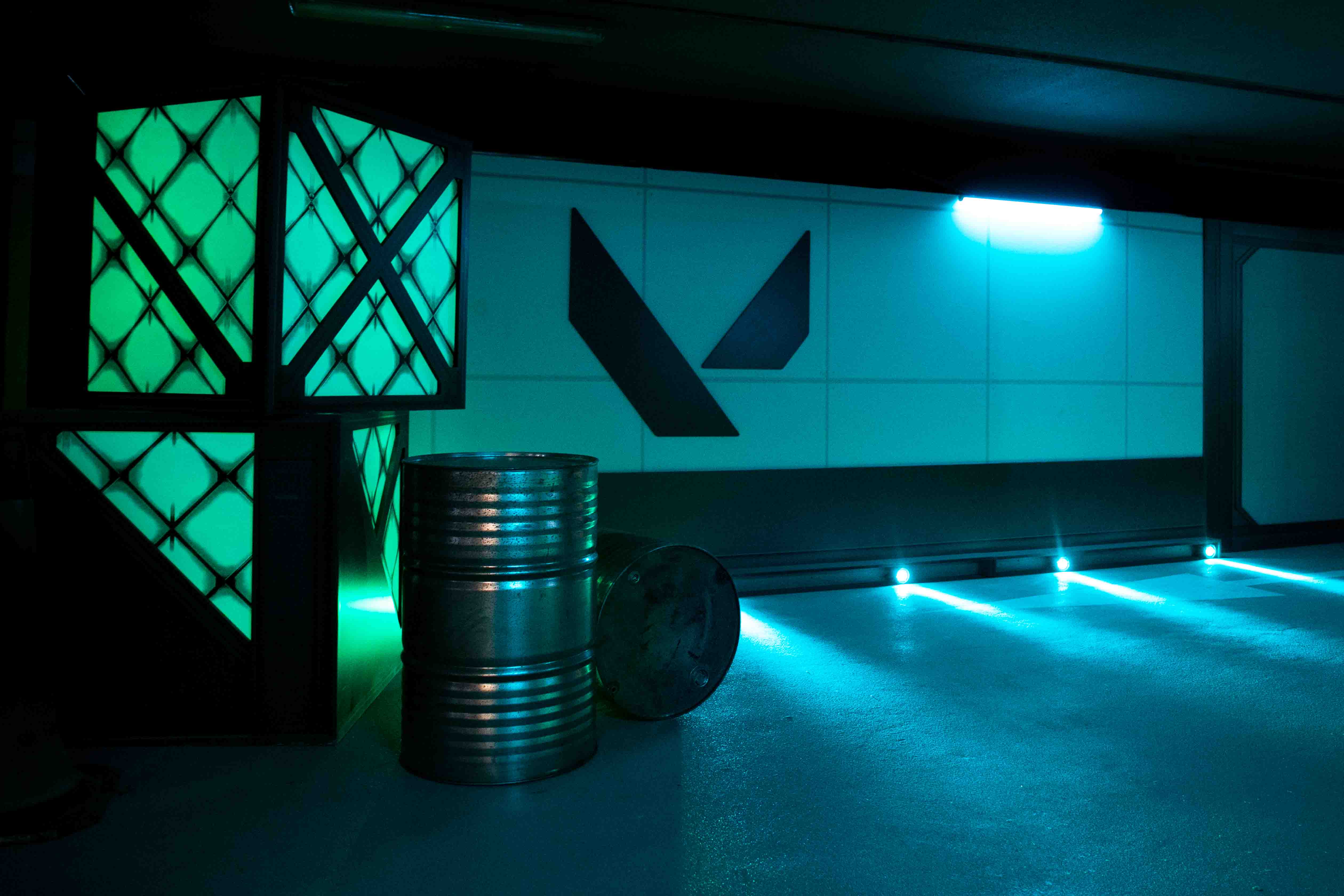
A Valorant logo on a wall with blue lights shining around it

Valorant • Retake: A Gamified Hybrid Experience

  • Client

    Riot Games

  • Solutions

    ExperienceExperiential Strategy & ProductionVR & Live Video Production

An epic battle between on-site and online agents.

After a year of rapid-paced battles, we wanted to celebrate the first year of VALORANT and its growing community with a bang. So we launched RETAKE, a series of hybrid events in Cairo and Dubai where both on-site and online audiences became real life agents of the VALORANT Protocol. They competed against each other to detonate or defuse the Spike, a game-deciding device featured in the VALORANT lore and gameplay.

00:00

00:00

00:00

Case Study

0:00

Monk Thoughts It was an absolute delight to partner with Riot Games and create a synergy between physical and online players. Together we've raised the bar to set a new standard for future events.
Marula Vaz headshot

VALORANT’s battleground is brought to real life.

The rivalry between agents is not the only aspect of VALORANT’s rich lore that we brought to life. Upon entering the event space, agents were met by sets inspired by in-game maps. Iconic landmarks, props and a huge Spike fully immersed agents into the action. The competing teams were led by live hosts that commanded when to attack or when to defend. Ultimately, only one team emerged victorious.

Monk Thoughts To stay true to the IP and create an authentic VALORANT experience, it was essential to materialize its signature visual language, industrial lighting and in-game sound effects.
Hernan Osorio headshot

Hybrid challenges to unleash your agent abilities.

The online experience took place on Twitch and was made possible with LiveXP, our own customizable tool to deliver interactive livestream experiences. Online viewers could attack by sharing hashtags, while on-site agents took part in physical interactive challenges based on in-game characters’ skills. Agents could control fire with their hands like Phoenix, escape the dark labyrinth haunted by Omen’s Paranoia or avoid being hit by lasers inspired by Cypher’s Trapwire ability.

Monk Thoughts For the first time, fans stepped out of their gaming stations and could interact with the abilities of their favourite characters via multi-sensorial experiences.
Jaihoun Habibi headshot

The potential of hybrid events.

RETAKE set the precedent for what can be achieved when brands invite online audiences to play an essential part in the story and mechanics of a physical event.

Want to talk experiential? Get in touch.

Hey 👋

Please fill out the following quick questions so our team can get in touch with you.

Can’t get enough? Here is some related work for you!

Tim Horton's world in roblox showcasing some of the obstacle courses
3d colorful world made from donuts and coffee

Tims Speed Run • Dodging Doughnuts and Catching Coffee in the Metaverse

  • Client

    Tim Hortons

  • Solutions

    ExperienceImpactful Brand ActivationsImmersive Brand StorytellingInnovation Sprints

Sipping coffee while running sprints with Tim Hortons.

In celebration of National Coffee Day, Tim Hortons teamed up with our good friends from creative agency GUT to create Tims Run Club. This campaign consists of a cozy athleisure collection and a call to customers to do a Tims run without ever breaking a sweat. To dial it up a notch, we were tasked to help the beloved restaurant chain become the first Canadian QSR brand to enter the metaverse by translating its creative concept into a challenging Roblox obby (slang for “obstacle course”). Considering this popular game platform hosts around 52 million daily active users—the majority of whom are Gen Z—Tim Hortons saw a great opportunity to reach new audiences with this gamified experience.

A sprinkled donut
A red tim hortons red cup with coffee beans surrounding it
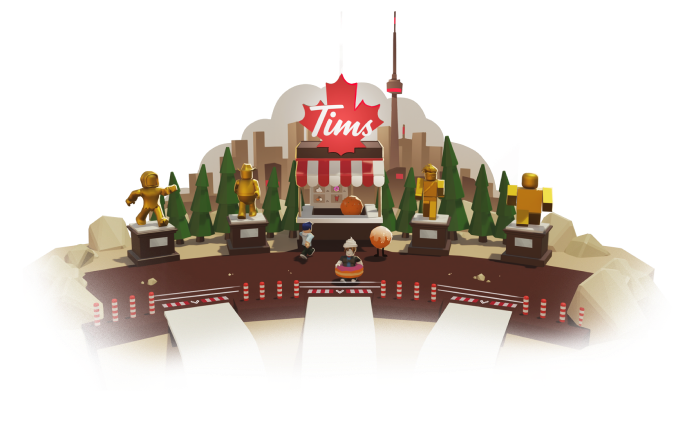
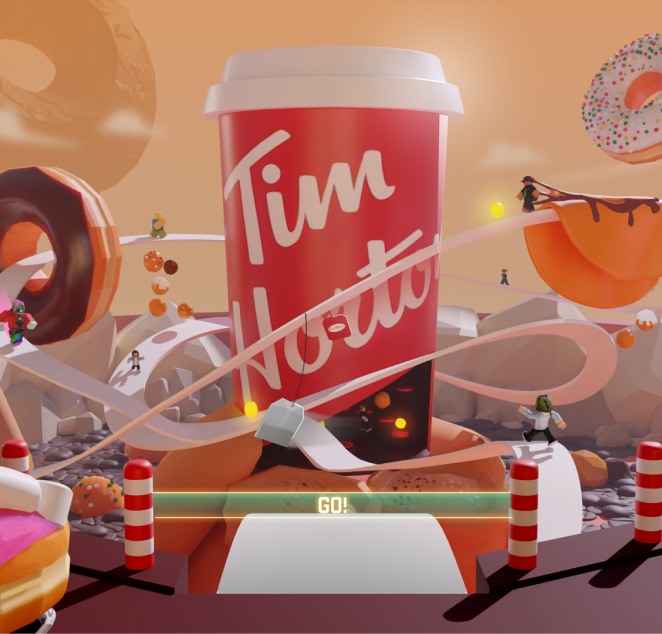
Press In the Canadian cafe chain’s game, called Tims Speed Run, players must race through hurdles ranging from spinning doughnuts and bagels to doughnut-hole boulders while carrying a tray of coffee.
Read on Adweek

The virtual world’s most colorful and caffeinated obstacle course.

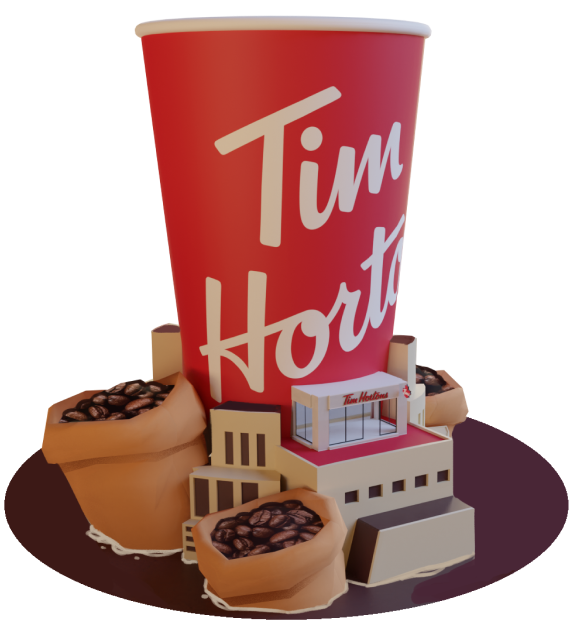
Picture this: You’re racing down colorful, sprinkle-covered steps, collecting all the golden coffee beans you can as you bounce up and down supersized everything bagels. You’re putting your best foot forward, and not even the full tray of always fresh, double-double coffees can slow you down. However, upon readjusting your grip, the course changes, and you and your four coffee cups are sent flying. Game over, it’s time to try again. No, this isn’t a strange dream you had, we’re talking about Tims Speed Run. Based on the art of speedrunning—the competitive act of playing a game as quickly as possible—Tims Speed Run challenges players to traverse the obstacle course as quickly as they can.

Monk Thoughts My favorite part has to be that it’s an authentic brand experience while still being relevant and tailored to Roblox players. All the products you’d expect to see at Tim Hortons in real life like Tim Bits, Donuts, Ice Caps, Cold Brew–you’ll find that in the Tims Speed Run as well.

00:00

00:00

00:00

Krista Lewis Associate Group Account Director

Breathing new life into familiar products.

Tims Speed Run brings iconic Tim Hortons products to life in the virtual world, allowing fans to experience these familiar goods in new, exciting ways. Players are invited to experience a wondrous celebration of Tims coffee and donuts in a world where the iconic imagery of the Canadian products are not only woven into the object of the game, but also into the structures and design of the world. To complete the Tims Run, players must sprint, jump, climb, slide and make sure their avatar doesn’t fall when traversing past swinging and rotating donuts, around Timbit boulders and down glazed icing slides—all in an effort to grab four hot coffees to-go and race back to the finish line in record-setting, leaderboard-making time.

Our Craft

Bringing iconic products to life in a virtual world

  • An avatar landing on a platform in tims speed run on roblox
  • An avatar jumping from platform to platform in tim hortons world in roblox
  • A avatar runs on a stripped pathway
  • A large view of tims speed run world within roblox

Additional fun for your avatar.

However, moving fast isn’t the only thing that makes for a solid Tims Run—you need a slick outfit, too. So, we made sure that each player’s avatar is all kitted out in Tims Run Club merchandise, bringing the brand’s athleisure collection into the digital experience. In addition, players can earn exclusive coffee and donut themed accessories, enabling them to express themselves in deliciously wacky ways by personalizing their avatars—which they can take with them wherever they go in Roblox. This way, players who collect enough golden coffee beans can make sure they’re dressed their best. As for the speediest players, they are immortalized as golden statues towering over the main player lobby. So, while you wait to start your Tims Run, take a moment to salute the best of the best and get inspired—who knows, your name might be up there one day.

Want to talk experiences? Get in touch.

Hey 👋

Please fill out the following quick questions so our team can get in touch with you.

Can’t get enough? Here is some related work for you!

Two roblox hockeyland players skating
Two roblox players on ice chatting in hockeyland

Hockeyland • A Innovative Challenge to Spark Hockey Fandom

  • Client

    Sportsnet

  • Solutions

    ExperienceImpactful Brand ActivationsImmersive Brand StorytellingExperiential Strategy & Production

00:00

00:00

00:00

Case Study

0:00

Bringing a beloved sport to a new generation.

To celebrate the 2022 NHL season play-off, we partnered with Sportsnet to launch Hockeyland: an immersive, hockey-themed adventure map available on the Mineraft Marketplace. Conceived by our in-house creative team, Hockeyland aims to inspire hockey fandom among a new, younger generation by bringing the sport to their “home ice”: one of the best-selling video games of all time. Combining best-in-class game design and metaverse strategy with executional expertise from Blockworks UK, one of a select few content creators certified by Microsoft to produce and distribute content on the Minecraft Marketplace, we helped Sportsnet deliver an accessible Minecraft experience that allows anyone to discover the sport in a fun and familiar way.

A metaverse strategy enhanced by familiar, gamified elements.

It’s not a true Minecraft experience without mining for precious resources to power-up your character and shape your environment. We built Hockeyland around a handful of familiar gamified elements designed to help players hone their skills and ice out the competition in their quest to be the best. Players can craft hockey equipment like helmets, stick upgrades, shoulder pads and more to strengthen their abilities, then put them to the test in a series of challenges against enemy Grinders (that’s hockey lingo for players who pressure opponents through physical force). From target practice in the Hockey Stick Forest to racing down the Ice Track Course, players can see if they have what it takes to achieve the game-winning goal: scaling the frigid heights of Playoff Peak to stand the literal top of the world.

An avatar in minecraft skating on ice dressed up in hockey gear

In partnership with

  • Sportsnet
Client Words We know these audiences are spending time on new, immersive platforms and we wanted to meet them exactly where they are. As innovation and technology continue to re-shape fandom, we're proud to be the first Canadian broadcaster to enter the Minecraft space.
Hilding Gnanapragasam headshot

Hilding Gnanapragasam

Director of Sports Creative, Sportsnet

An authentic approach to virtual, experiential marketing.

When it comes to inspiring the next generation of fans, Sportsnet knows where the puck is headed: today’s audiences crave interactive environments where they can play and connect. Hockeyland is a first-of-its kind experience that signifies the broadcaster’s new approach to reaching Gen Z and Gen Alpha audiences in immersive ways. In addition to meeting younger generations where they already are, we amplified the experiential marketing engagement with a 360-degree campaign spanning Sportsnet social channels, a Twitch paid media buy and organic outreach with Minecraft-focused content creators. Altogether, the metaverse strategy helped bring a beloved sport to life in a new medium—where Sportsnet can continue to grow and build for years to come.

Want to talk experiences? Get in touch.

Hey 👋

Please fill out the following quick questions so our team can get in touch with you.

Can’t get enough? Here is some related work for you!

IBC Show 2022 Captures Broadcasting for a New Era

IBC Show 2022 Captures Broadcasting for a New Era

Experience Experience, Industry events, Metaverse, VR & Live Video Production 7 min read
Profile picture for user mediamonks

Written by
Monks

Media.Monks employees on stage at IBC

September saw the launch of IBC 2022 in Amsterdam, one of the most influential conferences of the broadcasting industry, which made its triumphant return to face-to-face engagement. Naturally, we couldn’t pass up on the opportunity to show up in person.

Many might think that broadcasting is very traditional, loosening its grip on the cultural current as people turn more and more toward immersive, interactive experiences like gaming and the metaverse. But the IBC Show is anything but traditional, and this year our Monks on the ground (and on the stage) explored the broadcasting’s transformation in the virtualized era, from capturing new kinds of content to showing off workstreams that unlock incredible, new storytelling opportunities.

Monk Thoughts Innovation is at the forefront of the conference. We’re leaning into the future, and IBC is an optimistic part of that future.
Headshot of Lewis Smithingham

If it’s not interactive, it’s broken.

Video killed the radio star—and with the rise of the metaverse and an increasingly digital culture, is TV next on the chopping block? Smithingham opened the second day of the event with a keynote talk, “Step Into the Metaverse,” in which he set the stage for a new era of multi-dimensional, interactive media. The central thesis: traditional, flat media is less relevant today’s Gen Z and Gen Alpha audiences. “A core undercurrent across all of this is if something is not interactive to younger generations, it feels broken and disconnected,” says Smithingham, showing how live sports viewership is down and that most of the discussion surrounding the Super Bowl is about the halftime show instead of the game.

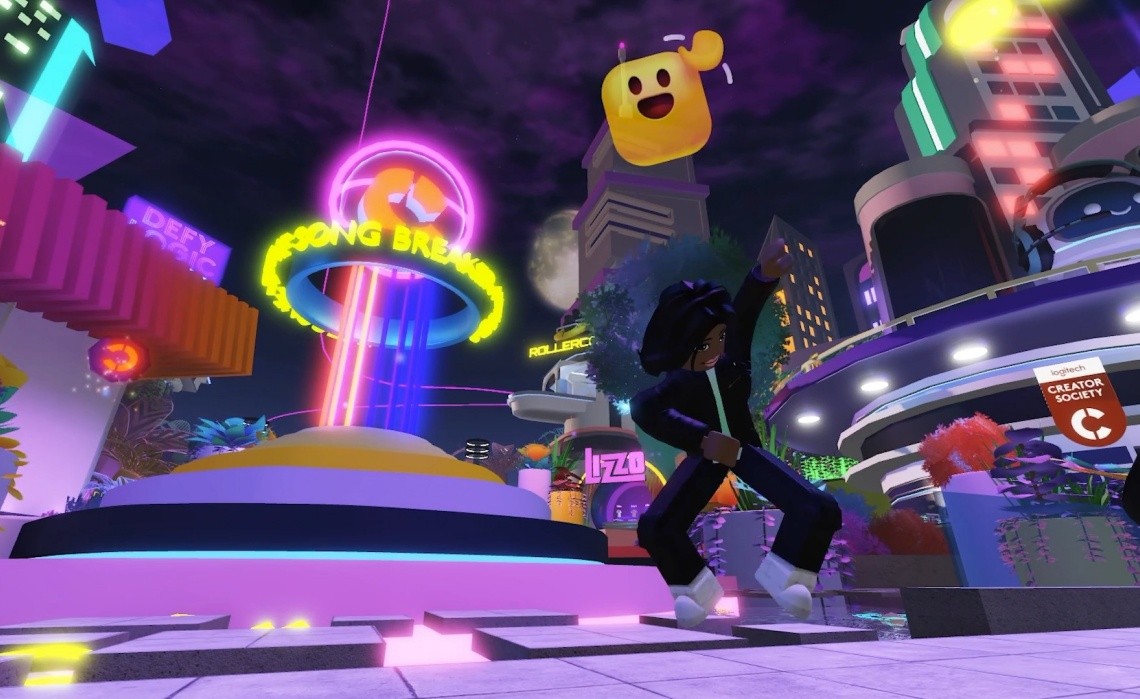
Still, Smithingham doesn’t want to discourage the industry; rather, now is the time for broadcasting players to take an active part in driving culture forward. “Broadcasting is culture. It’s the vehicle by which culture spreads,” he says, making the case by illustrating how text messaging volume directly correlated with American Idol viewership throughout the aughts. Likewise, broadcasting can embrace emerging technologies and behaviors—like livestream commerce—to connect more closely with today’s audiences and tap into new storytelling possibilities. For example, we partnered with Logitech to break out of the exclusive, VIP-focused awards show format with the Song Breaker Awards, making it more accessible and interactive for audiences in the metaverse. 

To Rob McNeil, VP of Live at Media.Monks, these immersive experiences will become complimentary to more traditional broadcast experiences. “It will coexist. Certain people will gravitate toward certain kinds of content,” he says, noting how he personally would rather watch sports in VR rather than on a TV. While he sees a future in 180- or 360-degree movies and TV shows, music performances and sports seem to be the use cases that make the most sense right now. “These are natural areas for immersive experiences,” he says, noting how music in particular takes advantage of spatial audio in the Meta Quest 2.

The lesson for brands and broadcasters? Break out of the traditionally one-way conversation of broadcasting and instead create a multidirectional ecosystem: a halo of virtual worlds, social content, streaming content, creator channels, podcasts, audience interaction and more. “It’s about feeding an audience that’s always on,” says Smithingham. “We have to evolve how we tell our stories.” You can learn more insights from Smithingham in the IBC interview below.

Esports points a way forward.

Marketers and broadcasters looking for examples of multidirectional ecosystems can turn to the esports space, which is taking some learnings from traditional sports while also establishing best practices of its own. Esports are a fast-growing industry, with 29.6 million monthly esports viewers this year—an 11.5% increase over 2021, according to Insider Intelligence. Funs Jacobs, our Gaming Category Lead, shared the stage with Nicolas Bourdon, CMO at EVS, and George Pratchett, Production Manager at Promod Esports, to discuss the new frontier of esports as they become increasingly mainstream.

Jacobs notes that most of the revenue earned in esports comes from sponsorships—but the number of esports games per year pale in comparison to, say, your average FIFA league, which amounts to less opportunities for sponsorship overall. That’s why in addition to hosting more games and tournaments, Jacobs encourages competitive gaming developers, leagues and teams to explore fan engagement on new social platforms. In addition, there is a new opportunity to strengthen their communities with blockchain-enabled technologies like NFTs, as brands can now cultivate a sense of ownership with their fans.

Monk Thoughts Give brands more opportunities to get involved. The viewer numbers are there, and the overall number of people who play video games is 3 billion worldwide.
Funs Jacobs headshot

Teams like FaZe Clan and 100 Thieves have done well to expand beyond tournaments into video content—FaZe Clan has four YouTube channels and 8.66 million subscribers to its main one—apparel, NFT drops, podcasts and dozens of channels run by individual content creators and pro players that have signed onto teams. 100 Thieves is even in the early stages of developing a game of its own. 

The variety of digital content offers not only new opportunities for sponsorship and revenue, but also different options for fans and viewers to engage as they see fit. “One thing we can learn from streamers is the level of accessibility,” says Jacobs. “These creators are so accessible despite being so far away in terms of lifestyle and skill level.”

Cloud-based workflows unlock new storytelling opportunities.

Broadcasting of the future requires new ways of working, and Smithingham joined Samira Bakhtiar, Director of Sales, Media & Entertainment at Amazon Web Services (AWS) to give conference attendees an inside look at our global, AWS-based virtual production team. While broadcasts are typically produced by an on-the-ground team tangled in wires and packed in a truck, our cloud-based setup unites personnel who are working across several different locations. 

Here's what it looks like. We put together a rack of gear, coders, monitors and uninterruptible power supplies. We then send two or three people to a location who take the rack, power it up and plug it directly into AWS via a network connection. “This is a direct connection outside of the internet, so we’re not susceptible to interferences, says Patrick Jones, Senior Director of Engineering, Live/Broadcast and Creative Solutions at Media.Monks. “We don’t have issues like outages from local ISPs.” 

Anywhere from 36 to 40 virtual machines are connected in the cloud, ranging from graphics servers, audio servers, playback servers that enable instant replays, and more. The cloud also connects dozens of people throughout a distributed team. “A director in Florida can collaborate with a tech director in England and audio people in New York,” says Jones. And despite the distance across teams, latency is negligible and just a matter of milliseconds.

Monk Thoughts There are people all over the place, and that’s the beauty of having a decentralized workflow. Our communications system lets us talk as if we’re right next to each other, which makes things so much simpler.
Patrick Jones headshot

Still, any live broadcast comes with a series of factors that may present the need for redundancies, whether that be extra equipment or multiple recording backups. “We’re the department of redundancy. It’s what we do: continue to make sure we have multiple systems in place to protect us,” says Jones. He notes that while traditional broadcasting trucks also have redundancies built in, things break, and having two of every piece of equipment isn’t practical. “If you’re in a truck, you may not have the ability to get another computer in. But in the cloud, we can quickly pivot to spin up another system or backup.”

Beyond the added efficiencies in stability and collaboration, one benefit of the AWS-powered workstream shouldn’t go unnoticed: it greatly reduces the carbon footprint of a broadcast, which would traditionally involve flying out an entire fleet of professionals. “We just have three people flying in for a typical production, and everyone else is in the cloud,” says Smithingham.

Broadcasting continues to evolve and innovate.

“Two years ago, we didn’t have some of the tools in the cloud that we have now,” says Jones. After exploring the showroom floor, he applauds the level of innovation at IBC. “Seeing all the people that are innovating, we advanced by maybe three years in six months. The pandemic forced a lot of companies to up their game, and we’re all reaping the benefits of that.”

We showed off our own innovation at the booth for RED Digital Cinema, who is disrupting the film production scene with camera equipment that is more affordably priced than more traditional names. At the booth, we shared a behind-the-scenes look at the making of Post Malone’s Twelve Carat Toothache VR performance, viewable on Meta Quest devices captured on RED’s cameras. Our team built a way to live-stitch the footage to accommodate VR viewing in a 4K resolution, streamed directly to Quest headsets as the footage is captured.

The shooting-to-viewing pipeline is important because advanced imaging isn’t just a learning curve for production crews; it forces performers to engage with the camera in new ways, too. “The camera’s movement is often limited, due to naturally occuring motion sickness,” says McNeil. “For artists, that’s challenging because they have to come toward the camera, rather than have the camera come to them.” Throughout the Twelve Carat Toothache shoot, the crew could let Post Malone inhabit the viewer’s perspective in between performances, influencing his stage presence.

To bring the same experience to the demo booth, we had headsets on hand capturing live footage of the conference floor. “As people create content with technology like this, we become desensitized to it, but people experiencing it for the first time were like, ‘This is simply stunning—absolutely amazing,’” says Jones.

The demo between team Media.Monks and team RED demonstrated more than just the potential of new technology. It also showed a spirit of partnership that permeated much of IBC this year. “You saw a lot of people going from booth to booth—not like an upstart going to the industry giants to get their foot in the door, but rather a lot of established names wanting to work together,” says McNeil.

Monk Thoughts It used to be separate workflows across the board. Now everyone has their own nuance or expertise and are working together to see what they can do together.
Rob McNeil headshot

To say that the world has changed since IBC’s last in-person conference in 2019 would be an understatement. But this year’s edition showed how the broadcast itself is in a state of evolution—one that will show no signs of slowing down soon. “We need to virtualize everything from our culture to how we do our work,” says Smithingham. From expanding content across different formats, to learning from emerging industries like esports, to exploring entirely new workflows, IBC 2022 offered several looks into the future of broadcasting—and it’s looking bright.

This year’s IBC Show offers a look into how the desire for interactive experiences and the metaverse are transforming the broadcast industry for the better. metaverse interactive content digital experiences amazon gaming Experience VR & Live Video Production Industry events Metaverse

Unity Appoints Media.Monks Media Agency of Record

Unity Appoints Media.Monks Media Agency of Record

Brand Media Brand Media, Media, Media Strategy & Planning, Metaverse, Monks news 2 min read
Profile picture for user mediamonks

Written by
Monks

Media.Monks and Unity logos

September 8, 2022

Unity (NYSE: U), the world’s leading platform for creating and operating interactive, real-time 3D (RT3D) content, has selected Media.Monks as its media agency of record following a competitive RFP process. The move will unify top of funnel awareness by consolidating media services under one roof at Media.Monks, which were previously split among various agencies.

Media.Monks will take on media strategy, planning and buying, and measurement for Unity globally. With subject matter expertise in gaming, VR, Web3 and the metaverse, Media.Monks’ integrated team will scale up media to engage Unity’s core gaming business and its B2B audience.

“Media.Monks is the right fit for our business given our shared expertise and belief in how RT3D, the metaverse and the next phase of the internet are changing not only gaming but many other industries,” said Carol Carpenter, CMO, Unity. “We are excited to partner with them to unify our media efforts globally, and work together to deliver unique solutions for customers.”

Monk Thoughts We’re so excited to partner up in a deeper way with such a similarly-minded, cutting-edge company. As avid fans of Unity, we’re looking forward to helping them charter their next path toward growth as they tackle new verticals and push the boundaries of this technology.
Melissa Wisehart headshot

In addition to the media AOR assignment, the Media.Monks creative development teams use Unity software to deliver real-time 3D solutions for clients across a wide range of industries. Recently, the Unity technology powered Media.Monks’ development of an award-winning AR experience, ‘Anne Frank House: The Bookcase for Tolerance,’ honored at the Cannes Lions Festival of Creativity in the Digital Craft category, and many more including The Webby Awards, The One Show, ADC Global and D&AD.

Monk Thoughts Real-time 3D is now a foundational part of our digital toolset. We’re using real-time 3D technology on countless projects across a wide range of verticals––it’s our go-to for creating interactive experiences, new ad formats, and yes, the metaverse.
Tim Dillon headshot

Learn more about the work Unity and Media.Monks are doing to build successful B2C brands in the metaverse by tuning in to an on demand discussion between Unity’s VP of Accelerate Solutions, Ryan Peterson, and Media.Monks' SVP, Tim Dillon. Tim will discuss insider lessons and insights gained from working with major consumer brands––from getting started in the metaverse, ways to leverage a real-time 3D game engine to making a genuine impact, and more. Listen now.

This review was led by Tenx4, an agency search consultancy who specializes in helping Global B2B Brands identify the right agency partner. “We’re on a mission to fix the broken agency RFP process to be about ‘the fit’ rather than ‘the win’ and it is clear that the partnership between Unity and Media.Monks is the perfect fit,” said Ashley Cohen Chandler, Partner, Tenx4.

Unity, the world’s leading platform for creating and operating interactive, real-time 3D (RT3D) content, has selected Media.Monks as its media agency of record. unity real time production 3D content media buying media strategy metaverse gaming VR Web3 Media Media Strategy & Planning Brand Media Monks news Metaverse

Our Map of the Metaverse Worlds: Find a Virtual Home Now

Our Map of the Metaverse Worlds: Find a Virtual Home Now

AI & Emerging Technology Consulting AI & Emerging Technology Consulting, Experience, Metaverse 7 min read
Profile picture for user mediamonks

Written by
Monks

A colorful island showing the different metaverse worlds

Given the way the metaverse has captured marketers’ imaginations for the last year, it’s easy to feel the need to make moves in the space for fear of missing out—or maybe to simply be seen as an innovator. But with roots in gaming and digital art, the lifeblood of a metaverse world is the culture that calls it home. While hopping into the hot platform of the minute may be tempting, it’s important to carefully consider what value your brand can bring to show up authentically.

Monks Thoughts The metaverse is a new canvas for creativity, but the hyped up trend wave could snuff all the incredible out of a good thing. We must see past the hype and look to the future with purposeful creativity.

00:00

00:00

00:00

Jouke Vuurmans Chief Creative Officer

The idea of people coming together in virtual environments isn’t new, as any fan of online games will tell you. But as these worlds become more mainstream, we’re seeing a shift in the role they play in our lives, whether it’s a pivot from competition to cooperation or enabling people to push beyond limits that hold them back IRL. This is virtualization in action: a set of new audience behaviors and cultural norms resulting from 30 years of digital transformation, hyper-accelerated over the past five years. These behaviors vary from one metaverse platform to the next, meaning an understanding of its culture is crucial to success in the space. In some ways, it’s not so different from identifying which city or neighborhood is the best location for a brick-and-mortar store.

Do you need to find your way into the metaverse? Don’t despair, because we’ve mapped out some of its preeminent worlds. Discover what differentiates one from the next with the information below. With a better understanding of each space, you’ll be able to better envision your brand’s place within the metaverse—wherever that may be.

An avatar in roblox dancing
Inside the merch store within Roblox for the Song Breaker Awards

Roblox.

Despite its quick rise to fame in recent years, Roblox dates back to September 2006, and today has a monthly average user base of 190 million. Its worlds are user-created, meaning they can vary drastically in look and feel; you never know what you’re going to find there. Users have the ability to develop their own assets (models, textures, audio and more), adding to the variety on the platform. This ability to create and sample a diverse array of activities is what makes it so appealing to players. Roblox is free and multiplatform—available on PC, mobile, Xbox One and VR platforms—and its developer tools are surprisingly accessible for those without deep coding experience.

More than a game, Roblox is a creation platform that has allowed millions of amateur developers to try their hand at making games and virtual environments for the first time. Players can both create and share individual assets, build robust games or simply play. The level of creation enabled by the platform, as well as its younger-skewing audience, makes it ripe for memes. Don’t expect avatars to mirror players’ physical likeness; fanciful avatars are the norm here. One great example of a brand embracing gamified elements in Roblox is the Song Breaker Awards, presented by Logitech For Creators. The experience reinvented the awards show format to be more accessible and interactive, inviting viewers to participate in a narrative that unfolded throughout the show.

Myla Unique Minor and Renee Montgomery in the metaverse celebrating on a basketball court

Horizon Worlds.

Meta’s foray into the metaverse is the newest virtual environment on our map—and the only one that requires a headset to enter. Since its launch in December 2021, Horizon Worlds now has 350,000 monthly active users. Like Roblox, environments in Horizon Worlds are largely user-created, meaning there’s a lot of variety in the worlds you can build or step into. The Unity-powered platform has a cartoon-like look and feel, with environments ranging from the fantastical to the ordinary, like a virtual comedy club or recording studio. Based in VR, Horizon Worlds requires an Oculus headset to enter, although its creation tools are accessible and intuitive.

Built by Meta, developer of some of the biggest social platforms on the internet, Horizon Worlds is first and foremost a space to socialize and create. While users can build competitive environments, connection among communities is key. The space also lends well to cultural moments like live sports or musical performances, which users can immerse themselves within from afar. Given the platform’s connection to Facebook—users can join with an existing Facebook account, although Meta just recently announced a unique account system—avatars and identities in Horizon Worlds are meant to reflect one’s real-world identity. This also makes safety and moderation a key consideration on the platform. Speaking of identity, a stand-out Meta’s Going Beyond: Women’s History Month event, made in collaboration with the NBA, is a stand-out experience. Throughout an interview focused on representation, viewers had a front-row seat.

Birdseye view of the library showing the whole playing area
Tiles that read different uncensored materials to read from

Minecraft.

Officially launched in November 2011, Minecraft is home to 170 million monthly average users. The blocky, open-world simulation game places users within a unique, procedurally generated landscape that they can explore and manipulate to their desire. What’s really driven Minecraft’s popularity over the decade is its marketplace of downloadable content and customization tools, allowing for the design of diverse worlds and environments. While Minecraft is a paid download, its wide availability on PC, consoles and mobile make it widely accessible to audiences.  

Minecraft’s culture is focused on building. Players take enjoyment in creating environments together and sharing them with the community—or even breaking apart pre-made environments. Users are afforded complete control of virtual spaces they inhabit, allowing for a high sense of ownership and collaboration. One of our favorite Minecraft activation is the Uncensored Library, which cleverly uses the game to circumvent state censorship and offer access to articles banned around the world. Of course, we have a soft spot for the time our VP of Platforms and Products Brook Downton built our New York office in Minecraft, too.

Fortnite.

Epic Games’ wildly popular shooter, powered by the developer’s own Unreal Engine, launched in July 2017 and boasts 280 million monthly average users. Having risen to fame at the height of the “battle royale” trend in gaming, Fortnite offers a handful of different game modes that take place on an island that grows and evolves over time. It features a cartoon-like art style, similar to what you might expect from a CGI-rendered animated film. As a free-to-play, cross-platform title available on consoles, mobile and PC, Fortnite has a very low barrier of entry for players.

Fortnite is an evolving space, refreshed seasonally with new competitive modes and events featuring limited-edition skins (avatars) depicting characters and celebrities from pop culture. The promise that there’s always something new is what keeps players coming back. In late 2021, Fortnite launched Party Worlds, or social spaces where players can access minigames, concerts, movie screenings and other content. The space demonstrates the kinds of ways that metaverse worlds can uniquely bring people together in shared, persistent social spaces.

An avatar in decentraland playing duolingo game

Decentraland.

Decentraland launched in February 2020 and is frequented by 330,000 users each month. There’s a big difference between Decentraland and the other platforms mentioned above: it’s a Web3-based environment built on the Ethereum blockchain. While platforms like Roblox and Horizon Worlds invite users to jump into self-contained worlds, Decentraland is a seamless, persistent landscape in which plots of land are bought, sold and redeveloped by the community—just like in the real-world real estate. Decentraland is accessible in a browser, though the need to connect a crypto wallet can be a technical barrier of entry to users.

The culture in Decentraland is more plugged into the Web3 space and skews very digitally mature. In addition to in-world games and activities, this environment is a place to flaunt what you’ve got: art galleries designed to show off NFT collections are popular, and a bustling marketplace allows users to trade ownership of unique digital outfits and objects. Duolingo expertly captured the playfulness of the space by dropping a giant statue of Duo, its infamous mascot, into Decentraland’s leisurely Terra Zero area. Holding a billboard that cycles through snarky push notifications reminding visitors to do their language lessons, the activation cleverly emulates Duo’s pesky habit of popping up right when the leisurely activities tee off.

The Sandbox.

 Our final metaverse world covered here is also one of the oldest, having launched back in May 2012. Since then, the Sandbox is enjoyed by 300,000 monthly users. Like Decentraland, it’s a Web3-based world where users can purchase land and build their own monetized environments. The platform is relatively consistent in look and feel, taking a voxel art style reminiscent of Minecraft as a nod to its 2D roots. Available on PC and mobile platforms, the Sandbox handles onboarding very easily: new users have the choice to connect a crypto wallet or a social account if they lack one.

As far as interactions go, the Sandbox offers a mix that you’ll find in other platforms. Like Roblox, users can easily construct their own games without coding experience. A play-to-earn model rewards creators and players, incentivizing play on the platform. And similar to Decentraland, a marketplace of NFTs in the form of avatars and unique parcels of land add to the opportunities for users to earn real-world value from their digital creations. One cool example we love is a collaboration between Tony Hawk and Autograph to build the biggest skatepark in the metaverse. In addition to hanging out in the space, visitors can purchase NFTs inspired by Hawk’s career.

Find your place in the metaverse.

Just like how the universe contains too many planets to count, the metaverse is a vast space comprising unique worlds—each with their own distinct culture. From video game worlds to Web3-native environments, each platform offers different tools for people and brands to engage with one another. Before jumping into the metaverse for the sake of it, carefully consider the audience you want to reach and how your brand can uniquely add value inside the world cultivated by its community. After making the right culture fit, you’ll have made the crucial first step in building impactful, authentic metaverse experiences.

The metaverse is a natural progression of the internet, and it reflects a cultural shift brought on by the ongoing process of virtualization. The metaverse is everywhere––a universal and connected experience that transcends geographical barriers and presents exciting opportunities for brands to show up. But, the stakes are high and the barrier to entry is steeper than ever. Advertising in the metaverse shouldn’t look like advertising at all. Brands need to strike a balance between being present and being authentic by providing utility and meaning for people through creativity and technological innovation. In short, brands must create experiences people actually want. While this isn’t a new idea, marketers will have to stretch their thinking for a new, fully-virtualized medium and a highly engaged audience quick to criticize disingenuous marketing efforts.

Want your own map of the metaverse worlds? Download it below: 

For your desktop (with stats)

For your desktop (no stats)

For your phone (no stats)

Do you need to find your way into the metaverse? Don’t despair, because we’ve mapped out some of its preeminent worlds. metaverse virtual experiences gaming game engine brand virtualization Experience AI & Emerging Technology Consulting Metaverse

The Creator Economy, A True Game-Changer

The Creator Economy, A True Game-Changer

4 min read
Profile picture for user mediamonks

Written by
Monks

Three images of people gaming, taking selfies, and singing

In case you haven’t seen the writing on the wall, the days of passive spectatorship are over and done. With the rise of social media, brands have been handed the opportunity to engage in two-way conversations with their audience, as the power of conversation shifted towards consumers. Still, as innovation never sleeps, this system may soon lose its popular standing: word has it that Web3 is slowly but surely becoming a bigger dot on the horizon, paving the way for an internet era that’s governed by the collective. While people like you and me are enjoying this strong wind in the sails, brands are figuring out how to stay afloat in following the currents of our industry. After all, brands are always searching for the best strategy to connect with new and existing audiences, our Social Innovation Lab says in their latest report, The Year of Digital Creators.

It’s all in the name, because collaborating with digital creators has proven to be one very effective way for brands to work their crowd. With influencers and creators—yes, they are different and the report will tell you why—the “creator economy” has rapidly expanded to a $20 billion industry. As such, it’s a growing focus for brands in catching the attention of consumers. This fast-expanding segment of our industry is driven by the ease of producing high-quality creative content, forging connections over shared interests and passions, and serving the desire for an authentic community. 

Gaming, our Social Innovation Lab highlights, is a great example of an industry where this creator economy can thrive, as it offers a digital space where influencers and creators, like livestreamers, are consistently strengthening connections with their communities at the intersection of content and entertainment. While the report touches on several areas where digital creators are adding depth, let’s use this space to dive into gaming and explore why it’s not only super fun, but also super efficient in speaking to your audience. 

Getting Ahead Of The Game 

As social distancing reigned these past two years, many people moved from physical to virtual worlds in search of new forms of entertainment. As such, it may not come as a surprise that the global gaming market has grown 21.9% compared to pre-pandemic levels, Statista reports. In 2020, there were nearly 2.7 billion active gamers worldwide and this number continues to grow, especially among Gen Z. The gaming industry has an incredible global reach—and leading brands are taking note, increasingly embracing this culture with open arms. 

“The gaming industry, particularly the culture, is becoming more crucial for every brand that wants to survive in the next twenty to thirty years. This has everything to do with upcoming generations, who will grow older and with time gain more buying power,” says Funs Jacobs, our Gaming Category Lead. “81% of Gen Z’ers have played video games—the highest share of any generation—so if you fail to understand this culture, you’re going to miss the connection with this audience and every following generation.” Check out our podcast episode with Funs Jacobs. 

So, collaborations between brands and gaming platforms are not just becoming more common, but also more serious, with the former owning virtual spaces inside video games or even producing their own unique, artistic gamified experiences. That said, the gaming industry is completely new territory and vastly different from what brands are used to creating in collaboration with influencers. Nevertheless, many industries don’t shy away from a challenge. Fashion and luxury, which is known for its innovative spirit and commitment to speaking to the moment and shifts in culture, was one to quickly tap into the upcoming gaming trend. Nike, for example, recently built its metaverse store Nikeland in Roblox, allowing nearly 7 million visitors worldwide to try on virtual products and play various games. Through such gaming platform collaborations, fashion brands are able to gamify their virtual products, thereby making the shopping experience all the more exciting. 

Livestream to Streamline Your Community Engagement 

Talking about excitement, live action is indispensable to a gamified brand experience in an era of digital creators. While gaming was originally a digital experience that combined gameplay, interactivity and narrative, it now also entails streaming technologies that enable the creation of online communities centered on the acts of playing and watching. Nowadays, popular game streamers are able to interact and connect with fans around the world and across platforms like Twitch, Instagram and YouTube. Brands want to reach audiences far and wide, whereas streamers want to be sponsored and earn an income from doing what they love. So, it wasn’t long before the two joined forces—it’s a true win-win. 

Community-building is central to the gaming experience. “Communities are being formed in and around gaming, which is fascinating,” says Jacobs. “However, many brands don’t have a strong community at the moment. They may have fans, but they don’t have that 360-degree relationship with their consumers—and that is something that needs to change in order for brands to survive.” Through collaborations with game streamers, brands are able to tap into diverse digital communities. Within these communities, the work of game streamers especially contributes to building an environment in which fans are not just entertained, but also gain a sense of belonging. 

Our Social Innovation Lab argues that “community” is the new version of word-of-mouth, and the opinions of people who are influential online can either boost or block sales. Belonging, information-sharing and the demand for a product are all stimulated by the powerful influence that digital communities can wield. Moreover, they provide a very useful space for brands to gather insights and feedback. So, by getting to know the digital community and looking closely at its behaviors, preferences and needs, brands have a unique opportunity to deliver tailored products, services and content. In other words, the digital community is an innovative, effective and fast-paced way for brands to sell directly to their consumers in the social media space—but more about community commerce can be found in the report. 

Forecasting The Future Of Creators  

While subcultures and tight-knit communities interacting across platforms characterize gaming culture today, it could look completely different tomorrow. The industry is growing, innovating and evolving faster every day. Fortunately, we now know that brands are paying close attention to these important developments. Always ahead of the industry, our Social Innovation Lab expects that one will be metaverse integration, predicting that in the next five years game streamers will interact with fans through their avatars in the metaverse while wearing virtual products and playing games together. Again, both efficient and super fun. 

What else do we think might change? Explore the report and find out more about the current state and future of digital creators.

Our Social Innovation Lab dives into gaming and explores why it’s not only super fun, but also super efficient in speaking to your audience. gaming social media marketing Web3 virtual experiences shoppable content

How Gaming Is Shaping the Future of Work in the Metaverse

How Gaming Is Shaping the Future of Work in the Metaverse

4 min read
Profile picture for user mediamonks

Written by
Monks

Screen grabs of videos games on a black background

Today, gaming is the gateway to the metaverse. Brands know it, marketers know it, and so it comes as no surprise that Microsoft has reached a deal to buy Activision Blizzard in the biggest all-cash acquisition in history. Or that just days before, Take-Two Interactive had made its own powerful move by agreeing to acquire Zynga, arguably the biggest company in social gaming.

For the industry, these two momentous deals are bursting with clues of what the future might look like. Brands are moving into or doubling down on gaming as they seek to tap into that community, bring interactive features to their business and create new virtual worlds to connect with consumers. And in years to come, we’ll continue to witness big moves in that direction as brands become increasingly interested in leaving their mark on the metaverse.

But in addition to gearing up for something that’s still being developed, these companies know that gaming spaces are already rich in cultural momentum and provide endless opportunities to create virtual environments where people can collaborate, exchange ideas and engage with others. But it’s not just consumers who will be there—these experiences can also extend to brands’ prospects and their own workforce. So, what exactly does the gaming trend mean for the future of work? 

Investing in Memory-Making

If you’ve read our metaverse report, which you can read in English, Spanish, Portuguese or Chinese, you may recall the anecdote of how our Director of Creative Solutions Lewis Smithingham had a meeting with his client in the video game Red Dead Redemption, where their business talk was interrupted by a lion attack. Far from being ruined, the meeting became an inside joke that brought them closer together—a fun memory that they wouldn’t have made on a regular video conference.

The anecdote shows how the memories we form online can have the same value as those made in any IRL experience. Perhaps even more so, as virtual spaces enable us to do things we wouldn’t have otherwise—like fending off your adversaries with clients. The fact is, people have been collecting real memories online for a long time, participating in exchanges over their shared passions and making new friends. It’s only natural for companies to start leveraging the potential for memory-making, and bring that value internally.

The report also illustrates how gaming drives the desire for cooperation, which becomes easier and more engaging in immersive worlds. On one hand, it erases the notion of borders and physical distance, meaning two people can be present in the same virtual space in a matter of seconds. It also levels the playing field: with games like The Last of Us, people can customize their experience through the accessibility settings, which includes features that benefit low-vision players and other options focused on fine motor and hearing.

Horizon Workrooms’

The same level of personalization can be extended to virtual workstations. People with chronic medical conditions or disabilities can personalize their setup according to their own needs and preferences instead of adapting to the one-size-fits-all kind of equipment they would find anywhere else. Horizon Workrooms’ settings, for instance, include color correction filters that help color blind people better distinguish elements. 

Beyond the Fun and Games

It would be a big mistake to assume that immersive worlds can only bring value to the entertainment industry. Microsoft’s Mesh, for instance, is a platform that enables team collaboration through immersive telepresence, making use of elements of the AtspaceVR platform that the company acquired. Soon, that same technology will be used to enhance the Teams platform. Noticeably, Microsoft has identified immersive worlds’ potential to bring work teams together and provide them with the same engaging, bonding effect it has on consumers.

Immersion can also be extremely powerful when it comes to networking. As a guest on the Campaign Chemistry podcast, Smithingham explains there’s a special level of focus that comes from having one’s hands on a controller, which pushes you to be present in the moment. So while regular video conferences lack some of the most engaging elements of an in-person meeting or the famous “hallway moment,” immersive worlds reduce the possibilities for distraction, leading to higher productivity.

When it boils down to it, accommodation makes all the difference in performance. The virtual workspace offers the possibility to be designed and redesigned for each individual without intruding on the preferences of others. With personal assistive technology, workers easily focus on their tasks and preserve energy for what really matters instead of wasting it on working around the same old barriers.

That said, as we embrace these technologies we must make a conscious effort to erase other inequalities—financial, cultural, racial—and create digital environments for everyone. “An open metaverse is more than just interoperability; it's about accessibility,” explains Catherine D. Henry, SVP Growth, Metaverse Innovation & Transformation Strategy, XR Creative Technology.

Monk Thoughts Digital democracy is ensuring everyone has access to the tools to participate in the virtual economy. The more active participants, the richer the ecosystem and the user experience.
Catherine Henry headshot

The Gateway to the Metaverse

For companies looking to build these immersive, collaborative environments, gaming serves as a source of inspiration and technological prowess. It shows how personalization and accessibility can bring about meaningful experiences, and that we don’t need to be in the same physical space to create a culture we truly feel part of. 

But among all the learnings that transpire from gaming brands, perhaps the most important is the value they place on authenticity. These brands keep players’ interests at heart to focus solely on experiences and partners that deliver true value to their community. By the same token, it’s essential to take a people-centric approach when it comes to virtual workspaces. Only if we put people’s preferences first will we be able to become the sponsors of an unforgettable experience. 

In seizing all the opportunities that the gaming industry is enabling for brands, it would be wise to approach each with an open mind. We’re already witnessing how modern and traditional companies alike are dipping their toes in gaming to unlock untapped audiences, but these values will also shift the way we approach other instances of life, such as work. 

If the metaverse is the successor of the internet, and gaming is defining the shape it’s going to take, it’s time we start looking at the tools and features that make it so engaging, and find new ways to incorporate them into our own business. After all, experimenting internally is the first step to providing our audiences with the virtual, immersive worlds they crave.

As companies invest in gaming, the development of immersive worlds will shift the way we approach work. As companies invest in gaming, the development of immersive worlds will shift the way we approach work. gaming metaverse immersive future of work

Stepping Into The Metaverse by Creating Well-Played Experiences

Stepping Into The Metaverse by Creating Well-Played Experiences

4 min read
Profile picture for user mediamonks

Written by
Monks

colorful design patterns are behind a blog title mentioning the metaverse

Touted as the successor state of the internet, the metaverse is bringing about new, immersive ways for people and communities to engage digitally. At the same time, the equipment used to experience virtual worlds are becoming more sophisticated and cost-efficient to consumers. Together, these trends offer a ripe opportunity for brands to begin experimenting within the metaverse.

Often, investing in gaming activations and experiences has served as a simple way for brands to enter this new space, some of which have garnered media attention and largely positive sentiments among players. These include Ally Bank’s customized island on Animal Crossing: New Horizons and the Uncensored Library, both of which Media.Monks helped create. Whether you want to build a game from scratch or put your unique spin on an existing world, here’s why gaming platforms are top-of-mind in brands’ virtualization strategies—and how you can create a high-scoring metaverse experience of your own.

Why Games Are a Go-To Entry Point

Andy Loo, VP of Operations in APAC says that games make for an easy starting point. Many online games offer pre-existing, fully realized virtual worlds through which brands can engage with consumers—cutting out much of the complex legwork that comes with building a metaverse experience from scratch. “Other points that brands can leverage are the hype that is already built around popular multiplayer games and the ability to connect with players online through their social features,” he adds.

Ally island video game showing 3D characters racing

Furthermore, game platforms such as Roblox and Minecraft have libraries of predefined tools that let players easily develop their own games and virtual worlds. These very same gameplay features can be leveraged by brands, too—building on gamers’ desire to create and collaborate. With Ally Island, for example, Ally Bank was able to exhibit their brand promise in a compelling way by helping players manage their in-game money and even invest in the “stalk market”—the game’s play on the stock market—much like it helps customers attain financial literacy and security in real life.

Social Media Gives Way to Social Gaming

In recent years, games have become important places to meet and socialize virtually, particularly for younger audiences. Spurred further by the pandemic, more people have jumped into online gaming, not just for its entertainment value, but also as a social lifeline to connect with family and friends. Statista’s 2021 survey of gaming audiences released in April found that the social side of gaming is very important to the majority of players: 77% respondents said that gaming helped them stay in touch with friends and 80% reported that video games helped them to meet new people. 

With the social and entertainment aspects of games intersecting, it’s no wonder that online gaming is gaining ground. Major game developers are also building enhanced social capabilities in their products. Sony is partnering with Discord to build a voice chat app into PlayStation consoles and Bitmoji will be integrated into Gismart-developed games in Snapchat. These are just a couple examples of games evolving towards spaces for socialization.

“We’re constantly looking for new ways to enable players around the world to connect with one another, form new friendships and communities, and share fun experiences and lasting memories,” Sony president and chief executive Jim Ryan said in a blog post.

These trends support a cornerstone characteristic of the metaverse: it’s an intrinsically social space. Much like the internet, the metaverse fulfills a desire for connection between people—but unlike the asynchronous, feed-based internet we know today, the metaverse is set to thrive on live interaction, like attending a virtual concert where players can interact with one another and enjoy the performance together.

A focus on sociality and relationships presents another way brands are entering the metaverse through gaming: by creating avatars and “skins” that players can personalize to show off their identity and style. “Fashion has always been used as a building block of identity, so what you wear says something about you, as a person in the real world,” Liam Osbourne, Global Client Partner of FLUX, our fashion and luxury team, told Digiday. “As we’re seeing things get more advanced digitally, it’s only natural that your avatar or virtual version of you gets given the same level of importance and attention.”

First player view of hands holding a steering wheel

A World Customized for Your Brand

While many brands have had success tapping into existing game worlds, others have taken a more bespoke approach by building experiences from scratch. Sure, it’s going to require more effort and resources, but you will have full creative control in tailoring your own world.

In promoting Netflix’s first-ever original anime series Eden, we built a VR racing game from the ground up. Available in English and Japanese, the game is based on the unique art style of the show, which is a mix of 3D cell-shaded characters and 2D painted backdrops. Developed as a companion to the series, the game lets players ride through Eden’s luscious environment to discover key locations and piece together the series’ story.

The benefit of these custom environments is that they are longer-lasting than one-off campaigns or ephemeral in-game activations. To that point, Eden Unearthed expands the world of Eden into a living, immersive world for fans to explore as they create their own stories inside.

“By establishing their own virtual worlds and encouraging people to interact within them, brands can seize opportunity in the metaverse to fuel future marketing and engagements with their audiences,” suggests Loo. Continually filling these spaces with fresh content helps them feel dynamic and real—and keeps audiences engaged into the long term.

Whatever your method to approach the metaverse or gaming, begin by considering which kind of experience is the best fit for your audience. Questions to ask include: what is a suitable gaming platform or type of world that would appeal to them, and what is the level of engagement you seek? For example, if you are trying to reach a young gaming audience, then customising a world within games such as Fortnite or Roblox—whose core players belong to Gen Z—may be the way to go. Free, multiplatform games may also be preferable for reaching the widest possible audience and lowering the barrier of entry.

Creating an affinity with your audience and connecting with them is key; there is no place for hard selling here. Be creative in making use of the environment to build value. The metaverse is a place to unlock new creative expressions, and brands are presented with numerous opportunities enabled through gaming.

For many brands, gaming is an easy entry point into the metaverse. Learn how you can level up your metaverse strategy in gaming. For many brands, gaming is an easy entry point into the metaverse. Learn how you can level up your metaverse strategy in gaming. metaverse marketing strategy gaming brand virtualization

Choose your language

Choose your language

The website has been translated to English with the help of Humans and AI

Dismiss