Case Study
Monks and NVIDIA
Orchestration Partner for the Intelligence Era.



Accelerate AI adoption.
Our strategic collaboration with NVIDIA empowers organizations with cutting-edge AI solutions that drive unparalleled efficiency, and freedom. The bottom line is that our solutions deliver great returns quickly without software or vendor lock-in. This is the kind of flexibility and cost calculus companies look for in rapidly changing times.
This powerful alliance seamlessly integrates Monks' comprehensive services and solutions with NVIDIA's industry-leading accelerated compute and SDKs. Through our partnership, you gain access to trusted expertise, global scale, agile execution, and end-to-end services designed to meet the needs of the ambitious.
Accelerated Solutions
- Monks.Flow - Shift your team from operators to orchestrators, steering AI agents toward transformational outcomes. Learn more.
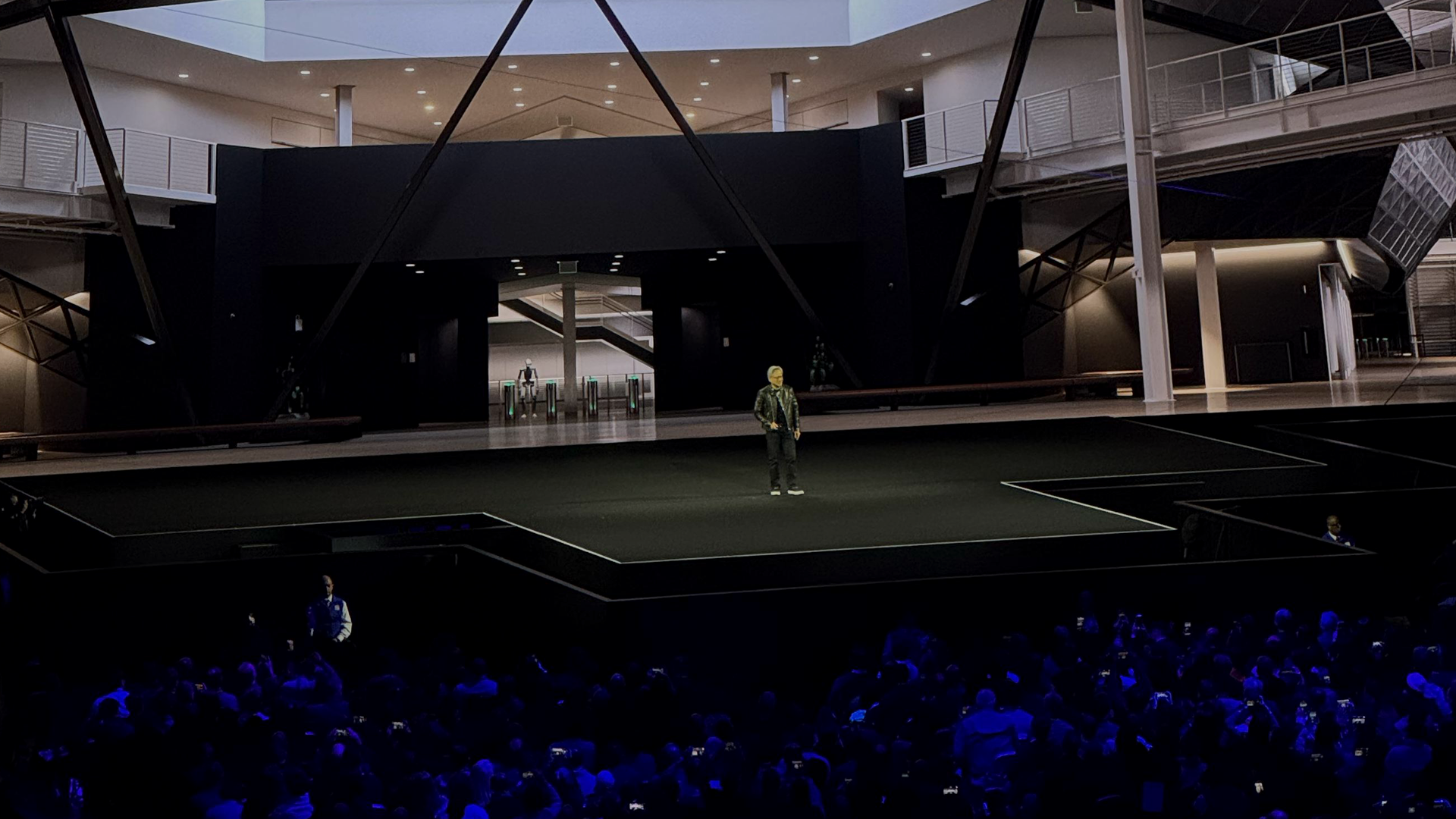
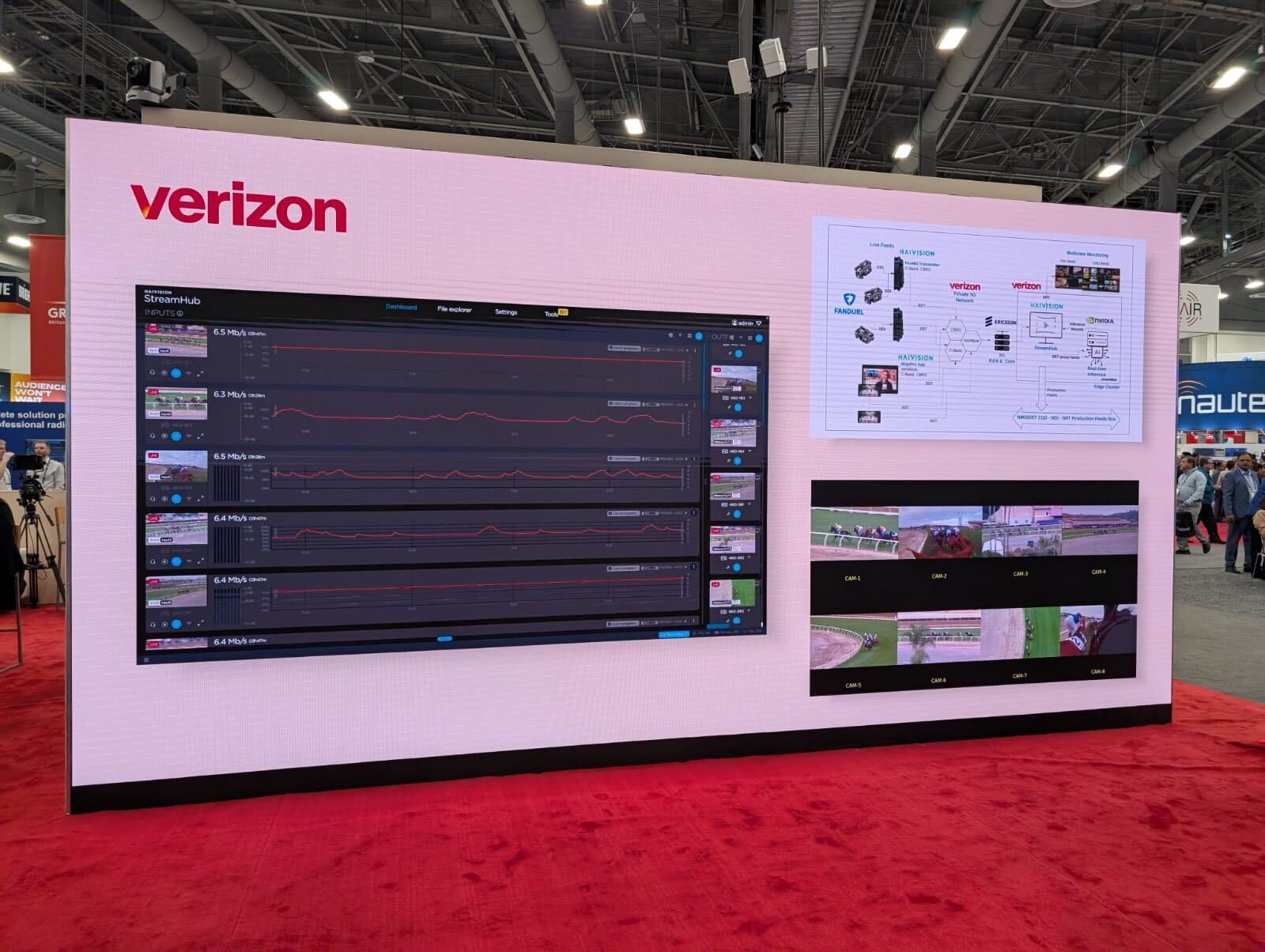
- LiveVision™ - Modernize your broadcasting infrastructure with real-time AI to create next-generation viewing experiences. Learn more.
- Email.Flow - Unlock a new level of customer engagement and loyalty by delivering hyper-personalized email communications with AI-powered consistency. Learn more.
Events
Join Monks at these upcoming events and unlock the power of orchestration for the intelligence era.
- AWS Re:Invent (opens in a new tab/window) Monks showcases solutions for deploying and scaling NVIDIA-accelerated AI and HPC workloads on AWS cloud infrastructure. Las Vegas, NV — December 1–5, 2025.
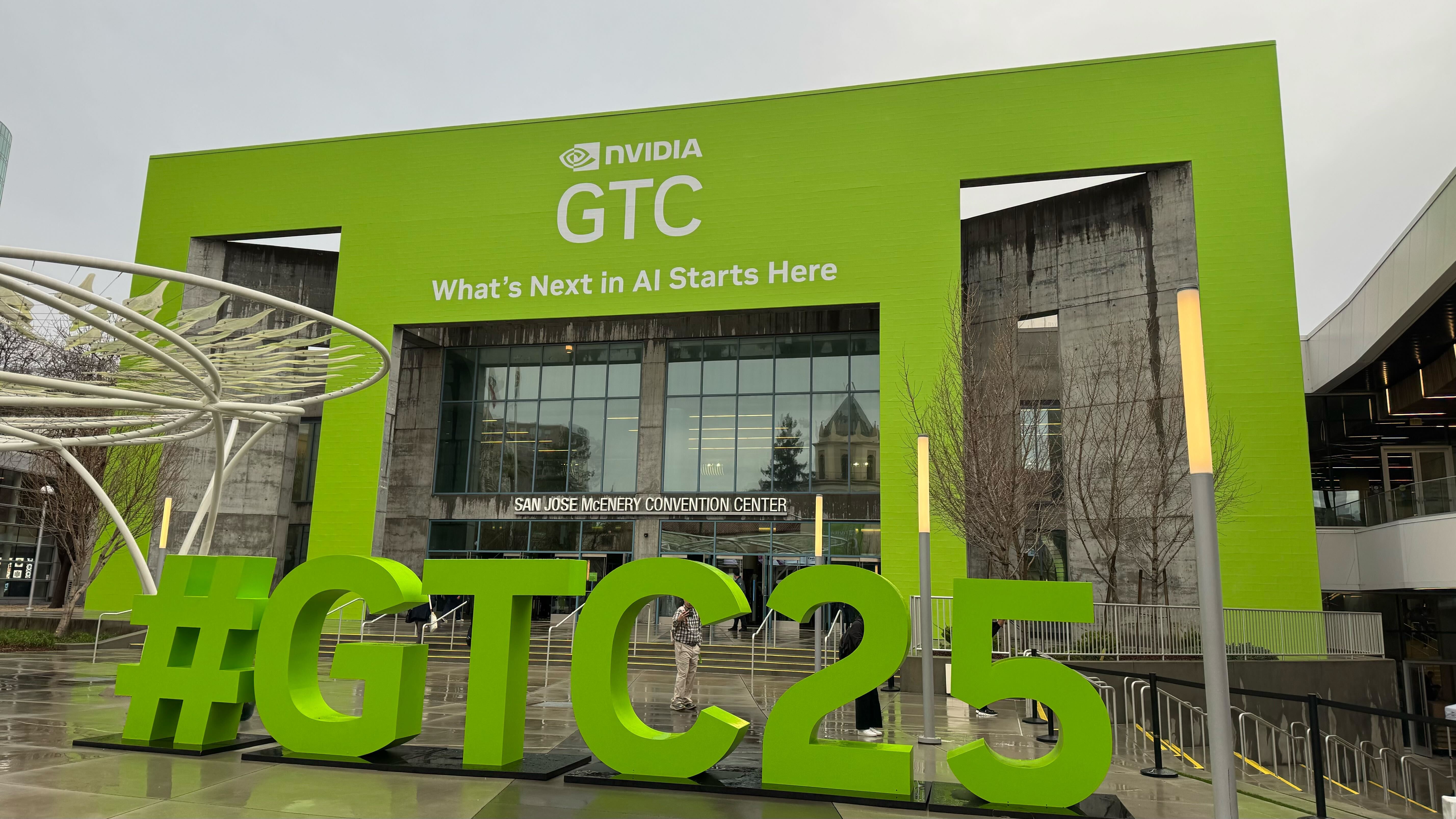
- NVIDIA GTC San Jose (opens in a new tab/window) The flagship AI conference: Monks reveals breakthroughs in accelerated computing and enterprise AI shaping digital innovation. San Jose, CA — March 16–19, 2026.
Our end-to-end partner services
Going beyond broadcast possibilities with software defined production.


Monk Thoughts
Our approach combines technical expertise with customer centricity. This enables us to deliver solutions faster and more effectively, setting a new industry standard.

How can we help you innovate? Let’s talk.
Key Takeaways from Advertising Week Latam as We Look Toward 2025
Key Takeaways from Advertising Week Latam as We Look Toward 2025


Organized annually by Insider, Advertising Week Latam has cemented its reputation as a must-attend event for the advertising world. Year after year, it gathers top leaders from major brands and agencies to discuss emerging opportunities, trends, and technologies with both local and global relevance—and this year’s event was no exception.
Held in early November, Advertising Week offers a preview of the ideas and themes set to drive the industry’s agenda in the year ahead. Whether you missed it or just want the highlights, here are the trends poised to shape the road to 2025.
We’re entering a new era for creators and brand ambassadors.
If you attended Advertising Week at the Papalote Museo del Niño in Mexico City on November 5–7, you probably noticed the prominent role of content creators across multiple panels. Judging by how quickly these rooms filled up, these sessions captured special interest, highlighting the growing value brands and marketers place on creators. We are in an era where connecting authentically, relevantly, and in real-time with audiences is not just desirable but essential—and that is redefining the relationship between brands and creators.
“The importance of creators lies in their deep connection with the audience,” says Alejandra Chiang, Account Director at Monks. “When communities trust a creator, and that creator partners with a brand that shares their values, the metrics always reflect that synergy.” But gone are the days when a promotional post was enough. Today, forging genuine connections requires actively engaging in dialogue with audiences and moving in tune with culture.
Expectations are rising while attention spans are shrinking. For brands and creators alike, the secret to thriving in this environment is delivering genuine value to audiences. A case in point: in a campaign for Sinuberase, a probiotic treatment by Opella, we collaborated with a diverse set of creators, including Mexican influencer Arturo Lemmen. The key to success was giving each creator creative freedom to generate content that genuinely interests their audience, allowing for a deeper connection with the product.
The power of data and large-scale personalization.
Creating value for consumers is essential, but it’s also easier said than done. It all starts with a deep understanding of the audience, requiring brands to prioritize data analysis to unlock consumer insights—and sometimes uncover surprising behaviors.
“Consumers don’t always use platforms for their intended purposes, which requires constant data analysis to adjust strategies,” says our Group Creative Director, Camilo Monsalve. A standout example shared during one panel came from the ecommerce giant Mercado Libre, where some users treat the platform as a search engine rather than a shopping destination.
Similarly, Heineken discovered its content resonates not just with its customers but also with non-beer drinkers. This is largely because the brand skillfully taps into major cultural moments, creating content that connects with people through shared passions and meaningful experiences. “What matters most is recognizing these behaviors, seizing opportunities around music festivals, sports events, or culinary experiences, and engaging with people’s interests beyond just the product,” explains Monsalve.
Monk Thoughts
This approach not only helps brands thrive in increasingly complex algorithms but also reinforces its relevance by communicating with audiences in their own language and interests.

Efficient data management also helps brands elevate personalization to new heights. “Rather than focusing on a narrow niche, data allows us to segment and customize messages for diverse groups with greater precision,” explains Andreia Tavares, VP, Head of Social, LATAM. “This enables sharper communication across segments, maximizing the impact for both brands and their portfolios.”
In today’s landscape, where a brand’s relevance depends on staying in constant dialogue with its audience, the combination of creativity and data is essential. “We have to operate in real time, moving at the same speed as consumers, to ensure brands remain relevant,” says Tavares.
AI enhances engagement and creativity.
It’s impossible to discuss real-time interaction without considering the impact of artificial intelligence. During Advertising Week, it became clear that AI not only improves how marketers present and sell ideas—whether to clients or within their own organizations—but also expands team capabilities. “AI enables smaller teams to offer full-scale services without becoming overwhelmed by tasks they can’t fully manage,” explains Chiang. Success isn’t about team size but about striking the right balance between creative talent and technology.
Part of achieving that balance is realizing it goes beyond just automating tasks to gain speed and efficiency at a lower cost. The real shift lies in using AI to foster deeper connections—restoring a sense of humanity in interactions between brands and people and reimagining what’s possible in that relationship. AI helps ensure the right message reaches the right audience on the right channel.
This combination of technology, data, personalization, and empathy will define leading brands by 2025 and beyond. Audiences increasingly value authentic and personalized connections, and brands must not only adapt to cultural changes in real-time but also actively participate in the creation of culture. A significant year lies ahead for those who manage to find the balance between creativity and technological precision while engaging in ongoing dialogue with their audiences.
Revolutionizing Customer Relationships Through AI
Revolutionizing Customer Relationships Through AI

AI is the great connector. From internal operations to customer loyalty, AI-driven tools are bringing together systems, data and individuals to enable a deeper understanding of customers and processes, fueling growth by doing so. There’s probably no area in our industry that remains indifferent to the potential for AI enhancement—and if there is one, that will probably change soon.
For all these reasons, the praise for AI among marketing experts is ceaseless; but while much ink has been spilled about it, we’ve merely begun to scratch the surface. This month, our team was part of Salesforce Connections, where the topic of AI and its impact on customer relationships dominated conversations. The two jam-packed days of sessions were all about creating strong, lasting customer connections with meaningful interactions—using AI combined with the power of first-party data to ideate, create and deliver them.
As the event kicked off, Salesforce unveiled their new AI-driven tools for personalized customer experiences, and we were honored to be featured in their announcement as one of the partners contributing to their generative AI ecosystem. If you want to learn more about AI and its impact on customer relationships, here are some of the main takeaways from our people’s keynotes and panel discussions.
AI empowers CMOs as their roles evolve.
On the first day of the event, our Chief Innovation Officer, Henry Cowling, and S4 Capital Group Executive Chairman, Sir Martin Sorrell, shared the main stage. Together with industry experts such as Salesforce President Sarah Franklin, they unpacked the role of AI in consumer engagement at the CMO+ experience, which convenes an intimate group of the world’s most influential CMOs for hyper-relevant networking.

Sir Martin Sorrell, S4 Capital Group Executive Chairman, shares the stage with Salesforce President Sarah Franklin for a fireside chat.
As we know, the role of the Chief Marketing Officer has undergone a significant transformation. The CMO is no longer solely responsible for overseeing marketing campaigns; instead, they have become a crucial strategic partner to the CEO and the C-suite. Today, the CMO’s role is to take business insights and bring them to market so that value can be realized. But in an always-on environment, that value can only be realized through personalization at scale, data-driven decision-making and the addressing of regulatory pressures and privacy concerns.
To unlock all of that and more, the aid of AI is key. For years, data experts have banked on predictive analytics and machine learning algorithms to help identify patterns, trends and customer segments, leading to more targeted and effective marketing strategies. Now, we’re finally approaching the promised land of hyper-personalization, where real-time insights inform each customer’s experience on a granular level and personalized content can be generated at scale.
Enhance customer experiences with cross-functional data systems.
Cowling puts it simply, “In an AI-enabled marketing landscape, the smartest data set wins.” First-party data is at the center of any journey of digital transformation, and through their marketing leaders, brands have an opportunity to capitalize on their unique data and intellectual property. By doing so, they can strengthen customer relationships and offer groundbreaking experiences that are key for success.
However, leveraging your data to its full potential also demands that CMOs partner with peers within and outside their organization. It’s important for teams to look beyond their specific perspectives and collaborate with their counterparts in IT, data science, product development, customer service, sales and even external partners who can provide valuable solutions.
On top of that, the transformative potential of AI is fundamentally changing how we see, understand and use data. Therefore, it raises new ethical, social and legal questions, requiring a reevaluation of our current systems and frameworks. The sooner brands address those with the input from their different teams, the sooner they’ll be able to leverage AI as a customer engagement tool.
Monk Thoughts
Now is the crucial time for every team to familiarize themselves with AI, the various tools that are available, and their increasingly sophisticated capabilities.


Directors of Go-to-Market Ashley Musumeci and Nich Seo share a presentation on building loyalty for brands.
Activate loyalty with a strong data strategy.
Hot on the heels of Cowling and Sorrell’s insightful chats, our customer relationships experts and Directors of Go-to-Market Ashley Musumeci and Nich Seo shed some light on the future of loyalty. Their presentation emphasized an important fact: in today’s ever-elusive landscape of consumer attention and loyalty, brands have a golden opportunity to set themselves apart by delivering exceptional customer experiences.
Contrary to outdated notions, true customer loyalty goes beyond a rewards program and requires ongoing, meaningful interactions with your customers. It hinges upon the emotional connection customers develop through their collective experiences with a brand—and there are three approaches to consider as you strive to create those bonds:
- Forge deeper connections by making sure consumers feel your brand values and understand them. Achieving this entails aligning personal values, creating impactful content, implementing personalization strategies and fostering a sense of community. It also requires the ability to anticipate customer needs and desires, exceeding their expectations at every turn.
- Offer meaningful experiences that provide genuine and relevant value for people’s interaction with your brand. This can be achieved by creating unique branded moments that leave a lasting impression, tapping into exclusivity, enhancing gamification elements to make interactions more engaging and embracing a purpose-driven approach.
- Building integrated ecosystems that expand the customer-brand relationship in innovative ways. For example, by connecting all physical and virtual touchpoints and forming an accessible universe that consumers can seamlessly navigate.
Now, you may be thinking: this sounds great, but where do I even start? As we discussed earlier, data plays a crucial role in the marketing lifecycle, enabling the delivery of enhanced value. Therefore, the initial step toward creating seamless, personalized and meaningful experiences is to establish a robust data strategy. Customer data resides on various platforms, and collection points are scattered throughout the entire customer journey. To overcome this challenge, identify integration points between existing technologies and unify the ecosystem.
The importance of cross-functional collaboration and leveraging first-party data to enhance customer experiences cannot be overstated. With AI enabling hyper-personalization, real-time insights and effective decision-making, it’s crucial to embrace AI-driven tools and establish a robust data strategy as a foundation for success. Now is the time to harness the power of AI and unlock its full potential in driving customer engagement and empowering CMOs.
Boosting Your ROI by Strengthening the Upper Funnel
Boosting Your ROI by Strengthening the Upper Funnel


As an Enterprise Consultant, there’s a question I often get from clients when we start working together on their digital marketing campaigns: how can we improve the return on investment? Let’s take, for example, an email marketing campaign. There’s an abundance of factors that go into achieving the highest possible ROI—from personalizing your message to optimizing email campaign journeys based on the campaign performance—but while everyone’s focusing on click-through and open rates, the key is often hiding at an earlier stage.
For one of our clients, their team had spent quite a good amount of time and effort building a series of email marketing campaigns in order to optimize online customer journeys. Some results were great: the CTR, for example, was extremely high considering the industry benchmark. So, how come the team was not able to demonstrate the impact of their investment just yet?
As soon as our team set out to analyze the email campaign data from top to bottom, a common issue sprung into view. It wasn’t really about the email content or the automation settings. The problem was at the top of their email campaign journey: the number of email leads put into the campaign pipelines was significantly low.
Before you start, consider your input.
Data from the 2022 ROI Report by Nielsen shows that increased investment in upper-funnel to mid-funnel marketing campaigns elevated brands’ ROI by 70%. Clearly, it is critical to create and strengthen a marketing system where you can maximize the impact of your input and draw the best outcomes. However, at times, we forget two of the main aspects of implementing a successful marketing strategy: the amount and quality of your input. Both should be satisfied, because without a decent amount of quality email leads at the top of the email marketing funnel, the outcomes will never suffice or provide the expected value for the team’s investment.
The Nielsen report also shows a significant, positive correlation between audience targeting and campaign ROI: high target reach campaigns (those that aim to reach a large number of people within a specific target audience) present a higher ROI than medium and lower target reach campaigns. Considering the power of the upper-mid funnel marketing, audience targeting in the upper funnel can lead to unlock maximized potentials of campaign performance. But in order to secure a healthy amount of customers at the top of the funnel, approaching the right targets in your upper funnel campaigns is pivotal. And here’s the good news: media campaign platforms offer a variety of options for you to fine-tune your targeting strategies by grouping customers into meaningful subsets.
When it comes to navigating the myriad categories and data points used for targeting, I follow a list of strategies and criteria to better target and activate audiences in marketing campaigns, which in turn helps to improve the upper funnel. Note that some strategies may not be viable, depending on the features of the media campaign platforms your team is using or the availability of the online customer data.
- Demographics: gender, age, education, job title, etc.
- Life events: critical lifetime milestones such as change in marital status, having a baby, or buying a house.
- Affinity: specific interests of consumers while browsing online.
- In-market: strong consumer interest in the products or services you are selling.
- Previous interactions with your website or app: visited, viewed a product, clicked “add to cart,” logged in, downloaded brochures, etc.
- Current customers: existing records in CRM matching with the campaign channels.
- Likely-to-be customers: people who are sharing similar characteristics to the existing customers.
By segmenting target customers into the right subsets and serving them relevant content in marketing channels, your team will be more likely to have strong upper pipelines, leading to stronger performance down the funnel. And if your team has robust input and a solid marketing system, ROI improvement is just around the corner!
Enterprise AI Is Here. Is Your Team Ready?
Enterprise AI Is Here. Is Your Team Ready?

Recent weeks have seen an explosion of sophisticated, AI-powered tools that aid in productivity and creativity, an evolution that continues at an overwhelming pace. Blink and you may risk missing out on a key innovation that can give your team superpowers—and with everything moving so fast, it can be difficult to know where to begin investing in these tools. To help brands gain their bearings, we've released a quick guide outlining the actions to take now to unlock AI’s benefits.
And while various point solutions and startups have hopped onto the scene, a growing collection of enterprise solutions is offering newly accessible ways for teams to boost productivity—all within platforms they already use and trust. The generative-AI-scrawled writing on the wall is clear: there’s no better time than now to begin upskilling teams in artificial intelligence.
The rise of enterprise AI is upon us.
Enterprise AI can be divided into three categories: martech, of which many marketers are already familiar in the data and media space; general productivity and collaboration tools; and tools aiding in creativity. Let’s look at high-profile examples from the latter two categories that have only recently been revealed.
On March 14, Google announced its plans to add generative AI features to the Google Workspace suite, with Docs and Gmail being the first platforms that will make use of the new tools. This isn’t Google’s first foray into applying artificial intelligence to work; Smart Reply and Smart Compose were introduced in 2015 and 2019, respectively, to streamline email communication by recommending contextually relevance responses or auto-completing lines as they’re written in real time.
Just a week after that announcement, Google opened up the waitlist for Bard, its chatbot alternative to ChatGPT. Unlike Workspace, Bard cannot be used with a corporate account; users must be logged into a Google account that they wholly control. Still, the application for business is significant, with Google suggesting use cases like generating blog post outlines or snappy taglines.
Just days after the Google Workspace reveal, Microsoft introduced Microsoft 365 Copilot to the world on March 16. Similar to Google’s offering, Copilot applies natural language to unlock productivity, like translating a product spec sheet into a drafted product announcement in seconds. A key feature behind Copilot is Business Chat, which works across a user’s data to surface up information and insights that are needed at a given moment. These moves come after a potential $10 billion investment in OpenAI, the company behind ChatGPT and other AI innovations, following previous investments in 2019 and 2021.
Getting creative with AI.
Like the enterprise tools mentioned above, Adobe Creative Suite is no stranger to AI; Sensei, a feature uses AI and machine learning to help users quickly make key edits to photography and design, launched in 2016.
Now, Adobe is launching Firefly, a family of generative AI models to assist in visual creation of all kinds, including still imagery, video content and 3D models. Examples include adding context-aware elements to an image you’re already working on—like speaking a castle into existence within a drawing of a beautiful landscape—or generating a whole image or design based on a sketch or a few words.
What’s interesting about Adobe Firefly is that it’s trained on images from Adobe Stock and works that are either in public domain or open license, avoiding the challenges of rights and ownership that affect models trained from content sourced across the internet.
Embrace experimentation to build AI maturity.
The rise of enterprise-ready AI is a turning point of the technology, which is now becoming even more accessible for employees looking to supercharge their productivity and creativity. But simply adopting a new technology isn’t a silver bullet that will help people work better with the click of the mouse.
Consider the paradox of choice: this phenomenon explains how when presented with more options, people expend more energy to make the right choice. Everyone has felt the paralyzing dread of a blank page waiting to be filled, and opaque platforms that rely on natural language can easily overwhelm, particularly for employees who aren’t used to issuing directives. To make the most out of these tools, then, brands will need to upskill their teams to better understand their potential and how to act on it.
Monk Thoughts
Automation and AI will be as ubiquitous as the mouse and keyboard. We’re preparing our people by giving them access to tooling, technical teams, training, and celebrating wins to help automate across the board.

Our team has been eager to embrace these tools to experiment and share that knowledge with our partners. Following a successful AI hackathon last winter to kickstart that maker’s attitude, Jam3 hosted another AI hackathon in March across its global offices, with the goal of answering the question: how can (and should) creatives in our industry use AI-powered tools? Challenged to build a brand strategy and product offering for a fictional fashion and beauty brand, each team employed AI as a sparring partner to gain an unconventional creative perspective and accelerate results. AI had to be used as a tool to generate ideas, insights, visuals, scripts and code—ultimately resulting in a campaign to launch the fictional brand and a storyboard and prototype to bring it to life. These events go a long way in helping employees envision the role that AI can play in achieving their everyday responsibilities.
Don’t wait to get started.
We’re only in the beginning of the AI-augmented workplace, but these tools and platforms are becoming increasingly sophisticated each day—meaning if you haven’t embraced AI on your team yet, you’re already falling behind.
That’s why we put together a quick, single-page guide mapping out areas where brands can begin building their AI maturity right now, while also gearing toward future goals as technology continues to improve. Whether you’re looking to do more with less, personalize marketing on a grander scale, or something else altogether, find out how to get started with our quick guide.
For Media.Monks, AI Isn’t a Pivot—it’s Our Reason for Being
For Media.Monks, AI Isn’t a Pivot—it’s Our Reason for Being


There’s seemingly no limit to what artificial intelligence can do—and if you can find one, it will probably be overcome soon. A year after GitHub launched its Copilot tool, 40% of code has been made using AI in files where the feature is enabled. Google’s Performance Max campaigns apply machine learning to automatically create and deliver customized ads optimized for customers across channels. Everywhere you look, artificial intelligence is disrupting our industry, extending across the realms of creative content, data and digital media, and tech services alike.
It’s true that we’re at the peak of the hype cycle with AI, particularly generative AI. But this disruption is a significant one, one that has become a make-or-break moment for many in our industry.
We’re not just bullish on AI; as a change agent in our industry, it makes our model inevitable. Automation has played a great role in helping us scale up our business and outmaneuver our more traditional peers since day one. Meanwhile, today’s rapid evolution of AI is reshaping the nature of the brand-agency in real time, along with how brands themselves can go to market. Winning in the new era requires a willingness to embrace all that AI has to offer.
Prior to the hype, generative AI sprung onto the scene about four years ago, and our innovation team quickly began to experiment with it by training our own models. One turned lines and doodles into foliage; another neural animation tool created original dance choreography based on simple input like stick figures. More recently, we made an entire short film with the help of AI at every step of the production process. These experimental prototypes anticipated a future in which AI would open a new world of creative possibilities—that future is now.
But AI will have other, far-reaching potential across our industry as brands set out on new paths to growth beyond just content creation; its rapid development signals the start of truly personalized digital experiences. Cookies are crumbling, and brands have taken that as a cue to recognize the people behind the numbers and provide a better value exchange for their data. Yet the tools that marketers have historically relied on have always failed to turn the ideal of 1:1 marketing across the customer journey into a reality. AI finally unlocks that ability—across content, data and digital media, and tech services—to build and deliver hyper-personalized, highly empathetic customer journeys at scale, and fast.
Some are wary of these tools, focused on the balance between augmenting human ability versus replacing it. That’s a noble and important conversation to have. But automation has always been crucial to the growth of our team, and we are confident AI will continue to lead to more and greater work for our people. As a tech-agnostic team of makers, one that has already enthusiastically adopted these tools across every part of our business, we are the best positioned to take advantage of the abundance AI enables.

A bird's-eye perspective of Gather.town, a 2D metaverse. It served as the location for our recent hackathon, conducted in partnership with automation solutions platform Workato.
There are incredible opportunities on horizon: making more with less, making marketing intelligence more intelligent, or even driving new value to intellectual property through the training of owned AI systems. Each possibility will challenge the role of a creative, data and digital media, or tech services partner to evolve—lest they be surpassed by any number of new startups and cottage industries that have cropped up designed around AI. We don’t shy away from the challenge; we’re poised and ready to lead in the disruption, because that’s what we’ve always been built to do.
CRM
Foster customer loyalty with a robust CRM strategy.


A fresh approach to building customer-obsessed brands.
Touchpoints have exploded, with the average consumer making 20+ interactions with a brand before purchasing. As a result, the loyalty landscape is evolving from a product and reward-centric model to a future where emotional connections drive engagement. Finding the balance between a privacy-first and personalized customer experience can be challenging, especially with the increasing complexity of the martech landscape. To execute a proper CRM strategy, brands need to create extended ecosystems, deeper connections and meaningful experiences for their consumers.
CRM is key to unlocking lasting relationships.
CRM is more than just a lead management tool; it’s a resource that gives you a 360-degree view of your customers. We understand that a CRM strategy is only as effective as the technology and data that powers it, and complex martech platforms can be difficult to use. Furthermore, your CRM technology is only one piece of the puzzle that needs to be integrated across your entire customer data ecosystem to be effective. This means looking holistically across your first-, second- and third-party data sources to find ways to connect them together, share data between platforms and deploy a truly seamless experience for customers.
Deliver greater effectiveness by orchestrating paid and owned channels.
Direct channels are key to driving leads down the funnel, boosting media ROI, and improving lifetime value and retention. Our approach begins with leveraging insights to identify the role your brand and its marketing programs play in consumers' lives, meeting their needs while achieving your business goals.
Monk Thoughts
Your CRM strategy is about more than just tracking sales leads and opportunities, it’s about customer data and how brands become more mindful about bringing data together to create the ideal experience for their customers.

A partnership process you can rely on.
-
How We Work • Our services cover everything you’d expect from an end-to-end CRM partner from discovery to strategy to activation and optimization.
-
![Colorful shapes]()
Discovery & Strategy
Understand how to build a true 360° view of your customer, then use that to activate connected customer experiences across CRM technology.
-
![Colorful shapes changing]()
Activation
Stand up customized solutions across the CRM platform that are integrated across the rest of your technology stack and enable the activation of personalized experiences.
-
![Colorful shapes changing]()
Optimization
Enable teams to drive long-term value from solutions through training, ongoing optimization and real-time reporting & analysis.
-
We're not only your go-to CRM partner. Learn more on what we have to offer.



Swipe
For More!
Drag
For More!
Want to talk CRM? Get in touch.

Explore more of our Data solutions
Solidify Your Data Strategy with The Unlocking Personalization at Scale On-Demand Video
Solidify Your Data Strategy with The Unlocking Personalization at Scale On-Demand Video


Maybe it has been awhile since you thought about your data. Over the decades, digital marketers stacked one tech solution on top of another to add functionality, but after more than 20 years the data is unregulated and sprawled throughout the organization. It’s all there somewhere, but data sets can’t connect, insights can’t be shared across departments and much of the data is no longer actionable.
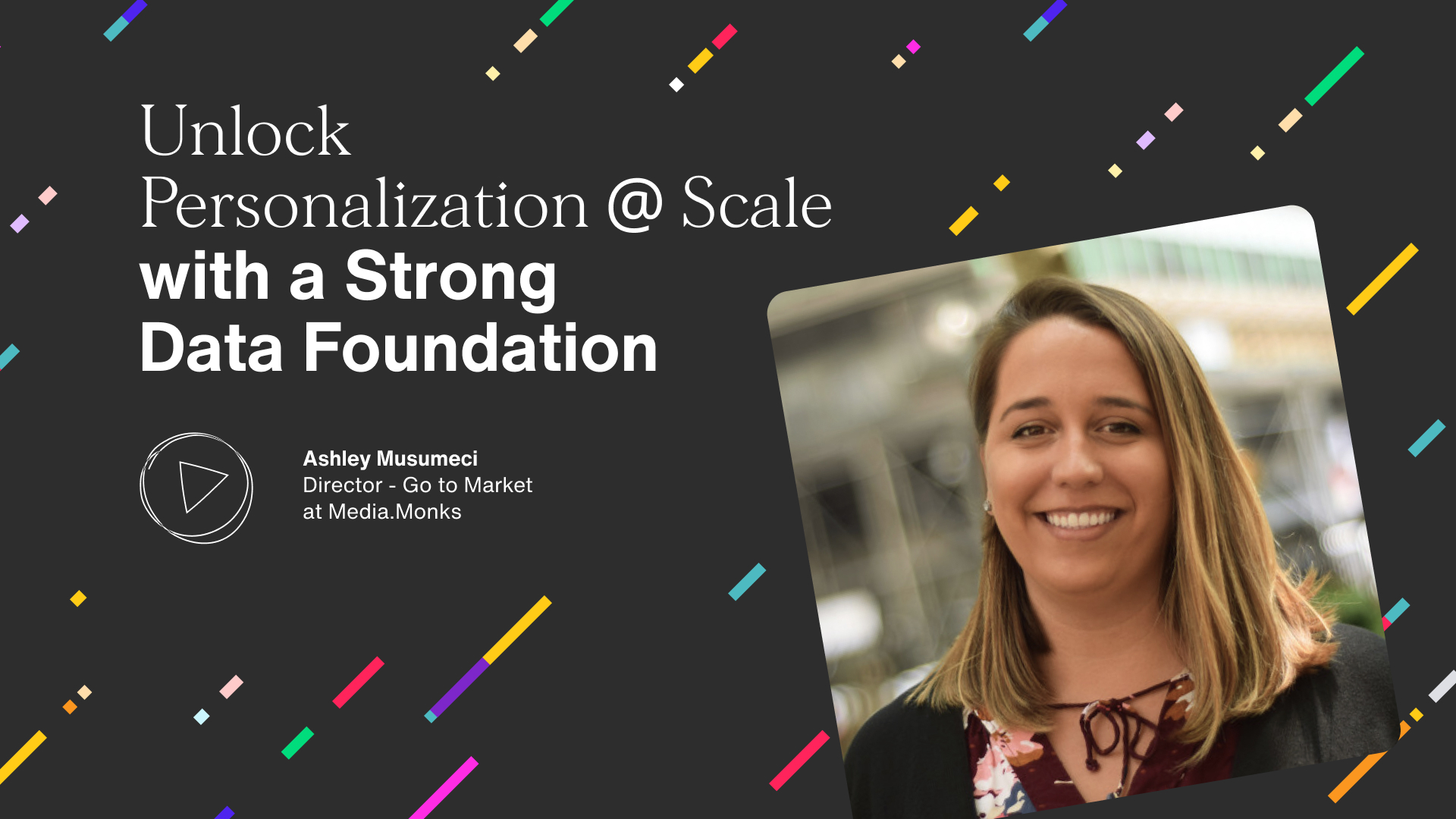
Earlier this year, Ashley Musumeci, Director Go-to-Market, CRM at Media.Monks, spoke to a packed house at Salesforce Connections. This exclusive 15-minute video captures her presentation in which she outlines how brand marketers are using Salesforce to deliver a personalized customer experience at scale when a clear data strategy is in place.
Build a strong data foundation by:
Desarrollando una estrategia de medición integrada con Falabella
Desarrollando una estrategia de medición integrada con Falabella

Es la era de la first-party data. Más específicamente, de recuperar el control sobre nuestra data para construir recorridos digitales mejorados. A esta altura, la muerte inminente de las cookies de terceros no es novedad, y tampoco lo es la necesidad de adaptarse y evolucionar a la velocidad de las nuevas tendencias digitales. Pero si bien los últimos años han consolidado esta noción para todo tipo de empresas, muchas estarían de acuerdo en que, en la práctica, desarrollar un modelo moderno y funcional de first-party data no es tan sencillo.
Pensemos, por ejemplo, en un holding multinacional con unas seis marcas filiales, presente en siete países con tiendas físicas y plataformas web y app. No todas las filiales operan en los mismos lugares, y no todas las plataformas utilizan el mismo idioma. Ahora imaginemos querer unificar todo eso en un sistema escalable que proporcione información actualizada y precisa de sus consumidores, procesada a través de métricas confiables que le permitan comprender mejor sus necesidades e intereses. No es tan fácil, ¿cierto?
Falabella.com, una de las empresas de retail más grandes de Latinoamérica, se enfrentaba a ese mismo desafío en la búsqueda de mejorar sus capacidades tecnológicas y fortalecer su logística para respaldar el rápido crecimiento de sus ventas online. Su objetivo final era simple: proporcionar un mejor servicio a través de soluciones personalizadas y aumentar la eficiencia general de la empresa. Sin embargo, llegar allí requería un nivel de experiencia considerable en el uso y la implementación de sistemas de datos.


Desarrollando sus músculos tecnológicos
Las tiendas insignia de Falabella, así como sus centros comerciales y supermercados, la han coronado como la empresa de retail más grande de Chile y una de las más importantes de América Latina. Pero si bien esta marca histórica ha sido construida sobre los valores de una tienda física tradicional, la importancia de contar con una fuerte presencia online jamás se les ha escapado.
Hoy, Falabella.com busca convertirse en uno de los protagonistas del ecommerce en la región. En otras palabras, tomar la relevancia que ha sembrado en el mundo físico y trasplantarla al mundo virtual. Pero para convertirse en la plataforma de ecommerce por excelencia para una amplia variedad de necesidades, precisaba integrar al menos cuatro plataformas preexistentes y sus datos en un solo marketplace y un único sistema de medición.
Nuestro Head of Data Growth, South Cone, Walter Rebollo, estuvo allí para apoyarlos en ese recorrido. “Formamos un equipo dedicado que trabajó codo a codo con el de Falabella, actuando como un músculo tecnológico”, explica.
Monk Thoughts
El objetivo principal era mejorar la calidad de los datos con los que trabajaba la marca, unificando todas sus propiedades digitales en un solo sistema de medición.

Para una empresa de tal magnitud, cualquier falta de comunicación tecnológica entre las propiedades podría afectar la precisión de su análisis de datos, lo que justifica la necesidad de una transformación absoluta. “Nuestro equipo de expertos y expertas en analytics, consultoría e ingeniería ayudaron a la marca a diseñar planes de medición que estuvieran alineados a lo largo de toda la organización. Desarrollaron dashboards, manuales, y brindaron soporte técnico para sus implementaciones”, agrega Rebollo.
Más que solo estadísticas
Además de actuar como un músculo tecnológico, el equipo empapó a la marca de una mentalidad más analítica y data-driven. Después de todo, ser consciente del potencial de la first-party data es el primer paso para construir una experiencia del cliente más afinada. Y no se trata de jugar con las estadísticas a ver que pega. Debemos pensar en la first-party data como una fuente de información verídica que ilustra las personalidades y los comportamientos de nuestros clientes. Una especie de hoja de ruta para apoyar a la audiencia a lo largo de todo el recorrido.
Javier Fernández Morales, Head Regional de Performance & Growth en Falabella.com, lo explica claramente: “Como uno de los sitios y app con mayor tráfico en la región, la utilización de nuestra first party data es un activo clave para brindar una mejor experiencia de compra y navegación.
Monk Thoughts
Nos permite construir una relación más cercana con nuestros usuarios, basada en la confianza mutua, con servicios personalizados y una distribución de producto más inteligente.

En el comercio minorista, los consumidores esperan encontrarse con una experiencia omnicanal que se adapte a ellos. Buscan pasar de app a web y cambiar de dispositivo tantas veces como sea necesario a lo largo del proceso de compra. Es por eso que diseñamos el marco de análisis para capturar esa información, creando un setup que facilitó la comprensión de cómo se comportan las audiencias y qué les interesa.
“La transformación digital de Falabella abarcó una serie de pasos que nos llevaron al objetivo final”, explica Gastón Fossati, nuestro VP de Data Growth SPLA. “Por ejemplo, la implementación del funnel de web ecommerce para todo los países, evaluaciones para definir el modelo de atribución a utilizar, el agregado de machine learning, la implementación de Enhanced Conversions en Google Analytics y acompañamiento de consultoría mensual para trabajar en el proyecto de Firebase para la app, entre otros”.
Un equipo empoderado conduce a una rápida toma de decisiones
Más allá de brindar una experiencia fluida al cliente, contar con un único sistema de medición alineado a lo largo y ancho de la organización puede ser tan útil internamente como lo es de cara al cliente. La medición refinada conduce a modelos automatizados efectivos, que pueden ahorrarle tiempo y energía al equipo.
“Desde el punto de vista de backend, contar con un mejor sistema de gestión de datos nos ha permitido desarrollar un modelo de escalabilidad de producto bien ejecutado”, explica Fernández Morales. Al permitir que las herramientas de tecnología sean ejecutadas con mayor agilidad, empoderamos a los especialistas a que tomen mejores decisiones, y más rápido.
Dicho esto, el desarrollo de un sistema de medición integrado no es algo que suceda de la noche a la mañana. En este proyecto de años de duración, que surge de una asociación que lleva por lo menos tres años, ambos equipos trabajaron en conjunto para crear una estrategia de medición que se acoplara a los objetivos de cada unidad, integrar Google Analytics y capacitar al equipo de la marca para actuar sobre esa información. “Nuestro enfoque siempre es de democratizar el conocimiento, por lo que nos aseguramos de enseñar a nuestros socios cómo y por qué hacemos lo que hacemos”, dice Rebollo.
A lo largo de ese proceso, ambos equipos se unieron hasta convertirse en uno. “Me parece realmente destacable cómo hemos creado un único equipo que si bien cuenta con miembros de ambos lados, todos comparten un mismo espíritu”, dice Lorena Alva Salazar, Head of Growth & Martech en Falabella.
Monk Thoughts
Queríamos un partner que nos empujara, que hiciera las preguntas difíciles y nos ayudara a perseguir la visión correcta, no solo entregar lo que pedimos. Me alegra saber que contamos con eso.
Hoy, Falabella.com no solo goza de un equipo sólido y unificado, sino también con métricas confiables que están disponibles de inmediato para una rápida toma de decisiones. La eliminación gradual de las cookies de terceros no supone una amenaza. De hecho, nunca han estado mejor preparados para forjar una relación más estrecha con los consumidores. Primero, porque un marco integrado y múltiples puntos de recopilación de datos brindan información invaluable sobre ellos. Y segundo, porque la marca ahora puede empoderar a los usuarios para que elijan cuánta información desean compartir, cuidando así su privacidad.
Building an Integrated Measurement Strategy With Falabella
Building an Integrated Measurement Strategy With Falabella
It’s the era of first-party data. More specifically, of reclaiming control over one’s data to build improved digital journeys. By now, the imminent death of the cookie is old news, and so is the need to adapt and evolve at the speed of the new digital trends. But while the last few years have cemented this notion for all kinds of businesses, many would agree that the journey to developing a modern, functional first-party data model has proven to be a bit bumpier than expected.
Think of, let’s say, a multinational holding company with about six subsidiaries in retail and banking, operating in seven countries with physical stores and both website and app platforms. Not all subsidiaries are present everywhere, and not all platforms use the same language. Now imagine wanting to unify all of that into a scalable system that provides updated, accurate information about your consumers—processed through reliable metrics that allow you to get a better grasp of their needs and interests. Not exactly child’s play, is it?
Our partners at Falabella, one of the largest retail companies in Latin America, were faced with that exact challenge in their ambition to develop their technological capabilities and strengthen their logistics to support the rapid growth of their online sales. The ultimate goal was simple: to better serve customers through personalized solutions and increase the company’s overall efficiency. The path to get there, though, required considerable expertise in the use and implementation of data.
Growing Its Technological Muscles
Falabella’s flagship department stores, as well as its shopping centers and supermarkets, have crowned it the largest retail company in Chile, and one of the most important ones in Latin America. But while this long-standing brand was built on the foundations of a traditional physical store, the importance of having a strong online presence has never eluded them.
Today, Falabella is in pursuit of becoming one of the region’s top ecommerce players. In other words, to take the relevance it’s built in the physical world and replicate it in the digital space. But to become the go-to ecommerce platform for a variety of needs, it had to integrate its four pre-existing platforms and their data into a single marketplace and a measuring system.
Our Head of Data Growth, South Cone, Walter Rebollo, was there to support them on that journey. “We put together a dedicated team that worked side by side with the brand’s, serving as a technological muscle,“ he says.
Monk Thoughts
The main objective was to improve the quality of the data that Falabella was working with, unifying all its digital properties into a single measurement system.
For a company of this magnitude, any technological miscommunication between properties could hinder the accuracy of their data analysis, which explains the need for a foundational transformation. “Our team of analytics experts, consultants and engineers helped the brand design measurement plans that were aligned throughout the organization. They developed dashboards, documentation, manuals and provided technical support for their implementations,” adds Rebollo.
It’s More Than Just Statistics
In addition to serving as the technological muscle, the team introduced the brand to a more analytical and data-driven mindset. After all, being cognizant of the potential that lies in one’s first-party data is the first step towards building a sharpened customer experience. And it’s not about playing with statistics to see what sticks. Think of first-party data as a source of truth that illustrates our customers’ personalities and behaviors; a roadmap of sorts to support your audience across the entire customer journey.
Javier Fernández Morales, Falabella’s Regional Head of Performance & Growth, puts it plainly, “As one of the sites with the highest traffic in the region, our first-party data is a key asset in order to provide a better shopping and browsing experience.
Monk Thoughts
It allows us to build a closer relationship with our clients built on mutual trust, with personalized services and smarter product allocation.
In retail, consumers expect an omnichannel experience that’s tailored to them. They want to be able to switch between app, web and devices across the purchase journey from start to finish. We designed the analytics framework to capture that information, creating a setup that eased the understanding of how audiences behave and what they are interested in.
“The digital transformation of Falabella encompassed a bunch of steps that led to the final goal,” explains Gastón Fossati, our VP of Data Growth SPLA. “For example, the implementation of the web ecommerce funnel for all countries, assessments to define the attribution model to be used, baking in machine learning for audience prediction, the implementation of enhanced conversions in Google Analytics and a monthly consulting service to work on the Firebase project for the app, among other things.”
An Empowered Team Leads to Fast Decision-Making
Beyond providing a seamless customer experience, having a single measurement system aligned throughout the organization can be as helpful internally as it is for customer-facing interactions. Think about it: refined measurement leads to effective automated models, which can then save the team time and energy. “From a backend standpoint, having a better data management system has made it possible for us to develop a well-executed product scalability model,” says Fernández Morales. By allowing marketing technology tools to be executed with greater agility, we empower specialists to make better decisions, faster.
That said, the development of an integrated measurement system from the ground up is not something that happens overnight. In this year-long project—which stemmed from a three-year partnership—both teams worked in lockstep to create a measurement strategy according to each unit’s goals, integrate Google Analytics and train the brand’s team to act upon the information. “Our approach is one of democratizing knowledge, so we always make sure we’re not just delivering but also teaching our partners how and why we do what we do,” says Rebollo.
Throughout that process, both teams blended with one another to the point where there was almost no distinction between each. “I find it truly remarkable that we’ve created a single team with not only a common goal but also a shared spirit,” says Lorena Alva Salazar, Head of Growth & Martech at Falabella.
Monk Thoughts
We wanted partners who could push us, ask the hard questions and help us build the right vision—not just deliver what we ask for. I’m glad to know we have that now.
Today, they can bank not only on a solid, unified team, but also on reliable metrics that are immediately available for quick decision-making. The phase-out of third-party cookies poses no threat, and they are in fact better prepared to forge a closer relationship with consumers. First, an integrated framework and multiple data collection points provide invaluable information on their consumers. And second, the brand can now empower users to choose how much information they want to share, thus safeguarding their privacy.