Choose your language

Choose your language

The website has been translated to English with the help of Humans and AI

Dismiss

Someone videoing on their cellphone the cube
A large piece of art sitting inside of a building, lit. 'the cube'. It's a projection design installation. Masterpiece work of art

CUBE: Fashion Takes Shape • Driving Art Installations with Data

  • Client

    Google

  • Solutions

    ExperienceExperiential Strategy & ProductionAI & Emerging Technology ConsultingData

00:00

00:00

00:00

Case Study

0:00

Visualizing fashion brands’ digital footprint and face value.

In this hypercompetitive and hyperconnected world, brands face the daily challenge of how to stand out from the crowd and remain meaningful and memorable to consumers. The secret lies in knowing what sticks with your audiences—a tricky task, as audience perception isn't always obvious to brands. So, we teamed up with Google to solve this issue by creating the first-ever AI-powered interactive tool that provides a visual representation of a brand’s digital presence: CUBE.

A vibrant and fashionable crowd fills the scene, gathered in a dimly lit room. The atmosphere is electric as people mingle and socialize. In the center, a large projection screen commands attention, displaying captivating visuals.  The room is bathed in a mystical combination of purple and blue lighting, emanating from ceiling fixtures and casting an ethereal glow. This adds to the allure of the setting, creating an ambiance that is both alluring and mysterious.
In the image, a man in a black suit is standing in front of a large projection screen. The screen is prominently displayed against a pink background. The man is holding a cell phone, specifically a Samsung Galaxy S10e with a pixelated screen. He is also holding a microphone, indicating that he may be speaking or presenting at an event.  The man in the black suit is wearing a mustache and is surrounded by various objects and individuals. There is a small text in the image that reads "CUB" on the lower portio

Transforming complex data into key insights for marketers.

Google’s goal was to help brands in the fashion industry use their data to understand how they’re perceived by the outside world. Together with data artist Dr. Kirell Benzi, we used the latest machine learning techniques in natural language processing to create CUBE, which is both a physical art installation and an online platform. Connecting fashion with art and technology, we used state-of-the-art AI to translate massive volumes of data into seven prime topics for the fashion world with the aim to deliver accessible and meaningful insights for marketers.

Presenting the fashion industry with a striking AI-powered tool.

During Google’s hybrid fashion event in Milan, we demonstrated the impact of the 200m2 CUBE art installation to 300 C-level executives from across the globe, as we invited them to interact with the artwork and discover how consumers perceive their unique brand based on its online presence. Shining a bright spotlight on brand storytelling, the purpose was to show fashion brands how they can use data, digital media and Google AI tools to understand what consumers think of them and ultimately communicate better with their target audiences.

Our Craft

Bringing brand storytelling to the next level

  • a group of people standing next to each other, masterpiece work of art, looking partly to the left, people enjoying the show
  • a group of people standing next to each other, masterpiece work of art, looking partly to the left, people enjoying the show
  • The image shows a man in a suit standing in front of a screen. The man is the focal point of the image, as he is positioned prominently in the center. The screen is large and occupies a significant portion of the image.  On the screen, there is text that reads "Google presents", indicating that this is a presentation or event organized by Google. Adjacent to the main text, there are several smaller texts that read "Agenda", "Livestream", and "Artwork", likely indicating different sections or features of the

Results

  • 500K fashion professionals reached online
  • 1,257 brands from 23 countries
  • 50K interactions with the artwork
  • 10K research downloads
  • 94% of guests recognize Google as the top tech company
  • +11 points in Google perception as strategic partner
  • 1x FWA

  • 1x Eventex Awards

Want to talk experiences? Get in touch.

Hey 👋

Please fill out the following quick questions so our team can get in touch with you.

Can’t get enough? Here is some related work for you!

Modeled Value-Based Bidding, a Game-Changer in Activating First-Party Data

Modeled Value-Based Bidding, a Game-Changer in Activating First-Party Data

AI AI, AI Consulting, Consumer Insights & Activation, Data, Data Privacy & Governance, Data privacy, Death of the cookie 2 min read
Profile picture for user mediamonks

Written by
Monks

Three speaker headshots

To navigate today's digital landscape, marketers must deliver tangible business results amidst heightened competition and an increasingly complex data privacy landscape. This requires a deep understanding of advertising data, the utilization of first-party data, optimized use of marketing platforms and identification of growth opportunities. And just as marketers are looking to understand how AI and machine learning fit into their digital advertising and data strategies, it’s no surprise that Google has innovated a game-changing solution that leverages machine learning to help optimize the already complicated consumer journey.

Modeled Value-Based Bidding (mVBB) enables precise audience targeting and media optimization through highly customized machine learning models. Relying primarily on advertisers’ first-party data, mVBB derives more value from traditional value-based bid strategies by drawing insights for bid optimizations in real time. 

Modeled Value-Based Bidding addresses these challenges for marketers:

  • Third-party cookie deprecation and tightening privacy regulations pose significant headwinds for brands looking to connect with consumers.
  • With first-party data sources and data volumes growing at breakneck speeds, many marketers are overwhelmed by managing data manually.
  • Companies that have large data sets can’t manage manual bid strategies with one person or even a team.
  • More and more advertisers are looking to understand how AI and machine learning can fit into their digital advertising and data strategies to help drive efficiencies.
Modeled Value-Based Bidding Webinar Speakers

Eager to learn more?

Join our Media.Monks experts Senior Director Machine Learning & AI Solutions Michael Neveu and Senior Data Scientist Mansi Parikh, along with special guest Drew Whitehead, Predictive Modeling Specialist at Google, for a discussion about Modeled Value-Based Bidding. In this webinar our team of experts cover:

  • The value of Modeled Value-Based Bidding
  • Strategies, technical specifications and testing frameworks
  • Real-world media use cases across multiple industries
  • Advanced models that are sure to boost performance
  • Three red-light/green-light questions to help decide whether mVBB addresses your business challenges

This experience is best viewed on Desktop.

Download Now
Learn how Modeled Value-Based Bidding leverages your first-party data to enable precise audience targeting and media optimization via machine learning models. first-party data data Data Data Privacy & Governance Consumer Insights & Activation AI Consulting Death of the cookie Data privacy AI

Put CMOs at the Center of a Powerful Data Strategy

Put CMOs at the Center of a Powerful Data Strategy

Data Data, Data Privacy & Governance, Data Strategy & Advisory, Data maturity, Transformation & In-Housing 4 min read
Profile picture for user mediamonks

Written by
Monks

A person holding a book in their hands

Hot off the press, a new report by Forrester offers actionable advice for CMOs on how to skillfully leverage their company’s data. Titled “The CMO’s Guide To An Enterprise Data Strategy” by Analyst Stephanie Lui and Researcher Melissa Bongarzone, this in-depth research explores the most common enterprise data mistakes—from hoarding too much of it to creating silos—and why marketing chiefs play a key role in making the most out of the data companies collect.

With insights included from our Global EVP Tyler Pietz, the report stresses an important takeaway: brand, marketing, finance and data managers have a lot to gain from working closely together and building cross-functional integration systems. To that regard, we believe that while companies may invest in different tools for each department, the way each one manages data should be a more general decision that takes into account the broader business context. Seeing the full picture is pivotal to success, and we can only do that with complete, well-organized, integrated data systems.

Keep the enterprise goals in sight.

As Pietz says in the report, “The CMO’s role is to take business insights and bring them to market so value can be realized.” That means turning the data strategy into something actionable. CMOs are responsible for identifying the tactics that will help the business achieve its goals—and things like profitability, revenue drivers and risk management are important factors to weigh as they carry out strategies to attract leads, move into new markets and beyond.

Monk Thoughts They should spend time with brand managers to understand what they’re seeing in their world. Doing so can surface opportunities for product innovation, authentic connections with consumers, or understanding buying patterns for specific categories.
Tyler Pietz headshot

To get there, however, CMOs need access to a comprehensive view of the brand’s consumer data—and the more departments and data points it encompasses, the better. But here’s where it gets tricky. Forrester’s findings show that 37% of B2C marketing decision-makers say driving decision-making with customer insights is one of their organization’s biggest marketing execution challenges. Rather than a skills issue, we believe this is due to structural problems that leave marketing leaders drowning in disorganized data, as well as a disconnect between departments.

Before collecting more data, learn to control it.

With changing privacy laws and platform restrictions, CMOs are hungry for new first-party data collection methods and alternative data sources. This is great, as first-party data is at the heart of any digital maturity and transformation journey. However, it’s important to remember that building a strong enterprise data strategy is not about acquiring as much data as possible; rather, it’s about extracting the most value from it. 

To do so, we need to start by establishing solid data foundations that ensure the information we have is accessible, timely, trustworthy and fit for purpose. While hiring new services like analytics tools and buying platforms is easy, the real challenge is to bridge together all of those data sources and systems in ways that allow us to see the full picture.

Monk Thoughts If data lives in disparate environments, that leads to low quality. And if we have to spend all our time harmonizing that data rather than using it, we’re wasting time and, consequently, money.
Kosta Demopoulos headshot

In other words, accumulating data is a misuse of our resources unless we can access its benefits—and as companies continue to explore new spaces where they can connect with consumers, the need for solid data foundations will become more pressing. Yes, a lack of control can lead to redundancies and misinformed decisions, but data hoarding presents even bigger risks in terms of user privacy. As the report illustrates, the consequences of a potential breach can be catastrophic if we don’t establish rigorous governance practices.

To deliver a great customer experience, create cross-functional data systems.

In addition to establishing solid data foundations, leveraging your data to its full potential also demands getting rid of departmental silos. While teams often consider only the data that is available to them, it’s possible to unlock additional expertise if we bank on stronger integration capabilities across channels, data sources and technologies.

Monk Thoughts When teams operate in silos and data works in isolation, so does experimentation. This inevitably leads to random acts of marketing and chaotic reporting. Rather than siloing teams, data should unify them—even if they have totally different KPIs.
Iuliana Jackson headshot

Marketing teams, for example, may look at lead generation and engagement, while product teams focus on retention and acquisition. However, you need all metrics to get a clear view of the customer, and so you’ll achieve better results if they aren’t tracked separately.

As Forrester says in their report, determining a customer’s next-best experience requires “an orchestra of IT, data science, risk and compliance, marketing, sales and service, and CX.” To get high-quality customer insights, CMOs must look beyond their marketing-specific perspectives and collaborate with their counterparts across departments. Complaints and inventory may not be part of marketing’s responsibilities, but they surely impact the customer experience. Ads for out-of-stock products are a major turn-off for consumers, and nobody likes a brand that continues to do out-of-touch marketing while ignoring the countless complaints in their inboxes and social media comments.

The bottom line is, everyone can benefit from being aligned on what type of data will help the business thrive and how to track it, but CMOs play one of the most important roles in squeezing the juice out of it. While marketing leaders can’t design a fully-fledged data strategy on their own, they are the ones who take these consumer insights and turn them into marketing programs that bring the desired results for the business. Instead of focusing on collecting huge volumes of data, work on unifying these sets in an organized, secure environment, and you’ll find yourself instinctively making data-driven decisions.

Media.Monks provided insights in a recent Forrester report that offers actionable advice for CMOs on leveraging company data. Forrester data business strategy Data Data Strategy & Advisory Transformation & In-Housing Data Privacy & Governance Data maturity
A hand holding a phone with the Built In application on it
A person sitting at a desk working on a laptop enjoying a cup of coffee
A person sitting on a couch working on a laptop

Enabling Hyper-Growth Across Communities • Optimizing Salesforce to Fuel Growth

  • Client

    Built In

  • Solutions

    DataCRMConsumer Insights & Activation

A laptop on a marble countertop displaying the built in application

Connecting content, data—and people.

Built In is a network of local online communities for startups, tech companies and tech professionals. A powerful connector of people, the company enables startups and tech companies to post and recruit candidates for open positions, promote their brand and culture, share news, and participate in community events.

However, having a network of communities in eight different markets meant Built In needed a way to streamline content and data for its employees, tech users and company clients to connect in one place. Built In already used Salesforce CRM, but like many companies, they hadn’t been reaping the full benefit of the CRM or other Salesforce products—missing out on key opportunities to optimize, streamline business processes and unlock revenue. Built In reached out to Monks, a Salesforce Consulting Partner, to connect the dots across their Salesforce marketing and enable a more personalized user experience.

An illustrated cellphone with a notification icon

In partnership with

  • Built In
Client Words We would recommend [Monks] to any company. [Monks] wants to be a partner. Speed of implementation and communication flexibility is really good, which you don’t always see from third-party vendors.
Jeff Hurd headshot

Jeff Hurd

Director of Product, Built In

Building trust through a transparent planning process.

Before making any moves, we connected with the Built In team to align our strategy with the goals of the business. We met with the team in person to walk them through each step involved in implementing and optimizing Salesforce Experience Cloud, Sales Cloud, Service Cloud and Marketing Cloud Account Engagement. Taking the Built In’s needs into account, we then verified and documented project steps with our engineering team—ensuring everyone was on the same page throughout the entire process.

Three employees listening to a presentation with their laptops
A person working at a whiteboard with sticky notes

An executional approach built on close collaboration.

Strong partnership is built on transparency, so once the planning phase concluded, we continued to give Built In clear visibility into our implementation of Salesforce products and platforms. We began by making daily check-ins with the Built In team, then hosted bi-weekly meetings to fully communicate our progress. The speed of communication throughout the engagement enabled additional flexibility in our approach.

Three employees looking at an iPhone together laughing

Fueling connection across platforms and people.

Now better able to connect content and data across regional communities, Built In was able to greatly improve customer satisfaction. Previously, finding companies, talent and communities were manual and complex processes; but now, tech professionals appreciate a more streamlined and transparent approach to discovering jobs, browsing salaries, connecting to networking opportunities and more. Overall, the collaborative approach between Built In and our CRM experts sowed the seeds that would fuel connection across the entire tech industry.

Results

  • 37%+ in sales forecasting
  • 19%+ increase in CSAT score

Want to talk CRM? Get in touch.

Hey 👋

Please fill out the following quick questions so our team can get in touch with you.

Can’t get enough? Here is some related work for you!

Looking Back at a Year of Digital Innovation

Looking Back at a Year of Digital Innovation

AI AI, AI & Emerging Technology Consulting, Extended reality, Metaverse, New paths to growth, Technology Consulting, Technology Services 7 min read
Profile picture for user mediamonks

Written by
Monks

Colorful crystals and shapes fly out of an image of person shaking their head

Lea este artículo en español aquí.

And just like that, another year comes to a close—twelve months packed with the emergence of exciting developments in technology and new consumer behaviors. The metaverse matured, commerce went social, and brands learned to move beyond vanity metrics and cookie consent to build actionable data with bottom-line impact. In essence, there’s been no shortage of challenges (and solid victories) over the past year—so as you begin to look ahead at the next, let’s take a quick review of 2022 highlights and trends.

Virtualization defines the transformation of digital.

As the world opened back up, an era of digital transformation gave way to the transformation of digital. By this, we mean virtualization: a set of new audience behaviors, cultural norms and technology paradigms resulting from 30 years of digital transformation, hyper-accelerated over the past five years. Virtualization, covered in our report earlier this year, marks a revolution in consumer behavior as people demand more from the digital platforms they engage with, which implicates the ways they look at digital experience, community, ownership and identity. For example, the design of ComplexLand, a virtualization of the hype-fueled annual event ComplexCon, was built around the insight that today’s fashion trendsetters are becoming just as invested in their digital identities as their corporeal ones.

The Social Innovation Lab, who explores up-and-coming trends in social, delved deeper into what motivates some of these behavioral changes in The Search for Meaning. By exploring how technology shapes the ways consumers find and make meaning in their lives, the Social Innovation Lab uncovers how brands can adapt to the new era in digital.

Monks Thoughts We're seeing the emergence of a new set of consumer expectations based on digital experiences that are richer, more meaningful, and more ownable. New tools, technologies, and talent on part of brands to show up and meet consumers in a new way. We call this virtualization

00:00

00:00

00:00

Doug Hall VP, Data Services and Technology

Experiments in the metaverse drive real success.

One of the biggest manifestations of the virtualization trend has been the rise of the metaverse, which many brands have experimented with this year to find their footing. Duolingo celebrated the birthday of its lovable (and persistent) mascot by hosting a game jam in Roblox and building larger-than-life public artwork in Decentraland. Logitech for Creators reinvented the awards show format by building the first music awards show in the metaverse, the Song Breaker Awards.

The fashion industry in particular has found a lot of success in the space. Liam Osbourne, Global Client Partner at the FLUX.Monks, our dedicated fashion and luxury team, shared with Vogue some insight on how the metaverse is an opportunity to become more inclusive. For brands exploring that question and more, the FLUX.Monks have authored a quick bulletin on why the metaverse matters.

Monk Thoughts Exploring the rules for access that are not the traditional levers of wealth or proximity to power would be great to see.
Liam Osbourne

As the metaverse continues to take shape, now is an excellent time for brands to continue experimenting in the space, which was a large part of a discussion shared between SVP Web3, Metaverse & Innovation Strategy Catherine D. Henry; Chief Innovation Officer Henry Cowling; and Mike Proulx, VP and Research Director at Forrester as part of our Meet Me in the Metaverse series. Eager to get started experimenting in the metaverse yourself? Our map of the metaverse can help you find the right home for your brand within this quickly evolving space.

Web3 and other emerging tech begin to mature.

In addition to the metaverse, other emerging technologies have fueled transformative digital experiences—most notably Web3. We showed up at NFT.NYC, the biggest Web3 conference on this side of the screen, with an immersive installation for Cool Cats that blurred the boundary between virtual and the real. Meanwhile, Gucci opened the virtual door to an immersive gallery space used to host an auction of NFT artwork.   

More than just a new tech infrastructure, Web3 marks a foundational shift in brand-consumer relationships, a topic covered in a bulletin we released in collaboration with Salesforce this year titled Web 3: The Future of Customer Engagement. For those wondering how to begin making moves in Web3, check out insights from our In a Monk’s Opinion series, which lays out everything you need to know about NFTs and the blockchain. One tip from the Labs.Monks: be sure to make your NFT projects sustainable.

Speaking of the Labs.Monks, our R&D team has continually released missives on the bleeding edge of tech throughout a year of innovation. Their most recent report on generative AI explores the potential of AI tools like Dall-E and Mid Journey that have captured creatives’ imagination (and people’s social feeds). One example of what the tech can achieve: unlocking efficiencies in animation and other production needs.

Creativity and media go hand in hand.

Throughout the digital era, it’s been tempting to focus attention on vanity metrics. But as CMOs invest more dollars into media (and face increasing budget scrutiny with a possible recession), they will benefit from transforming their approach to a more holistic strategy that blends media and creative to optimize their spend. Speaking to Digiday, Media.Monks Global Head of Media Melissa Wisehart unveiled how our integrated media pillar is designed to help brands make this leap.

Monk Thoughts We’re really looking at and drawing statistical correlation between what happened in the media universe and what is the downstream business impact.
Melissa Wisehart headshot

Uni's relaunch campaign demonstrates this more holistic approach through the development of both the creative and media placement by one partner. With three creative variations and four measurement initiatives, we ensured the creative rolled out across today’s most relevant channels according to their purpose within the brand ecosystem.

When it comes to creative optimization, wellness brand Hatch found great success—and shared some of their secrets in an episode of In a Monk’s Opinion featuring Hatch’s VP Growth Marketing Holly Elliott. Many brands that rely on digital platforms for their marketing face a series of challenges: rising acquisition costs; a limited ability to manage their performance, attribution and audience targeting; and the risk of losing brand authenticity. Hatch assuaged these concerns by striking a balance between creative and performance. In the episode, Holly and our creative performance experts offer insight into how historical performance data can fuel further creative iterations.

Brands prepare for the oncoming privacy era.

While media optimization and performance may be top of mind now, budget conscious CMOs are also eyeing another obstacle on the horizon: overcoming their reliance on third-party cookies as attitudes in privacy shift and as Google aims to sunset third-party cookies with the Chrome browser. And speaking of cookies, VP of Data Services and Technology Doug Hall recently shared ways marketers can rethink cookie consent and management using the Privacy Sandbox platform.

Add to the mix that Google is sunsetting GA360 to make way for its new GA4 platform, meaning brands have plenty of adjustments to manage in the near future. Thankfully, GA360’s sunset was postponed to July 2024, meaning they have more time to perfect their migration strategy. Our data experts put their heads together to create a short guide on how to maximize your move to GA4 before the deadline.

Monk Thoughts Google is postponing the Google Analytics 360 sunset. The move to GA4 is now 2024. This is not a time to pivot on your data and privacy strategy, this is the time for you to perfect your migration over to GA4.

00:00

00:00

00:00

Doug Hall VP, Data Services and Technology

We’ve also got some inspiration based on how other brands have future-proofed their data strategies with great success. We began our partnership with Molson Coors in 2021 with the goal to bring more of its digital media in-house. By taking an ambitious, holistic approach focused on modernization, we’ve since helped the brand future-proof with a robust, in-house digital media team: a data transformation that ranges from data acquisition, data activation and enrichment, and optimization.

And in the commerce space, leadership from Canadian retailer Reitmans shared the role cloud computing played in building a single source of truth throughout its entire organization, joining online consumer behavior with data from over 400 brick-and-mortar locations. Check out the episode of IMO to learn how a strong data foundation helped the brand adapt at speed.

Speaking of data foundations, emerging technologies like Web3 offer new ways of connecting with consumers and strengthening relationships. In an episode of Meet Me in the Metaverse, Ashley Muscumeci, our Director, Go-to-Market, sat down with Jordan Cuddy, Chief Client Officer at Jam3, and Avanthika Ramesh, Senior Product Manager, NFT Cloud at Salesforce, to explore how building a resilient data foundation will help brands get a head-start into the Web3 future. One key insight: despite being a new space, the same rules apply when it comes to user consent. “Even if you are bridging Web3 and Web2 data to bring all these identifiers about a consumer together, it’s really important that the user opts in and provides consent to merge these identities,” says Ramesh.

Commerce goes social and creators go virtual.

In recent years, creators have expanded their digital footprint into new spaces—like gaming and social audio—and have even adopted new content ventures to translate audience engagement into revenue for brands. So, what does the intersection of content, commerce and entertainment look like today? The Social Innovation Lab launched a report earlier this year, The Year of Digital Creators, to explore the state of the creator economy in depth, available in English, Spanish and Portuguese.

One example of how creators have transformed the consumer journey is through the rise of live commerce, the subject of a recently released Social Bite from the Social Innovation Lab. Live commerce blends communities and real-time connection to offer entertaining, interactive and personalized experiences for audiences, and the short deck offers a glimpse into the live commerce journey and how brands can activate audiences every step of the way.

What’s next in the realm of digital creators? Expect more and more virtual influencers in the form of CGI-rendered fictional characters or avatar alter-egos of real people. With the rise of the metaverse and more accessible motion capture technology, virtual influencers are primed to become a more common presence in brands’ influencer marketing strategies—and if you’re curious about the role one could play in your own marketing, check out another Social Bite about how virtual influencers are coming alive.

Here's to a new year of innovating!

With so much innovation in the last year spanning experiences, content creation and optimization through data, there’s a lot to celebrate as we cap off 2022. Looking ahead into the new year, these trends will continue to shape brands’ strategies as they seek to engage with hyper connected audiences in the new digital era.

Where will you begin? Reach out to start your 2023 journey with confidence.

As you plan for the new year, revisit innovations that defined 2022: virtualization, Web3, the metaverse, privacy and more. Innovation digital marketing trends innovation trends metaverse Web3 data data privacy media buying media strategy Technology Services Technology Consulting AI & Emerging Technology Consulting New paths to growth AI Extended reality Metaverse

Repasando los hitos de un año de innovación digital

Repasando los hitos de un año de innovación digital

6 min read
Profile picture for user mediamonks

Written by
Monks

Colorful crystals and shapes fly out of an image of person shaking their head

Y así sin más, otro año llega a su fin: doce meses repletos de desarrollos tecnológicos y nuevos comportamientos de lxs consumidorxs. El metaverso maduró, el ecommerce se volvió social, y las marcas aprendieron a ir más allá de las métricas de vanidad y el simple consentimiento respecto a las cookies para crear conjuntos de datos procesables con un impacto real. En esencia, los desafíos no han escaseado (ni tampoco las victorias) durante el último año. Mientras comenzamos a pensar en el próximo, repasemos rápidamente los hitos y tendencias del 2022.

La virtualización define la transformación de lo digital.

A medida que el mundo volvió a abrirse, una era de transformación digital dio paso a la transformación de lo digital. Con esto nos referimos a la virtualización: un conjunto de nuevos comportamientos, normas culturales y paradigmas tecnológicos que son el resultado de 30 años de transformación digital, particularmente hiperacelerada en los últimos cinco. La virtualización, como explicamos en nuestro informe a principios de este año, representa una revolución en el comportamiento de lxs consumidorxs, quienes demandan más de las plataformas digitales con las que interactúan, derivando en cambios en la idea de experiencia digital, comunidad, propiedad e identidad.  

Por ejemplo, el diseño de ComplexLand, una virtualización del popular evento anual ComplexCon, gira en torno a la idea de que lxs trendsetters de la moda de hoy en día se están interesando en sus identidades digitales tanto como en las corporales. De forma similar, la campaña de lanzamiento de Cielo Grande en Netflix incluyó la gamificación de la trama de la serie en Roblox, una plataforma extremadamente popular entre preadolescentes. Con misterios a resolver y ‘meet&greets’ con el elenco, se trata de una experiencia digital completamente nueva en la que la audiencia puede interactuar directamente con los personajes de la serie a través de avatares. 

Los experimentos en el metaverso llevan al éxito verdadero.

Una de las mayores manifestaciones de la virtualización ha sido el surgimiento y crecimiento del metaverso, en el que muchas marcas han comenzado a establecerse a través de distintos experimentos. Duolingo celebró el cumpleaños de su adorable (e insistente) mascota organizando un game jam en Roblox y construyendo obras de arte en Decentraland. Macy’s extendió su desfile del Día de Acción de Gracias a una experiencia virtual en OnCyber, donde fans de todo el mundo podían explorar cinco galerías con colecciones de NFT y votar por sus favoritas. 

La industria de la moda en particular ha sido muy exitosa en este aspecto. Liam Osbourne, Global Client Partner de lxs FLUX.Monks, nuestro equipo dedicado a ‘Luxury & Fashion’, compartió con Vogue algunas ideas sobre cómo el metaverso es una oportunidad para que las marcas sean más inclusivas. Para quienes quieran saber más sobre este tema, lxs FLUX.Monks elaboraron un breve boletín sobre la importancia del metaverso.

Monk Thoughts Sería genial explorar nuevas reglas de acceso que no sean los medios tradicionales de riqueza o proximidad al poder.
Liam Osbourne

Ahora que el metaverso está tomando forma, nos encontramos en un momento ideal para que las marcas continúen experimentando en este espacio. De eso mismo hablaron Catherine D. Henry, nuestra SVP Web3, Metaverse & Innovation Strategy; Henry Cowling, Chief Innovation Officer; y Nike Proulx, VP y Research Director en Forrester, en un episodio de nuestra serie Meet Me in the Metaverse. Si estás ansiosx por comenzar a experimentar, nuestro mapa del metaverso es de gran ayuda a la hora de encontrar el espacio adecuado para tu marca. 

La Web3 y otras tecnologías emergentes comienzan a madurar.

Además del metaverso, otras tecnologías emergentes han sido el motor de experiencias digitales transformadoras, principalmente la Web3. Durante NFT.NYC, la conferencia Web3 más grande de este lado de la pantalla, nos presentamos con una instalación inmersiva para Cool Cats que difumina el límite entre lo virtual y lo real. Mientras tanto, Gucci abrió su propia galería inmersiva para albergar una subasta de obras de arte NFT.  

Más que una nueva infraestructura tecnológica, la Web3 marca un cambio fundamental en las relaciones marca-consumidor, un tema tratado en un folleto que publicamos en colaboración con Salesforce este año. Para quienes se preguntan cómo comenzar a moverse en la Web3, pueden consultar los insights de nuestra serie In a Monk’s Opinion, que expone todo lo que necesitamos saber sobre los NFT y la blockchain. Un consejo de los Labs.Monks: debemos asegurarnos de que los proyectos NFT sean sostenibles

Hablando de los Labs.Monks, nuestro equipo de investigación y desarrollo ha publicado una serie de misivas sobre las tecnologías más avanzada a lo largo de este año de innovación. Su informe más reciente sobre IA generativa explora el potencial de las herramientas de inteligencia artificial como Dall-E y Mid Journey, que han capturado la imaginación de lxs creativxs (y los feeds de social media). Un ejemplo de lo que la tecnología puede lograr: desbloquear eficiencias en animación y otras necesidades de producción. 

Creatividad y media van de la mano.

A lo largo de la era digital, ha sido tentador enfocar nuestra atención en las métricas de vanidad. Pero a medida que lxs CMO invierten más dinero en medios (y se enfrentan a un escrutinio presupuestario cada vez mayor con una posible recesión), es más beneficioso adoptar un enfoque más holístico que combine medios y creatividad para optimizar su gasto. En conversación con Digiday, nuestra Head of Media Melissa Wisehart reveló cómo nuestro pilar de medios integrados está diseñado para ayudar a las marcas a dar este salto.

Monk Thoughts Realmente estamos observando y trazando una correlación estadística entre lo que sucedió en el universo de los medios y el impacto comercial posterior.
Melissa Wisehart headshot

Este enfoque más holístico se puede apreciar en nuestra campaña de relanzamiento de Uni, para quien desarrollamos tanto la creatividad como el posicionamiento en medios. Con tres variaciones creativas y cuatro iniciativas de medición, nos aseguramos de que la creatividad se implementara en los canales más relevantes según su propósito dentro del ecosistema de la marca.

Cuando se trata de optimizar la creatividad, la marca de bienestar Hatch parece haber encontrado la fórmula del éxito, como explicaron en un episodio de In a Monk’s Opinion con Holly Elliott, VP de Growth Marketing en Hatch. Muchas marcas que dependen en plataformas digitales para su marketing se enfrentan a una serie de desafíos: aumento de los costos de adquisición; límites en la capacidad de administrar su performance, atribución y targeting; y el riesgo de perder autenticidad. Hatch alivió estas preocupaciones logrando un equilibrio entre creatividad y performance. En el episodio, Holly y nuestrxs expertxs en performance ofrecen información sobre cómo los datos históricos de rendimiento pueden impulsar más iteraciones creativas.

Las marcas se preparan para la era de la privacidad.

Si bien la optimización y la performance de medios pueden ser de lo más importante hoy en día, lxs CMO que están pendientes del presupuesto también anticipan otros obstáculos: superar su dependencia en las cookies de terceros a medida que cambia la actitud en torno a la privacidad y Google busca eliminar las cookies de Chrome. Y hablando de cookies, nuestro VP de Data Services and Technology , Dough Hall, compartió recientemente formas en que lxs marketers pueden repensar la idea de consentimiento y la administración de cookies utilizando la plataforma Privacy Sandbox.   

Si le sumamos a eso el hecho de que Google se está despidiendo de GA360 para dar paso a su nueva plataforma, GA4, es evidente que las marcas tendrán muchos ajustes que hacer en el futuro cercano. Afortunadamente, el fin de GA360 se pospuso hasta julio de 2024, lo que significa que hay más tiempo para perfeccionar las estrategias de migración. Nuestrxs expertxs en data trabajaron en conjunto para crear una breve guía sobre cómo maximizar este proceso antes de la fecha límite. 

El comercio se vuelve social y lxs creadorxs se vuelven virtuales.

En los últimos años, los creadores y creadoras han expandido su huella digital a nuevos espacios, como juegos y redes sociales de audio, e incluso han utilizado su contenido para transformar el engagement de la audiencia en ingresos para las marcas. Entonces, ¿cómo luce hoy la intersección de contenido, ecommerce y entretenimiento? El Social Innovation Lab lanzó un informe llamado “El año de lxs creadorxs digitales”, que explora en profundidad el estado de la economía de lxs credorxs y está disponible en inglés, español y portugués

Un ejemplo de cómo lxs creadorxs han transformado el journey de lxs consumidorxs es a través del live commerce, o comercio en vivo. El live commerce combina comunidades y conexión en tiempo real para ofrecer experiencias entretenidas, interactivas y personalizadas para las audiencias, tal como exploramos en este informe (actualmente solo disponible en inglés). 

¿Y qué es lo que sigue en el universo de lxs creadorxs digitales? Para empezar, podemos esperar ver más influencers virtuales en CGI o alter-egos de personas reales en forma de avatares. Con el auge del metaverso y más acceso a tecnologías de motion capture, lxs influencers virtuales se convertirán en un elemento más común en las estrategias de marketing. 

¡Por un nuevo año de innovación!

 Con tanta innovación en el último año; desde nuevas experiencias y creación de contenido hasta optimización a través de datos; hay mucho que celebrar. De cara al nuevo año y a medida que le damos un cierre al 2022, estas tendencias seguirán dando forma a las estrategias de las marcas, siempre y cuando busquen interactuar con audiencias hiperconectadas en la nueva era digital. ¿Por dónde empezarás tú?

Repasamos las innovaciones que definieron el 2022: virtualización, Web3, el metaverso, privacidad y mucho más, para empezar a planificar el nuevo año. Innovation digital marketing trends innovation trends metaverse Web3 data data privacy media buying media strategy
Nissan ad on facebook showing a truck
A tablet showing a graph increasing
A grey nissan car on the road

Nissan Increased Conversion Tracking • Overcoming Obstacles to Follow the User Journey

  • Client

    Nissan Thailand

  • Solutions

    DataData Privacy & GovernanceConsumer Insights & ActivationMeasurement

Results

  • 96% increase in total conversions
  • 30% increase in conversion rate
  • 45% decrease in average cost per conversion

On the road to increase performance and efficiency.

In the automotive category, digital experiences and offline sales touchpoints are traditionally disconnected. With consumers following increasingly complex journeys that span both, Nissan United Thailand wanted to ensure they could not only gain insight into digital behavior, but also apply that knowledge to reach future buyers more efficiently. Yet platform changes designed around user privacy limited the tried-and-true methods of traffic tracking that Nissan relied on. To adapt, Nissan hired Monks to help steer the brand on a path to greater efficiency and performance.

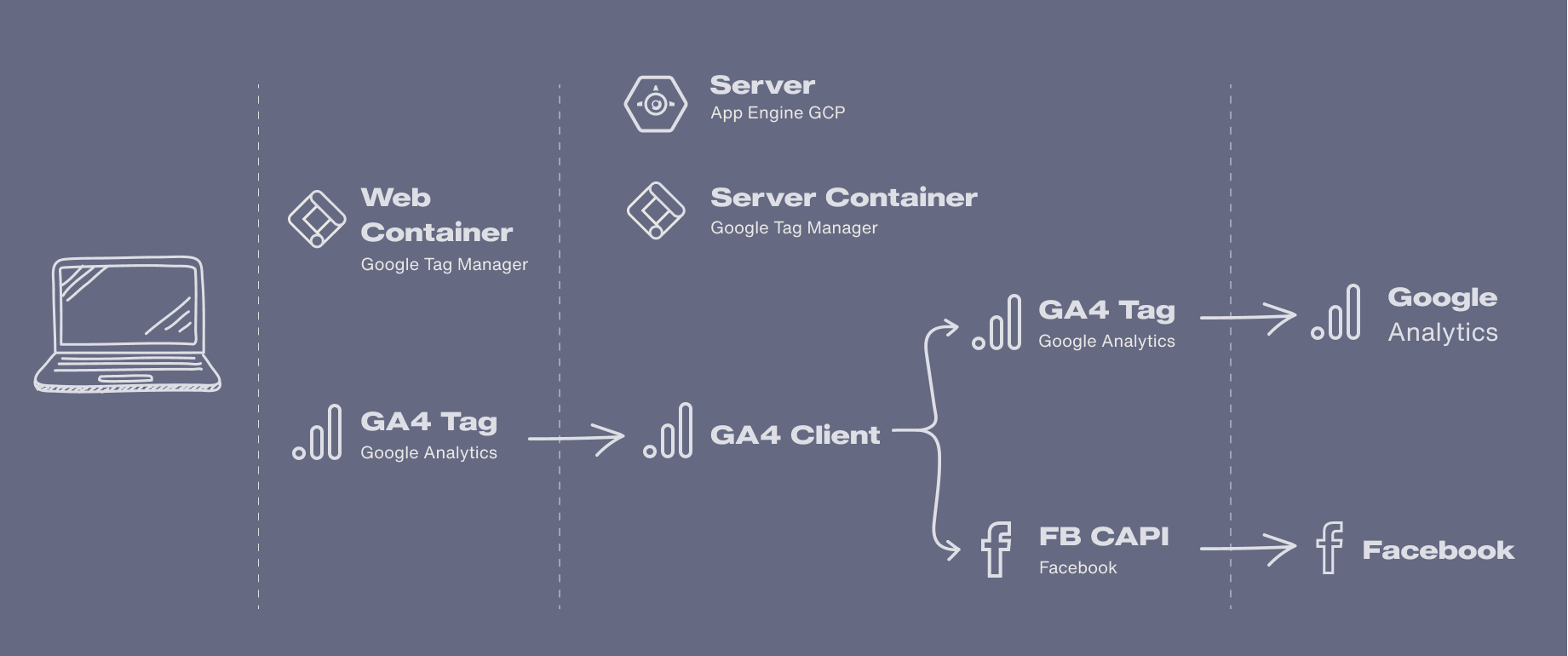
A diagram showing the mapping of google tag manager

Maintaining success amidst new privacy constraints.

Historically, the client-side deployment of the Meta Pixel via Google Tag Manager has been the quickest and simplest way for Nissan to track activity across their website. But this method has suffered some setbacks since the introduction of Intelligent Tracking Prevention (ITP) by Apple, which limits tracking capabilities in the Safari browser. More recent updates to iOS have further limited web traffic by extending ITP restrictions to all browsers installed on the device by default. But these bumps in the road weren’t cause for panic; to increase Facebook campaign efficiency, we implemented Meta’s Conversion API to align traffic and behavior data in a way that still safeguards user privacy.

Nissan car wheel with a black rim

In partnership with

  • Nissan Thailand
Client Words We were excited by the idea of making the Facebook algorithm smarter by giving it signals coming from our proprietary data, as we heavily rely on it to locate our best customers. We have improved our Facebook campaign efficiency across the board since installing Conversions API, which has had a great impact on the business.
Nissan logo

Anuwat Eiamsa-art (Nu)

Head of Data, Tech, and Analytics, Nissan United Thailand

Increasing conversions with Conversion API.

The Conversion API is designed to reliably connect server-side marketing data to Meta’s business and marketing tools. We implemented the API by creating a Server-Side Google Tag Manager (SSGTM) instance. The SSGTM worked as a proxy between client-side user activity and the third-party vendor’s server. When a user triggers an event, the SSGTM container can read and transform the data before it reaches the vendor’s server.

Google cloud interface on a laptop

Unlocking new possibilities for data activation.

Our solution using the Conversion API gives Nissan new capabilities in terms of conversion tracking and remarketing, data governance, security and performance. We closely monitored Nissan’s eight active Facebook campaigns for a period of two weeks before and after the SSGTM implementation and saw a significant uplift in website conversions. The successful implementation not only helped Nissan continue to activate data despite new constraints, but also serves as another leg in the journey to future proof in the privacy era.

Want to talk data? Get in touch.

Hey 👋

Please fill out the following quick questions so our team can get in touch with you.

Can’t get enough? Here is some related work for you!

Meet Me in the Metaverse: Building Your Data Foundation for Web3 Customer Engagement

Meet Me in the Metaverse: Building Your Data Foundation for Web3 Customer Engagement

CRM CRM, Data, Experience, Metaverse, Web3 2 min read
Profile picture for user Ashley Musumeci

Written by
Ashley Musumeci
Global VP of Lifecycle Marketing & CRM

three portraits of women avatars in the metaverse against a rainbow background

Strengthen your data foundations to venture into Web3 with confidence.

Optimizing customer engagement is incredibly important to your business, but it’s about to get even more challenging with the proliferation of Web3. Fortunately, your data—when set up and used properly—can help you through these changes. And by taking the time to test and learn within the new space of Web3, you also have a chance to adapt for a new era of customer engagement.

In this episode of Meet Me in the Metaverse, host Ashley Musumeci, Director, Go-To-Market at Media.Monks, sits down with Jordan Cuddy, Chief Client Officer at Jam3, and Avanthika Ramesh, Senior Product Manager, NFT Cloud at Salesforce, to explore how building a resilient data foundation will help brands get a head-start into the Web3 future. Watch and listen below.

00:00

00:00

00:00

In this episode

2:13: Customer engagement changes in Web3

5:48: Ensuring long term value and utility of your Web3 activations

11:24: Choosing the right platforms

16:27: How to build people’s trust in brands

21:33: Activating responsibly

24:23: Change management needs

Solving the Web3 identity crisis.

Web3 offers new customer touchpoints, and with them come new kinds of personal data like anonymized wallets or communication in new channels. But elements of privacy and consent that were required in Web2 engagements still carry over into Web3, says Ramesh, introducing an identity crisis for brands to solve. “Even if you are bridging Web3 and Web2 data to bring all these identifiers about a consumer together, it’s really important that the user opts in and provides consent to merge these identities,” she says. This challenge has led to the release of new, Web3-connected CRMs from businesses like Salesforce who aim to solve the need for a full, 360-degree view of the customer.

For brands who want to engage meaningfully with consumers in the space, Cuddy encourages starting with a purpose. Jam3 helped Adidas take its first, sneaker-worn step into the metaverse to build hype for its new collection of Ozweego shoes. “What our strategy team found was that there was a shift from ‘Where can I go in the metaverse’ to ‘Who can I be in the metaverse.’” The team realized that options for self-expression in the metaverse were often limiting. Ozworld Alter Ego, a generative platform that creates a unique avatar based on personality and style, made perfect sense for a brand focused on self-expression through fashion.

As brands seek a unified approach to their data-driven marketing, a strong Web3 strategy makes for a valuable addition to their existing data foundations. From experimenting with new channels to developing your own platform like Complex did, there are many ways to test and learn your way to Web3 success. And by delivering experiences that people value, you’ll incentivize customers to share data that will help strengthen customer relationships.

Eager to learn how to build solid data foundations in Web3 and beyond? Catch the full episode of Meet Me in the Metaverse above.

In this episode of Meet Me in the Metaverse we explore how building a resilient data foundation will help brands get a head-start into the Web3 future. metaverse Web3 data customer journey customer experience Data CRM Experience Web3 Metaverse

Rather Than Pivot, Take This Time to Perfect Your GA4 Migration

Rather Than Pivot, Take This Time to Perfect Your GA4 Migration

Data Data, Data Privacy & Governance, Data Strategy & Advisory, Data maturity, Digital transformation 5 min read
Profile picture for user mediamonks

Written by
Monks

GA4 logo with data points falling from the logo

On October 27, Google announced that it is postponing the sunsetting of GA360 to July 2024, which means that companies will have more time to fully migrate to the new GA4 marketing technology. Anticipating various questions and concerns, our experts in the field of data and technology services have joined forces for a conversation about privacy, first-party data and the importance of GA4.

When it comes to the privacy arena, what trends are you seeing agnostically?

Privacy is one of the fastest changing and most complex realms in the digital space, even more so than Web3. On top of that, privacy is an ever-present undercurrent—ongoing in everything that we do. With a plethora of global and regional players involved—the tech sector, regulatory bodies, public opinion—we can safely say there’s a complex interaction at play, which makes coming up with any long-term prediction or silver bullet solution practically impossible. As a consequence, our waterways can quickly go from clear to muddy. What follows is a sense of fear, uncertainty and doubt among many companies. 

In working with companies across the board, we still see a lot of confusion around technical terminology, with partners raising questions such as, “What is personal data compared to Personally Identifiable Information (PII)?” To be frank, we believe this is in part driven by clickbait. Headlines propagating that “GA is illegal” cause unnecessary confusion and concern, when the fact of the matter is that Google’s GA4 as a product has gone through a massive rebuild from the ground up to address and tackle the issues in question. As a baseline trend, we’re receiving more and more questions about privacy matters with regards to all products in the digital marketing ecosystem—and we welcome them with open arms, because we’re here to help solve the riddle. 

How are you helping clients navigate this new, data-focused advertising landscape?

Our objective is to help our partners take proper control of and ownership over their data collection and activation. Therefore, we first focus on basic data hygiene, conducting health checks and audits. It’s very important to know what your company has in store, so we ask questions like what data is collected, which cookies are set, how is the collected data used, and who else is getting the data of your users? Creating a graph of 3P consumers and beyond is complex and thus requires high levels of scrutiny. 

Though the third-party cookie deprecation has been pushed back until at least late 2025, we don’t like to wait around and carry on in the same way we have always done. Rather, we’re embracing a first-class, first-party and privacy-first strategy, for instance by helping companies migrate to GA4—because we see no reasons for taking a reactive approach. We make sure our partners get on the front foot as fast and efficiently as possible, with a strong emphasis on automation. When you’re working with large data volumes, you can’t rely on human-centric processes to manage compliance. For instance, we have implemented automated machine learning as part of the data pipelines in order to prevent PII ingestion. There’s no way that a company can afford to manage a breach retrospectively or be proactive without automation—simply put, this is the most efficient way to scale. 

What are the main lessons that you have learned on this journey?

First of all, we clearly communicate to every brand we partner with to always aim for transparency, make a plan, and move beyond the minimum. Let’s be honest, the economic headwinds that we are all currently facing mean that every dollar, euro and pound spent needs to deliver a return more than ever before. As such, preserving data quality is our top priority. To give you the full scoop: everything we do to be more transparent, protect users’ privacy, and apply rigor and governance to data collection and activation is, in fact, enhancing the data quality, too. So long as you go about your data the right way, you can’t go wrong. 

Speaking of data quality, another key lesson that we have learned is to use time to the fullest. Yes, industry leaders like Google may unexpectedly push back plans, but rather than seeing this as an issue, we believe it can work to our advantage. Setting up the privacy tech for this tool is quick and easy—the hard part is changing the people and processes, which we know can take a while to get completely right. Though we expect that many brands will interpret this extension of GA360 as extra time to look around and perhaps jump ship to another technology, we believe that this is a risky strategy. Instead, we recommend our partners to take this change of plans as an opportunity to perfect, rather than a chance to pivot. There are no excuses to delay GA4 migration. It's imperative to use this time to manage change, translate data workloads, dashboards and data pipelines, and ensure all those GA360 assets become high quality GA4 assets.

Do you see gaps in performance between brands that invest in privacy and those who don’t?

There's a clear and definite advantage to taking a strong privacy-first approach to data—and companies are catching on. People are realizing (or, at least, starting to realize) that we’re not playing a zero-sum game and the exchange of data in return for personalization and better ad targeting is the data privacy transaction we all engage in—with reciprocity being the key word. Those who are best able to complete this transaction at scale will be rewarded with the best results, whereas those who continue to walk the third-party cookie path will fall behind. For some time now, we’ve been helping many of our partners run on a healthy diet of deterministic and probabilistic data and not trip over the mix of consented first-party and modeled data, and we can tell you: they are in good shape. 

Want to discuss next steps? Get in touch. 

Everything you do for privacy feeds back into your data quality, hence the opportunity to sharpen and perfect your process of migration to GA4 is one to take with both hands. It’s essential for brands to look beyond the obstacles of GA4 and work to get the best first-party data off the back of the migration.

Monk Thoughts It’s a time to revisit, realign, clean out the data cobwebs, and move into a brand-new system which allows you to perfect not only your data and privacy strategies, but also your marketing strategy across the board.
Doug Hall headshot

We’re here to help make sense of changes in the privacy landscape, how to make use of GA4 data, and how such technologies can support all your marketing needs. If you have any questions with regards to GA4 migration, please reach out to growth@mediamonks.com. We’ll schedule some time to discuss any questions you may have and see how we can support your analytics needs.

Insights for this piece were contributed by Doug Hall, VP Data Services and Technology, EMEA; Julien Coquet, Director of Analytics, EMEA; Suzanne Jansen, Head of Data Strategy, EMEA; Véronique Franzen, Senior Director Business Consulting, EMEA; Jakub Otrząsek, VP Data, APAC; Sayf Sharif, VP Data, NAMER; Michael Neveu, Director of Data, NAMER; and Wenting Wang, Senior Director of Data & Analytics, UK.

Google announced that it is postponing the sunsetting of GA360 to July 2024, which means companies will have more time to fully migrate to the new GA4 marketing technology. Google Google Analytics data analytics data first-party data privacy Data Data Strategy & Advisory Data Privacy & Governance Data maturity Digital transformation

Choose your language

Choose your language

The website has been translated to English with the help of Humans and AI

Dismiss