Choose your language

Choose your language

The website has been translated to English with the help of Humans and AI

Dismiss

`

Paid Social Services

Paid Social Growth

Supercharge social ad performance, maximizing impact across channels and devices.

Two younger women looking at an iphone laughing
mobile phone with social media icons and graphs

We are the Innovative Paid Social Thought Leaders

The paid social media landscape is continually changing between privacy updates, emerging social platforms, and new ways to effectively reach your target customer. Armed with experts across Lead Generation, eCommerce, Mobile Apps (and more!), our Paid Social team partners with clients to maximize, measure, and amplify growth.

Logos of notable brands that we have worked with

Want to Talk Social Media Advertising? Let's Talk.

Hey👋

Please fill out the following quick questions so you can learn more about your social media needs.

  1. Performance-Focused Paid Social Management • One stop shop to all services needed to take your social media advertising to the next level.

  2. Ad Copy & Creative Testing

    We turn your industry expertise into meaningful messaging to your audience and test to find the best.


    Audience Targeting

    We utilize a number of approaches to find new targets to ensure we never settle with your marketing.

  3. Full-Funnel Performance Marketing

    Deliver the right message at the right time to every individual in your target market no matter their stage in the buying process.


    Back End Data Optimization

    We integrate with your backend systems to ensure your marketing campaigns are optimized to delivery the best results to drive bottom line growth.

  4. Dynamic Product Ads

    The ecommerce shopping journey continues onto social platforms after consumers have expressed interest in your products.


    Lead Ads

    Especially on mobile, the right offer and a quick contact info capture is the key to B2B success on social channels.

  5. Budget Management

    Our experts use their years of experience in paid social management, to give you customized recommendations on how to make your marketing investment across multiple channels go the furthest.


    Mobile App Ads / ABM

    ABM - Covert your most desired accounts with a personalized ABM campaign, targeting multiple users in the buying committee.

  6. Find Out More About Our Paid Social Services.

Swipe
For More!

Drag
For More!

Awakening Authentic Social Content with Hill House Home

different colored headbands
clothing items lying on a white background
A woman lying on a white bed with a robe and towel

Case Study

High-Performance Social CampaignsWe helped D2C lifestyle brand Hill House Home stand out in the fiercely competitive social space to achieve dream performance results: a 250% increase in new customers.

See Full Case Study
  1. Social Media Platforms We Manage

  2. meta logo

    The largest of social media platforms our team continues to stay ahead of the ever evolving Meta platform, to delivery results to your team.

  3. linkedin logo

    Our success and growth of accounts on LinkedIn has established us as a top independent agency on the LinkedIn Advertising Platform.

  4. emerging social channels logos

    Have you fallen to the trend #TikTokMadeMeBuyIt? Our team partners with clients to meet their customers where they scroll

  5. additional social logos

    Our team helps you meet your customers where they are on the internet.

  6. Contact Our Team of Social Media Experts!

Swipe
For More!

Drag
For More!

Sonic Telecommunications Performance Creative

Case Study

Data-driven social creative testing scales order volume for Sonic

View Case Study

Get in Touch with Our Paid Social Team

Hey👋

Let us know how we can reach you and discuss how to grow your business.

Interested in more? Here's some related content for you.

Why Booking.com Sought a Social Partner of Record

Why Booking.com Sought a Social Partner of Record

Brand Identity & Systems Brand Identity & Systems, Culture, Social, Social AOR 4 min read
Profile picture for user mediamonks

Written by
Monks

Two people putting post-it notes all over a wall

Picture this: you’re the CMO of one of the biggest brands in the world, operating globally and connecting with consumers on multiple social media channels. Since joining the company a few months ago, you’ve been working hard on a unified strategy that covers every platform your target audience is spending time on: an integrated plan that drives the business forward. To have a real impact, however, you need to ensure your brand is driving culture, not merely following it. But how do you find the space for innovation when keeping up with our fast-changing culture is a challenge in itself?

For starters, it’s important to have a holistic view of the brand experience and how it manifests across the various touchpoints. In the wake of new behaviors, devices and channels, an end-to-end approach is needed to drive value across digital—the kind that includes branding, creative, social, go-to-market, UX and more. On top of that, consumers crave personalization, which adds data management to the equation. In the past, these needs could’ve been met by hiring different providers for each. Now, we know that the brand experience is more than the sum of its parts, meaning there can’t be disconnections between them.

For Booking.com, this realization came into sharper focus as its SVP and Chief Marketing Officer Arjan Dijk set out to leverage the accelerated shift in consumer behavior and the post-pandemic rise of travel intent. This prompted his search for an end-to-end partner that could bring all digital disciplines together. Fast forward to today, we’re proud to announce Media.Monks is Booking.com’s new social partner of record, and we’ll work together to deliver a future-proofed social strategy that covers everything from content creation to data management.

A person staring at film equipment on set

When every brand is a social brand, creative differentiation matters.

As previously hinted, the biggest brands today are the ones driving culture, which means they found success in leading the conversation—not chasing trends. In that, the role of social media can’t be overlooked. Social is the barometer of culture—a fundamental indicator of what people find exciting, the problems they face and the issues they care about. It’s also the entry point for any brand looking to make an impact.

Doing so, however, may be harder than it sounds. Creative competition is becoming fiercer, especially in the new era of virtualization. Consumers’ voices are stronger, expectations around personalization are higher, and audiences are well aware of the value of their data, money and attention—meaning they demand a clear value exchange. Meeting those needs is no easy feat, but here’s the good news: communities are hungry for opportunities to co-create alongside brands, and those who provide those opportunities for them will be greatly rewarded. 

In any case, this has prompted a new urgency for creative differentiation. To that end, having a partner of record can help. While consultancies spend more time consulting than creating, a partner of record is fully immersed in the day-to-day of working in data management, content creation, creative editorial, digital media and beyond. That constant exchange of insights and expertise is key to engaging with audiences on social media, where delivering relevant content can be challenging and coming across as authentic is table stakes. 

Creative innovation is a mindset, not a sum of capabilities.

To seize cultural opportunities as they arise, a brand and its partners need to be quick on the draw. That means not only delivering with speed-to-market, but also coming up with creative ideas in the first place. A social partner of record fosters that by having a constant exchange of knowledge and ideas with the brand. While the brand’s input is key to crafting a story that’s true to its identity, the social partner provides unique perspectives that come from years of working with thousands of clients in different industries. And because they work so closely together, they operate as one well-oiled machine.

With Booking.com, we’re building on a long-standing relationship with a history of driving value through culturally-relevant campaigns. Not long ago, we helped the brand show up across cultures during the world’s largest musical event, Eurovision. Through an integrated strategy that included everything from influencer partnerships to content creation, we inspired audiences to experience the music, language and cultures that Europe has to offer—fostering meaningful conversations between influencers from different countries. And on the day of the event, we enticed the audience with exclusive behind-the-scenes content from the venue.

A group of people around a desk on a film set

This, of course, is only the beginning. For Booking.com, the new, integrated social strategy includes managing PR campaigns, starting a global TikTok channel, doing a community management tune-up, adding paid social to the mix and aligning on how to communicate with the audience across platforms. “We will expand our partnership into end-to-end social that includes the launch of the first Booking.com TikTok channel, paid social, influencer marketing, community management and social strategy,” says Cedric Brunings, Head of Social Growth EMEA. “We will put together a team of social talent in Amsterdam and Madrid that will be fully dedicated to enhancing the brand’s social media presence.”

While mastering a variety of capabilities is key to seizing opportunities at the speed of social, it’s having the right mindset that sets you up for success. This means not only being adept at identifying the places, events or spaces where your brand should engage, but also knowing how you can show up authentically in every instance. That is why a social partner of record joins the conversations further upstream: because it helps marketing teams gain awareness on upcoming opportunities.

Monk Thoughts Our set-up with a single P&L allows us not just to collaborate on social capabilities, but also to provide Booking.com with data services, live stream capabilities, and more. This way, they can rely on a single partner for their entire social strategy.
Bruno Lambertini headshot

Working as Booking.com’s social partner of record, our job is to bridge innovative thinking with end-to-end creativity and speed-to-market to enable the brand to show up for consumers across platforms, regions and languages.

Media.Monks is Booking.com’s new social partner of record! Read more about our collaboration together and how we work to deliver a future-proofed social strategy. brand strategy social media marketing creative content influencer marketing Social Social AOR Brand Identity & Systems Culture

Using the Power of Connection in Social Communities

Using the Power of Connection in Social Communities

Community Management Community Management, Social, Social AOR, Social moments 4 min read
Profile picture for user aaron.wong

Written by
Aaron Wong
Influencer Marketing Campaign Manager, Media.Monks APAC

Two people playing video games with controllers

Humans are inherently social, and the Covid-19 pandemic has proven that we remain very much so: online connections have grown even as the pandemic separated us individually. Social media platforms such as Reddit, TikTok, YouTube and Twitch have seen the number of social communities rise with increased social engagement and community building. It’s easy to see why engagement of online communities grew by 81% since the beginning of the Covid-19 pandemic.

The role of digital communities is multifaceted and growing—not just to connect with loved ones or those who share similar interests, but to also gain information and understanding of the world around us. In short, digital communities aren’t just for the bottom of the social media marketing funnel any longer. For today’s virtualized era, they play a significant role in driving purchasing decisions, arguably more than traditional advertising. My colleague Ryan Ford aptly put it this way: “TikTok made me buy it isn’t just a meme; it’s a powerful driver of social proof.” Given the elevated role that communities play in consumers’ lives today, brands must infuse community across their digital marketing strategy—an important tactic behind brand virtualization as brands aim to remain relevant within a new era in digital. Here’s how you can.

Bringing users closer to your brand.

Communities thrive on human-to-human connection. In realizing the power they have to forge deep relationships, savvy brands are tapping into communities’ highly engaged members and the key opinion leaders (KOLs) they admire—an approach to marketing that’s built around driving conversation, not conversion.

Monk Thoughts Social communities are the new word-of-mouth marketing, where authenticity reigns supreme.
Portrait of Aaron Wong

Acting with a sense of purpose is key to supporting—not exploiting—the communities that your audience has carefully built, and this reinforces communities’ power to validate or amplify a brand’s values. For example, OPPO realme’s inspiring and inclusivity-minded campaign exemplified the power of community by featuring local influencers known to defy the status quo in their own communities. A brand film championed the pursuit of their individual and collective truths—a rallying cry that resonated so well that it achieved 1.5 billion topic engagements in just two weeks.

There are many more ways brands can effectively and authentically engage with existing communities—or maybe even launch their own. To know how to best plug into communities, it’s helpful to understand the different kinds that exist.

Personal interest communities.

Platforms focused on user-generated content like Reddit and Discord are examples of personal interest communities. Diverse groups of highly active users meet in these self-governed communities to share their interests and passions. Norms are unique to each one, making it important that brands understand their culture to engage with them authentically.

In some instances, personal interest communities cross social media platform lines, meaning that accounts set up on one social media platform may funnel users to another. For example, an instructor in sports anatomy may post an instructive video on Instagram that tells followers to tune in for a live Q&A session on TikTok. Another example, this time among gaming communities, is overlaying Discord chats on Twitch streams.

Brand-initiated communities.

Brand-initiated communities are communities built by brands that draw in audiences who align with their core values. Fitness giant Nike has cultivated its lifestyle communities via a range of apps and touch points such as Nike+ and Nike Running Club. These spaces allow Nike to actively engage not just individuals, but also their personal circles, by allowing consumers to share their own fitness and lifestyle goals with like-minded friends within the Nike ecosystem.

LG recently took an approach that blended key aspects of both personal interest and brand-initiated communities. Partnering with Star Wars to promote its OLED TV, LG launched a Discord server focused on the sci-fi franchise in conjunction with its presence at the Star Wars Celebration held at Anaheim Convention Center.

To entice fans to join the new Discord community, LG handed out lenticular cards with a QR code that directly linked visitors to the group. Merging product demonstration with digital activation, an LG TV acted like a photo booth for visitors to take photos from. Animated photos could also be retrieved digitally from the Discord channel.

Monk Thoughts With consistent engagement and interactions on the Discord channel, LG attracted a passionate and highly engaged community, with more than double the initial expected membership on its Discord channel.
Portrait of Aaron Wong

KOL-led communities.

KOL-led communities are centered around key opinion leaders and are ready made for brands to tap into. Much like brand-initiated communities, KOLs attract followers who align with their personal values and enjoy the content they put out. Therefore, brands partnering with KOLs can associate themselves with values of those community and the positive associations that come with them.

Automobile innovator Kia engaged with KOL communities to great effect with their “Movement that inspires” rebranding campaign. Kia created a virtual instrument using high-resolution music samples captured from nature. Partnering with Soundcloud, Kia then launched a music competition with its freely available virtual instrument.

Media.Monks curated a list of prominent music producers known not just for their artistic ability, but also for their past work as advocates for the environment. This fostered genuine synergy between Kia’s rebranding and the music community and demonstrated to audiences how Kia is both sophisticated and conscious of sustainability.

In order to thrive, being genuine is key.

Connected by shared passions and values, audiences in social communities are incredibly engaged. Brands who immerse themselves in these spaces authentically have an opportunity to gain new fans and drive culture in compelling ways.

Staying true to your brand’s values and being consistent in how you show up—despite the fleeting and fickle nature of social media—instills trust. By fueling conversation and supporting audiences, brands can build deeper relationships with consumers and position themselves at the forefront of how people connect today.

As the role of social continues to grow in the digital customer journey, explore the different types of social communities that people call home. social social media influencer marketing Influencers social media marketing Social Social AOR Community Management Social moments

Social Bites: State of Play and the Augmentation of Self

Social Bites: State of Play and the Augmentation of Self

Culture Culture, Social, Social AOR 1 min read
Profile picture for user mediamonks

Written by
Monks

A person hitting a tennis ball and an augmented reality headset

Uncovering new tactics to win audiences over.

One of the best ways to learn is through play (consider the instructive and empathy-building power of role play as one example). When used to better oneself, it’s easy to see how aspects of play extend beyond games and frivolity: they’re embedded in many of the ways we interact with one another, from making negotiations to measuring how your work stacks up against KPIs.

Building on this realization, the Social Innovation Lab have dedicated the latest issue of Social Bites to examining “The State of Play” and its role in modern marketing. This means more than the gamification strategies of awarding badges or leveling up from one loyalty tier to the next; the function of play is quickly evolving, influenced by spaces like the metaverse that offer fresh opportunities to push oneself beyond traditional limitations. Whether to fuel competition or cooperation, “State of Play and the Augmentation of Self” illustrates how digital communities and the channels they call home are integrating playful design to augment the self.

Access the issue now and you’ll learn:

  • Game theory and its role in motivating choices and interaction
  • How to seamlessly integrate actions between physical and virtual spaces
  • How to build a sense of belonging in spaces like the metaverse by enabling a sense of play
Our Social Innovation Lab have dedicated the latest issue of Social Bites to examining “The State of Play” and its role in modern marketing. social media marketing brand strategy metaverse augmented reality Social Social AOR Culture

The Creator Economy, A True Game-Changer

The Creator Economy, A True Game-Changer

4 min read
Profile picture for user mediamonks

Written by
Monks

Three images of people gaming, taking selfies, and singing

In case you haven’t seen the writing on the wall, the days of passive spectatorship are over and done. With the rise of social media, brands have been handed the opportunity to engage in two-way conversations with their audience, as the power of conversation shifted towards consumers. Still, as innovation never sleeps, this system may soon lose its popular standing: word has it that Web3 is slowly but surely becoming a bigger dot on the horizon, paving the way for an internet era that’s governed by the collective. While people like you and me are enjoying this strong wind in the sails, brands are figuring out how to stay afloat in following the currents of our industry. After all, brands are always searching for the best strategy to connect with new and existing audiences, our Social Innovation Lab says in their latest report, The Year of Digital Creators.

It’s all in the name, because collaborating with digital creators has proven to be one very effective way for brands to work their crowd. With influencers and creators—yes, they are different and the report will tell you why—the “creator economy” has rapidly expanded to a $20 billion industry. As such, it’s a growing focus for brands in catching the attention of consumers. This fast-expanding segment of our industry is driven by the ease of producing high-quality creative content, forging connections over shared interests and passions, and serving the desire for an authentic community. 

Gaming, our Social Innovation Lab highlights, is a great example of an industry where this creator economy can thrive, as it offers a digital space where influencers and creators, like livestreamers, are consistently strengthening connections with their communities at the intersection of content and entertainment. While the report touches on several areas where digital creators are adding depth, let’s use this space to dive into gaming and explore why it’s not only super fun, but also super efficient in speaking to your audience. 

Getting Ahead Of The Game 

As social distancing reigned these past two years, many people moved from physical to virtual worlds in search of new forms of entertainment. As such, it may not come as a surprise that the global gaming market has grown 21.9% compared to pre-pandemic levels, Statista reports. In 2020, there were nearly 2.7 billion active gamers worldwide and this number continues to grow, especially among Gen Z. The gaming industry has an incredible global reach—and leading brands are taking note, increasingly embracing this culture with open arms. 

“The gaming industry, particularly the culture, is becoming more crucial for every brand that wants to survive in the next twenty to thirty years. This has everything to do with upcoming generations, who will grow older and with time gain more buying power,” says Funs Jacobs, our Gaming Category Lead. “81% of Gen Z’ers have played video games—the highest share of any generation—so if you fail to understand this culture, you’re going to miss the connection with this audience and every following generation.” Check out our podcast episode with Funs Jacobs. 

So, collaborations between brands and gaming platforms are not just becoming more common, but also more serious, with the former owning virtual spaces inside video games or even producing their own unique, artistic gamified experiences. That said, the gaming industry is completely new territory and vastly different from what brands are used to creating in collaboration with influencers. Nevertheless, many industries don’t shy away from a challenge. Fashion and luxury, which is known for its innovative spirit and commitment to speaking to the moment and shifts in culture, was one to quickly tap into the upcoming gaming trend. Nike, for example, recently built its metaverse store Nikeland in Roblox, allowing nearly 7 million visitors worldwide to try on virtual products and play various games. Through such gaming platform collaborations, fashion brands are able to gamify their virtual products, thereby making the shopping experience all the more exciting. 

Livestream to Streamline Your Community Engagement 

Talking about excitement, live action is indispensable to a gamified brand experience in an era of digital creators. While gaming was originally a digital experience that combined gameplay, interactivity and narrative, it now also entails streaming technologies that enable the creation of online communities centered on the acts of playing and watching. Nowadays, popular game streamers are able to interact and connect with fans around the world and across platforms like Twitch, Instagram and YouTube. Brands want to reach audiences far and wide, whereas streamers want to be sponsored and earn an income from doing what they love. So, it wasn’t long before the two joined forces—it’s a true win-win. 

Community-building is central to the gaming experience. “Communities are being formed in and around gaming, which is fascinating,” says Jacobs. “However, many brands don’t have a strong community at the moment. They may have fans, but they don’t have that 360-degree relationship with their consumers—and that is something that needs to change in order for brands to survive.” Through collaborations with game streamers, brands are able to tap into diverse digital communities. Within these communities, the work of game streamers especially contributes to building an environment in which fans are not just entertained, but also gain a sense of belonging. 

Our Social Innovation Lab argues that “community” is the new version of word-of-mouth, and the opinions of people who are influential online can either boost or block sales. Belonging, information-sharing and the demand for a product are all stimulated by the powerful influence that digital communities can wield. Moreover, they provide a very useful space for brands to gather insights and feedback. So, by getting to know the digital community and looking closely at its behaviors, preferences and needs, brands have a unique opportunity to deliver tailored products, services and content. In other words, the digital community is an innovative, effective and fast-paced way for brands to sell directly to their consumers in the social media space—but more about community commerce can be found in the report. 

Forecasting The Future Of Creators  

While subcultures and tight-knit communities interacting across platforms characterize gaming culture today, it could look completely different tomorrow. The industry is growing, innovating and evolving faster every day. Fortunately, we now know that brands are paying close attention to these important developments. Always ahead of the industry, our Social Innovation Lab expects that one will be metaverse integration, predicting that in the next five years game streamers will interact with fans through their avatars in the metaverse while wearing virtual products and playing games together. Again, both efficient and super fun. 

What else do we think might change? Explore the report and find out more about the current state and future of digital creators.

Our Social Innovation Lab dives into gaming and explores why it’s not only super fun, but also super efficient in speaking to your audience. gaming social media marketing Web3 virtual experiences shoppable content
A beyond meat box with a green label
A beyond meat ad from the superbowl

#GoBeyond • A Social Strategy to Sink Your Teeth Into

  • Client

    Beyond Meat

  • Solutions

    SocialSocial CampaignsCommunity Management

00:00

00:00

00:00

Case Study

0:00

A social-first campaign pushing beyond limits.

Founded in 2009 and launching their first product (Chicken-Free Strips) in 2012, Beyond Meat is one of the true pioneering players in the plant-based food category. While its B2B strategy was taking them exactly where they wanted to be, there hadn’t been a defined B2C approach until July 2020, when Beyond Meat partnered with us to launch a social-first, end-to-end campaign that would carry the brand well beyond the shifting values, attitudes and appetites of consumers and onto dinner plates around the world.

Our Craft

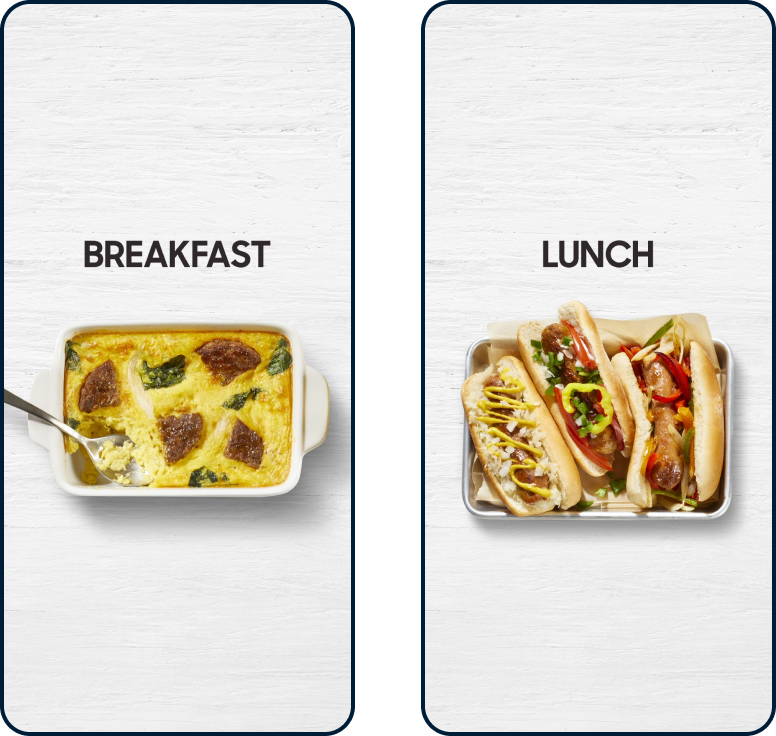
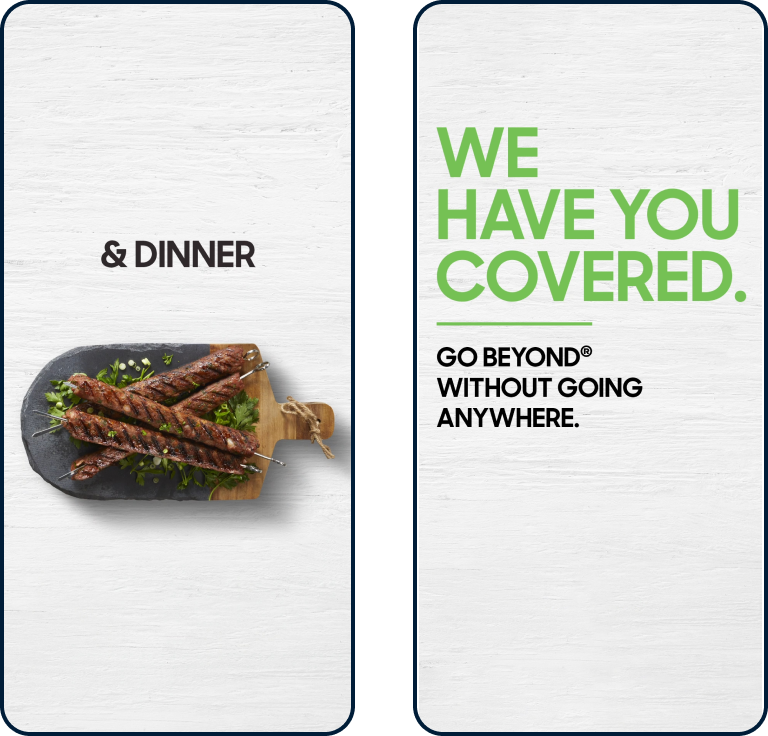
Appetizing assets.

  • Breakfast and Lunch dishes made using Beyond Meat products
  • Dinner dish made from beyond meat

Making a movement.

Based on Beyond Meat’s mission to make small changes that lead to greater impact, we asked on Twitter: “What if we all…?” and invited people to fill in the question with their own ambition for a better world. Within hours of posting, influencers amplified the message to inspire millions of others on the platform. The response was overwhelming and would go on to fuel our strategy from end to end, including 55 pieces of flavorful fit-for-format content and a purposeful TV spot that pushed the brand forward from a campaign to a movement.

  • Cheesy nacho dish made with beyond meat A big cheeseburger made using beyond meat
  • Beyond meat corndog with mustard Beyond beef mac & cheese

Keeping the conversation going.

After launch, we wanted to continue the conversation and ensure Beyond Meat remained at the top of shopping lists, taking the form of real-time community management. During the Super Bowl – arguably the biggest day in advertising – we reacted to the crave-inducing food commercials on everyone's big screen with a series of recipes featuring those same products in real time. We knew that one of the most common requests the brand receives on Twitter is for recipes people can try with the product, making the opportunity to deliver savory stories and tweets too delicious to pass up.

Results

  • 150 million total impressions
  • 87% of replies reflected a positive response
  • 10 twitter posts resulted in 10k organic impressions

Want to talk social? Get in touch.

Hey 👋

Please fill out the following quick questions so our team can get in touch with you.

Can’t get enough? Here is some related work for you!

Social Bites: Tune-Up Your Social Strategy to Reach Subcultures

Social Bites: Tune-Up Your Social Strategy to Reach Subcultures

3 min read
Profile picture for user mediamonks

Written by
Monks

A boy rides a skateboard and girl along his side poses with fairy wings behind her

Relevance boils down to a brand’s ability to connect with consumers. It’s a reflection of how closely they’ve been paying attention to their concerns, how genuine their relationship is and how they’ve been embracing culture. For all kinds of brands, being familiar with what their audience cares about and the values they hold dear is one of the greatest determinants of success.

On occasion, people’s particular interests grow into communities, and these communities evolve into subcultures. These subcultures come with beliefs, codes and languages that challenge the status quo and stoke the fire of societal change. But how do brands participate in this cultural transformation, and how can they authentically engage with them to resonate with society?

In the second edition of Social Bites, a series of quick explorations on various social media themes, the Social Innovation Lab delves into subcultures and how they can be woven into brands’ overall social marketing strategy. You can find the issue of Social bites here, along with some of our key findings below. 

Feeding Culture

While subcultures tend to begin in niche communities, they are quickly bleeding into the mainstream in society’s constant pursuit of novelty. The younger generation in particular is very welcoming of new ways of being, as they are more open to new identities and values that can help shape their own. 

Subcultures often break into the mainstream by permeating fashion, aesthetics and entertainment. Drag culture is a great example of this. With ideals of diversity and inclusivity, its values transcended marginalization and paved the way for a new era of fluid identities and entertainment—think RuPaul’s Drag Race and innovative beauty tutorials. In connecting with those subcultures, brands need to look at the values and ideals that come with it, as they offer a glimpse of shifts in societal values and cultural concerns. The goal is not to appropriate these subcultures; it’s supporting their ideals with authenticity.

Powering Communities in Social Media

Today, subcultures are born in social media and powered by it. Reddit, TikTok, Instagram and Tumblr play a fundamental role in community building, as they provide the digital spaces for people to connect with others. On these platforms, a subculture may even merge with another and form hybrid communities—a phenomenon prompted by the accelerated trends of the hyper-connected digital world and the app algorithms that connect the two with the same audience.

For brands, this serves as a guide on how communities are built and how novelty leads to excitement. While weaving these learnings into their cultural strategy, it’s important to remember that it’s not about trying to predict what subcultures will emerge; rather, it’s about cultivating them by being an active participant in today’s cultural scene. 

Achieving Social Cultural Insertion

To become a valuable player in social culture, brands need to acutely read their audience. The rise of a subculture on social media can be fast, so there’s no time to waste in becoming fluent in upcoming trends. The latest Social Bites report includes information on how brands can identify the rituals, habits and overall feel of a subculture to build a stronger cultural strategy that authentically supports those at the bleeding edge of culture. In this era of hyper-connectivity, brands can expect countless benefits from adapting fast to the evolving culture, as long as they approach their audience with transparency and purpose.

Looking for more social media insights? Tune into our weekly Social Innovation Lab podcast to hear from the brightest minds in social and learn how to create winning social media campaigns. Check out the latest episodes of the Social Innovation Lab podcast.

Our Social Innovation Lab delves into subcultures and how they can be woven into brands’ overall social marketing strategy. Our Social Innovation Lab delves into subcultures and how they can be woven into brands’ overall social marketing strategy. social media marketing content marketing strategy culture

Build Brand Love Through Fandom

Build Brand Love Through Fandom

2 min read
Profile picture for user mediamonks

Written by
Monks

A title accompanied by a few fans celebrating

When people interact with a brand, an emotional bond is created similar to when we build a relationship with another person. It's this emotional connection that gravitates passionate fans around the brand, celebrity or franchise—and brands who are looking to build loyalty can learn a thing or two from the culture of fandoms.

In their inaugural issue of Social Bites, a series of quick explorations into a monthly theme, the Social Innovation Lab puts a spotlight on fan communities to help brands better understand their motivations and attitudes. You can find the issue of Social bites here, along with a short summary of key ideas below.

What do we mean when we talk about fandom?

Built around shared passions, fandoms are communities of people who are more than just consumers of the stuff they enjoy—they're producers and creatives in their own right (think fan art, fan fiction, cosplay or even commentary channels). Fandom is an example of participatory culture, and subcultures and communities often feel a sense of fellowship through their shared interests and attitudes.

Consumer, fans and stans

There are three levels of fandom: the average consumer, the fan and the stan. Consumers are indiscriminate shoppers whose relationship with a brand is based on convenience—they show little to no loyalty. Fans are co-creators and promoters who are capable of amplifying a brand by word-of-mouth. A stan—a playful portmanteau of “stalker” and “fan”—are excessive in their enthusiasm and carry strong loyalty.

The Northstar of fandom

Properly tapping into a fandom effectively means making a match between your brand and your potential fans. Every fan has what we call an “inner mantra,” or a vision of who they are or long to be. A person's inner mantra is linked to their sense of identity—and in seeking new fans, brands should carefully consider how their implicit and explicit values connect and align to the attitudes and ambitions of potential fans.

Fandom tactics for brands

How to best connect with consumers, fans and stans depends on the actions of your audience, which you'll want to match in your own messaging. Our new issue of Social Bites explores some of the tactics available for brands to meet every level of fandom, along with examples of brands who have already captivated communities too much success.

Looking for more social media insights? Tune into our weekly Social Innovation Lab podcast to hear from the brightest minds in social and learn how to create winning social media campaigns. Check out the latest episodes of the Social Innovation Lab podcast.

Media.Monks' Social Innovation Lab puts a spotlight on fan communities to help brands better understand their motivations and attitudes. The Social Innovation Lab puts a spotlight on fan communities to help brands better understand their motivations and attitudes. social media marketing social media brand awareness brand strategy

The Top 5 Social Media Trends in December 2021

The Top 5 Social Media Trends in December 2021

2 min read
Profile picture for user mediamonks

Written by
Monks

social innovation lab logo

In order to create inspiring social media campaigns and brilliant customer experiences, you have to move at the speed of digital. Social media marketing is constantly evolving, and our Social.Monks team is here to help you stay on top of the latest innovations. Each month, we’ll break down the latest trends in social media and wrap them up into our top five trends to watch.

This month we look at how social commerce is playing a role in the holiday shopping season, the influence of TikTok on social app development, and more. Find a quick look—and a link to the insights in full—below.

Brands canceling social media as a statement 

While it seems like everyone is on social media these days, some brands are intentionally absent. We take a look at the decision of Lush to deactivate its social media profiles as a statement on mental health. 

Baby Boomers and Gen X as the newest generation of social users 

The hottest audience on social media might not be who you think it is—Baby Boomers and Gen X. COVID-19 has accelerated digital adoption within both generations, presenting new branding opportunities for marketers in 2022. 

Holiday live-streaming and changing social commerce landscape 

This holiday season, many marketers are looking to shorten the path to purchase. Social commerce and live-streaming opportunities present new purchase opportunities across social platforms. 

The influence of TikTok on social media app development

TikTok has taken the social world by storm and other platforms have taken notice. The latest updates across Pinterest, Instagram, and YouTube look to take a page out of TikTok’s short video playbook.

Increasing interactivity on Instagram with ‘Add Yours’ 

This month Instagram launched the ‘Add Yours’ sticker aimed at increasing interactivity between users. We look at how this new feature has been received. 

Looking for more social media insights? Tune into our weekly Social Innovation Lab podcast to hear from the brightest minds in social and learn how to create winning social media campaigns. Find the latest episodes here.

Social media marketing is constantly evolving, and our Social.Monks team is here to help you stay on top of the latest innovations. Social media marketing is constantly evolving, and our Social.Monks team is here to help you stay on top of the latest innovations. social media marketing innovation digital marketing trends social shopping trends

The Revolution of Shoppable Content

The Revolution of Shoppable Content

3 min read
Profile picture for user mediamonks

Written by
Monks

IMA’s New White Paper Examines The Revolution of Shoppable Content

It is no secret that social media had an incredibly fast evolution in the last decade—so much so we can only speculate how far the next few years will take us. Today, social content plays a fundamental role in the consumer journey. While new platforms and features are introduced seemingly every day, marketers must strive to be at the forefront of social media trends and make the most of the emerging technological possibilities like their brands depend on it—because they do.

A new white paper from IMA, our influencer activation team, seeks to guide brands through the next era of social media: shoppable content. Titled Influencers and Shoppable Content: the Future of Social Media, the report covers the habits that COVID-19 changed forever and how they’ve impacted the seamless fusion of content and commerce across platforms. It also provides a clear outlook on the role influencers play in virtual shopping and the era of everywhere commerce.

The Future of Shopping is Social

The paper starts by setting the scene with statistics on the current state of online shopping, and its acceleration during the pandemic. In a matter of months, skeptic consumers who were previously reluctant to adopt online shopping habits were suddenly “filling up their digital carts,” and by April 2020, online retail orders had grown 146% worldwide.

According to IMA, brands that tap into this new consumer behavior have the opportunity to “establish a robust social presence and take advantage of third-party ecommerce platforms.” But online shopping is no longer channel-specific. Both social and ecommerce platforms are already adding features that will revolutionize how consumers spend their time online and make purchases—allowing users to shop directly from social media channels and blurring the lines between content and commerce. Our BrandLab partnership with Mercado Libre (LATAM’s ecommerce giant) and L’Oréal Paris serves as a clear example: we developed an ideal “digital destination” for beauty enthusiasts with video tutorials led by recognizable influencers, which help differentiate the brand and its products while providing an improved user experience for shoppers.

MM_Blog_header_1200x600

"Beauty Click" combines content and commerce through video tutorials

Amazon is placing its bets on shoppable livestreaming through Amazon Live, too. The platform allows sellers to promote their products through their own livestreams with a smart addition: a carousel where shoppers can browse and seamlessly purchase featured items. Similarly, Instagram promises to amplify its influence in the shopping process with the “checkout” feature, which is swiftly “transforming the platform into an immersive storefront for people to explore and purchase” without leaving the app, according to the report.

Everywhere commerce will continue to rise in prominence and competitiveness, and platforms are also likely to incorporate AR and AI to increase customer confidence—enabling them to try before they buy. This will open a gateway to new entertaining shopping experiences that build user engagement as consumers share these virtualized experiences on their social media accounts.

From Awareness To Conversion, Influencers Conquer The Funnel

Of course, influencers will be key to brands as they envision how to show up in a revolutionized social media ecosystem. As deft content creators, natural conversation-starters and production powerhouses, influencers will become ever-more important for any brand’s social strategy—a must-have in any marketing mix.

As new, improved ecommerce functionalities are introduced, influencers are often early adopters who perfect delivering relevant content at speed. And they are the most proficient at doing so, too, finding meaningful ways that resonate with their audiences and enable seamless implementations that raise both awareness and conversions. Tapping into communities with a human touch, influencer-generated content is more likely to be perceived as authentic by the audience—especially within niche communities, where engagement levels tend to be higher. According to the white paper, 63% of consumers aged 18-34 years old say they trust what influencers say about brands much more than what brands say about themselves in their advertising. 

IMA_NoisyMay_thelfashion-nandaschwarz

The authenticity that influencers bring can help define brands’ success in a shoppable ecosystem.

This authenticity that influencers bring to the table can help define brands’ success in a shoppable social ecosystem as long as the balance is right. “It’s important to keep in mind though that in order to maintain the genuine relationships between influencers and brands, these ecommerce features should be used in a meaningful way that resonates with audiences,” says Maddie Raedts, IMA Founder and Global Head of Social, Fashion  & Luxury at Media.Monks. “Don’t merely add shoppability to each post that features products, as it can come across very spammy and have the opposite effect.”

From livestreams with purchase options to Instagram posts with shoppable tags, influencer marketing will conquer the funnel from top to bottom—not only inspiring audiences but also driving direct, more measurable conversions. In addition to being at the forefront of social shopping, influencers are the enablers and catalysts of this evolution. For those who want to learn more about how shoppable content is revolutionizing customer behavior across platforms, Influencers and Shoppable Content: the Future of Social Media provides invaluable insights, and it’s available for download below. Discover the next generation of online shopping.

Influencer-led shoppable content will conquer the funnel from top to bottom—not only inspiring audiences but also driving direct conversions. The Revolution of Shoppable Content How social is influencing the next stage in ecommerce.
Influencers influencer marketing shoppable content digital marketing social media marketing everywhere commerce

Choose your language

Choose your language

The website has been translated to English with the help of Humans and AI

Dismiss