Choose your language

Choose your language

The website has been translated to English with the help of Humans and AI

Dismiss

Looking Back at a Year of Digital Innovation

Looking Back at a Year of Digital Innovation

AI AI, AI & Emerging Technology Consulting, Extended reality, Metaverse, New paths to growth, Technology Consulting, Technology Services 7 min read
Profile picture for user mediamonks

Written by
Monks

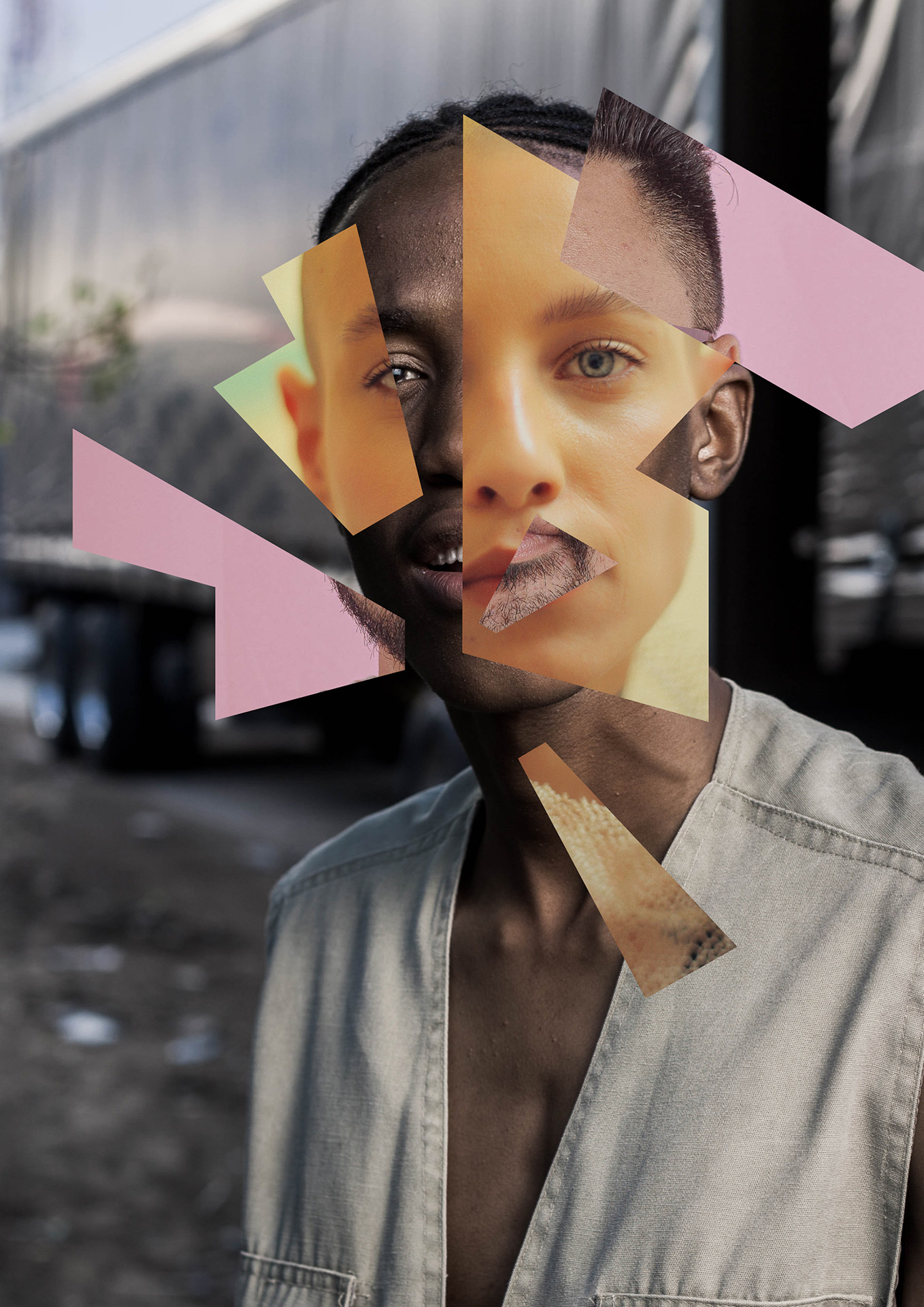
Colorful crystals and shapes fly out of an image of person shaking their head

Lea este artículo en español aquí.

And just like that, another year comes to a close—twelve months packed with the emergence of exciting developments in technology and new consumer behaviors. The metaverse matured, commerce went social, and brands learned to move beyond vanity metrics and cookie consent to build actionable data with bottom-line impact. In essence, there’s been no shortage of challenges (and solid victories) over the past year—so as you begin to look ahead at the next, let’s take a quick review of 2022 highlights and trends.

Virtualization defines the transformation of digital.

As the world opened back up, an era of digital transformation gave way to the transformation of digital. By this, we mean virtualization: a set of new audience behaviors, cultural norms and technology paradigms resulting from 30 years of digital transformation, hyper-accelerated over the past five years. Virtualization, covered in our report earlier this year, marks a revolution in consumer behavior as people demand more from the digital platforms they engage with, which implicates the ways they look at digital experience, community, ownership and identity. For example, the design of ComplexLand, a virtualization of the hype-fueled annual event ComplexCon, was built around the insight that today’s fashion trendsetters are becoming just as invested in their digital identities as their corporeal ones.

The Social Innovation Lab, who explores up-and-coming trends in social, delved deeper into what motivates some of these behavioral changes in The Search for Meaning. By exploring how technology shapes the ways consumers find and make meaning in their lives, the Social Innovation Lab uncovers how brands can adapt to the new era in digital.

Monks Thoughts We're seeing the emergence of a new set of consumer expectations based on digital experiences that are richer, more meaningful, and more ownable. New tools, technologies, and talent on part of brands to show up and meet consumers in a new way. We call this virtualization

00:00

00:00

00:00

Doug Hall VP, Data Services and Technology

Experiments in the metaverse drive real success.

One of the biggest manifestations of the virtualization trend has been the rise of the metaverse, which many brands have experimented with this year to find their footing. Duolingo celebrated the birthday of its lovable (and persistent) mascot by hosting a game jam in Roblox and building larger-than-life public artwork in Decentraland. Logitech for Creators reinvented the awards show format by building the first music awards show in the metaverse, the Song Breaker Awards.

The fashion industry in particular has found a lot of success in the space. Liam Osbourne, Global Client Partner at the FLUX.Monks, our dedicated fashion and luxury team, shared with Vogue some insight on how the metaverse is an opportunity to become more inclusive. For brands exploring that question and more, the FLUX.Monks have authored a quick bulletin on why the metaverse matters.

Monk Thoughts Exploring the rules for access that are not the traditional levers of wealth or proximity to power would be great to see.
Liam Osbourne

As the metaverse continues to take shape, now is an excellent time for brands to continue experimenting in the space, which was a large part of a discussion shared between SVP Web3, Metaverse & Innovation Strategy Catherine D. Henry; Chief Innovation Officer Henry Cowling; and Mike Proulx, VP and Research Director at Forrester as part of our Meet Me in the Metaverse series. Eager to get started experimenting in the metaverse yourself? Our map of the metaverse can help you find the right home for your brand within this quickly evolving space.

Web3 and other emerging tech begin to mature.

In addition to the metaverse, other emerging technologies have fueled transformative digital experiences—most notably Web3. We showed up at NFT.NYC, the biggest Web3 conference on this side of the screen, with an immersive installation for Cool Cats that blurred the boundary between virtual and the real. Meanwhile, Gucci opened the virtual door to an immersive gallery space used to host an auction of NFT artwork.   

More than just a new tech infrastructure, Web3 marks a foundational shift in brand-consumer relationships, a topic covered in a bulletin we released in collaboration with Salesforce this year titled Web 3: The Future of Customer Engagement. For those wondering how to begin making moves in Web3, check out insights from our In a Monk’s Opinion series, which lays out everything you need to know about NFTs and the blockchain. One tip from the Labs.Monks: be sure to make your NFT projects sustainable.

Speaking of the Labs.Monks, our R&D team has continually released missives on the bleeding edge of tech throughout a year of innovation. Their most recent report on generative AI explores the potential of AI tools like Dall-E and Mid Journey that have captured creatives’ imagination (and people’s social feeds). One example of what the tech can achieve: unlocking efficiencies in animation and other production needs.

Creativity and media go hand in hand.

Throughout the digital era, it’s been tempting to focus attention on vanity metrics. But as CMOs invest more dollars into media (and face increasing budget scrutiny with a possible recession), they will benefit from transforming their approach to a more holistic strategy that blends media and creative to optimize their spend. Speaking to Digiday, Media.Monks Global Head of Media Melissa Wisehart unveiled how our integrated media pillar is designed to help brands make this leap.

Monk Thoughts We’re really looking at and drawing statistical correlation between what happened in the media universe and what is the downstream business impact.
Melissa Wisehart headshot

Uni's relaunch campaign demonstrates this more holistic approach through the development of both the creative and media placement by one partner. With three creative variations and four measurement initiatives, we ensured the creative rolled out across today’s most relevant channels according to their purpose within the brand ecosystem.

When it comes to creative optimization, wellness brand Hatch found great success—and shared some of their secrets in an episode of In a Monk’s Opinion featuring Hatch’s VP Growth Marketing Holly Elliott. Many brands that rely on digital platforms for their marketing face a series of challenges: rising acquisition costs; a limited ability to manage their performance, attribution and audience targeting; and the risk of losing brand authenticity. Hatch assuaged these concerns by striking a balance between creative and performance. In the episode, Holly and our creative performance experts offer insight into how historical performance data can fuel further creative iterations.

Brands prepare for the oncoming privacy era.

While media optimization and performance may be top of mind now, budget conscious CMOs are also eyeing another obstacle on the horizon: overcoming their reliance on third-party cookies as attitudes in privacy shift and as Google aims to sunset third-party cookies with the Chrome browser. And speaking of cookies, VP of Data Services and Technology Doug Hall recently shared ways marketers can rethink cookie consent and management using the Privacy Sandbox platform.

Add to the mix that Google is sunsetting GA360 to make way for its new GA4 platform, meaning brands have plenty of adjustments to manage in the near future. Thankfully, GA360’s sunset was postponed to July 2024, meaning they have more time to perfect their migration strategy. Our data experts put their heads together to create a short guide on how to maximize your move to GA4 before the deadline.

Monk Thoughts Google is postponing the Google Analytics 360 sunset. The move to GA4 is now 2024. This is not a time to pivot on your data and privacy strategy, this is the time for you to perfect your migration over to GA4.

00:00

00:00

00:00

Doug Hall VP, Data Services and Technology

We’ve also got some inspiration based on how other brands have future-proofed their data strategies with great success. We began our partnership with Molson Coors in 2021 with the goal to bring more of its digital media in-house. By taking an ambitious, holistic approach focused on modernization, we’ve since helped the brand future-proof with a robust, in-house digital media team: a data transformation that ranges from data acquisition, data activation and enrichment, and optimization.

And in the commerce space, leadership from Canadian retailer Reitmans shared the role cloud computing played in building a single source of truth throughout its entire organization, joining online consumer behavior with data from over 400 brick-and-mortar locations. Check out the episode of IMO to learn how a strong data foundation helped the brand adapt at speed.

Speaking of data foundations, emerging technologies like Web3 offer new ways of connecting with consumers and strengthening relationships. In an episode of Meet Me in the Metaverse, Ashley Muscumeci, our Director, Go-to-Market, sat down with Jordan Cuddy, Chief Client Officer at Jam3, and Avanthika Ramesh, Senior Product Manager, NFT Cloud at Salesforce, to explore how building a resilient data foundation will help brands get a head-start into the Web3 future. One key insight: despite being a new space, the same rules apply when it comes to user consent. “Even if you are bridging Web3 and Web2 data to bring all these identifiers about a consumer together, it’s really important that the user opts in and provides consent to merge these identities,” says Ramesh.

Commerce goes social and creators go virtual.

In recent years, creators have expanded their digital footprint into new spaces—like gaming and social audio—and have even adopted new content ventures to translate audience engagement into revenue for brands. So, what does the intersection of content, commerce and entertainment look like today? The Social Innovation Lab launched a report earlier this year, The Year of Digital Creators, to explore the state of the creator economy in depth, available in English, Spanish and Portuguese.

One example of how creators have transformed the consumer journey is through the rise of live commerce, the subject of a recently released Social Bite from the Social Innovation Lab. Live commerce blends communities and real-time connection to offer entertaining, interactive and personalized experiences for audiences, and the short deck offers a glimpse into the live commerce journey and how brands can activate audiences every step of the way.

What’s next in the realm of digital creators? Expect more and more virtual influencers in the form of CGI-rendered fictional characters or avatar alter-egos of real people. With the rise of the metaverse and more accessible motion capture technology, virtual influencers are primed to become a more common presence in brands’ influencer marketing strategies—and if you’re curious about the role one could play in your own marketing, check out another Social Bite about how virtual influencers are coming alive.

Here's to a new year of innovating!

With so much innovation in the last year spanning experiences, content creation and optimization through data, there’s a lot to celebrate as we cap off 2022. Looking ahead into the new year, these trends will continue to shape brands’ strategies as they seek to engage with hyper connected audiences in the new digital era.

Where will you begin? Reach out to start your 2023 journey with confidence.

As you plan for the new year, revisit innovations that defined 2022: virtualization, Web3, the metaverse, privacy and more. Innovation digital marketing trends innovation trends metaverse Web3 data data privacy media buying media strategy Technology Services Technology Consulting AI & Emerging Technology Consulting New paths to growth AI Extended reality Metaverse

Pushing Your Business Forward With Enterprise Automation

Pushing Your Business Forward With Enterprise Automation

AI AI, AI Consulting, Digital Product Delivery, Digital transformation, Technology Consulting, Technology Services 5 min read
Profile picture for user Michael B

Written by
Michael Balarezo
Global VP, Enterprise Automation

A circle made up of little black dots

When it comes to enhancing efficiency and trying to leave busywork behind, it’s important to rethink your approach to work and consider how you can be smarter about completing your tasks. Fortunately, there are many tools and technologies nowadays that can help you on your way.

The marketing and advertising industry is united by the common goal to leverage technology in new, creative ways—not only to translate data into personalized campaigns, but also to enhance internal operations. This is where automation could come in, if it wasn’t for the fact that marketing is traditionally quite limited in using such technologies. Simply put, many marketing teams haven’t been exposed to automation beyond connecting CRM to email marketing, even though there’s so much more out there.

From business to advertising, development and production operations, digital process automation can help unlock efficiencies across the entire enterprise. There are ample automation solutions for digital operations that can provide support across a company’s content, data, media and tech efforts. While the positive impact of enterprise automation reaches far and wide—from enhancing digital ad operations to improving internal people services—the biggest benefit is the ability to free employees from repetitive tasks or unnecessary complexities in the workflow, so as to enable them to direct their attention and energy towards more relevant work. Especially considering the current economic headwinds, it’s crucial to make sure that your talent can maximize their impact. 

My team of Automation.Monks is specialized in enabling the workforce to embrace automation as a new way of working and realize its full potential. We encourage people to automate as much as possible, no matter how big or small individual tasks are—if a machine can do the work, we should probably let it. This requires us to rethink how we operate within a business and how we collaborate with both tech and each other. The team not only focuses on automating our internal people, operations and processes, but also on supporting brands in automating their enterprise. So, let’s take a look at how we aim to achieve maximum efficiency, visibility and connectivity with automation solutions built by our analytics practice.

Helping brands future-proof their business with GA4.  

Our bread and butter is helping brands automate their people, platforms and processes. The objective is to ensure that these work in ways that businesses can accelerate their digital transformation and prepare themselves for the modern era. One of our go-to tools for measurement is Google Analytics. As Google’s GA360 is scheduled to sunset in the summer of 2024, many brands are busy migrating to the new GA4 product to take advantage of the measurement platform of the future. Among many other useful updates, this tool helps brands collect website and app data to get a better sense of the customer journey by utilizing event-based rather than session-based data. It also includes privacy controls and behavioral and conversion modeling that help fill the gaps in your data caused by the cookieless future.  

GA4 adoption requires collaboration between departments across an organization, and is therefore a change management process as much as it is a technology solution. The flatter, richer insights from GA4 data can help brands deliver more value and achieve faster competitive advantages—particularly when the adoption process is planned, communicated and managed to promote knowledge-sharing and digital maturity growth. Many brands have benefited a great deal from automating their business processes. Let’s take a look at the positive impact experienced by some of our key partners.

We’re supporting a global CPG brand that strives to increase their business revenue YOY by 3%, with a media objective of 3% ROI growth—ambitious, but certainly possible. As its partner for global content production, we advised the brand to focus on the efficient use of first-party data, while also establishing the use of connected data collected from across the customer journey. We pitched GA4 as the obvious solution, keeping in mind our pillars of quality, speed and value. Using custom built in-house automation, we helped the brand rapidly deploy 169 GA4 properties in minutes—all the while managing the shift to GA4 and maintaining top quality first-party data during the adoption. The results were impressive: through our collaboration, this brand has been able to unify its marketing efforts and metrics across 37 brands in 150 countries, ultimately realizing a growth of more than 70% in global ROI since 2017.

Another major brand that we were able to help automate at scale is Diageo, the multinational alcoholic beverage company. Diageo has made the ambitious commitment to increase their market share from 3% to 6% in FY 23. In order to realize this, the brand needs accurate tools with actionable insights. Once again, we presented GA4 as the straightforward solution. Considering the planned sunsetting of GA360, we immediately started planning the GA4 adoption process. Diageo’s scope covered as many as 150 brand websites, including 39 D2C sites (and counting) where we collect transactional data, which is a large-scale task. We leveraged custom Google Tag Manager templates for the GA4 tagging as well as our in-house automation tool to automate the GA360 rollout for the GA4 deployment in minutes versus what would normally take a team weeks to accomplish.

Deploying a common data layer taxonomy, harmonized across all brand sites, allowed for true apples-to-apples data comparison. On top of that, it was pivotal to delivering high-quality, privacy-first, consented first-party data. As a result, the team was able to both save over 200 hours of work and assure quality and reliable repeatability. Moreover, any future updates to measurement are consistently applied across all brand sites using the same solution—and align with Diageo’s overall strategic goals.

Designing the future of Media.Monks with clients in mind. 

Automation is critical to driving your enterprise into its next phase of digital transformation. Though solutions are largely technology focused, it’s important to be aware of the fact that automation can only truly succeed at scale and have a significant impact on your operations if it’s spread across and woven into every facet of your company culture. By incorporating many new, exciting and innovative tools into the tech stack and empowering your people, you can lift your business to the next level of operational excellence. For example, my team is currently working on productizing cloud-based “starter kits” that can easily deploy within a company’s tech stack and seamlessly integrate with existing or modified operational processes. CMOs can leverage these tools to connect their media efforts to the rest of the organization, which allows for better visibility, data interoperability, and measurement in aligning media efforts to business objectives. This is just one of the many ways in which automation can help organizations become more efficient in reaching their marketing and advertising goals.  

No matter the size of your business or the industry that you’re in, enterprise automation enables you to both streamline your people, processes and operations and enhance the output of different teams. In other words, it allows you to do more with less. Our advice? Start building an automation-first company culture now. Recognize where the biggest pain points are in your workflows and thus where your workforce needs to level up with new skills. When it’s deployed in line with your business goals and objectives, automation will maximize your existing talent and set up your business for future success. However, since there’s no one-size-fits-all solution for enterprise automation, the key is to start now.

Learn how we aim to achieve maximum efficiency, visibility and connectivity with automation solutions built by our analytics practice. automation data analytics Google Analytics Technology Services Digital Product Delivery AI Consulting Technology Consulting AI Digital transformation

A Frame-by-Frame Look at How Generative AI Supercharges Creativity

A Frame-by-Frame Look at How Generative AI Supercharges Creativity

AI AI, AI & Emerging Technology Consulting, Digital transformation, Experience 6 min read
Profile picture for user Labs.Monks

Written by
Labs.Monks

A landscape animated mountainside with mist and fog

By now, you’ve seen it all over social media: uncanny images painted by artificial intelligence. Fun to play with thanks to its accessibility, generative AI has exploded in popularity online. But it’s also raised questions about the nature of human creativity: what is the value of artistry and craft if anyone can generate images in a few seconds?

The impressive output of generative AI has led some to voice concerns about whether their livelihoods are in jeopardy. Creativity, after all, has long been considered a strictly human skill.

But creatives aren’t about to lose their jobs to robot overlords who can spin strings of text into pixelated gold. To the contrary, these tools—which rely on human input and some level of artistic aptitude to really shine—are unlocking creative potential and helping people bring their concepts to life in new ways. This outlook prompted the Labs.Monks, our research and development team, to explore how generative AI can uplevel the work of our teams and our clients.

“We’ve been playing with this technology for a while, and after it began to trend, we’ve been getting more and more questions about it,” says Geert Eichhorn, Innovation Director and Head of Labs. For instance: a lot can be said about the future of content creation aided by AI, but how could today’s tools integrate into a present-day production pipeline? 

Looking for an answer, the Labs.Monks collaborated with animators and illustrators on our team to develop a prototype production workflow that blends traditional animation methods with cutting-edge AI technology. The result is an animated film trailer made using a fraction of the time and resources that a typical, frame-by-frame animation of its length would require.

00:00

00:00

00:00

Learn to live with the algorithm.

Ancestor Saga is a 2D-animated side project focused on a central question: what if people in the Viking Age realized they were living in a simulation? After learning that their purpose in life is to entertain the gods, will they accept their new reality, or put an end to the world by bringing about Ragnarök?

The theme might feel familiar to anyone trying to make sense of the increasingly algorithmic world we’ve suddenly found ourselves in. “We wanted to tell a story that could integrate with the tech we’re using: virtual worlds and virtual people,” says Samuel Snider-Held, Creative Technologist. Associate Creative Director Joan Llabata takes this thought further, citing some of the challenges faced when humans and AI don’t quite connect. “There’s some space where we need to find the best way to communicate with the machine effectively,” he says.

When using generative AI, a bespoke approach is best.

That challenge of getting humans and AI to play nice demonstrates the need for a team like the Labs.Monks to experiment with the tools that are available. While off-the-shelf tools are great for empowering individual creators, integrating them into team pipelines requires a more custom solution.

AI is designed to do specific tasks very, very well. Projects that involve multiple capabilities and phases call for a workflow that can integrate a variety of generative AI to fulfill different goals throughout. With an animation project, this means plugging into creative concepting, storyboarding, sound and of course animating the visuals.

In our case, says Snider-Held, “We wanted to explore how AI could allow us to do the work we really want to do, even if the time or the budget isn’t there.” He found that while our animation team loves classic, frame-by-frame animation, the method is often overlooked because it is slower to produce and less cost-efficient than other ways of animating. 

Now the team had a clear goal: orchestrate an AI-based workflow that could output a frame-by-frame animation in record time, without compromising quality. They took inspiration from rotoscoping, a method used by animators like Ralph Baskhi, in which an artist traces images over existing footage. This task of translating an existing recording from one style to another was ideal for image-to-image generative AI. In addition, the team used AI technology to develop background designs and read out the animation’s voiceover.

Generative AI isn’t a radical departure from tradition.

The team began by recording a 3D character model in a virtual setting, capturing a variety of poses for an illustrator to trace over. These visuals were then used to train the AI model on how to draw the character in different movements. “If you draw about five frames, you have enough to teach a neural network how to paint the others,” says Snider-Held, noting that it’s important to select frames that are different from one another so the AI can pick up on various forms, shapes and poses.

In addition to rotoscoping virtual production, the team also experimented with live-action stock footage. Being able to use two different types of visual source material baked extra flexibility into the process; teams could mix and match the different methods according to their specific needs or abilities. Fantastical creatures might be captured more easily in virtual production, while a team lacking in their ability to animate lifelike movements may prefer using live-action film as a base. “You get better acting from footage versus a 3D model, but the visual output is ultimately the same,” says Snider-Held.

Much like how that process emulated classic rotoscoping by hand, other ways of integrating AI followed a traditional animation process, albeit with some additional steps here and there. For example, the storyboarding phase is important for visualizing which types of shots or animations are needed for a specific sequence. In addition to pondering that, the team also planned which kinds of AI would be best for generating this or that shot.

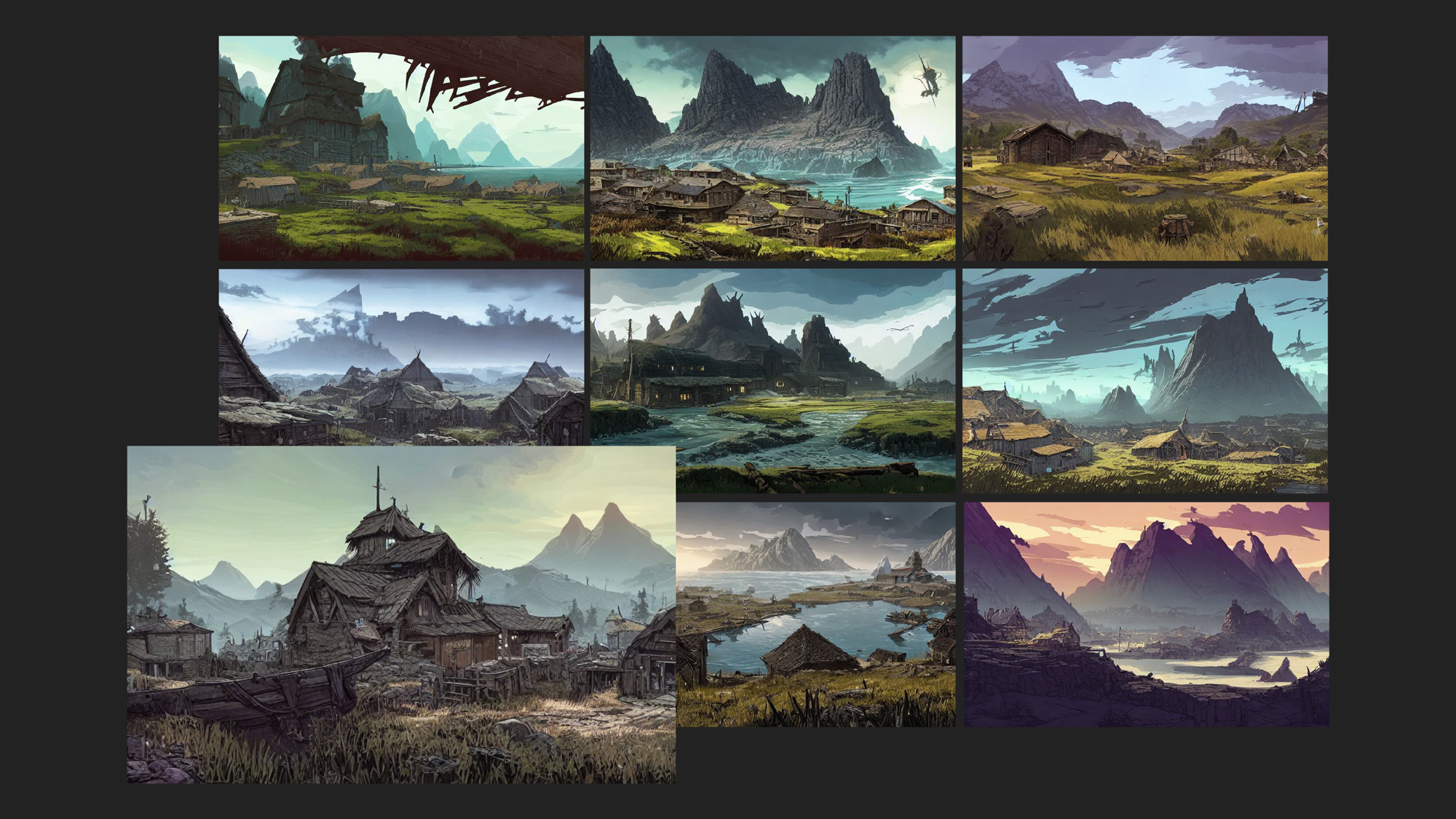
Using Stable Diffusion—a kind of generative AI that translates a text prompt into an image—allowed the team to create a large volume of backgrounds that they could swap in and out to test how they looked. “You can explore a lot in this phase,” says Snider-Held.

As for developing backgrounds in particular, “It’s like describing the shot you want to a director of photography,” says Llabata. He was able to test hundreds of different environments, camera angles, artistic styles, lighting and more, all with relative ease.

a grid of landscapes of a house amid mountains and fields

Unlock efficiencies and long-term gains.

The findings above hit on perhaps the biggest gain that a generative AI-powered workflow can provide: greater flexibility throughout the life of a creative project. Being able to generate 60 frames in one minute—rather than one frame in 60 minutes—makes it incredibly easy to pivot or change things up in the blink of an eye.

Monk Thoughts It’s a producer’s dream to be able to create so many assets so flexibly. It redefines linearity in the pipeline because you can always go back and change things.
Joan Llabata headshot

It doesn’t require a sophisticated hardware setup either, further making content creation accessible to teams of all sizes. “You don’t need a giant server or cloud computing,” says Eichhorn. “A reasonably good gaming PC can churn out assets like backdrops quickly.” Still, more complex uses of AI like rotoscoping may require more power.

The flexibility unlocked by integrating generative AI into a team’s pipeline continues to pay dividends beyond the life of a single project. “If you have a project whose scope is really big, the effort and money you spent in that R&D is compounded in value over time,” says Snider-Held, noting that whether a brand wants to make 10 animations or 30, the steps to lay down an AI-powered foundation will be roughly the same.

Experiment to find an approach that suits your needs.

Tools like stable diffusion aren’t meant to replace those in the creative field. “An AI will not achieve anything by itself,” says Llabata. Instead, these products will give teams the ability to chase more ambitious projects with fewer constraints in time and budget. Just consider how closely the creation of the Ancestor Saga trailer follows a traditional animation process, just with more efficiencies baked in. 

Such flexibility afforded by generative AI can go well beyond traditional animation.

Monk Thoughts The merging of data and creativity is something we’re always exploring at Media.Monks, and this technology is going to supercharge that. Imagine using data that we already use for media campaigns to generate hyper-personalized images.
Portrait of Geert Eichhorn

Whatever your use case for generative AI, understand that while building tools from scratch can be challenging, the result is extremely powerful. “Our approach is that if an off-the-shelf tool is mature enough, use it. If not, create it yourself,” says Snider-Held. In addition to ensuring a tool is calibrated for their specific needs, teams who go the bespoke route will also be better poised to future proof as the technology continues to evolve at a rapid pace.

So, think you’re ready to explore what generative AI means for your field? Learn more about the ins and outs of the technology in the latest Labs Report exploring the rapid evolution of digital creation.

Labs.Monks collaborated with animators and illustrators to develop a prototype production workflow that blends traditional animation with cutting-edge AI. artificial intelligence animation prototyping creative technology Experience AI & Emerging Technology Consulting AI Digital transformation

Labs Report 32: Generative AI

Labs Report 32: Generative AI

AI AI, AI & Emerging Technology Consulting, Digital transformation, Experience 1 min read
Profile picture for user Labs.Monks

Written by
Labs.Monks

A digital view of inside a castle with pink walls and stairs

Generating the future of content through AI.

We’ve seen DALL-E 2, Midjourney, Stable Diffusion and other powerful image generation tools take over our social feeds. The tech is making giant leaps each week, and a future in which it fuels entire industries is not too far away. Those with a deep understanding of the tech and can adopt it into their existing workflows to empower–rather than replace–their teams will remain ahead of the curve.

In this Labs report, we'll uncover how Generative AI is impacting digital creation today, and will explore how to keep ahead of where the tech is going next.

In this Labs report, you’ll:

  • Learn what Generative AI is and what’s currently available
  • Understand how the tech works
  • See the technology in real-world action
  • Peek into what the future holds
  • Learn how to harness its power now

00:00

00:00

00:00

Ancestor Saga is a cyberpunk fantasy adventure created using state of the art generative AI and rotoscoping AI technology.

Generative AI supercharges production for higher quality creative output.

In this animated trailer for an original series called "Ancestor Saga," we demonstrate how Generative AI can be applied to film production. This prototype leverages Stable Diffusion AI for generating background scenes and custom Img2Img neural networks for AI-based rotoscoping of virtual characters.

See our findings about the benefits of using generative AI, including time and labor reduction in production, in the report.

In this Labs report, we’ll discover how Generative AI is going to impact digital creation, and provide a breakdown to help you get ahead. AI artificial intelligence emerging tech creative AI Experience AI & Emerging Technology Consulting AI Digital transformation

Can Virtual Humans Provide Real Connection?

Can Virtual Humans Provide Real Connection?

AI AI, AI & Emerging Technology Consulting, Experience, Extended reality 4 min read
Profile picture for user Labs.Monks

Written by
Labs.Monks

Can Virtual Humans Provide Real Connection?

They’re on social feeds, collaborating with fashion brands and dabbling in politics. They’re starring in movies and performing for sold-out audiences. They’re live streaming on YouTube. And while you sit down to talk to one, they may be talking to dozens—if not hundreds or thousands—of other people at the same time.

They’re like people, but they’re not: they’re digital humans, and they may transform the way we think about how we connect to brands, each other and our own selves. “Digital humans” is a broad term that includes any realistic digital representation of a human, fictional or otherwise. That can include digital body doubles (like CGI actors), fictional CGI influencers, chatbots with bodies, 3D avatars and more. And while they can elicit excitement or unease—the uncanny valley continues to be a concern as technologies evolve—they have the power to connect people in unique ways.

Bringing Communities Together

One of the most appealing things about digital humans is that they can fulfill a sense of connection. Virtual influencers like Lil Miquela may feel like a novelty at first, but they’ve also built real communities around shared values and aesthetics. Hatsune Miku, the virtual Japanese pop idol, is essentially a crowdsourced brand: her songs, costumes and music videos are shaped by a community of creative, dedicated and collaborative fans. Both characters rose to prominence because digital audiences felt empowered to connect with them—and similarly, Riot Games created Seraphine, a digital influencer who appears in the massively popular game League of Legends, as a steward of the game’s community.

Monk Thoughts Those kinds of virtual humans are selling feelings and experiences.
Portrait of Geert Eichhorn

“Those kinds of virtual humans are selling feelings and experiences,” says Geert Eichhorn, Director of Innovation at MediaMonks. And that ability to create meaningful exchanges is what makes digital humans attractive to brands—for example, giving a branded chatbot a face. Text-based chatbots are ubiquitous on websites and apps all over, but businesses like Uneeq and Soul Machines have developed incredibly realistic, animated digital humans that engage with customers both online and within physical locations, like at a lobby’s check-in desk. Unlike their faceless chatbot counterparts, digital humans are able to communicate through body language and nonverbal cues—like eye contact—eliciting stronger emotional responses in people and enabling more meaningful experiences.

Enabling Self-Expression in New Ways

More than just fictional conversation partners or branded virtual assistants, the “virtual human” category can also include avatars controlled by humans, and this is where Eichhorn sees great potential for the tech: fulfilling people’s desire to better represent themselves as they spend increasing amounts of time online. “Avatars are really about self-expression,” says Eichhorn. “Maybe it helps you express the gender identity that you identify with, for example. In that way, avatars can be very liberating.”

On Fortnite, the massively popular online game developed by Epic Games, players have the chance to become some of their favorite characters—or even real-world people, like Travis Scott, Major Lazer and esports star Ninja—and these avatars have played a big part in shaping perception that the platform is more than just a game, but a virtual social world in its own right.

Monk Thoughts Maybe avatars help you express the gender identity that you identify with. They can be very liberating.
Portrait of Geert Eichhorn

On that note, Eichhorn believes the next big social platform could be based around avatars that connect across digital experiences—a bit like how Bitmoji not only connects to social apps, but also video games to let people play as cartoonish, 3D representations of themselves. “Think of an API connected to platforms like Fortnite, or retailers that let you try on and fit clothing on a body double,” says Eichhorn. “I see there being some kind of overarching platform that could integrate it into everything else.”

Ethical Considerations for Building Virtual Humans

Avatars and digital doubles could certainly be useful for shopping and socializing, as discussed above—but they also invite ethical considerations to keep in mind. Deceased celebrities have returned to screens as CGI actors or hologram performers, and the creation of digital doubles may call into question who owns the likeness and what they’re authorized to do with them.

Conversations around ethics haven’t kept up with the pace of the technology’s evolution. “There are some whitepapers from 2012 or 2014 on how to deal with the ethics of avatars, but they’re already so outdated,” says Eichhorn. “There isn’t really a common ground on this yet.”

Octagon_Bob_Paisley_TechBTS_v405.00_01_30_10.Still003

Working with Standard Chartered and Octagon, MediaMonks built a 3D representation of Bob Paisley, the legendary Liverpool FC manager.

Regardless, he and other Monks have already explored these questions when collaborating with Standard Chartered and Liverpool FC to celebrate what would have been the 100th birthday of Bob Paisley, the club’s legendary manager. In a series of meticulously created films and an AR experience, fans got the rare chance to engage directly with Paisley once again. “Our first consideration was if we could make the experience something genuine,” says Eichhorn. “We got the blessing of the Paisley family and brought them onboard as stakeholders to discuss any concerns of theirs before the project even began, ensuring everything was done responsibly.”

Throughout the past year, people have come to rely on digital more than ever, whether socializing in video games, shopping more online or even working in VR. As we grow more accustomed to these virtual environments, the presence of virtual humans may only become more ubiquitous. From activating communities and enabling self-expression like never before, “this technology will affect culture and society by changing our idea of what being human means,” says Eichhorn.

Avatars, virtual influencers and realistic digital assistants are part of a breed of virtual humans that will change the way we think about humanity and relationships. Can Virtual Humans Provide Real Connection? From enabling self-expression to building communities, digital humans are making a mark on consumers.
Virtual humans digital humans avatars chatbots AI virtual influencers Experience AI & Emerging Technology Consulting AI Extended reality

Choose your language

Choose your language

The website has been translated to English with the help of Humans and AI

Dismiss