Choose your language

Choose your language

The website has been translated to English with the help of Humans and AI

Dismiss

From AI Transformation to Purpose, These Are the Top Insights We’re Taking From Cannes

From AI Transformation to Purpose, These Are the Top Insights We’re Taking From Cannes

AI AI, AI & Emerging Technology Consulting, AI Consulting, Community Management, Culture, Digital transformation, Original Content, Sustainability 8 min read
Profile picture for user Kate Richling

Written by
Kate Richling
CMO

collage of photos of people on stage at Cannes Lions 2023

It’s come and gone again: the Cannes Festival of Creativity, one of the most prestigious and influential events in the advertising and creative industries. From networking over glass after glass of rosé to toasting the year’s most award-winning work, people from around the world came together at the festival, now in its 70th year, which serves as a barometer for what’s on marketers’ minds.

If you missed it (or could use a refresher), no worries—we’ve collected insights from across the week that set the agenda for what brands and their partners are focusing now and into the next year. Want to see the key themes at a glance? Find our deck at the bottom of the page.

Surprise: everyone was talking about AI.

It’s no surprise that among all the themes covered at Cannes this year, generative AI was the toast of the town. Our programming at Les.Monks Café centered on how marketers are using the tech now—or how they can lay the foundation for the revolutionary effects of AI in the very near future. “AI: Powering Transformative Customer Experiences” was one panel touching on these topics.

Panelists from Media.Monks talk on AI at Cannes
Les Monks Cafe with attendees listening to a panel talk

At the top of the conversation, Jay Pattisall, VP & Principal Analyst at Forrester, shared insights from his recent forecast report co-authored by Michael O’Grady. “In Q1, 19% of marketers in the US have used generative AI in their marketing execution. By Q2, that grew to 56%. There’s a really substantial growth,” he said, noting that early use cases include content development as well as media strategy and buying.

But what does this look like? Carlos Ricardo, Sr. VP Marketing Services & Creative Production at HP, laid out the brand’s strategic balance in identifying opportunities now versus building toward future goals. “We established what would be the potential business impact in terms of prioritization,” he said. “So, we determined 14 different work streams that we are currently working on which we call ‘Day Zero’—experiments that have already started.” In addition, the team has mapped out plans for 30, 60 and 90 days into the future to keep its AI transformation on-track.

Solange Bernard, Sr. Director/Head of Marketing Communications at Tim Hortons, also offered a peek behind the counter at how they’re using AI: “The way we’ve been approaching it is twofold. One, you see it as an opportunity to be more efficient. And then there’s also creative content development—there’s a lot of excitement in what we could be doing.” Bernard noted AI tools have enabled the team to take their first steps into virtual production to scale up creative.

AI plays a key role as an integrator that unlocks growth for brands.

As Pattisall shared, AI is more than unlocking creative content at scale—there’s also great potential in media. Later in the panel, Media.Monks Co-Founder Wesley ter Haar explained that when you bring both disciplines together through dynamic creative optimization, you truly unlock AI’s revolutionary impact. “For me, it brings to the front the original intent and promise of digital advertising: this idea that we can be real-time responsive, have highly personalized goals, and highly targeted feedback loops.”

This sentiment was echoed at our “TuesdAI Breakfast Session” with our EMEA CEO Victor Knaap and EMEA Chief Growth Officer Maria Nordstrom. With the discussion focused primarily on the basics of generative AI, Knaap explained the importance of integration across the business to “make an enterprise-ready pipeline where we can go all the way from insights to the assets that run on media,” and that he expects to see brands implement structural changes from the top down to accommodate.

Media.Monks presenting on AI at Les Monks cafe in Paris

One example: the work we’ve done with BMW and Mini, in which “atomic assets”—bits and pieces of creative, like the car model or environment featured—come together based on user profiles and data. “So, you get an infinite amount of assets that can be served into media,” says Knaap, noting that this infinitude can even resonate with audiences you haven’t formally targeted—leading to newer insights along the way.

The secret to cultural relevance? Leaning into communities that align.

AI wasn’t the only topic for discussion at Cannes this year. There was also a lot of talk on building cultural relevance and authenticity, especially when it comes to serving a movement or community. This is already top of mind for many brands during Pride Month—but the 50th anniversary of hip-hop during August this year offers a case study of this concept in real time as brands lean into the culture.

This was a key topic in our panel “Hip Hop 50. Then. Now. Forever,” hosted in collaboration with Billboard, ADCOLOR and Sony Music Group. “Any time a brand wants to utilize or activate a culture, it’s got to be really thoughtful, and it’s got to have intention,” said Eric Johnson, Executive Creative Director, North America at MassiveMusic. “It’s really important for brands to honor the culture and understand the culture.”

Hip Hop 50th Anniversary panel with Media.Monks and Billboard

With the group diving into legendary brand collaborations in the early days of hip-hop—like Run DMC’s historic signing with Adidas in the 80s after endorsing the shoes in their songs—Cashmere President and Chief Creative Officer Ryan Ford expressed the importance of seeking these natural alignments. “We’re trying to help brands understand where the authentic alignment is already. It’s not just about slapping a ‘Hip-Hop 50th Anniversary’ logo on your product, right?” Instead, he says, you need to think hard about how to show up for the cultural moment.

Mike Van, President at Billboard, offered one approach. “[Hip-hop culture] is inherently entrepreneurial, it’s bootstrap culture all the way. It’s all about financial independence and empowerment, and you have a whole generation now of consumers and fans of hip-hop who are thirsting for that kind of content.” The opportunity: brands can become arbiters to build knowledge within the culture.

Real purposeful marketing focuses on real solutions. 

One area where cultural relevance is key is purpose-driven marketing, which shows no sign of slowing down on the award circuit. That said, the nature of what passes for truly transformative, purposeful work has evolved from previous years. “We’ve moved beyond just raising awareness for good causes. We need tangible solutions,” Sara Cosgrove, our Global Director of Awards & Creativity, on our “Women Connect” panel.

The Women Connect panelists at Cannes

Cosgrove was joined by Jo Wallace, Global Executive Creative Director, and Ashley Knight, Strategy Director, in the panel, which was moderated by Luciana Haguiara, Executive Creative Director, Latam. With Wallace and Knight having served on juries this year, the group pushed back against work that tacks on a cause. “It has to have absolute relevance,” Wallace said. “We’re noticing a real disparity between brands that have a genuine purpose and a reason to function in that space and to bring good, and brands where there’s some laziness—you’re trying to bolt on this purpose and it shows.”

A favorite piece of work among the team is our Havaianas Pride Research project, where we teamed up with Havaianas, Datafolja and All Out to create Brazil’s biggest LGBTQ+ survey. Questions related to community had been excluded from Brazil’s official census, so the survey was designed to make the community and its needs more visible. Its findings were released on a beautifully designed web platform developed by the Media.Monks team. 

There’s no single definition of “good” creative.

Speaking of impactful work, the leadup to Cannes this year didn’t have the single frontrunner that was expected to sweep all the awards—but that’s not a bad thing, because it’s indicative of more diversification of what “good” creative is. An increasingly diverse talent base, plus more diverse and representative juries at the festival, will continue to affect what work is awarded and further challenge industry norms and expectations.

“It all comes down to empathy. There’s never been as many diverse crises we’ve been facing as a group of people, as an industry, and I think the expectation is creativity needs to do more to create empathy among these groups,” Knight shared. “Having more diverse perspectives that can speak to other people’s circumstances and needs can only be a good thing and that’s where I see a lot of change in the work this year.”

So, what makes outstanding work? The Women Connect panel made a rubric: have a clever insight that links to the brand, don’t overcomplicate things, play to emotion, and give newcomers the chance to challenge their more established peers. This helps bring new perspectives to the fore that can uniquely relate to audiences.

Supporting green talent is the idea behind our NextUp.Monks competition, in collaboration with Cannes Lions, which aims to elevate up-and-coming creative talent. This year, teams competed by answering a creative brief from Meta, "VR for Good," which challenged participants to transform how Gen Z thinks about VR and show how a headset can change minds and transform lives. We finished the week with a toast to the six competition winners—Vasyl Ilba, Mykyta Zolotoverkhyi, Ashwin Paul, Jorene Chew, Anna Zhang and Yazad Dastur, Jr.—who touched on their processes and experiences bringing the brief to reality.

Our NextUp.Monks chatting about the Cannes Festival of Creativity

One interesting tidbit came from Dastur, on zeroing in on an idea that has an impact. “While we wanted to do something different, we didn’t want to do something big. We aligned really quickly that we wanted to focus on a very small problem that would be able to help everyday life.”

Looking ahead, brands are planning their transformation strategies.

Throughout Cannes, we got a glimpse into what brands are thinking about right now. But what should they be doing now to prepare for next year—and beyond? S4 Capital Executive Chairman sat down with Salesforce President Sarah Franklin and Diageo Chief Digital Officer Susan Jones to speak on “Gathering the Transformation Trio” and aligning C-suite leadership across agency, technology and brand for continued success.

Franklin kicked things off by touching on the evolving role of the CMO. “You’re seeing more CMOs as more strategic in the business, the pathway to these more strategic roles, even the pathway to the CEO which, I think, speaks volumes for how much is on the shoulders of the marketeers and how strategic they are,” she said. Sir Martin Sorrell’s advice to building more strategic brands: be agile, take back control, and invest in first-party data.

On agility, Jones spoke on the need of continually evaluating and re-evaluating your activities. “Test new things as they come long to understand how they work, and then take a step back and go, ‘Is this sustainable? What’s a better way?’” This agility helps empower teams to reorganize around changed or emerging needs.

Sir Martin Sorrell at Cannes during a panel held at Les Monks cafe

When it comes to in-housing, Sorrell notes that the important thing is bringing teams together to work far more efficiently—something that AI can help unlock. “Being able to disseminate knowledge across the organization on the assumption that you’ve ingested the right data, and that you’ve opened it for access to all, is the really powerful thing—and it means you’re going to become a much more singular force for agencies to deal with,” by breaking down the silos and politics that typically slow things down.

Finally, “You have to have a strong foundation of your data. Your data has to be in order,” particularly when it comes to setting up artificial intelligence. But as the lifeblood of your brand, a solid data foundation can accomplish even more. Franklin mentioned Formula One, whose “Drive to Survive” Netflix series brought in a new fanbase, many of whom are women. “So you see how something which is very orthogonal to their actual business, which is a TV series, created this whole new community of fans for them. And what they’ve done from the data side to be able to really drive that personalization has been really impressive.”

The festival captured an industry at a pivotal moment.

While AI dominated the conversation at Cannes this week, it’s important to consider some of the pre-requisites touched on elsewhere throughout the festival: getting your data in order, integrating the business to achieve new outcomes and ensuring you lead with authenticity with everything you do. The beautiful part? Once you’ve made a solid foundation on each of these, you’ll be prepared to fully unlock the potential of technologies like generative AI. 

That’s it for Cannes this year—and we can’t wait to see how AI, more intentional creative and greater diversity on teams will continue to influence creativity next year.


We’ve collected insights from the Cannes Festival of Creativity that set the agenda for what brands and their partners are focusing now and into the next year. Cannes Festival of Creativity brand creative AI advertising and culture Digital transformation data and analytics AI & Emerging Technology Consulting AI Consulting Community Management Original Content AI Digital transformation Culture Sustainability

Experience

Redefine brand engagement through innovative, best-in-class digital experiences.

  • Expert Thinkers
    and Makers

    300+

  • Cannes Lions

    126

We are the architects of industry-defining brand experiences.

Over the last four decades, digital transformation has been the catalyst for growth. However, a new generation of digital natives with distinctive and high expectations has emerged. As experts in brand experience, we see every brand touchpoint as an opportunity to inspire, engage and innovate.

Our approach is centered around the power of bringing strategic, creative and in-house production together. We deliver award-winning, big-idea thinking through our unparalleled storytelling, exceptional craft and industry-defining digital expertise. 

Redefining the future of virtual events

  1. Work

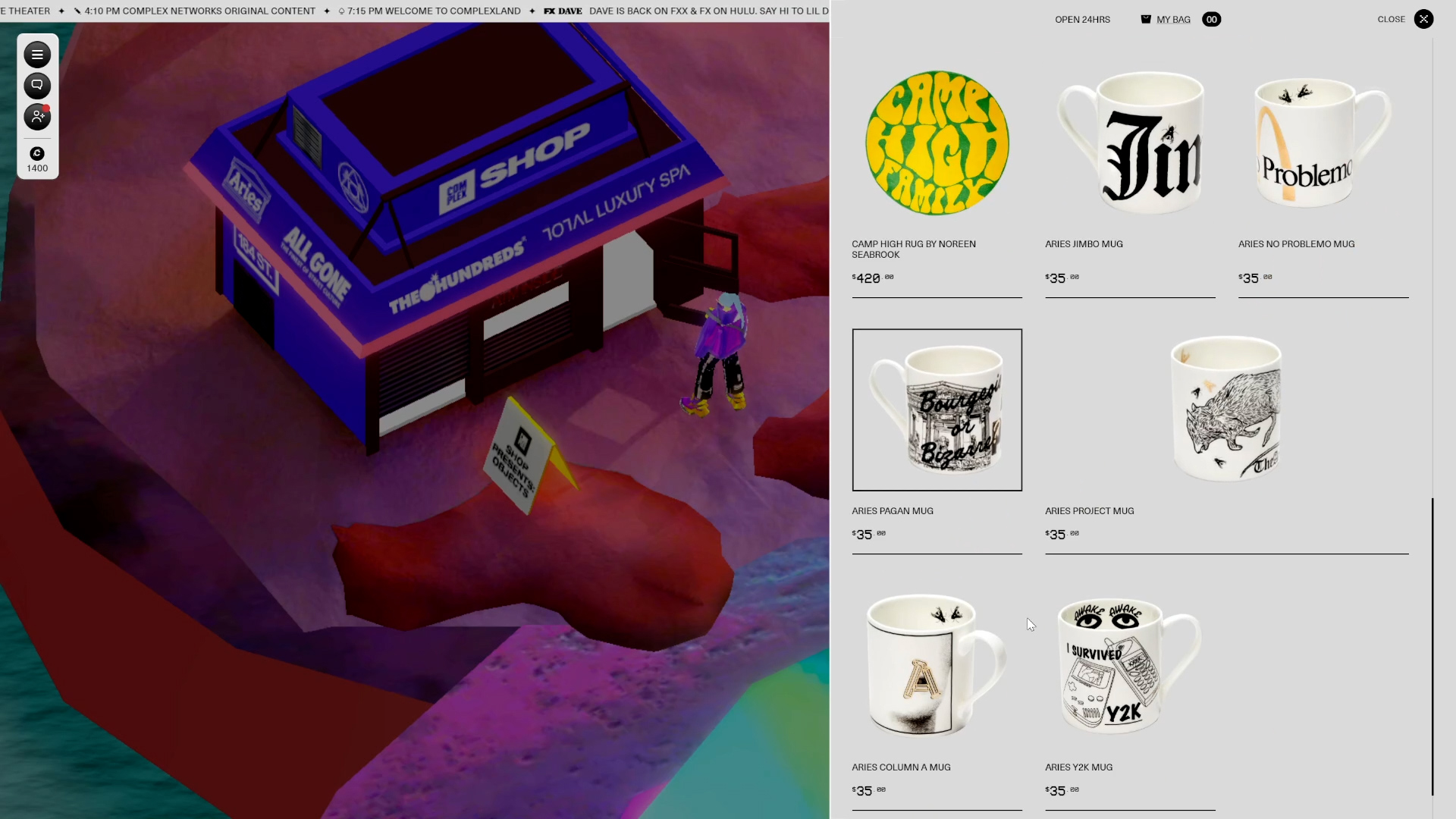
    ComplexLand • We translated the experience of ComplexCon into a shoppable, digital-first journey enjoyed by the most discerning trendsetters in culture.

  2. ComplexLand intro with logo in the clouds

    Realizing that trendsetters are increasingly just as interested in their digital identities as their physical ones, we leveraged this insight into new consumer behaviors to design ComplexLand.

  3. An avatar dancing
  4. A shoe drop happens in ComplexLand
  5. Since the start of our partnership years ago, ComplexLand has grown into a profitable media and retail platform that combines commerce and entertainment.

    It’s the first of its kind to condense more than 70 brands into one shared virtual experience—allowing the institution to establish new partnerships with the hottest brands driving culture today.

  6. Want to learn more about our partnership with Complex Networks?

Swipe
For More!

Drag
For More!

Monk Thoughts Today’s consumers have seen it all and done it all – simply put, they expect infinitely more from brand experiences. Earning their affinity and their business requires insight and strategy rooted in culture, matched with highly innovative and disruptive thinking.
Adrian Belina headshot
`

Connect

How can we help you innovate? Drop us a line.

Experience is everything.

As experts in brand experience design, we work to elevate and innovate your brand through every single consumer touchpoint.

We are your consultancy, agency and production arm all in one, specifically designed to help modern brands looking to disrupt, differentiate, and innovate everywhere customers interact with them. We exist to make complex problems simple.

Solutions

We are here to help with…

Highlighted

Solutions

Swipe
For More!

Monk Thoughts We love experimenting with immersive spaces that engage the senses, evoke emotions, and build connections. Through innovative creative technology and interactivity, we transport audiences into a new level of brand engagement.
Rafael Fittipaldi headshot

Bringing the future of urban living to life

A large airplane hanger all lit up in the night
A large white circular exhibit piece with large screens on the inside of it

Case Study

Ellinikon Experience CentreA permanent, large-scale exhibition inviting people to experience Europe’s greatest urban redevelopment project to date.

See Full Case Study

Results

And it’s working…

  • $700,000+ in sales during the 5 days of ComplexLand 1.0
  • Complexland 2.0’s gamified virtual shopping increased sponsorship revenue by 60%
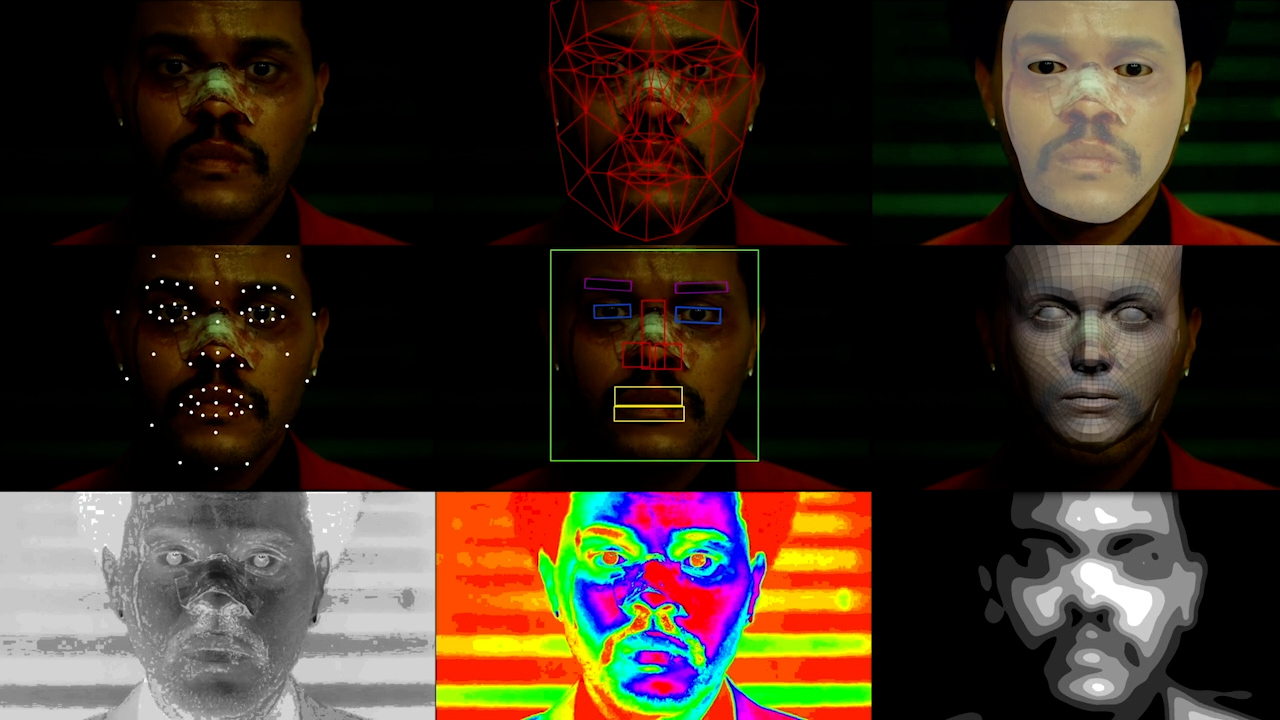
  • 700K fans visited The Weekend x Spotify AI experience in the first 48 hrs
  • 104 press articles & 2.1B impressions in 24 hrs for SONOS latest launch event
Monk Thoughts Our goal is to deliver more personalized experiences for consumers and brands as efficiently as possible. Fans are increasingly craving personalized content, so we use the latest technologies and platforms to build upon our next-generation broadcasting solutions and deliver content people most want to watch.
Headshot of Lewis Smithingham

Announcing software-defined production...

A new cost-efficient and carbon-reducing production offering available for video capture and live broadcast that will save you 50% or more on legacy production expenses, powered by NVIDIA, AWS, and Adobe.

Want to talk experiences? Get in touch.

Hey👋

Please fill out the following quick questions so our team can get in touch with you.

Thinkers and Makers. Together at last.

Revolutionizing Customer Relationships Through AI

Revolutionizing Customer Relationships Through AI

AI AI, AI Consulting, CRM, Customer loyalty, Data 4 min read
Profile picture for user mediamonks

Written by
Monks

Salesforce and Media.Monks logo

AI is the great connector. From internal operations to customer loyalty, AI-driven tools are bringing together systems, data and individuals to enable a deeper understanding of customers and processes, fueling growth by doing so. There’s probably no area in our industry that remains indifferent to the potential for AI enhancement—and if there is one, that will probably change soon.

For all these reasons, the praise for AI among marketing experts is ceaseless; but while much ink has been spilled about it, we’ve merely begun to scratch the surface. This month, our team was part of Salesforce Connections, where the topic of AI and its impact on customer relationships dominated conversations. The two jam-packed days of sessions were all about creating strong, lasting customer connections with meaningful interactions—using AI combined with the power of first-party data to ideate, create and deliver them.

As the event kicked off, Salesforce unveiled their new AI-driven tools for personalized customer experiences, and we were honored to be featured in their announcement as one of the partners contributing to their generative AI ecosystem. If you want to learn more about AI and its impact on customer relationships, here are some of the main takeaways from our people’s keynotes and panel discussions.

AI empowers CMOs as their roles evolve. 

On the first day of the event, our Chief Innovation Officer, Henry Cowling, and S4 Capital Group Executive Chairman, Sir Martin Sorrell, shared the main stage. Together with industry experts such as Salesforce President Sarah Franklin, they unpacked the role of AI in consumer engagement at the CMO+ experience, which convenes an intimate group of the world’s most influential CMOs for hyper-relevant networking.

Sir Martin Sorrell at Salesforce Connections

Sir Martin Sorrell, S4 Capital Group Executive Chairman, shares the stage with Salesforce President Sarah Franklin for a fireside chat.

As we know, the role of the Chief Marketing Officer has undergone a significant transformation. The CMO is no longer solely responsible for overseeing marketing campaigns; instead, they have become a crucial strategic partner to the CEO and the C-suite. Today, the CMO’s role is to take business insights and bring them to market so that value can be realized. But in an always-on environment, that value can only be realized through personalization at scale, data-driven decision-making and the addressing of regulatory pressures and privacy concerns.

To unlock all of that and more, the aid of AI is key. For years, data experts have banked on predictive analytics and machine learning algorithms to help identify patterns, trends and customer segments, leading to more targeted and effective marketing strategies. Now, we’re finally approaching the promised land of hyper-personalization, where real-time insights inform each customer’s experience on a granular level and personalized content can be generated at scale.

Enhance customer experiences with cross-functional data systems.

Cowling puts it simply, “In an AI-enabled marketing landscape, the smartest data set wins.” First-party data is at the center of any journey of digital transformation, and through their marketing leaders, brands have an opportunity to capitalize on their unique data and intellectual property. By doing so, they can strengthen customer relationships and offer groundbreaking experiences that are key for success.

However, leveraging your data to its full potential also demands that CMOs partner with peers within and outside their organization. It’s important for teams to look beyond their specific perspectives and collaborate with their counterparts in IT, data science, product development, customer service, sales and even external partners who can provide valuable solutions. 

On top of that, the transformative potential of AI is fundamentally changing how we see, understand and use data. Therefore, it raises new ethical, social and legal questions, requiring a reevaluation of our current systems and frameworks. The sooner brands address those with the input from their different teams, the sooner they’ll be able to leverage AI as a customer engagement tool.

Monk Thoughts Now is the crucial time for every team to familiarize themselves with AI, the various tools that are available, and their increasingly sophisticated capabilities.
sol
Media.Monks at Salesforce Connections

Directors of Go-to-Market Ashley Musumeci and Nich Seo share a presentation on building loyalty for brands.

Activate loyalty with a strong data strategy.

Hot on the heels of Cowling and Sorrell’s insightful chats, our customer relationships experts and Directors of Go-to-Market Ashley Musumeci and Nich Seo shed some light on the future of loyalty. Their presentation emphasized an important fact: in today’s ever-elusive landscape of consumer attention and loyalty, brands have a golden opportunity to set themselves apart by delivering exceptional customer experiences.

Contrary to outdated notions, true customer loyalty goes beyond a rewards program and requires ongoing, meaningful interactions with your customers. It hinges upon the emotional connection customers develop through their collective experiences with a brand—and there are three approaches to consider as you strive to create those bonds:

  • Forge deeper connections by making sure consumers feel your brand values and understand them. Achieving this entails aligning personal values, creating impactful content, implementing personalization strategies and fostering a sense of community. It also requires the ability to anticipate customer needs and desires, exceeding their expectations at every turn.
  • Offer meaningful experiences that provide genuine and relevant value for people’s interaction with your brand. This can be achieved by creating unique branded moments that leave a lasting impression, tapping into exclusivity, enhancing gamification elements to make interactions more engaging and embracing a purpose-driven approach.
  • Building integrated ecosystems that expand the customer-brand relationship in innovative ways. For example, by connecting all physical and virtual touchpoints and forming an accessible universe that consumers can seamlessly navigate. 

Now, you may be thinking: this sounds great, but where do I even start? As we discussed earlier, data plays a crucial role in the marketing lifecycle, enabling the delivery of enhanced value. Therefore, the initial step toward creating seamless, personalized and meaningful experiences is to establish a robust data strategy. Customer data resides on various platforms, and collection points are scattered throughout the entire customer journey. To overcome this challenge, identify integration points between existing technologies and unify the ecosystem.

The importance of cross-functional collaboration and leveraging first-party data to enhance customer experiences cannot be overstated. With AI enabling hyper-personalization, real-time insights and effective decision-making, it’s crucial to embrace AI-driven tools and establish a robust data strategy as a foundation for success. Now is the time to harness the power of AI and unlock its full potential in driving customer engagement and empowering CMOs.

Salesforce unveiled their AI-driven tools for personalized customer experiences, and we're honored to be one of the partners contributing to their generative AI ecosystem. AI personalized marketing CRM strategy customer experience salesforce marketing Data CRM AI Consulting AI Customer loyalty

How AI is Influencing the Future of Search

How AI is Influencing the Future of Search

AI AI, Data maturity, Media, Paid Search 5 min read
Profile picture for user Tory Lariar

Written by
Tory Lariar
SVP, Paid Search

Two hands typing on a laptop

The future of search is undoubtedly going to be shaped by the integration of artificial intelligence, particularly large language models (LLMs) such as Google Bard and OpenAI GPT-4, and brands that want to stay ahead of the curve should seek to understand how AI will influence search.

Those who engage with AI will be better equipped to deliver personalized, relevant and effective content that engages users and helps them stand out in an increasingly competitive digital landscape, and they may do so by investing in first-party data integration, testing AI-driven bidding and creative tools, experimenting with more visual content, and preparing for the eventuality that AI will change the search engine results page (SERP) ad landscape as we know it.

Late last year, ChatGPT took the world by storm, becoming the fastest product in history to accumulate one million users in just five days. This same technology went on to power the launch of Microsoft’s new Bing search experience. Since then, Bing launched an ads experience that surfaces ads and recommendations based on relevance to the conversation. This seems to be working, as the search engine's audience has grown significantly to over 100 million daily active users.

Unsurprisingly, Google is beginning a limited release of the Search Generative Experience, with ad formats that are highly focused on travel and shopping experiences. Meanwhile, the traditional Google SERP will bring in generative AI responses to further improve how we search for, engage and ingest information we seek. Search ads will continue to show in traditional ad slots, but there will be a totally different experience based on the conversation, rendering relevant links and ads.

Still, artificial intelligence isn’t new to search; in fact, it influences a variety of factors that influence results, from bidding to search query matching to creative optimization. But the introduction of large language models (LLMs) into the equation will significantly impact not only the user experience, but also how content is valued and ranked on the results page and how we buy media. They’ll also significantly change the way we create content. Here are three big ways the future of search will force brands to adapt—and what you need to do now to stay ahead of the curve.

AI-generated content will be a double-edged sword.

 Conversational search opens the possibility of delivering highly relevant, personalized responses to users on the fly. While the benefits to this are obvious, AI’s talent for spinning up content on its own presents a double-edged sword. Some verticals—like healthcare, pharma and finance—will struggle to keep up with the pace of automation given the various rounds of legal and regulatory approval required for their creative before it goes live.  

AI-generated content risks circumventing these hurdles. It’s also vulnerable to spreading misinformation. But brands can mitigate these concerns by ensuring human review before the approval and publication of ads. Through proper tuning and training of AI models, brands can quickly spin up content that incorporates regulatory guidelines that they are beholden to.

Search will be more engaging, visual, and interactive.

The future of search isn’t all text. Search is also skewing toward more visual and experiential content. Sure, image extensions make search more visually engaging to users. But also consider more sophisticated platforms like Google Lens or Snapchat Scan, which use computer vision to make a user’s surroundings searchable. AR is another format that will add a new dimension to search and is already offered by Google, allowing users to engage directly with virtual animals, objects and places in real time.

The idea is to build a more immersive experience versus the infinite scroll. Travel, retail and lifestyle brands may benefit most from this because they already have robust libraries of visual assets to draw from. Others, like B2B brands, healthcare, pharma, and finance, will need to catch up by building libraries of visual and experiential content that engage users to avoid stock images. At the recent Google Marketing Live, new products for asset creation using generative AI were announced, making it easier for those without libraries to build creative in Google’s advertising platform. Generative AI can certainly help brands develop assets at speed and scale, although it’s important to remember that they aren’t yet production ready on their own. There may also be open questions of legal ownership and intellectual property rights.

Data streams will continue making search more predictive and proactive.

Search is already steering in a direction where it can serve more personalized results based on previous activity or what the search engine already knows about you—for example, suggesting local restaurants when searching for food on Google, or recommending related products on an Amazon product page. These experiences generally help users find what they’re searching for faster and keep them coming back for future searches.

It’s not a stretch of the imagination, then, to envision a future in which search engines anticipate user needs before they are typed. They will go beyond keyword query and apply previous behaviors and contextual information—like the intent unlocked by a conversational interface—to generate entirely unique responses for each user. That sounds amazing, but the more conversational search improves, the better it will be at delivering answers that satisfy users’ queries without their having to click through to another website—reducing opportunities for ads in the traditional sense.

The data streams that enable this experience will play an outsized role in how search continues to evolve. Brands who have first-party data will have opportunities to use it to enable even greater predictive and personalized experiences. While we don’t know for sure how this space will evolve—concerns about privacy and transparency, especially globally, may interrupt progress here—it seems likely that search experiences will continue to evolve in this trend. The lesson is clear for brands: the accumulation of data assets and the ability to deploy AI will be differentiators as the SERP ad landscape changes.

Don’t wait to update your search strategy.

Unsurprisingly, a strong data foundation will be crucial to keeping ahead of these changes. Maintain a competitive edge by investing in first-party data integrated across touchpoints in the conversion cycle. Apply conversion modeling to help fuel more relevant ads and higher returns. These insights will prove critical as brands adapt to conversational search, providing them with the insights and tools they need to deliver more personalized, relevant and effective content.

Speaking of content, brands can also future proof by updating their approach to activation and creative. Test AI though bidding, ad creative and playing with broad matches. Experiment with tools like Google’s Performance Max—an AI feature deployed in the GMP suite that allows for cross channel campaign launches and optimizations all from a single campaign configuration—and automated asset generation.

Finally, break away from relying on text by testing more image extensions and invest in performance creative to help stand out. Leveraging AI to optimize and find the best creative combinations will help brands adopt a more asset-based approach and prepare for search’s increasingly experiential, visual and conversational interfaces.

All of these developments are happening right now, and brands will need to adapt through experimentation with emerging AI tools.

By doing so, they will be better equipped to deliver personalized, relevant, and effective content that engages users and helps them stand out in an increasingly competitive digital landscape. And lastly, AI is far from perfect, so check the sources and verify the generative responses.

Learn how search will be shaped by the integration of artificial intelligence, and how brands can stay ahead of the curve. artificial intelligence paid search AI first-party data search engine marketing Media Paid Search AI Data maturity

Creating Brand Love Through AI-Powered Customer Experiences

Creating Brand Love Through AI-Powered Customer Experiences

AI AI, AI & Emerging Technology Consulting, Emerging media, Experience, Go-To-Market Strategy, Impactful Brand Activations 4 min read
Profile picture for user rogier.bikker

Written by
Rogier Bikker
Managing Director - Greater China

Estee lauder and intel digital experiences using AI

If you'd asked anyone a year ago whether AI would come after creativity first, the answer would have been a resolute no. Up until a few months ago, the most broadly used AI applications centered around data. Today, AI-generated content is taking the world by storm. With the quantity and quality of content increasing exponentially, the cost of content will decrease exponentially. But humans can only consume so much content. Last time I checked, everyone still only has 24 hours in their day. So, while the cost of creating content will decrease, the cost of (earned) attention will most certainly increase.

AI process graph

To stay ahead of the curve in customer engagement, brands must move beyond delivering AI-generated content (AIGC) to delivering AI-powered consumer experiences (AICX). While AIGC levels up content by creating content at scale, AICX levels up the customer experience by creating personalized interactions. Applying AI to CX is not just about chatbots for customer service, it's about adopting a customer-centric approach across all functions, from product development to marketing, and across all touchpoints, from digital to retail, all enabled by AI. AI has the ability to create intimate and hyper-personalized one-to-one interactions across all touchpoints of the consumer decision journey, and will be a key factor in how brands are perceived, valued and ultimately loved by consumers. Here’s how, in three ways.

AICX levels up storytelling.

Applying AI to consumer experience means moving from advertising a brand world, to participating and engaging in a brand world. The most discerning audiences in the world are demanding nothing less than a seamless and immersive brand experience: 73% point to brand experience as an important factor in their purchasing decisions, right behind price and product quality. Here are the ways brands are already leveling up engagement via immersive brand experiences powered by AI, and developed by Media.Monks:

  • Building smart and immersive flagship stores. Chinese EV brand JIDU launched the world's smartest showroom in Beijing, powered by Baidu AI technology. This immersive space offers a unique brand experience with life-size avatars and captures valuable user data.  
  • Embedding consumers directly into any story. Intel’s AI-powered technology connects young people in China to their remarkable heritage by scanning and mapping their faces in real time onto historical figures in a series of animated films that were projected on the city walls of Xi’an.
Intel face capturing tech showing a woman's face in the camera

AICX levels up personalization.

The benefits of personalized customer experiences—one-on-one interaction between a customer and a brand—helps to massively uplift sales and loyalty. Research suggests that personalized and tailored CX drives over 66% of customer loyalty—more than price and brand combined. Meanwhile, 78% of consumers are more likely to make repeat purchases and recommend companies that personalize their interactions. 

  • Creating hyper-personalized celebrity content at scale. In collaboration with Spotify, we created an interactive listening experience with a deep fake version of The Weeknd giving users a personalized greeting using data from their Spotify accounts. We created an AI to synthesize the artist’s voice allowing for an interactive listening experience between the fan and the artist himself. Over 600K fans visited in the first few hours—and The Weeknd knew every one of them.
  • Personifying an AI personal shopper. What if your customers could have a conversation with an AI personal shopper that could recommend style tips and products, creating cross-selling and repeat purchase opportunities for higher customer lifetime value? For a long time, brands have tried to do this with chatbots to handle questions or complaints in a customer service capacity further down the funnel, but now conversational UI creates a smoother experience and will be used earlier in the funnel for ecommerce exploration. 

AICX levels up co-creation.

Involving consumers in product development very early on in R&D is proven to drive product success, advocacy and conversion. Companies that involve customers in the product development process see numerous benefits, including a higher customer advocacy, than those that don't. The proof is there, but brands find it very difficult to execute on immersive co-creation because it typically involves different departments and different organizational structures. That’s where AI comes in. Here are some AI-powered co-creation applications that we’re helping brands experiment with today.

  • Generating consumer insights. At the Estee Lauder R&D Experience Center in Shanghai, the beauty brand engages consumers and key opinion leaders in product testing, validation and co-creation sessions for new products. Touch tables and magic mirrors powered with AI technology enhance workshops and ideation sessions and support the generation of consumer insights from participants in the room.
  • Co-creating new products with customers in real time. What if a fashion lifestyle brand could run live design sessions with their community, their best creative directors and celebrities in a livestream that could generate the must-have sneaker, handbag or you-name-it based on their input…in real time? Not only would it speed products to market, but community co-creation and input would virtually guarantee success.
Inside the Estee Lauder companies experience showing a digital floor with screens
Outside the Estee Lauder companies building lit up in pink

Get ahead by embracing AICX now.

The evolution of AI technology—from analyzing and processing data, to creating more content faster and at scale, to facilitating personalized storytelling through experiences that deepen the collaboration and intimacy between brands and its customers—is extremely exciting…and disruptive. There are new developments in the technology and its application for brand engagement literally every day, and brands that are able to harness AI’s power will be able to build stronger, more meaningful relationships with their customers and drive business growth like never before. Again, this will mean looking beyond AI’s power to merely build efficiency; in an environment of content overload, delivering AICX is how brands can truly deliver value.

Find out how to stay ahead in customer engagement by moving beyond delivering AI-generated content (AIGC) to delivering AI-powered consumer experiences (AICX). AI artificial intelligence digital experiences customer experience content marketing strategy Experience Go-To-Market Strategy Impactful Brand Activations AI & Emerging Technology Consulting AI Emerging media

Blue Sky Thinking with Salesforce Data Cloud

Blue Sky Thinking with Salesforce Data Cloud

Consumer Insights & Activation Consumer Insights & Activation, Data, Data Privacy & Governance, Data Strategy & Advisory, Data maturity, Death of the cookie 1 min read
Profile picture for user mediamonks

Written by
Monks

gray background with colorful lines

Unlock deep customer insights with a CDP

While the nomenclature of Data Cloud might sound soft and fluffy, a CDP is anything but. CDPs can deliver value across an organization, from marketing operations to IT, data science to paid media, but it’s important to take a few key considerations into account before making the leap.

In this report, you will learn how to handle key considerations like data governance, efficiency management, virtualization principles, consent management, unification, and activation to build a holistic view of what is happening in your business.

gray background with text that reads "Blue Sky Thinking with Salesforce Data Cloud"

You’re one download away from…

  • Understanding governance and privacy standards that come with CDP adoption
  • Seeing how CDPs bridge the gap between the CMO and CIO
  • Assessing your readiness to implement a CDP

This experience is best viewed on Desktop.

Download Now
Thinking about a Customer Data Platform (CDP)? This report guides you through essential considerations like data governance, consent management, and data unification to help your organization gain a holistic view of its customers. AI Personalization customer data artificial intelligence creative technology emerging technology automation Data Data Privacy & Governance Consumer Insights & Activation Data Strategy & Advisory Data maturity Death of the cookie

3 Experiments That Unlock the Power of ChatGPT

3 Experiments That Unlock the Power of ChatGPT

AI AI, AI & Emerging Technology Consulting, AI Consulting, Technology Services 4 min read
Profile picture for user mediamonks

Written by
Monks

A hand holds a smartphone to the viewer. On the phone is a conversation between a user and a chatbot. The conversation isn't legible.

Look around, and you’ve surely noticed a surge of interest in artificial intelligence that can process language more accurately and effectively than ever before. Yes, chatbots have improved by leaps and bounds since the days of Eliza, the early bot whose therapist persona cleverly masked its cognitive limits by reflecting user input with noncommittal replies. Today’s bots seem to truly understand users, and can even explain memes.

What’s supercharging these AIs are large language models (LLMs). LLMs are language prediction tools that can read, summarize and translate text by predicting upcoming words in a sentence, allowing them to generate new text that closely resembles human speech and writing. They’re adept at both writing and interpreting text, and that cognitive ability means they can do far more than just write the first draft of an email or summarize your meeting notes.

ChatGPT, built by OpenAI, has gained incredible popularity thanks to its simple conversational interface and its ease of use. This accessibility has inspired multiple teams within Media.Monks to experiment with LLMs, and GPT in particular, to find better ways to work and create. The result is a series of prototyped innovations that demonstrate the ability of LLMs to aid in internal collaboration, streamline information gathering and self-service, and make highly technical metrics more accessible for everyone.

Enabling collaboration through multi-user experiences.

The Labs.Monks, our R&D team focused on technology and innovation, built a chatbot designed to streamline brainstorming and collaboration across teams. Charmingly named Brian (originally from an internal pun of BrAIn but renamed for simplicity), the GPT-powered bot integrates into Slack and serves as an intelligent, active participant in team channels. The idea for Brian came from the realization that most applications of ChatGPT are task-based, which inspired the team to consider other ways LLMs can support teams, like serving as a creative collaborator.

Brian has two modes. In facilitation mode, it keeps group brainstorms going by offering questions and providing summaries on the discussion. In contribution mode, Brian serves as another collaborator who thinks along with the team and adds to the discussion.

“During one of our tests, it was able to help us brainstorm a fictional brief on how to create an experiential activation for a soft drink brand catered to seniors with some interesting results! Though ultimately we ended up coming up with an idea ourselves, the input from Brian helped us get to other outcomes we might not have thought of otherwise,” says Angelica Ortiz, Senior Creative Technologist. Being able to field a discussion among a group of users (and even address individuals by name) separates Brian from other chatbots, which are typically limited to one-on-one conversations.

The team originally built Brian as an exercise to gain hands-on knowledge and experience with LLMs, the focus of their recent Labs Report. Now, the team is exploring how to roll it out as a tool for wide use by the Media.Monks team.

Monk Thoughts The input from Brian helped us get to other outcomes we might not have thought of otherwise.
Angelica Ortiz headshot

An alternative to fine-tuning GPT.

After seeing the potential of LLMs, many brands are exploring the idea of fine-tuning those models to better match their tone of voice or the kinds of content they create. Generally, fine-tuning an existing model can be cost-effective, removing the need to train a model, program a chatbot or write new content from scratch. But for some use cases, fine-tuning can be prohibitively expensive compared to another method of generating more brand-unique results: prompt engineering.

Our Tech Services practice developed a method of prompt engineering that makes it easy to build a GPT-powered chatbot that can answer questions based on content from a specific domain. The example they use is turning a company’s internal wiki into an assistant that saves employees the trouble of searching and sifting through long documents to find the information they need. The key technology behind this method are OpenAI’s embeddings, a feature that allows matching user queries with answers from the most relevant source content.

Embeddings unlock some incredible features. Users can ask questions and receive responses in their language of choice, regardless of the source content’s original language, meaning there’s no need to localize. They also don’t rely on exact word matches; if someone asks our hypothetical company wiki bot about “vacation time” policies, the bot will know to pull information from a document about “paid time off.” Adding more content to the chatbot is also easy, as all it takes is a simple webhook to enable the bot to answer questions about new content as its published.

If you want to learn more about how to use embeddings to prompt engineer a bot of your own, check out the full writeup. You’ll also see a video demo that walks you through how embeddings achieve each of the outcomes above.

Digesting information at speed.

Sifting through data can be overwhelming—especially if numbers aren’t your forte. That’s why our enterprise automation team developed Turing.Monk, a chatbot affectionately named after Alan Turing, the 20th century computer scientist who developed the Turing test, which tests a computer’s ability to exhibit intelligent behavior. Turing.Monk help teams quickly find the answers they need about their campaigns by answering queries in three formats: lists, summaries and graphs.

The bot functions a lot like a marketing assistant, helping marketers draw conclusions about a campaign’s performance. Want to see how the media cost has changed on a week-by-week basis? Just ask Turing.Bot to “provide a written summary of how the media cost is changing” for the campaign in question. It’s that easy.

The ability to ask questions in natural language helps puts analytics and data science at the fingertips for those on the team who might not know SQL or Python. “It’s early in development, but today an account manager can keep prompting and fine-tuning the prompt to get the outcome they desire,” says Michael Balarezo, Global VP of Enterprise Automation. “We’re now working on improving the analytical capability of the tool, leveraging the power of LLMs to understand the nuance of the ask, and translate that into more complex insight generation”

More potential has yet to be unlocked.

While much has been said about LLMs’ abilities to generate text, their skill in interpreting queries and surfacing up helpful, contextual information—all in a conversational format—will make them incredible tools in the workplace and beyond. From facilitating creative collaboration, to making information easily accessible for all, to giving people superpowers by putting digestible data at their fingertips, the potential for LLMs like GPT is great—and you can bet we’ll continue to experiment and find even more applications and use cases to benefit our team and the brands we work with.

With interest of large language models like ChatGPT on the rise, we've developed a series of prototypes that showcase their potential across different disciplines and use cases. automation artificial intelligence AI innovation Technology Services AI Consulting AI & Emerging Technology Consulting AI

Enterprise AI Is Here. Is Your Team Ready?

Enterprise AI Is Here. Is Your Team Ready?

AI AI, AI & Emerging Technology Consulting, AI Consulting, Technology Services 4 min read
Profile picture for user mediamonks

Written by
Monks

A person with a collage design showing many different people's faces

Recent weeks have seen an explosion of sophisticated, AI-powered tools that aid in productivity and creativity, an evolution that continues at an overwhelming pace. Blink and you may risk missing out on a key innovation that can give your team superpowers—and with everything moving so fast, it can be difficult to know where to begin investing in these tools. To help brands gain their bearings, we've released a quick guide outlining the actions to take now to unlock AI’s benefits.

And while various point solutions and startups have hopped onto the scene, a growing collection of enterprise solutions is offering newly accessible ways for teams to boost productivity—all within platforms they already use and trust. The generative-AI-scrawled writing on the wall is clear: there’s no better time than now to begin upskilling teams in artificial intelligence.

The rise of enterprise AI is upon us.

Enterprise AI can be divided into three categories: martech, of which many marketers are already familiar in the data and media space; general productivity and collaboration tools; and tools aiding in creativity. Let’s look at high-profile examples from the latter two categories that have only recently been revealed.

On March 14, Google announced its plans to add generative AI features to the Google Workspace suite, with Docs and Gmail being the first platforms that will make use of the new tools. This isn’t Google’s first foray into applying artificial intelligence to work; Smart Reply and Smart Compose were introduced in 2015 and 2019, respectively, to streamline email communication by recommending contextually relevance responses or auto-completing lines as they’re written in real time. 

Just a week after that announcement, Google opened up the waitlist for Bard, its chatbot alternative to ChatGPT. Unlike Workspace, Bard cannot be used with a corporate account; users must be logged into a Google account that they wholly control. Still, the application for business is significant, with Google suggesting use cases like generating blog post outlines or snappy taglines.

Just days after the Google Workspace reveal, Microsoft introduced Microsoft 365 Copilot to the world on March 16. Similar to Google’s offering, Copilot applies natural language to unlock productivity, like translating a product spec sheet into a drafted product announcement in seconds. A key feature behind Copilot is Business Chat, which works across a user’s data to surface up information and insights that are needed at a given moment. These moves come after a potential $10 billion investment in OpenAI, the company behind ChatGPT and other AI innovations, following previous investments in 2019 and 2021. 

Getting creative with AI.

Like the enterprise tools mentioned above, Adobe Creative Suite is no stranger to AI; Sensei, a feature uses AI and machine learning to help users quickly make key edits to photography and design, launched in 2016.

Now, Adobe is launching Firefly, a family of generative AI models to assist in visual creation of all kinds, including still imagery, video content and 3D models. Examples include adding context-aware elements to an image you’re already working on—like speaking a castle into existence within a drawing of a beautiful landscape—or generating a whole image or design based on a sketch or a few words.

What’s interesting about Adobe Firefly is that it’s trained on images from Adobe Stock and works that are either in public domain or open license, avoiding the challenges of rights and ownership that affect models trained from content sourced across the internet.

Embrace experimentation to build AI maturity.

The rise of enterprise-ready AI is a turning point of the technology, which is now becoming even more accessible for employees looking to supercharge their productivity and creativity. But simply adopting a new technology isn’t a silver bullet that will help people work better with the click of the mouse.

Consider the paradox of choice: this phenomenon explains how when presented with more options, people expend more energy to make the right choice. Everyone has felt the paralyzing dread of a blank page waiting to be filled, and opaque platforms that rely on natural language can easily overwhelm, particularly for employees who aren’t used to issuing directives. To make the most out of these tools, then, brands will need to upskill their teams to better understand their potential and how to act on it.

Monk Thoughts Automation and AI will be as ubiquitous as the mouse and keyboard. We’re preparing our people by giving them access to tooling, technical teams, training, and celebrating wins to help automate across the board.
Michael Balarezo headshot

Our team has been eager to embrace these tools to experiment and share that knowledge with our partners. Following a successful AI hackathon last winter to kickstart that maker’s attitude, Jam3 hosted another AI hackathon in March across its global offices, with the goal of answering the question: how can (and should) creatives in our industry use AI-powered tools? Challenged to build a brand strategy and product offering for a fictional fashion and beauty brand, each team employed AI as a sparring partner to gain an unconventional creative perspective and accelerate results. AI had to be used as a tool to generate ideas, insights, visuals, scripts and code—ultimately resulting in a campaign to launch the fictional brand and a storyboard and prototype to bring it to life. These events go a long way in helping employees envision the role that AI can play in achieving their everyday responsibilities.

Don’t wait to get started.

We’re only in the beginning of the AI-augmented workplace, but these tools and platforms are becoming increasingly sophisticated each day—meaning if you haven’t embraced AI on your team yet, you’re already falling behind. 

That’s why we put together a quick, single-page guide mapping out areas where brands can begin building their AI maturity right now, while also gearing toward future goals as technology continues to improve. Whether you’re looking to do more with less, personalize marketing on a grander scale, or something else altogether, find out how to get started with our quick guide.

To help brands in the rapidly changing environment with AI, we've released a quick guide outlining the actions to take now to unlock AI’s benefits. artificial intelligence AI automation personalized marketing Adobe Google microsoft Technology Services AI Consulting AI & Emerging Technology Consulting AI

The Evolution of the Community Manager

The Evolution of the Community Manager

AI AI, Community Management, Social, Social moments, Web3 3 min read
Profile picture for user mediamonks

Written by
Monks

People working at a desk and on their phones and computers

From answering queries to becoming brand ambassadors, the job of community managers has evolved into a leading role that balances the audience’s expectations with the brand’s needs. While often underestimated and under-researched, community managers are at the heart of our digital communications—injecting brands with a dose of closeness and authenticity that has become necessary in recent times.

For the new generation of consumers, a brand that keeps its distance on social media is not a memorable one. Quite the opposite. Audiences today have come to expect a degree of relatability—and above all, a real understanding of their interests and necessities. It’s not about keeping up with the top 10 TikTok trends; rather, about thinking and creating like consumers. 

Marketers who have a solid grasp of this are expanding their businesses and promoting their brand just as with word of mouth. But they are not doing it alone. Community managers are one of the main players in the game of hooking consumers—even if their role is often simplified and associated with junior professionals who are just starting their careers. As consumer behavior continues to evolve, we need a new approach to community management that understands its importance and allows us to harness its true power. Here’s what that looks like.

AI and automation meet an increased focus on being human.

As previously mentioned, consumers are more likely to engage with brands that demonstrate some sense of humanity. And if they are not afraid to show an actual human behind the screen, all the merrier. Community managers today are spending less time solving problems and more time sharing their own opinions, experiences and emotions—acting more as entertainers and relatable friends than customer service agents.

If we think about the spaces where consumers connect with brands, these are mostly global digital platforms with a demand for always-on interaction. One of the ways that world-class brands deal with this expectation is by hiring community managers in a bunch of different time zones so that they are manually working round the clock to serve them. However, by incorporating automation tools—such as social bots or other applications of AI—you can also offer on-demand attention and instant solutions so that the users feel supported 24/7 while CMs focus on being creative.

In other words, these tools manage all the liking, retweeting and answering of repetitive queries so that community managers can better direct their energy toward inspiring real connections with people.

Twitter chats from the Atlanta FX takeover

On top of that, you can have fun with it. Working with the television series Atlanta, for example, we created their own custom AI bot to take over the show’s official Twitter account for a week. In a joint effort between Jam3, Cashmere and Media.Monks’ teams, we trained it on every tweet from the Atlanta handle. Then, we used Twitter’s new edit function to tease out a takeover that had communities on Reddit and Discord following along.

Web3 fosters a spirit of participation.

Many factors have pushed community managers to expand their roles, and as long as new platforms keep emerging, they’ll continue to adapt and evolve. With its values of collaboration, decentralization and power-to-the-user, Web3 is already changing the way we engage with communities, switching the focus from “talking to” to “participating with.” In that landscape, community managers will need to be quick on their feet and feel prepared to appropriately engage with consumers—whether that means communicating through a virtual avatar or even hosting an auction of NFT artwork

What’s more, commerce is going live—prompting brands to blend communities and real-time connection to offer entertaining interactive experiences. While influencers or digital creators are typically the stars of these events, community managers play a fundamental role in moderating and executing these activities. 

Community managers are becoming more involved in creative processes.

As virtual worlds evolve and virtualization emphasizes the spirit of collaboration, brands have an opportunity to give more thought to the role that community managers play within their team. Instead of simply asking ourselves what new platforms to join, we need to follow it up with, “What should be the purpose of the CM in each one?”

Not all brands need to have the same approach, but one thing is certain: when community managers are invited to creative rounds, campaign briefs and content calendar meetings, they are better equipped to create the kind of brand experience that social media managers and creatives are working so hard on. What’s more, they can provide unique insights they’ve gathered from interacting directly with consumers.

In a world where brands need to be active listeners and co-create culture alongside their audience, community managers are key liaisons between the two. As their role evolves, we need to get rid of the simplistic view of posting, responding and reacting—understanding that they have the power to create brand love and a direct impact on the brand experience. Let’s move away from the concept of community managers as an exclusively intern-level position and recognize the importance of elevating the role of those communicating directly with consumers.

As consumer behavior continues to evolve, we need a new approach to community management that understands its importance and harnesses its true power. Here’s what that looks like. consumer journey consumer insights social media marketing automation AI Web3 NFT Social Community Management Social moments AI Web3

Labs Report 33: GPT and Large Language Models

Labs Report 33: GPT and Large Language Models

AI AI, AI Consulting, Labs 2 min read
Profile picture for user Labs.Monks

Written by
Labs.Monks

Green chat boxes

Reading between the lines of the artificial intelligence hype.

The success behind ChatGPT demonstrates the power of Large Language Models to generate content, automate processes, simulate characters and much more. These models, which can create sentences that closely resemble human speech and writing, are changing how we create, adapt or draw conclusions from written text.

In this report, we’ll cover everything you need to know about LLMs: what the competitive landscape looks like, how these models can be applied to your work, what changes with the release of GPT-4, and considerations for responsible use. After taking stock of the present, we’ll also look at what the future of text might look like as LLMs become more sophisticated and tailored for specific uses across industries. In addition, we’ll share our prototype built using GPT and Slack’s API that’s designed to jumpstart brainstorms among a group of collaborators.

In this report, you will learn:

  • Why LLMs are so effective
  • How GPT-4 changes the game
  • Ways to apply this technology now
  • Important considerations to keep in mind
  • The upcoming impact of LLMs and how to prepare
Monk Thoughts LLMs can be quite powerful, as we're seeing with GPT-4’s latest release. It’s going to help us work smarter, instead of harder if used responsibly.
Angelica Ortiz headshot

Brian: A creative co-collaborator brainstorm bot powered by chatGPT.

To make GPT more accessible across our team and to integrate it within commonly used workflows, we created a chatbot that integrates into our widely used communication tool, Slack. Unlike typical chatbots that only engage in one-on-one conversations with users, Brian is designed to actively contribute and facilitate brainstorming sessions among teams.

Ultimately, the chatbot streamlines team brainstorming and collaboration within the Slack platform by guiding the conversation, sharing its own ideas, summarizing the discussion and more.

In our recent report, we cover everything you need to know about LLMs and how they’re changing how we create, adapt or draw conclusions from written text. artificial intelligence AI AI Consulting Labs AI

Choose your language

Choose your language

The website has been translated to English with the help of Humans and AI

Dismiss