Choose your language

Choose your language

The website has been translated to English with the help of Humans and AI

Dismiss

Labs Report 33: GPT and Large Language Models

Labs Report 33: GPT and Large Language Models

AI AI, AI Consulting, Labs 2 min read
Profile picture for user Labs.Monks

Written by
Labs.Monks

Green chat boxes

Reading between the lines of the artificial intelligence hype.

The success behind ChatGPT demonstrates the power of Large Language Models to generate content, automate processes, simulate characters and much more. These models, which can create sentences that closely resemble human speech and writing, are changing how we create, adapt or draw conclusions from written text.

In this report, we’ll cover everything you need to know about LLMs: what the competitive landscape looks like, how these models can be applied to your work, what changes with the release of GPT-4, and considerations for responsible use. After taking stock of the present, we’ll also look at what the future of text might look like as LLMs become more sophisticated and tailored for specific uses across industries. In addition, we’ll share our prototype built using GPT and Slack’s API that’s designed to jumpstart brainstorms among a group of collaborators.

In this report, you will learn:

  • Why LLMs are so effective
  • How GPT-4 changes the game
  • Ways to apply this technology now
  • Important considerations to keep in mind
  • The upcoming impact of LLMs and how to prepare
Monk Thoughts LLMs can be quite powerful, as we're seeing with GPT-4’s latest release. It’s going to help us work smarter, instead of harder if used responsibly.
Angelica Ortiz headshot

Brian: A creative co-collaborator brainstorm bot powered by chatGPT.

To make GPT more accessible across our team and to integrate it within commonly used workflows, we created a chatbot that integrates into our widely used communication tool, Slack. Unlike typical chatbots that only engage in one-on-one conversations with users, Brian is designed to actively contribute and facilitate brainstorming sessions among teams.

Ultimately, the chatbot streamlines team brainstorming and collaboration within the Slack platform by guiding the conversation, sharing its own ideas, summarizing the discussion and more.

In our recent report, we cover everything you need to know about LLMs and how they’re changing how we create, adapt or draw conclusions from written text. artificial intelligence AI AI Consulting Labs AI

How AI Is Changing Everything You Know About Marketing

How AI Is Changing Everything You Know About Marketing

AI AI, AI & Emerging Technology Consulting, AI Consulting, Digital transformation, New paths to growth, Technology Consulting, Technology Services 1 min read
Profile picture for user mediamonks

Written by
Monks

How AI Is Changing Everything You Know About Marketing

Artificial Intelligence is disrupting every aspect of business across content, data and digital media, and technology. The delivery of hyper-personalized experiences, real-time insights via predictive marketing intelligence, and the emergence of owned machine learning models are just a handful of ways that AI has turned business-as-usual into an unfamiliar landscape that continues to evolve at the blink of an eye.

Indeed, the efficiencies and opportunities that AI enables can radically uplevel brand experience and output, though unlocking their true potential relies on understanding how to uplevel teams to use the technology effectively. Those who can fully leverage the power of AI and infuse it within every aspect of their business will dominate the market. But for those lagging behind, this is a Kodak moment: there will be no loyalty for businesses that are slow to deliver AI-powered experiences that make consumers’ lives easier.

Throughout this guide, we’ll showcase AI’s potential to transform marketing today and tomorrow, as well as the actions you can take right now to reap those rewards and lead in the new era.

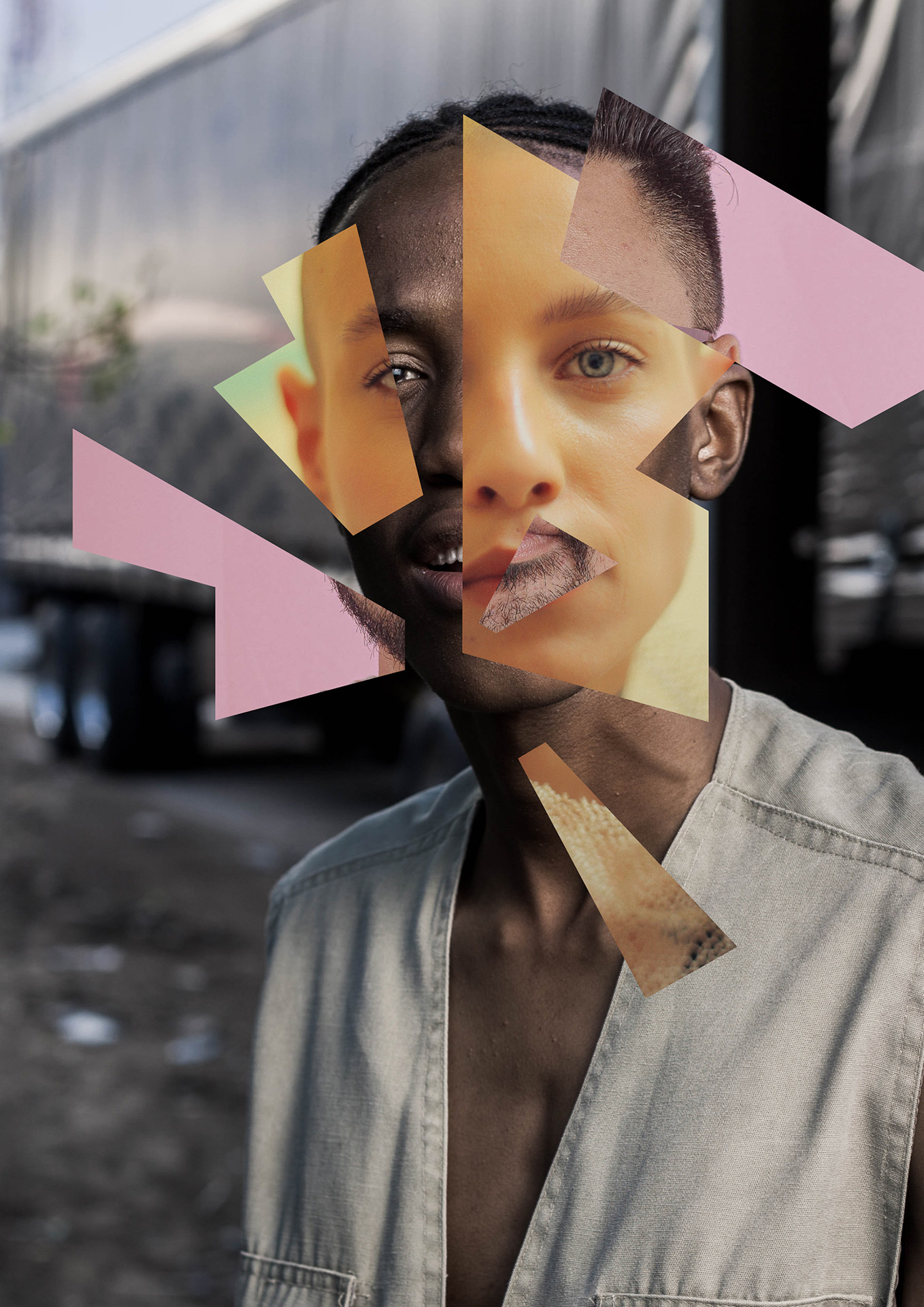
A person with glitchy different faces in a collage style type of design

You’re one download away from…

  • Preparing for your journey to AI transformation now
  • Establishing a strong data foundation to serve AI innovation
  • Finally unlocking true personalization across the customer journey
  • Future-proofing your business culture and teams for the new era

This experience is best viewed on Desktop.

Download Now
In this report we discuss the impact of AI on the business landscape and how it can offer hyper-personalized experiences and real-time insights for brands. AI Personalization artificial intelligence creative technology emerging technology automation Technology Services AI Consulting AI & Emerging Technology Consulting Technology Consulting AI Digital transformation New paths to growth

For Media.Monks, AI Isn’t a Pivot—it’s Our Reason for Being

For Media.Monks, AI Isn’t a Pivot—it’s Our Reason for Being

AI AI, AI & Emerging Technology Consulting, AI Consulting, Monks news, Technology Consulting, Technology Services 3 min read
Profile picture for user Wesley ter Haar

Written by
Wesley ter Haar
Co-CEO, Content

Wes ter Haar headshot on top of a cloudy sky

There’s seemingly no limit to what artificial intelligence can do—and if you can find one, it will probably be overcome soon. A year after GitHub launched its Copilot tool, 40% of code has been made using AI in files where the feature is enabled. Google’s Performance Max campaigns apply machine learning to automatically create and deliver customized ads optimized for customers across channels. Everywhere you look, artificial intelligence is disrupting our industry, extending across the realms of creative content, data and digital media, and tech services alike.

It’s true that we’re at the peak of the hype cycle with AI, particularly generative AI. But this disruption is a significant one, one that has become a make-or-break moment for many in our industry. 

We’re not just bullish on AI; as a change agent in our industry, it makes our model inevitable. Automation has played a great role in helping us scale up our business and outmaneuver our more traditional peers since day one. Meanwhile, today’s rapid evolution of AI is reshaping the nature of the brand-agency in real time, along with how brands themselves can go to market. Winning in the new era requires a willingness to embrace all that AI has to offer.

Prior to the hype, generative AI sprung onto the scene about four years ago, and our innovation team quickly began to experiment with it by training our own models. One turned lines and doodles into foliage; another neural animation tool created original dance choreography based on simple input like stick figures. More recently, we made an entire short film with the help of AI at every step of the production process. These experimental prototypes anticipated a future in which AI would open a new world of creative possibilities—that future is now.

But AI will have other, far-reaching potential across our industry as brands set out on new paths to growth beyond just content creation; its rapid development signals the start of truly personalized digital experiences. Cookies are crumbling, and brands have taken that as a cue to recognize the people behind the numbers and provide a better value exchange for their data. Yet the tools that marketers have historically relied on have always failed to turn the ideal of 1:1 marketing across the customer journey into a reality. AI finally unlocks that ability—across content, data and digital media, and tech services—to build and deliver hyper-personalized, highly empathetic customer journeys at scale, and fast.

Some are wary of these tools, focused on the balance between augmenting human ability versus replacing it. That’s a noble and important conversation to have. But automation has always been crucial to the growth of our team, and we are confident AI will continue to lead to more and greater work for our people. As a tech-agnostic team of makers, one that has already enthusiastically adopted these tools across every part of our business, we are the best positioned to take advantage of the abundance AI enables.

2D metaverse of showing media.monks hackathon in Workato

A bird's-eye perspective of Gather.town, a 2D metaverse. It served as the location for our recent hackathon, conducted in partnership with automation solutions platform Workato.

There are incredible opportunities on horizon: making more with less, making marketing intelligence more intelligent, or even driving new value to intellectual property through the training of owned AI systems. Each possibility will challenge the role of a creative, data and digital media, or tech services partner to evolve—lest they be surpassed by any number of new startups and cottage industries that have cropped up designed around AI. We don’t shy away from the challenge; we’re poised and ready to lead in the disruption, because that’s what we’ve always been built to do.

AI is revolutionizing the industry, from creative content to tech services. Discover how we're leveraging AI to drive efficiency and budgetary gains for brands. AI artificial intelligence content personalization personalized marketing Technology Services AI Consulting AI & Emerging Technology Consulting Technology Consulting AI Monks news
A woman with her hair swaying
`

AI Solutions

Stop Automating & Start Orchestrating Real-Time Relevance

We move your business beyond manual workloads to AI-native strategy, orchestration, and execution at scale for maximum relevance and ROI.

AI transformation for marketing workflows and hyper-personalization.

AI is a platform shift on the scale of the internet, forcing every business to rethink how they go to market. Seizing this opportunity means fundamentally transforming your marketing operations, going far beyond automating old processes to deliver unprecedented relevance and value.

Navigating this shift is a monumental challenge. We act as your change agent, helping you harness this shift while de-risking the transformation. Our approach turns your rigid marketing supply chain into a fluid, real-time engine for growth, applying our unique experience from the front lines of the AI revolution so your business doesn't just survive the shift, but thrives in it.

Solutions

Explore our solutions driving the new era of AI-first marketing.

    • Monks.Flow

      Monks.Flow logo in black with a flowing circle evolving in colors

      Our AI-powered professional managed service is built for enterprise complexity, deploying specialized agents across your complete marketing ecosystem. These agents handle tasks from strategy and creative to adaptation and performance, transforming your team from operators into orchestrators. Monks.Flow is highly extensible, integrating with any existing tool or workflow to deliver autonomous execution and measurable results without vendor lock-in.

      Learn more
    • AI Campaigns

      Google Pixel 9 Pro phone

      Our AI Campaigns solution transforms the rigid content supply chain into a fluid, intelligent ecosystem. We move your brand beyond manual workflows to a system that delivers higher quality, more culturally relevant, and performance-optimized creative at unprecedented speed. By embedding intelligence at every stage, from insights to delivery, we help you get exponentially more from your creative investment while cutting production costs.

    • Search Experience Solutions

      Close-up of a person using a dark smartphone for mobile search, illustrating the importance of a mobile-first SEO strategy and user experience.

      The way brands are discovered is undergoing a massive transformation as search becomes an AI-powered conversational experience. To thrive, your brand must be understood, trusted and recommended by the AI models that now guide users. We combine traditional SEO with Answer Engine Optimization (AEO) to make your brand an authoritative source, ensuring you capture high-intent traffic and dominate the new era of discovery.

      Learn more
    • AI Consulting

      Employees around a table consulting with each other

      True transformation requires more than technology; it requires a strategic partner who can align people, processes and culture for an AI-native future. Our global consulting practice drives purposeful, AI-powered change for the Fortune 100. We provide expert guidance and actionable roadmaps for everything from AI readiness to building and scaling human-centric technology solutions that move your business forward.

Brands we work with:

Check out more work
`

Connect

Reinvent your marketing pipeline with AI and Monks.

Our commitment to responsible innovation.

Our commitment to responsible innovation is publicly detailed in our Ethical Marketing Policy, while our internal operations are guided by the Global AI Policy for all Monks. AI's transformative power demands an equally powerful commitment to responsible governance. Our approach to AI governance is a living framework, designed to ensure our ethical standards evolve and lead the way as the technology advances. This framework is built on a foundation of trust, safety, and human oversight.

  • Human-in-the-Loop Governance. At every stage, our human creative and strategic teams act as the essential control layer, operating within a rigorous governance model anchored by the cross-functional AI Core team (Legal, Data Privacy, and Information Security). We maintain a clear review process with gates for legal clearance and brand safety, ensuring that AI serves as a tool to augment—not replace—the informed, ethical judgment of our experts.
  • Ethical Data & Sourcing. We recognize the risks of models trained on unvetted internet data. We strongly favor tools that use proprietary, transparently sourced and legally permissible datasets. Furthermore, we apply a rigorous Vendor Security Assessment (VSA) process to demand contractual assurances (including NDAs and DPAs) from our technology partners, protecting our clients from copyright and data privacy risks.
  • Active Bias Mitigation. We proactively address the biases that AI models can inherit from their training data, aligning with our broader Diversity, Equity & Inclusion (DEI) commitments. Our teams undergo mandatory trainings and actively work to identify and correct stereotypical or inequitable representations in AI-generated content. This commitment is reflected in various initiatives, ensuring the work we produce authentically reflects the diverse audiences our clients serve.

Learn how we’re helping brands lead in the AI era.

25 Minutes of AI logo with a colorful gradient background

Events

Stay Ahead. Own the AI Curve in 25 Minutes.

Your monthly, hyper-focused dose of AI innovation, inspiration, and essential information. We deliver the strategic insights you need to keep your organization ahead of the industry curve—no time wasted.

Learn more

Want to talk artificial intelligence? Get in touch.

Hey👋

Please fill out the following quick questions so our team can get in touch with you.

More on AI

The Labs.Monks Count Down to Most Anticipated Trends of 2023

The Labs.Monks Count Down to Most Anticipated Trends of 2023

AI AI, AI & Emerging Technology Consulting, Extended reality, Metaverse, New paths to growth, Technology Consulting, Technology Services 7 min read
Profile picture for user Labs.Monks

Written by
Labs.Monks

Labs.Monks logo with triangular designs

Firmly settled into the new year, we’re already looking ahead at tech trends that lie on the horizon. And who better is there to predict what they might look like than the Labs.Monks, our innovation team? As an assessment of their trend forecast from one year ago (spoiler alert: they got more than a few right) and a glimpse into the near future of digital creation and consumption, the Labs.Monks have come together again to share their top trends for the new year. Let’s count them down!

10. Digital humans get more realistic.

Digital humans may have earned a spot on our list of trends last year, but we haven’t grown tired of traversing the uncanny valley to play with the technology. In fact, the recent explosion of conversational AI will likely inject new life into digital humans and transform the realms of customer service, entertainment and more. Whether used to hand-craft original characters or refine scanned-in digital twins, digital human creation tools are becoming increasingly complex to deliver lifelike avatars. 

“We’ll see more competition between Unreal’s MetaHuman Creator and Unity’s Ziva,” says Geert Eichhorn, Innovation Director. In fact, Media.Monks has used Unreal’s tool to create a digital double of our APAC Chief Executive Officer, Michel de Rijk. Because why not?

00:00

00:00

00:00

9. Motion capture becomes more accessible.

Last year, we released a Labs Report dedicated to motion capture and how its increasing accessibility influenced content production for both professional film teams and everyday consumers. New technologies available at consumer price points are helping to bring motion capture into even more people’s hands. Meta’s Quest Pro headset, which released late last year, features impressive facial tracking that will be key to expressing the nuances of human emotion in VR. Move.ai, currently in beta, enables 1:1 motion tracking with a group of mobile devices—no bodysuits, no markers, no extra hardware needed. Using computer vision, the platform allows anyone to make motion capture video in any environment.

8. Mixed reality and mirror worlds mature.

With smaller and more comfortable AR headsets shown off already at CES, we can expect augmented and mixed reality to become more immersive, accessible and practical over the course of 2023 (check out more of what we saw at CES here). The VIVE Flow, for example, includes diopters so that users can replicate their prescription lenses in the device, amounting to a more comfortable experience overall. 

But it’s not just about hardware. “One of the major advancements is not in the headsets, but in the software,” says Eichhorn, noting that VPS has the power to pinpoint a user’s exact position and vantage point in the real world. “They do this positioning by comparing your camera view to a virtual, 3D version of the world, like Street View.” We covered mirror worlds in last year’s trend list, but the development of VPS is now bringing this vision closer to everyday consumers.

While VPS currently works only outdoors, we’ve already seen the power of the technology with Gorillaz performances in Times Square and Piccadilly Circus in December 2022.

Monk Thoughts This innovation ultimately unlocks the public space for bespoke digital experiences, where brands can move out of billboards and storefronts and move into the space in between.
Portrait of Geert Eichhorn

7. More enterprises embrace the hybrid model.

For many businesses the return to the office hasn’t been a smooth transition; while some roles require close collaboration within a shared space, others enjoy more flexible setups that support childcare, offer privacy for focus work or greater accessibility. Given the benefits of flexible work setups and the development of technologies that build presence in virtual environments, Luis Guajardo Díaz, Creative Technologist, believes more enterprises will embrace the hybrid work model.

Media.Monks’ live broadcast team, for example, built a sophisticated network of cloud-based virtual machines hosted on AWS to enable people distributed around the world to produce live broadcasts and events. Born out of necessity during the pandemic, the workflow goes beyond bringing teams together—it’s designed to overcome some of the challenges traditional broadcast teams face on the ground, like outages or hardware malfunctions. It stands to show how hybrid models can help enhance the ways we work today.

6. Virtual production continues to impress.

Virtual production powered by real-time become popular in recent years: the beautiful environments of The Mandalorian or grungy urban landscape of The Matrix showed what was possible by integrating game engines in the production process, while pandemic lockdowns made the technology a necessity for teams who couldn’t shoot on location.

Now, further advancements in game engines and graphics processing offer a look inside the future of virtual production. Sander van der Vegte, VP Emerging Tech and R&D, points to Unreal’s Nanite, which allows for the optimization of raw 3D content in real time.

Monk Thoughts From concept to testing, the chronological steps of developing such projects will follow a different and more iterative approach, which opens up creative possibilities that were impossible before.
Sander van der Vegte headshot

Localization of content is one example. “In 2023 we’re going to see this versatility in the localization of shoots, where one virtual production shoot can have different settings for different regions, all adapted post-shoot,” says Eichhorn.

5. TV streaming and broadcasts become more interactive.

With virtual production becoming even more powerful, TV and broadcasting will also evolve to become more interactive and immersive. “Translating live, filmed people into real-time models allows for many new creative possibilities,” says van der Vegt. “Imagine unlocking the power to be the cameraman for anything you are watching on TV.” 

It might sound like science fiction, but Sander’s vision isn’t far off. At this year’s CES, Sony demoed a platform that uses Hawk-Eye data to generate simulated sports replays. Users can freely control the virtual camera to view the action from any angle—and while not live, the demo illustrates the power of more immersive broadcasts. The technology could be a game changer for sports and televised events that let audiences feel like they’re part of the action.

Post malone singing with a large camera hanging
Post malone on a smokey stage

4. Metaverse moves become more strategic.

“2021 was a peak hype year for the metaverse and Web3. 2022 was the year of major disillusionment,” says Javier Sancho, Project Manager. “There are plenty of reasons to believe that this was just an overinflated hype, but it’s a recurring pattern in tech history.” Indeed, a “trough of disillusionment” inevitably follows a peak in the hype cycle.

This year will challenge brands to think of where they fit within the metaverse—and how they can leverage the immersive technology to drive bottom-line value. Angelica Ortiz, Senior Creative Technologist, says the key to unlocking value in metaverse spaces is to think beyond one-time activations and instead fuel long-term customer journeys.

Monk Thoughts NFTs and crypto have had challenges in the past year from a consumer and legal perspective. Now that the shine is starting to fade, that paves a new road for brands to go beyond PR and think critically about when and how to best evolve and create more connected experiences.
Angelica Ortiz headshot

A great example of how brands are using Web3 in impactful ways is by transforming customer loyalty programs, like offering unique membership perks and gamified experiences. These programs reinforce how the Web3 ethos is evolving brand-customer relationships by turning consumers into active participants and collaborators.

3. Large language models keep the conversation flowing.

With so much interest in bots like ChatGPT, the Labs.Monks expect large language models (LLMs) will continue to impress as the year goes on. “Large Language Models (LLMs) are artificial intelligence tools that can read, summarize and translate texts, and generate sentences similar to how humans talk and write,” says Eichhorn. These models can hold humanlike conversations, answering complex questions and even writing programs. But these skills open a can of worms, especially in education when students can outsource their homework to a bot.

LLMs like GPT are only going to become more powerful, with GPT-4 soon to launch. But despite their impressive ability to understand and mimic human speech, inaccuracies in response still need to be worked out. “The results are not entirely trustworthy, so there’s plenty of challenges ahead,” says Eichhorn. “We expect many discussions over AI sentience this year, as the Turing Test is a measurement we’re going to leave behind.” In fact, Google’s LaMDA already triggered debates about sentience last year—so expect more to come. 

2. Generative AI paints the future of AI-assisted creativity.

If 2021 was the year of the metaverse, the breakout star of 2022 is generative AI in all its forms: creating copy, music, voiceovers and especially artwork. “Generative AI wasn’t on our list in 2022, although looking back it should have been,” says Eichhorn. “The writing was on the wall, and internally we’ve been working on machine learning and generating assets for years.” 

But while the technology has been embraced by some creatives and technologists, there’s also been some worry and pushback. “These new technologies are so disruptive that we see not only copywriters and illustrators feel threatened, but also major tech companies need to catch up to not become obsolete.” 

In response to these concerns, Ortiz anticipates a friendly middle ground where AI will be used to augment—not erase—human creativity. “With the increasing push back from artists, the industry will find strategic ways to optimize processes not cut jobs to improve workflows and let artists do more of what they love and less of what they don’t,” she says. Prior to the generative AI boom, Adobe integrated machine learning and artificial intelligence across its software with Adobe Sensei. More recently, they announced plans to sell AI-generated images on their stock photography platform.

00:00

00:00

00:00

Ancestor Saga is a cyberpunk fantasy adventure created using state of the art generative AI and rotoscoping AI technology.

Monk Thoughts We’re suddenly seeing a very tangible understanding of the power of AI. 2023 will be the Cambrian explosion of AI, and this is going to be accompanied with serious ethical concerns that were previously only theorized about in academia and science fiction.
Javier Sancho Rodriguez headshot

1. The definition of “artist” or “creator” changes forever.

Perhaps the most significant trend we anticipate this year isn’t a tech trend; rather, it’s the effect that technology like generative AI and LLMs will have on artists, knowledge workers and society. 

With an abundance of AI-generated content, traditional works of art—illustrations, photographs and more—may lose some of their value. “But on the flip side, these tools let everyone become an artist, including those who were never able to create this kind of work before,” says Eichhorn. This can mean those who lack the training, sure, but it also means those with disabilities who have found particular creative fields to be inaccessible.

When everyone can be an artist, what does being an artist even mean? The new definition will lie in the skills that generative AI forces us to adopt. Working with generative AI doesn’t necessarily eliminate creative decision-making; rather, it changes what the creative process entails. New creative skills, like understanding how to prompt a generative AI for specific results, may reshape the role of the artist into something more akin to a director. 

Eichhorn compares these questions to the rise of digital cameras and Photoshop, both of which changed photography forever while making it more accessible. “The whole process will take many more years to settle in society, but we’ll likely see many discussions this year on what ‘craft’ really entails,” says Eichhorn.

That’s all, but we can expect a few surprises to emerge as the year goes on. Look out for more updates from the Labs.Monks, who regularly release reports, prototypes and podcast episodes that touch on the latest in digital tech, including some of the topics discussed above. Here’s to another year of innovation!

Our Labs.Monks have come together again to share their most anticipated and top trends for the new year. AI artificial intelligence metaverse emerging tech trends technology Technology Services Technology Consulting AI & Emerging Technology Consulting New paths to growth AI Extended reality Metaverse

Meet Your Digital Double: How Metahumans Enhance Personalization

Meet Your Digital Double: How Metahumans Enhance Personalization

AI AI, AI & Emerging Technology Consulting, Experience, Extended reality, Web3 4 min read
Profile picture for user mediamonks

Written by
Monks

A virtual human head inside a clear box

Picture this: you’re a well-known figure in your field, perhaps even a celebrity, who follows a similar routine every day. You shoot commercials for different markets, reply to every single message in your DMs with a personalized note, host a virtual event where you meet and greet thousands of fans and even teach an on-demand class where you and your students engage in meaningful conversations. It’s all happening at the same time and all over the world, because it’s not your physical self who’s doing it, but your digital double.

Since its launch in 2021, Epic Game’s MetaHuman Creator, a cloud-based app for developing digital humans, has extended its range of possibilities by adding new features—such as Mesh to MetaHuman. Using Unreal Engine, this plugin offers a new way to create a metahuman from a 3D character mesh, allowing developers to import scans of real people. In other words, it makes it easier to create a virtual double of yourself (or anyone else) almost immediately.

Inspired by this significant update and following our tradition of enhancing production workflows using Unreal Engine, our team of dedicated experts decided to build their own prototype. Needless to say, they learned a few things along the way—from the practical possibilities of metahumans to the technicalities of applying motion capture to them. As explained by the experts themselves, here’s what you need to know about creating and unlocking the full potential of virtual humans.

00:00

00:00

00:00

Be everywhere at once—at least virtually.

If you ever fantasized about cloning yourself to be able to comply with all your commitments or complete your pending tasks, metahumans may be just what you were looking for. Virtually, at least. As digital representatives of existing individuals, metahumans offer endless possibilities in terms of content creation, customer service, film and entertainment at large. Sure, they won’t be able to do your dishes—at least not yet—but if you happen to be a public figure or work with them, it’s a game changer. 

By lending likeness rights to their digital doubles, any influencer, celebrity, politician or sports superstar will be able to make simultaneous (digital) appearances and take on more commercial gigs without having to be on set. As John Paite, Chief Creative Officer of Media.Monks India, explains, “Celebrities could use their metahuman for social media posts or smaller advertising tasks that they usually wouldn’t have the availability for.” Similarly, brands collaborating with influencers and celebrities will no longer need to work around their busy schedules.

The truth is, virtual influencers are already a thing—albeit in the shape of fictional characters rather than digital doubles of existing humans. They form communities, partner with brands and are able to engage directly and simultaneously with millions of fans. Furthermore, they are not stuck in one place at a time nor do they operate under timezone constraints. In that regard, celebrities’ digital doubles combine the benefits of virtual humans with the appeal of a real person.

A new frontier of personalization and localization.

Because working with virtual humans can be more time-efficient than working with real humans, they offer valuable opportunities in terms of personalization and localization. Similarly to how we’ve been using Unreal Engine to deliver relevant creative at speed and scale, MetaHuman Creator takes localization to a new level. As Senior Designer Rika Guite says, “If a commercial features someone who is a celebrity in a specific region, for example, this technology makes it easy for the brand to replace them with someone who is better known in a different market, without having to return to set.” 

But not everything is about celebrities. Metahumans are poised to transform the educational landscape, too, as well as many others. “If you combine metahumans with AI, it becomes a powerhouse,” says Paite. “Soon enough, metahumans will be teaching personalized courses, and students will be able to access those at a lower price. We haven’t reached that level yet, but we’ll get there.”

For impeccable realism, the human touch is key.

To test how far metahumans are ready to go, our team scanned our APAC Chief Executive Officer, Michel de Rijk, using photogrammetry with Epic Games’ Reality Capture. This technique works with multiple photographs from different angles, lighting conditions and vantage points to truly capture the depth of each subject and build the base for a realistic metahuman mode. Then, we imported the geometry into MetaHuman Creator, which our 3D designers refined using the platform’s editing tools. 

“Because Mesh to Metahuman allows you to scan and import your real face, it’s much easier to create digital doubles of real people,” says our Unreal Engine Generalist Nida Arshia. That said, the input of an expert is still necessary to attain top-quality models. “Certain parts of the face, such as the mouth, can be more challenging. Some face structures are harder than others, too. If you want the metahuman to look truly realistic, it’s important to spend some time refining it.” 

Once we got our prototype as close to perfection as possible, we used FaceWare’s facial motion capture technology to unlock real-time facial animations. While FaceWare’s breadth of customization options made it our tool of choice for this particular model, different options are available depending on the budget, timeline and part of the body you want to animate. Unreal’s LiveLink, for example, offers a free version that allows you to use your phone and is easy to implement both real-time and pre-recorded applications, but focuses on facial animations only. Mocap suits with external cameras allow for full-body motion capture, but with mid-fidelity, and recording a real human in a dedicated mocap studio unlocks highly realistic animations for both face and body. 

At the same time, the environment we intend the metahuman to inhabit is worth considering, as the clothes, hair, body type and facial structure will all need to fit accordingly. Naturally, different software may adapt better to one style or another. 

While this technology is still incipient and requires some level of expertise, brands can begin to explore different ways to leverage metahumans and save time, money and resources in their content creation, customer service and entertainment efforts. Similarly, creators can start sharpening their skills and co-create alongside brands to expand the realm of possibilities. As Arshia says, “We must continue to push forward in our pursuit of realism by focusing on expanding the variety of skin tones, skin textures and features available so that we can build a future where everyone can be accurately represented.”

Our experts share what you need to know about creating and unlocking the full potential of virtual humans. Virtual humans unreal engine artificial intelligence AI Personalization Experience AI & Emerging Technology Consulting AI Web3 Extended reality

Labs Report 32: Generative AI

Labs Report 32: Generative AI

AI AI, AI & Emerging Technology Consulting, Digital transformation, Experience 1 min read
Profile picture for user Labs.Monks

Written by
Labs.Monks

A digital view of inside a castle with pink walls and stairs

Generating the future of content through AI.

We’ve seen DALL-E 2, Midjourney, Stable Diffusion and other powerful image generation tools take over our social feeds. The tech is making giant leaps each week, and a future in which it fuels entire industries is not too far away. Those with a deep understanding of the tech and can adopt it into their existing workflows to empower–rather than replace–their teams will remain ahead of the curve.

In this Labs report, we'll uncover how Generative AI is impacting digital creation today, and will explore how to keep ahead of where the tech is going next.

In this Labs report, you’ll:

  • Learn what Generative AI is and what’s currently available
  • Understand how the tech works
  • See the technology in real-world action
  • Peek into what the future holds
  • Learn how to harness its power now

00:00

00:00

00:00

Ancestor Saga is a cyberpunk fantasy adventure created using state of the art generative AI and rotoscoping AI technology.

Generative AI supercharges production for higher quality creative output.

In this animated trailer for an original series called "Ancestor Saga," we demonstrate how Generative AI can be applied to film production. This prototype leverages Stable Diffusion AI for generating background scenes and custom Img2Img neural networks for AI-based rotoscoping of virtual characters.

See our findings about the benefits of using generative AI, including time and labor reduction in production, in the report.

In this Labs report, we’ll discover how Generative AI is going to impact digital creation, and provide a breakdown to help you get ahead. AI artificial intelligence emerging tech creative AI Experience AI & Emerging Technology Consulting AI Digital transformation

Can Virtual Humans Provide Real Connection?

Can Virtual Humans Provide Real Connection?

AI AI, AI & Emerging Technology Consulting, Experience, Extended reality 4 min read
Profile picture for user Labs.Monks

Written by
Labs.Monks

Can Virtual Humans Provide Real Connection?

They’re on social feeds, collaborating with fashion brands and dabbling in politics. They’re starring in movies and performing for sold-out audiences. They’re live streaming on YouTube. And while you sit down to talk to one, they may be talking to dozens—if not hundreds or thousands—of other people at the same time.

They’re like people, but they’re not: they’re digital humans, and they may transform the way we think about how we connect to brands, each other and our own selves. “Digital humans” is a broad term that includes any realistic digital representation of a human, fictional or otherwise. That can include digital body doubles (like CGI actors), fictional CGI influencers, chatbots with bodies, 3D avatars and more. And while they can elicit excitement or unease—the uncanny valley continues to be a concern as technologies evolve—they have the power to connect people in unique ways.

Bringing Communities Together

One of the most appealing things about digital humans is that they can fulfill a sense of connection. Virtual influencers like Lil Miquela may feel like a novelty at first, but they’ve also built real communities around shared values and aesthetics. Hatsune Miku, the virtual Japanese pop idol, is essentially a crowdsourced brand: her songs, costumes and music videos are shaped by a community of creative, dedicated and collaborative fans. Both characters rose to prominence because digital audiences felt empowered to connect with them—and similarly, Riot Games created Seraphine, a digital influencer who appears in the massively popular game League of Legends, as a steward of the game’s community.

Monk Thoughts Those kinds of virtual humans are selling feelings and experiences.
Portrait of Geert Eichhorn

“Those kinds of virtual humans are selling feelings and experiences,” says Geert Eichhorn, Director of Innovation at MediaMonks. And that ability to create meaningful exchanges is what makes digital humans attractive to brands—for example, giving a branded chatbot a face. Text-based chatbots are ubiquitous on websites and apps all over, but businesses like Uneeq and Soul Machines have developed incredibly realistic, animated digital humans that engage with customers both online and within physical locations, like at a lobby’s check-in desk. Unlike their faceless chatbot counterparts, digital humans are able to communicate through body language and nonverbal cues—like eye contact—eliciting stronger emotional responses in people and enabling more meaningful experiences.

Enabling Self-Expression in New Ways

More than just fictional conversation partners or branded virtual assistants, the “virtual human” category can also include avatars controlled by humans, and this is where Eichhorn sees great potential for the tech: fulfilling people’s desire to better represent themselves as they spend increasing amounts of time online. “Avatars are really about self-expression,” says Eichhorn. “Maybe it helps you express the gender identity that you identify with, for example. In that way, avatars can be very liberating.”

On Fortnite, the massively popular online game developed by Epic Games, players have the chance to become some of their favorite characters—or even real-world people, like Travis Scott, Major Lazer and esports star Ninja—and these avatars have played a big part in shaping perception that the platform is more than just a game, but a virtual social world in its own right.

Monk Thoughts Maybe avatars help you express the gender identity that you identify with. They can be very liberating.
Portrait of Geert Eichhorn

On that note, Eichhorn believes the next big social platform could be based around avatars that connect across digital experiences—a bit like how Bitmoji not only connects to social apps, but also video games to let people play as cartoonish, 3D representations of themselves. “Think of an API connected to platforms like Fortnite, or retailers that let you try on and fit clothing on a body double,” says Eichhorn. “I see there being some kind of overarching platform that could integrate it into everything else.”

Ethical Considerations for Building Virtual Humans

Avatars and digital doubles could certainly be useful for shopping and socializing, as discussed above—but they also invite ethical considerations to keep in mind. Deceased celebrities have returned to screens as CGI actors or hologram performers, and the creation of digital doubles may call into question who owns the likeness and what they’re authorized to do with them.

Conversations around ethics haven’t kept up with the pace of the technology’s evolution. “There are some whitepapers from 2012 or 2014 on how to deal with the ethics of avatars, but they’re already so outdated,” says Eichhorn. “There isn’t really a common ground on this yet.”

Octagon_Bob_Paisley_TechBTS_v405.00_01_30_10.Still003

Working with Standard Chartered and Octagon, MediaMonks built a 3D representation of Bob Paisley, the legendary Liverpool FC manager.

Regardless, he and other Monks have already explored these questions when collaborating with Standard Chartered and Liverpool FC to celebrate what would have been the 100th birthday of Bob Paisley, the club’s legendary manager. In a series of meticulously created films and an AR experience, fans got the rare chance to engage directly with Paisley once again. “Our first consideration was if we could make the experience something genuine,” says Eichhorn. “We got the blessing of the Paisley family and brought them onboard as stakeholders to discuss any concerns of theirs before the project even began, ensuring everything was done responsibly.”

Throughout the past year, people have come to rely on digital more than ever, whether socializing in video games, shopping more online or even working in VR. As we grow more accustomed to these virtual environments, the presence of virtual humans may only become more ubiquitous. From activating communities and enabling self-expression like never before, “this technology will affect culture and society by changing our idea of what being human means,” says Eichhorn.

Avatars, virtual influencers and realistic digital assistants are part of a breed of virtual humans that will change the way we think about humanity and relationships. Can Virtual Humans Provide Real Connection? From enabling self-expression to building communities, digital humans are making a mark on consumers.
Virtual humans digital humans avatars chatbots AI virtual influencers Experience AI & Emerging Technology Consulting AI Extended reality

Hey Google, Fix My Marriage

Hey Google, Fix My Marriage

5 min read
Profile picture for user mediamonks

Written by
Monks

Hey Google, Fix My Marriage

There’s no denying that Google Assistant is useful for simple, everyday needs that keep users from having to reach for a phone. But what if it could provide more value-added experiences, becoming more intuitive and human-like in the process? Are we that far away from the kind of assistant depicted in Spike Jonze’s Her?

One of the greatest inhibitors of adoption of voice is that natural language isn’t ubiquitous, and functionality is typically limited to quick shortcuts. According to Forrester, 46% of adults currently use smart speakers to control their home, and 52% use them to stream audio. Neither of these use cases are necessities, nor are they very unique. Looking beyond shortcuts and entertainment value, we sought to experiment with Google Assistant to highlight a real-world utility that offers more human-like interactions. Think less in terms of “Hey Google, turn on the kitchen lights,” and instead something more like “Hey Google, fix my marriage.”

That’s not a joke; by providing a shoulder to cry on or a mediator who can resolve conflicts while keeping a level head, our internal R&D team MediaMonks Labs wanted to push the limits of Google Assistant to see what kind of experiences it could provide to better users’ lives and interpersonal relationships.

Who would have thought that a better quality of conversation with a machine might help you better speak to other humans? “Most of the stuff on the Assistant is very functional,” says Sander van der Vegte. “It’s almost like an audible button, or something for entertainment. The marriage counselor is neither, but could be implemented as a step before you look for an actual counselor.”

Why Google Assistant?

Google Assistant is an exciting platform for voice thanks to its ability to be called up anytime, anywhere through its close integration with mobile. “Google Assistant is very much an assistant, available to help at any moment of time,” says Joe Mango, Creative Technologist at MediaMonks.

GOOGLEVID2

But still, the team felt the platform could go even further in providing experiences that are unique to the voice interface. “Right now, considering the briefings we get, most of the stuff on the assistant is very functional,” says Sander van der Vegte, Head of MediaMonks Labs. “It’s designed to be a shortcut to do something on your phone, like an audible button. This marriage counselor has a completely different function to it.”

The Labs team took note when Amazon challenged developers to design Alexa skills that could hold meaningful conversations with users for 20 minutes, through a program called the Alexa Prize. It offered an excellent opportunity to turn the tables and challenge the Google Assistant platform to see how well it could sustain a social conversation with users, resulting in a unique action that requires the assistant to use active listening and an empathetic approach to help two users see eye to eye.

Breaking the Conversation Mold

As you might imagine, offering this kind of experience required a bit of hacking. To listen and respond to two different people in a conversation, the assistant had to free itself from the typical, transactional exchange that voice assistant dialogue models are designed for. “We had to break all the rules,” says Mango—but all’s fair in love and war, at least for a virtual assistant.

A big example of this is a novel use of the fallback intent. By design, the fallback intent is a response the assistant provides to users when they make a query that isn’t programmed to a response—usually something as simple as asking the user to try to state their request in another way.

But the marriage counselor uses this step to pass the query along to sentiment analysis with Google Cloud API. There, the statement is scored on how positive or negative it is. Tying this score to a scan of the conversation history for applicable details, the assistant can pull a personalized response. This allows both users to speak freely through an open-ended discussion without being interrupted by errors.

Screen Shot 2019-09-18 at 9.55.26 AM

What does such an interaction look like? When a couple tested the marriage counselor action, one user mentioned his relationship with his brothers: some of them were close, but the user felt that he was becoming distant from one of them. In response, the assistant chimed in to remind the user that it was good that he had a series of close relationships to confide in. Its ability to provide a healthy perspective in response to a one-off comment—a comment not even about the user’s romantic relationship, but still relevant to his emotional well-being—was surprising.

The inventive use of the platform allows the assistant to better respond to a user’s perceived emotional state. Google is particularly interesting to experiment with thanks to its advanced voice recognition models; it built the sentiment analysis framework used within the marriage counseling action, and Google’s announcement of Project Euphonia earlier this year, which makes voice recognition easier for those with speech impairments, was a welcome sight for those seeking to make digital experiences more inclusive. “At MediaMonks, we’re finding ways to creatively execute on these frameworks and push them forward,” said Mango.

Giving Digital Assistants the Human Touch

But the marriage counselor action is more focused on listening rather than speaking, allowing two users to hash it out and doling out advice or prompts when needed. A big part of this process is emotional intelligence. Humans know that the same sentence can have multiple meanings depending on the tone used—for example, sarcasm. Another example might be the statement “Only you would think of that,” which could be viewed as patronizing or a compliment given the tone and context.

Monk Thoughts At MediaMonks, we’re finding ways to creatively execute on these frameworks and push them forward.

While the assistant currently can’t understand tone of voice, a stopgap solution was to enable it to parse meaning with through vocabulary and conversational context—helping the assistant understand that it’s not just what you say, but how you say it. This is something that humans pick up on naturally, but Mango drew on linguistics to provide the illusion of emotional intelligence.

“If the assistant moves in this direction, you’ll get a far more valuable user experience,” says van der Vegte. One example of how emotional intelligence can better support the user outside of a counseling context would be if the user asks for directions somewhere in a way that indicates they’re stressed. Realizing that a stressed user who’s in a hurry probably doesn’t want to spend time wrangling with route options, the action could make the choice to provide the fastest route.

Next Stop: More Proactive, Responsive Assistants

“There’s always improvements to be made,” says Mango, who recognizes two ways that Google Assistant could provide even more lifelike and dynamic social conversations. First, he would like to see the assistant support emotion detection through more ways than examining vocabulary. Second, he’s like to make the conversation flow even more responsive and dynamic.

Sentiment

“Right now the conversation is very linear in its series of questions,” he says. But in a best-case scenario, the assistant could provide alternative paths based on user response, customizing each conversation to respond to different underlying issues that the marriage counselor might identify is affecting the relationship.

But for now, the team is excited to tinker and push the envelope on what platforms can achieve, inspired by a sense of technical curiosity and the types of experiences they’d like to see in the world. “It speaks a lot to the mission of what we do at Labs,” said Mango. “We always want to push the limitation of the frameworks out there to provide for new experiences with added value.”

As assistants become better equipped to listen and respond with emotional intelligence, their capabilities will expand to provide better and more engaging user experiences. In a best-case scenario, an assistant might identify user sentiment and use that knowledge to recommend a relevant service, like prompting a tired-sounding user to take a rest. Such an advancement would allow brands to forge a deeper connection to users by providing the right service at the right place in time. While Westworld-level AI is still far off in the distance, we’ll continue chatting and tinkering away at teaching our own bots the fine art of conversation—and we can’t wait to see what they’ll say next.

Voice assistants have been life changing for some users, but they can go to even further lengths in providing rich, valuable conversational experiences. The next big leap in conversational AI may be emotional intelligence, and MediaMonks Labs set out to achieve just that. Hey Google, Fix My Marriage Checking the weather or a sports score is nice, but can a smart speaker save your marriage? We’re working on it.
Google Assistant Alexa skills Google actions sentiment analysis emotional intelligence AI artificial intelligence conversational interface

Choose your language

Choose your language

The website has been translated to English with the help of Humans and AI

Dismiss