


















Choose your language

Choose your language

The website has been translated to English with the help of Humans and AI

Dismiss

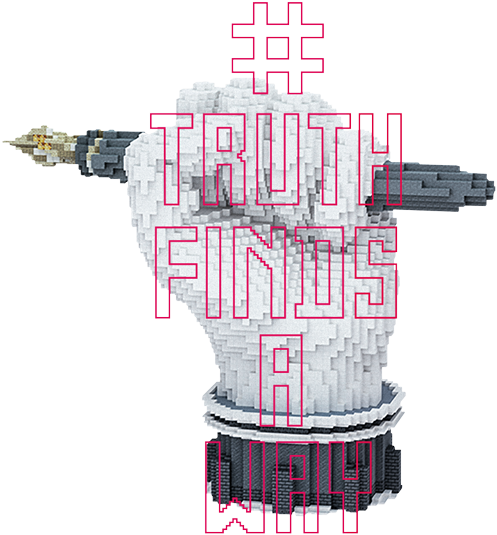
A hand and a pen
A screen shot of the uncensored library in the game minecraft

The Uncensored Library • Circumventing Censorship in a Whole New Way

  • Client

    Reporters Without Borders, DDB Germany

  • Solutions

    ExperienceExperiential Strategy & Production

00:00

00:00

00:00

Case Study

0:00

The only library where silence is discouraged.

Together with Reporters Without Borders and DDB Germany, we set out to drive public awareness of press censorship happening around the world by leveraging one of the world’s most popular games: Minecraft.

Freely available around the globe—even in countries with strict online censorship—Minecraft served as the perfect loophole to circumvent censorship, and the perfect spot for the first virtual library of articles banned around the world. In this 12.5- million-block structure, users can explore and access content they wouldn’t be able to see otherwise, both in English and their language of origin.

Since opening its doors on World Day Against Cyber Censorship, The Uncensored Library has reached more than 20 million gamers from 165 countries, and amassed multiple accolades—including nine Cannes Lions. 

Results

  • 9x Cannes Lions

  • 4x CLIOs

  • 2x Webbys

  • 8x Pencils

  • 13x One Show Awards

  • 8x ADC Awards

  • 1x Pro Award

  • 1x Lovie

Want to talk experiential? 
Get in touch.

Hey 👋

Please fill out the following quick questions so our team can get in touch with you.

Can’t get enough? Here is some related work for you!

A colorful green and blue circle
Hands pilled on top of each other
Bayer sign on the wall

Bayer Consumer Health • Moving Digital Media Ops In-House For Greater Control

  • Client

    Bayer

  • Solutions

    MediaMedia AnalyticsTransformation & In-HousingMedia Strategy & PlanningDataMeasurement

Results

  • $10 million in cost savings within 
the first six weeks.
  • Increased working media, targeted impressions, category reach and, 
ultimately, ROI.
  • 35% ongoing efficiency improvement in media cost.

Taking the wheel.

Bayer’s Consumer Health Division brings consumers some of the world’s best-known and most trusted over-the-counter medications, nutritional supplements and other self-care products. In 2018, Bayer Consumer Health US sought to make its digital advertising more responsive, effective and cost-efficient. So the company embarked on a plan to bring digital ad operations in-house. 

The goal of transitioning to an in-house shop was to improve performance and transparency while reducing fees, improving speed to market and developing data insights for smarter decision-making. They also wanted to broaden and deepen digital expertise across their organization. To execute on this vision, Bayer partnered with Monks to support the transition and help build out the in-house team and systems.

A person on a bicycle along with the bayer logo and a colorful circle

Driving efficiency at scale.

Our team worked with Bayer to develop a two-phased approach to digital media self-sufficiency. In phase one, we took interim control of campaigns and technologies across two dozen brands while we helped Bayer establish frameworks and processes for digital ad buying that would drive efficiency at scale.

A few pictures of doctors working in a hospital

As a first step, we helped Bayer gain access to underlying campaign data and identify opportunities to reduce or eliminate fees from digital media buys. Bayer brand expertise, coupled with access to data, immediately unlocked opportunities for the team to quickly gather insights and make them actionable. Data fueled the creation of a highly complex but unified taxonomy to assist with analysis and provide a consistent data feedback loop. We integrated cleaner data into dashboards, giving the Bayer team fast and easy ways to interact with data and uncover insights. With ownership of media costs, weekly sales, profit data and competitive reports, the Bayer team was empowered to make optimization decisions that would have the most meaningful impact.

Bayer logo on a building
man sitting in front of a projected presentation at a conference
A person playing chess with a kid
Press As we start to onboard all of our data and put things into our system, there will be the question of the bandwidth of the team, which is why it’s so important to have a group like Monks support the business.
Read on Digiday

Impact

The road to self-sufficiency.

To build a self-sufficient team and ensure a smooth transition, we worked with Bayer to create and establish job descriptions, communication flow and performance and workflow standards. We implemented a staggered transition plan, with a period of overlapping support, so Bayer could hire and train the necessary talent to take over day-to-day ownership of media, search, social, programmatic, analytics and strategy—all achieved two months ahead of schedule.

Given the success of the Consumer Health engagement and the strength of our partnership, Bayer sought Monks’ advice and support on digital transformations for the Pharma and Crop Science divisions.

Results

  • 1x AdExchanger Award

Want to talk media? 
Get in touch.

Hey 👋

Please fill out the following quick questions so our team can get in touch with you.

Can’t get enough? Here is some related work for you!

A person riding a Harley Davidson motorcycle
A person rides a motorcycle down the road

Pan America Reveal • Transforming an Iconic Event Into an Unforgettable Experience

  • Client

    Harley-Davidson

  • Solutions

    BrandOriginal ContentVR & Live Video ProductionGo-To-Market StrategyWebsites & Platforms

00:00

00:00

00:00

Case Study

0:00

As the Harley-Davidson community geared up for another memorable model year launch we crafted an immersive virtual destination for Harley’s first-ever digital reveal of new models in the brand’s 118-year history. 

Embarking on a road less traveled for both enthusiasts and dealers, the experience included interactive elements for new bike exploration, access to product specialists via live Q&As, shoppable content and dedicated microsites that encourage riders to continue the adventure.

Our Craft

Showing possibilities as wide as the open road.

  • Jason Momoa sits on a Harley
  • Harley Davidson platform screen
  • Explore the icons screen from the Harley Davidson platform
  • Road King special Harley Davidson screen
  • Launch countdown clock on platform

Microsites took users on a real-world virtual journey, making pit stops for video content, merch and interactive 3D renders of each bike. Users got to customize a bike's look, digging into what makes each model unique. With an integrated approach localized for 11 countries around the world, better represent the brand's diverse ridership and reach a wider audience of riders than ever before.

We also created a series of docu-style films profiling riders and the values that drive them—no actors, scripts or sets—riding the Harleys they love. And a separate 26-minute documentary—Everything’s a Road: The Path to Pan America—kicking off the launch of Pan America, H-D’s highly anticipated entry into the adventure touring category.

Results

  • Over 2 billion media impressions.
  • 97% positive media sentiment.
  • Over 360K viewers of the Pan America virtual launch, 
plus global media acclaim.
  • Sold out of Pan America pre-order allocation.
  • 1x CSS Site of the Day

  • 1x FWA

Want to talk film? 
Get in touch.

Hey 👋

Please fill out the following quick questions so our team can get in touch with you.

Can’t get enough? Here is some related work for you!

Our Work

Integrated brand experiences that move hearts—and the needle.

Showing 23 cases

    Popular Cases

    Client Project Solutions
    1. magalu asset

      Magazine Luiza

    2. A race track created by Oscar Piastri F1 driver with a papaya theme using Google Gemini

      Google

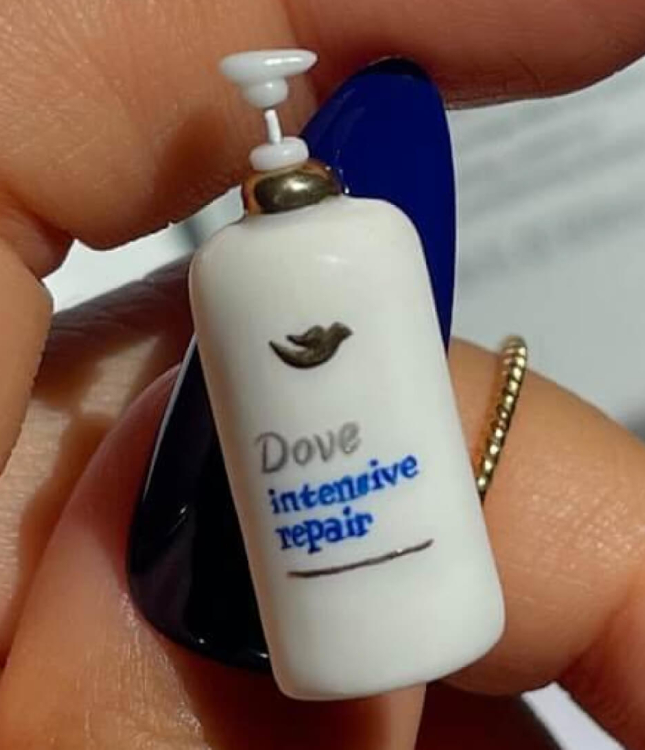
    3. A hand-made miniature Dove Hair product affixed to the blue thumbnail of an influencer.

      Dove Hair

    4. A honey bee flying among the flowers holding a tiny jar of honey.

      Google Fi

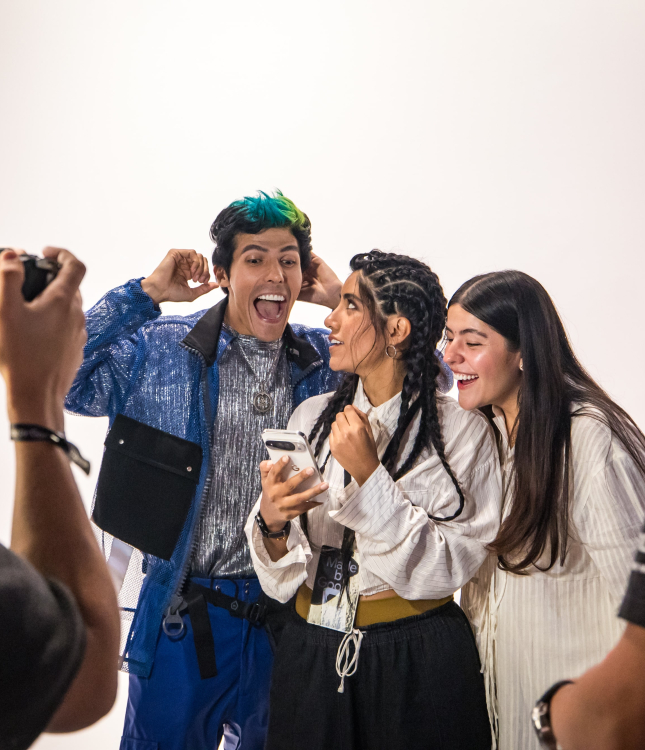
    5. Experiential marketing event attendees are filmed interacting with a Google device, highlighting the creation of multi-modal content (video, social media, case study image) for a brand activation strategy.

      Google

    6. Businessmen shaking hands in a factory. Two factory workers and two people in suits are collaborating.

      Paycor

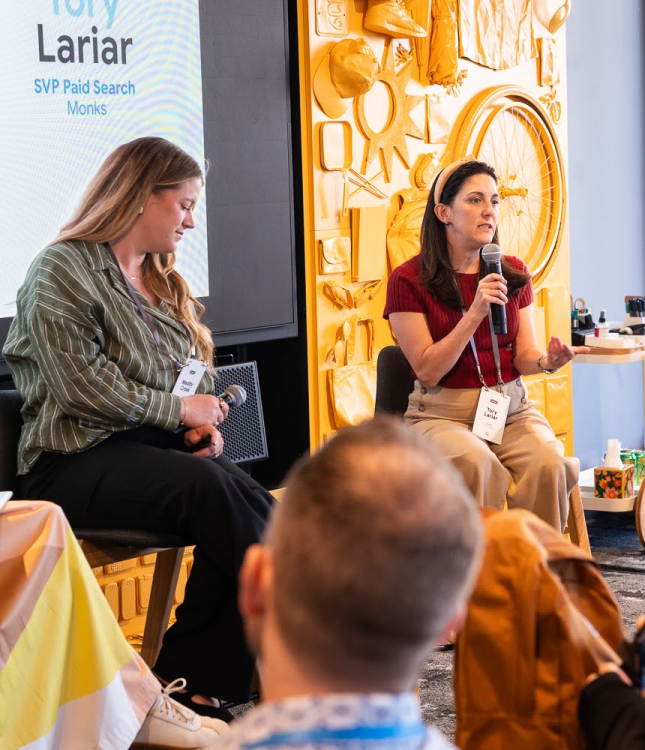
    7. Monks' Victoria Lariar and Paylocity's Maddy Cross speaking at Google Think Leads 2025

      Paylocity

    8. Boomtown Unboxed logo with a bunch of animated application screens around it

      Boomtown, Amplify

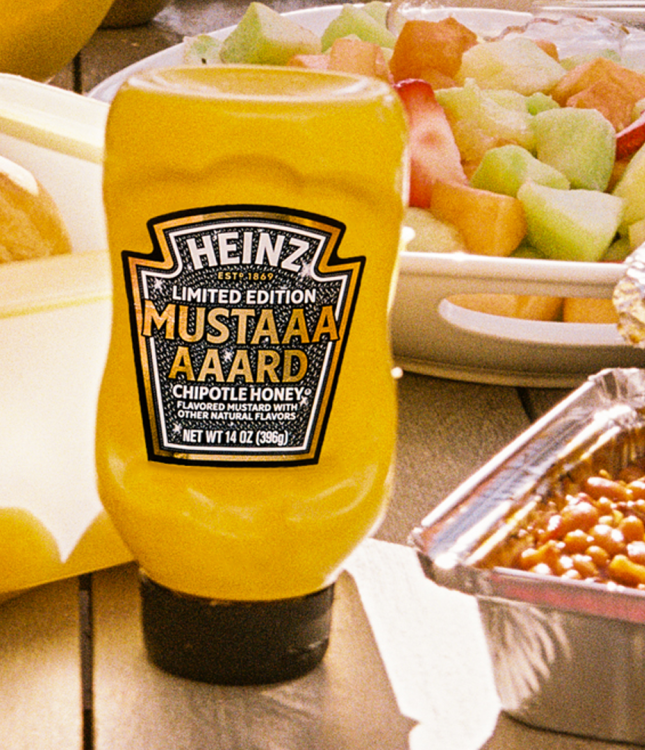
    9. Bright yellow Heinz Limited Edition Mustaaaaard Chipotle Honey bottle, prominently displayed on a wooden picnic table next to a fruit salad, baked beans, and fresh buns, highlighting the perfect summer BBQ condiment.

      Kraft Heinz

    10. Hands turning on an Orbit sprinkler unit in a green lawn

      Orbit

    11. Cadillac LYRIQ still image with a red hue of lighting

      General Motors

    12. Google Pixel 9 Pro phone

      Google

    13. Samsung Hologram_3

      Samsung

    14. A broken gnome with a pony malta drink bottle and ball by it's feet

      Pony Malta

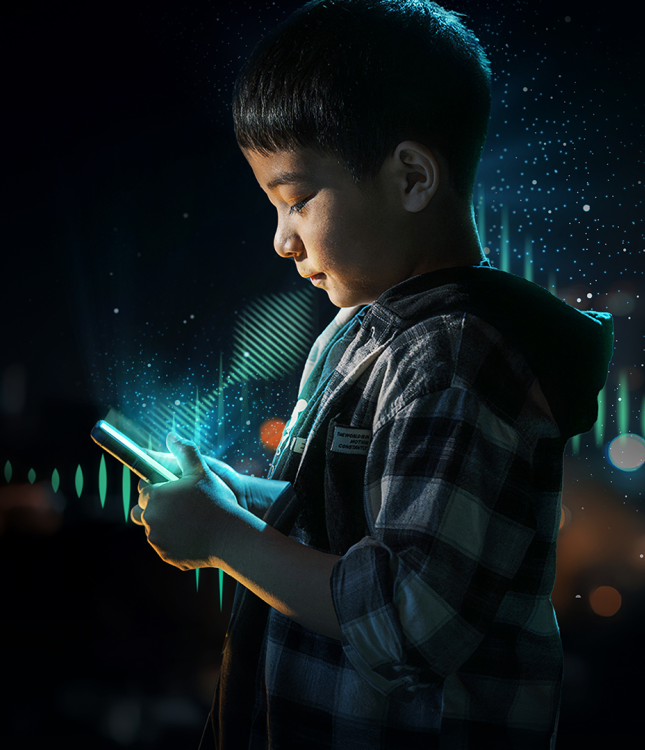
    15. The image shows a young person in profile, illuminated by the glow of a smartphone screen, with digital waveforms and particle effects surrounding them in a dark, futuristic setting.

      Centre for Community Initiative

    16. EuroCarParts Logo on a black and white background of a garage with a car inside

      Euro Car Parts

    17. The image shows several petri dishes and test tubes containing water with floating green plant stems and leaves.

      Cerveza Pilsen

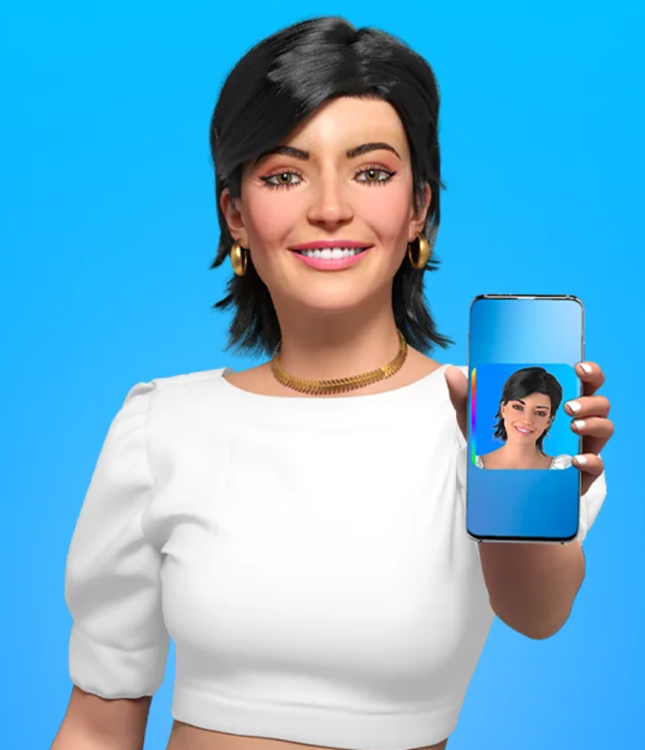
    18. Lu, virtual influencer from Magalu

      Magazine Luiza

    19. TaxSlayer logo

      TaxSlayer

    20. The image features the title "SENNA," presented as a Netflix series, with speed metrics and a racetrack outline, suggesting a focus on high-speed racing.

      Netflix

    What We Deliver

    Turn complexity into opportunity. We make every marketing move count.

    Watch video

    00:00

    00:00

    00:00

    Ambitious brands are looking for more than just visibility. They want real influence, lasting relationships, and measurable growth—but navigating that complexity demands solutions that deliver clarity and impact at every stage.

    We help brands grow by orchestrating marketing and technology into unified, intelligent systems. While anyone can access powerful tools, our expertise lies in the sophisticated deployment that leads to superior outcomes. Our teams work side-by-side to turn attention into action, ideas into innovation, and data into real business value.

    By uniting marketing and technology under one roof, we empower brands to connect more deeply, move more intelligently, and achieve what no one else can.

    `

    Connect

    What can we do for you?

    This is where ambitious brands break through.

    In partnership with

    • Netflix
    • Dove
    • HP
    • Hatch
    • Meta
    • Mondelēz
    • KFC
    • Forever 21

    Partner to 24 of BCG's 50 most innovative companies in the world

    To launch Sex Education Season 4, we created a culture-first OOH experience that cut through the noise, sparking real-time conversation and brand relevance.

    Modernizing Dove’s familiar Real Beauty campaign to speak to more audiences in more places, we trained AI models and launched a campaign around a more inclusive definition of AI beauty photography.

    To establish HP as an AI leader, we orchestrated creative talent and GenAI to produce landmark content with exceptional speed, setting a new bar for cost-efficient craft.

    We redefined creative economics for Hatch with total clarity, using AI-powered tools for transparent asset production that maximizes investment and impact.

    For Meta & the NBA, we engineered the software-defined production platform to turn their VR broadcast ambition into an operational reality for 56 games across three seasons.

    We orchestrated their data and technology for Mondelēz, transforming their advertising into an insight engine that directly connects creative spend to sales and ROI.

    We solidified the KFC Bucket’s icon status by transforming it into a resonant cultural moment, fostering lasting connections with fans through a partnership with Rolling Stone.

    Applying radical transparency to performance creative, our AI-driven approach for Forever 21 delivered clear, measurable results—boosting their Meta ROI by 66%.

    View Case Study

    Trusted by industry-leading tech partners to deliver transformative solutions for ambitious brands.

    More on Partnerships

    Our Capabilities

    Providing solutions and services that uplift your business and your customers.

    Let’s unlock what’s possible together.

    Hey👋

    Please fill out the following quick questions so our team can get in touch with you.

    The Revolution of Shoppable Content

    The Revolution of Shoppable Content

    3 min read
    Profile picture for user mediamonks

    Written by
    Monks

    IMA’s New White Paper Examines The Revolution of Shoppable Content

    It is no secret that social media had an incredibly fast evolution in the last decade—so much so we can only speculate how far the next few years will take us. Today, social content plays a fundamental role in the consumer journey. While new platforms and features are introduced seemingly every day, marketers must strive to be at the forefront of social media trends and make the most of the emerging technological possibilities like their brands depend on it—because they do.

    A new white paper from IMA, our influencer activation team, seeks to guide brands through the next era of social media: shoppable content. Titled Influencers and Shoppable Content: the Future of Social Media, the report covers the habits that COVID-19 changed forever and how they’ve impacted the seamless fusion of content and commerce across platforms. It also provides a clear outlook on the role influencers play in virtual shopping and the era of everywhere commerce.

    The Future of Shopping is Social

    The paper starts by setting the scene with statistics on the current state of online shopping, and its acceleration during the pandemic. In a matter of months, skeptic consumers who were previously reluctant to adopt online shopping habits were suddenly “filling up their digital carts,” and by April 2020, online retail orders had grown 146% worldwide.

    According to IMA, brands that tap into this new consumer behavior have the opportunity to “establish a robust social presence and take advantage of third-party ecommerce platforms.” But online shopping is no longer channel-specific. Both social and ecommerce platforms are already adding features that will revolutionize how consumers spend their time online and make purchases—allowing users to shop directly from social media channels and blurring the lines between content and commerce. Our BrandLab partnership with Mercado Libre (LATAM’s ecommerce giant) and L’Oréal Paris serves as a clear example: we developed an ideal “digital destination” for beauty enthusiasts with video tutorials led by recognizable influencers, which help differentiate the brand and its products while providing an improved user experience for shoppers.

    MM_Blog_header_1200x600

    "Beauty Click" combines content and commerce through video tutorials

    Amazon is placing its bets on shoppable livestreaming through Amazon Live, too. The platform allows sellers to promote their products through their own livestreams with a smart addition: a carousel where shoppers can browse and seamlessly purchase featured items. Similarly, Instagram promises to amplify its influence in the shopping process with the “checkout” feature, which is swiftly “transforming the platform into an immersive storefront for people to explore and purchase” without leaving the app, according to the report.

    Everywhere commerce will continue to rise in prominence and competitiveness, and platforms are also likely to incorporate AR and AI to increase customer confidence—enabling them to try before they buy. This will open a gateway to new entertaining shopping experiences that build user engagement as consumers share these virtualized experiences on their social media accounts.

    From Awareness To Conversion, Influencers Conquer The Funnel

    Of course, influencers will be key to brands as they envision how to show up in a revolutionized social media ecosystem. As deft content creators, natural conversation-starters and production powerhouses, influencers will become ever-more important for any brand’s social strategy—a must-have in any marketing mix.

    As new, improved ecommerce functionalities are introduced, influencers are often early adopters who perfect delivering relevant content at speed. And they are the most proficient at doing so, too, finding meaningful ways that resonate with their audiences and enable seamless implementations that raise both awareness and conversions. Tapping into communities with a human touch, influencer-generated content is more likely to be perceived as authentic by the audience—especially within niche communities, where engagement levels tend to be higher. According to the white paper, 63% of consumers aged 18-34 years old say they trust what influencers say about brands much more than what brands say about themselves in their advertising. 

    IMA_NoisyMay_thelfashion-nandaschwarz

    The authenticity that influencers bring can help define brands’ success in a shoppable ecosystem.

    This authenticity that influencers bring to the table can help define brands’ success in a shoppable social ecosystem as long as the balance is right. “It’s important to keep in mind though that in order to maintain the genuine relationships between influencers and brands, these ecommerce features should be used in a meaningful way that resonates with audiences,” says Maddie Raedts, IMA Founder and Global Head of Social, Fashion  & Luxury at Media.Monks. “Don’t merely add shoppability to each post that features products, as it can come across very spammy and have the opposite effect.”

    From livestreams with purchase options to Instagram posts with shoppable tags, influencer marketing will conquer the funnel from top to bottom—not only inspiring audiences but also driving direct, more measurable conversions. In addition to being at the forefront of social shopping, influencers are the enablers and catalysts of this evolution. For those who want to learn more about how shoppable content is revolutionizing customer behavior across platforms, Influencers and Shoppable Content: the Future of Social Media provides invaluable insights, and it’s available for download below. Discover the next generation of online shopping.

    Influencer-led shoppable content will conquer the funnel from top to bottom—not only inspiring audiences but also driving direct conversions. The Revolution of Shoppable Content How social is influencing the next stage in ecommerce.
    Influencers influencer marketing shoppable content digital marketing social media marketing everywhere commerce

    Consumer Habits Are Changing. Why Isn’t the Industry?

    Consumer Habits Are Changing. Why Isn’t the Industry?

    4 min read
    Profile picture for user Jouke Vuurmans

    Written by
    Jouke Vuurmans
    Chief Creative Officer

    Consumer Habits Are Changing. Why Isn’t the Industry?

    Having served as our first Creative Monk in the MySpace days to building a team of more than 2,300 over the past 15 years, I’ve had the privilege of witnessing the immense evolution of digital culture and its effect on creativity. Now, as MediaMonks’ new (and first-ever) Chief Creative Officer, I aim to wield that experience by challenging the one-size-fits-all model that continues to remain popular with creatives today—even though it falls flat against consumers’ needs.

    In a time when online experiences are paramount, our ambition to harness the power of technology and creativity is more important than ever. No stranger to adapting to our current realities, this moment offers an opportunity for us to look at the current state of creativity and the vision that sets true innovation from the rest.

    Still in the infancy of a new decade, I find myself dismayed at how our industry still struggles to push itself forward. This year especially, brands find themselves with an unequivocal imperative to reassess the strategies they’ve relied on as digital behaviors have quickly evolved. In this age of hyperadoption — in which new behaviors are continually adopted and dropped — we as creatives must raise the bar and reimagine what’s possible.

    Consider this: much of the most recently celebrated work may have been placed on digital and social media, but was designed specifically for TVC or print. So many social and digital ads are simple 15 or 8-second cut downs for the toolkit, but different rules and behavior apply to these channels than TV; for example, people on average only watch social ads for about 1.7 seconds, which already makes cut downs incongruent to the format.

    Monk Thoughts This year especially, brands find themselves with an unequivocal imperative to reassess strategies as digital behaviors have quickly evolved.
    Consumer Habits Are Changing. Why Isn’t the Industry?

    The industry stunts itself by limiting its recognition of ads—what I would call all the paid media-related creative work that the industry makes—to include only the traditional formats of one-size-fits-all print and linear, 30-second TV scripts. Being so set in our ways risks our own irrelevance to modern-day consumers, whose customer decision journey (and attention) increasingly extends across digital platforms and channels, often simultaneously.

    Rather Than Celebrate Innovation, We Repeat Our Mistakes

    Feeling secure in sticking to established success parameters isn’t new for our industry—in fact, it’s not that far off from how we moved from radio into TV ads back in the days. Rather than take advantage of what film had to offer, the first TV ads were basically radio scripts with an image or two. Take the famous Bulova ad, which wasn’t filmed at all; while novel, it failed to take advantage of the creative impact that TV made in storytelling.

    Frustratingly, the industry once again finds itself impeded in its ability to develop and recognize creative that takes full advantage of the abundance of opportunities afforded by today’s technology; the most-celebrated digital ads of 2019, for example, might as well be the best ads of 2009. In fact, Ad Age’s Top Campaigns of the 21st Century—which chronicles its first 15 years, ostensibly tracing the direction that advertising has taken in lockstep with gains in digital tech—offers little real distinguishing factor from year to year. Don’t get me wrong, these campaigns are great, culturally relevant ideas, but execution must be better aligned with current user behavior on the appropriate channels best-suited to drive engagement, connection and emotion.

    Mind the Creative Gap

    Creative teams drop the ball when they fail to mind the (creative) gap between the big idea and the media toolkit. What the industry needs to do is go even broader on the big idea, allowing integration across several channels or sources of data, rather than retrofitting it to one-size-fits-all toolkits that ultimately diminish its creative potential. What gets at the heart of this challenge is the need to recognize context, whether it be through media placement, user behavior, technology or with data.

    Monk Thoughts We must use all the tools at our disposal to make sure we not only reach consumers at the right place and time, but truly meet their needs in the contexts in which they engage.
    Consumer Habits Are Changing. Why Isn’t the Industry?

    To this end, Forrester Research advises, “As experiences traverse digital, physical, and communication moments, each point of intersection should be inspired by the creative articulation of the brand and leave an indelible impression on customers.” Brands will struggle to achieve such an effect if their digital creative isn’t fit for both format and purpose toward the specific moments and places where consumers find it.

    And if there’s anything digital isn’t, it’s static: through responsiveness to consumer interaction and data, digital creative enables brands to truly build a connection in a more personalized context. Essentially, the big idea must function as a two-way conversation that anticipates, responds to and builds upon user context and interaction—and as creatives, we must use all the technical tools at our disposal to make sure we not only reach consumers at the right place and time, but truly meet their needs at the contexts in which they engage.

    Let’s Build Awareness for Contextual Awareness

    One of the most clever examples of a brand [leaning on user behavior/strategy] was Wendy’s “Keeping Fortnite Fresh” campaign, in which a character with a striking likeness to the fast food chain’s mascot infiltrated the popular third-person shooter. Not interested in killing fellow players (which is the object of the game), this virtual Wendy sought to destroy the game world’s in-game freezers as a homage to Wendy’s pledge to never freeze its beef. Livestreamed on Twitch, the stunt represented how brands could skillfully participate in new social spaces online and is a modern, relevant take on the brand’s big idea: the “home of fresh.”

    Monk Thoughts We as an industry face unprecedented opportunity to make better, more assistive and unique work.
    Consumer Habits Are Changing. Why Isn’t the Industry?

    We’re at a time where technology is deeply intertwined not only with the way people consume content, but also how they communicate and form deep relationships with one another. Given the abundance of data available through these myriad interactions, not to mention the many opportunities to act upon them, we as an industry face unprecedented opportunity to make better, more assistive and unique work—and when that work is produced, we must celebrate it rather than cling to the safe, established yet increasingly irrelevant success parameters of the past.

    With all of this discussion about how advertising must change, and in a moment when we’re challenged once again to adapt to a new reality, I look ahead to a future where our industry rises to the creative challenge by building experiences that drive impact throughout ecosystems, resonating with consumers’ needs no matter where they are. This has always been our dedication; and as MediaMonks’ newly appointed CCO, I hope my voice resonates and serves as a catalyst for change.

    MediaMonks CCO Jouke Vuurmans assesses the state of creativity today, and how marrying it with technology results in better experiences. Consumer Habits Are Changing. Why Isn’t the Industry? Jouke Vuurmans, our new CCO, assesses the state of today’s creative.
    Digital advertising digital marketing mediamonks jouke vuurmans digital creative customer obsession creative storytelling

    IMA Explores How Gen Z is Reshaping Culture in New White Paper

    IMA Explores How Gen Z is Reshaping Culture in New White Paper

    4 min read
    Profile picture for user mediamonks

    Written by
    Monks

    IMA Explores How Gen Z is Reshaping Culture in New White Paper

    It’s widely understood that social media has fundamentally changed our culture—so rapidly, and in so many ways, that it can be difficult to gauge. For example, many still struggle to understand the role that social media plays in the lives of young people, an important segment of the market that enjoys increased purchasing power and exemplifies a radical shift in consumer values.

    A new white paper from IMA, our brand activation and influencer engagement team, seeks to demystify Gen Z’s impact on culture, and provides key learnings on how today’s brands can retain relevance and build impact amidst shifting cultural values. Titled Anticipating Culture & Changing Behavior, the white paper lays out what separates Gen Z from those that came before it, and how influencers are key to reaching these community-obsessed consumers.

    Surveying Today’s Social Landscape

    Anticipating Culture & Changing Behavior opens with a look at the current state of culture and how it is shaped online. A key change that’s emerged in the past few years is that influencers have stepped in to replace brands as the intermediaries of culture, “bringing innovations from the margins of society into the mass market.”

    viksoza_66804705_227059691588934_1482248765221459054_n

    How, or why, have influencers risen to take on this role? IMA’s describes a phenomenon called “crowdculture” to describe the new ways that younger consumers—most notably, Gen Z—are reshaping the way we gather together, build identities and discover or engage with brands.

    Crowdcultures operates in two different ways. First, they include subcultures built around passions and hobbies. Second, they include “art worlds,” or the “loose network of overlapping subcultures held together by a belief in art,” according to IMA. The former includes niche interests, while the latter addresses the fact that individuals in such communities inspire and compete with one another, fueling an exchange in ideas and content that is amplified on social media. It’s within these new environments and networks that brands must learn to engage with audiences authentically.

    Understanding Gen Z

    If anyone is embedded within crowdcultures, it’s Gen Z—and forward-thinking, future-proofed brands across industries are eager to understand this unconventional consumer base that has largely eschewed labels. But IMA has one useful name for them, which gets at the heart of what they care about: they’re “the truth generation.”

    With digital fluency and the ability to research products and brands, Gen Z is always in the pursuit of the truth. This includes expressing their own individual truths or connecting with those of others—such as experimenting with different identities.

    Monk Thoughts Gen Z’ers are always in search for authenticity, since they believe it generates greater freedom of expression and greater openness to understanding different kinds of people.

    Communication and dialogue are key for this type of exploration. “Gen Z’ers are always in search for authenticity since they believe it generates greater freedom of expression and greater openness to understanding different kinds of people,” reads the white paper. “They value connecting to different truths,” whether it be investigating diversity, environmental sustainability or more.

    IMA’s work in casting and producing influencer-driven content illustrates this well. Working with audio equipment brand Marshall, they partnered with influencers to develop content for the brand’s Guided by Music social content series—a digital city guide through the lens of music and rock and roll—IMA developed a multi-tier influencer strategy for both reach and engagement. Giving influencers like musician Charlie Barker and professional skateboarder Boo Johnson creative freedom to produce content (backed by the help of professional assistance), Marshall was able to develop a full-year framework for authentic content.

    Where to Begin Your Influencer Marketing Strategy

    To evolve your digital strategy to accommodate these cultural shifts, first understand that influencers today are not just popular users, but innovators in their own right. They embody a new set of shared values and have risen through the ranks as leaders in their own respective art worlds and subcultures. Challenge yourself to extend your view outside of the conventional influencer “image” and recognize that they are authorities whose insight and opinions are trusted by today’s consumers.

    Monk Thoughts What’s happening now is that brands are facing a structural problem, not a creative one.

    Second, understand that consumers want to engage with other people—not faceless brands. “What’s happening now is that brands are facing a structural problem, not a creative one,” notes IMA’s paper. “They have the budget and the creativity to go above and beyond, however, they fail to arouse consumers’ interest and attention because they do not immerse themselves in their culture, their community, and their ideologies.” In a drive to become more customer-obsessed and assistive in their audience’s lives, brands would do well to explore how influencers can fit into their marketing mix to build relevance.

    Driving online conversation and bolstered by increased purchasing power, Gen Z has fundamentally changed our culture. Brands that refuse to acknowledge shifts in younger consumers’ values and how they affect engagement with brands risk falling behind into obsolescence. For those that need guidance for integrating influencers into their marketing mix, Anticipating Culture & Changing Behavior is a great starting resource.

    Get cultured in crowdculture.

    Gen Z is reshaping culture in significant ways. Influencer marketing is key for brands desiring to reach young consumers whose values have shifted from those of previous generations. IMA Explores How Gen Z is Reshaping Culture in New White Paper Get cultured on crowdculture.
    Influencers influencer marketing gen z digital marketing social media marketing values-based marketing

    Tackling Digital Transformation in Latin America

    Tackling Digital Transformation in Latin America

    4 min read
    Profile picture for user mediamonks

    Written by
    Monks

    You’ve probably heard the joke before: one can buy a top-of-the-line TV, only to find that it’s already become obsolete by the time it’s installed in the living room. Joking aside, the rate of change in technology seems faster each day, prompting some brands to feel as though they’re treading water when getting accustomed to the platforms available.

    Digital-only brands like Uber and Airbnb have significantly raised the bar for digital user experiences in growth markets like Latin America, and while the regional market privileges social relationships and recommendations, brands that haven’t prioritized the digital customer experience should view digital transformation as an opportunity—rather than a challenge—to better meet their customers’ needs in an exhilarating time of change. According to Forrester’s eCommerce Trends to Look Out For in Latin America, “By 2022, the number of unique smartphone subscribers will grow to 68.5% of the total population in Mexico, 71.0% in Argentina, and 74.6% in Brazil,” which means there’s great potential for brands to engage digitally with a growing audience—and time is of the essence to prepare.

    Monk Thoughts New trends, platforms and channels always emerge, so you must always evolve in how you interact with customers.

    The most important thing to understand about digital transformation is that it’ll have no end: it’s a process, not a project. With every new channel comes a new way of interacting with consumers, and as soon as you become comfortable with one, another arrives. Due to the speed at which this occurs, brands must move away from a desire to simply chase the next (or even current) big thing and instead focus on building a culture that is agile and ready to adapt to emerging channels. In fact, you’ll likely find that a desire for a new app or website is in fact indicative of a need for a new business model.

    A New Perspective for New Experiences

    The digital transformation process challenges not only the way brands reach their audience, but also their internal structures. They must be ready to break down silos and look for more collaborative ways for talent across departments and levels to work with one another. At Gartner’s CIO & IT Executive Latin American Summit in 2017, one of the key findings was that “CIOs play a crucial role in transforming the enterprise,” particularly by providing an outsider’s perspective on user experience thanks to their informational skills. “It always helps to have someone see you from the outside,” says Carlos Rivera, Consulting & Platforms Lead at MediaMonks MX, on the need for organizations to seek new points of view to provide new experiences.

    Monk Thoughts As your goals evolve, a digital transformation partner should “further bring in the expertise you need along the process.

    Digital transformation typically begins by taking stock of the business’ KPIs, assessing its internal structure and polling stakeholders at all levels of the organization. From there, organizations must benchmark themselves to industry competition. Much like how Instagram has done well to absorb features from competing brands (like stories), organizations should take a look at what’s working for digital-only brands within their industry and pay special attention toward how they drive change in the way consumers interact.

    The next step is to envision the goals of the organization. We call this a digital playbook, which is a plan that maps out the digital transformation journey for the organization. While a digital playbook serves as a useful guide to an organization’s initial steps, the partner relationship shouldn’t end at the assessment. Instead, the partner should be able to translate that assessment into actionable steps every step of the way. “We provide this resource to help you better understand and activate our digital playbook,” says Rivera. As your goals evolve or new channels emerge, “your partner can connect you to the rest of the agency and production network to further bring in the expertise you need along the process.”

    image_02

    Embarking on the Journey

    A manageable way for organizations to execute their new digital strategy is to take a channel-by-channel basis. “We can approach things on single channels, like on the mobile side for example,” says Rivera. “From there, we can turn our approach to the website or whatever else comes out naturally.” For example, we previously revamped the Aeromexico app in order to provide a mobile experience that was consistent with the website. Having netted over 100,000 downloads in just a month, catapulting it to the top spot in Mexican travel apps, our next opportunity was to streamline its digital booking process—a process that entails external transactional platforms in addition to just those owned by the brand.

    This works well for some brands, but those who strive for a more consistent user experience can take a more holistic approach from the start: one can easily imagine all the various ways that platforms and channels tie together and feed into one another. Optimizing an offline call center can inform chatbot development, which in turn contributes to a digital messaging or social strategy, which can tie to creative content and so on.

    As part of an ongoing digital transformation engagement with Club Premier, we put together an attractive app that helps customers take care of all their spending needs, enhanced with personalized content to improve the user experience. The result is a modernized experience that aligns Club Premier’s loyalty spending program with other apps users are seamlessly using daily. Through the app’s success, we’ve gone back to the drawing board with Club Premier to collaboratively build a sustained, ongoing digital transformation process that can spread across their entire ecosystem.

    ClubPremierApp_PromoVideo_v005 (1).00_00_13_15.Still003

    Recognizing the integrated nature of platforms and the dynamic user journeys across them return us to the earlier point that digital transformation cannot be treated as a project with an endpoint, but is rather a permanent progression in which organizations must open themselves up to new ways of thinking. This makes long-term partner relationships ideal for digital transformation. One example of what this looks like is the shared risk revenue model in which both parties have shared skin in the game: a dedicated team that lives and dies on their client’s success. “Digital transformation is a service where we are coupled with you and go hand-in-hand,” says Rivera. “We want to be there along the way.” Wherever the path to digital transformation takes you, remember: it’s all about the journey, not the destination.

    The Latin American market is quickly shifting thanks to a boom in smartphone adoption and the emergence of global, digital-first brands that impact users' expectations on UI. These changes are prompting organizations to play catch-up with their digital transformation efforts--a process that has no end and requires continually evolving to new tech. Tackling Digital Transformation in Latin America With a boom in smartphone adoption and international brands raising the UX bar, many in the Latam market feel the pressure to step up their game. Here’s where they should start.
    digital transformation digital marketing emerging technology latam latin america mexico brazil argentina

    Harness the Power of Emerging Tech Like a Techno-Wizard

    Harness the Power of Emerging Tech Like a Techno-Wizard

    4 min read
    Profile picture for user Labs.Monks

    Written by
    Labs.Monks

    Harness the Power of Emerging Tech Like a Techno-Wizard

    This week saw the 4A’s CreateTech conference in New York City for a rousing exchange of ideas from creative technologists and leaders in advertising. Focused on technology’s power to provide new forms of storytelling and engagement, this year’s event was focused on the new “Innovation Imperative,” a sink-or-swim feeling faced by organizations who find themselves anxious about identifying the next big thing—or struggling to catch up to the last one.

    The conference had a sense of urgency about it, but not without excitement, too. Its prevailing theme was to look past preconceived notions of what’s possible and to view challenges as new opportunities. A shortlist of concerns: What if artificial intelligence threatens my job security? How can my organization reach audiences on cutting-edge channels? How do we anticipate the fabled Next Big Thing?

    Monk Thoughts We must all become creative technologists.

    Attendees didn’t have to wait very long for a solution to these questions. In her opening remarks, 4A’s President and CEO Marla Kaplowitz presented an edict in response to technology’s encroachment into the creative process: “We must all become creative technologists, at every level of the organization.” Easier said than done, perhaps, though with so many bright minds in a room together, plans of action were sure to emerge.

    Eschew Fear for Fun

    Our very own Sam Snider-Held, VR/AR Creative Technologist at MediaMonks NY, uses the term “techno-wizard” to describe the work that he does: “It’s like being a wizard, but instead of using magical stones and spell books, my tools are VR, AR, programming and machine learning.” In his playful talk “Becoming a Techno-Wizard,” Snider-Held expressed how a personal, creative goal can propel anyone “through learning all the hard, technical stuff” in their way. In essence, creative technologists should have fun.

    pepsi5
    Pepsi2

    For Snider-Held, that goal is “technologically-driven lucid dreaming,” or translating environments from imagination to virtual space with as little friction as possible using machine learning. This nod to imagination and play highlights how ingenuity shouldn’t be lost in working with tech. In fact, at a later CreateTech panel on artificial intelligence, event emcee Charlie Oliver and CEO of Tech2025 mused how “Something that’s missing in AI is ‘charm.’” Basically, she says, technology’s status as a black box sometimes leads to a sense of unease for creatives and marketers who don’t yet understand it.

    But this anxiety about the changing tech landscape is exactly why Snider-Held suggests everyone empower themselves to leverage for their own goals. “AI isn’t going to take my job,” he says. “Instead, it’s allowing me to spend more time to make cool things rather than do detail-oriented, repetitive work.”

    Become a Techno-Wizard

    Snider-Held may be right that the closest thing we have to magic is technology, but how does a techno-muggle become a techno-wizard? The answer lies in committing to a constant willingness to learn and expand your (or your team’s) skillset bit-by-bit through an iterative process.

    Monk Thoughts AI allows me to spend more time on making cool things.

    The industry tends to think of innovation and “the next big thing” as a monolith—a disrupting force that must be unlocked. But this view obscures all the little things that made it possible to arrive at the big thing. In his opening keynote at CreateTech, Dr. Kumar Mehta offered a tongue-twisting shift of perspective: “The thing behind the next big thing might be ‘the thing.’” He gave the example of how the invention of the wheel is seen as remarkable, “but what gave it value was the axle, which attached it to a movable platform.” Innovation, then, is an iterative process where one thing leads to another—the big thing is an aggregate of little things. Those who really want to lead in “innovation” must first and foremost treat it as a learning process where experimentation can eventually lead to value.

    This way of thinking provides a more approachable framework for adapting to trends: start somewhere small and work up from there. Snider-Held walked the audience through his iterative process of creating a simple tool that performs complex world-building tasks in virtual reality. With just a few gestures, the tool lets you place AI-designed, animated three-dimensional assets within the space.

    Monk Thoughts Make your boss happy by making yourself happy first.

    Just a small experiment born out of curiosity—“What if I could use machine learning to place assets in a virtual environment?”—snowballed into something bigger, resulting in a tool that could help Snider-Held and colleagues design much faster. But the experiment isn’t the only thing that transformed: so did Snider-Held. “I started off being the AR and VR guy on the team,” he told the audience, “but now I’m the AR, VR and machine learning guy.” He also mentioned how such experiments can result in ready-made prototypes that can serve as tangible solutions to new problems, showing how the techno-wizard mindset is as useful to entire organizations as it is for inspired individuals.

    In summary, “Don’t wait for opportunities,” says Snider-Held, which really speaks to the over-arching theme of the event. Organizations shouldn’t wait for a big change but continually seek out new ways of doing things. Through this, both organizations and individuals can enjoy a new sense of confidence and enthusiasm to tackling the latest trend challenges.

    At the 8th annual 4A's CreateTech conference, global brands came together to discuss the biggest challenges to innovation. With a "techno-wizard" mindset, organizations can cultivate a more adaptive and agile environment to meet these concerns. Harness the Power of Emerging Tech Like a Techno-Wizard If anticipating the next innovative leap feels like gazing into a crystal ball, just learn the (not-so-dark) art of techno-wizardry.
    Digital transformation digital marketing channel strategy innovation innovation imperitive emerging technology emerging tech

    Choose your language

    Choose your language

    The website has been translated to English with the help of Humans and AI

    Dismiss